CONTACT US
Circle of Barend Cornelis Koekkoek (1803–1862)
Forest Landscape with Figures
Oil on canvas – framed 124 x 142 cm
Unsigned
Hague School – Romanticism / Realism
Introduction
This monumental forest landscape from the circle of Barend Cornelis Koekkoek ranks among the most refined examples of 19th-century Dutch Romantic landscape painting. Its composition, delicate handling of light, and meticulous brushwork reveal the influence of Koekkoek’s atelier, where the natural world was elevated into a poetic symbol of harmony and serenity.
Known as the “Prince of Landscape Painters,” Koekkoek established in Cleves (Germany) one of the most important art academies of his time, shaping a generation of artists who would define the romantic and early realistic landscape in the Netherlands and beyond. This painting embodies his ideal — the perfect union of technical mastery, atmosphere, and tranquility.
Description of the Work
The scene depicts a wide woodland road bordered by majestic oaks and beeches. In the foreground, a soldier with his horse converses with a peasant couple seated upon felled logs, while further along the path, a cart drawn by two horses advances through a shaft of sunlight filtering through the trees. The road leads the viewer’s gaze deep into the forest, disappearing into a luminous haze in the distance.
The play of light and shadow forms the emotional core of the composition. Sunlight breaks gently through the foliage, illuminating tree trunks and the dusty path with a golden radiance. Each tree is rendered with remarkable anatomical precision — from the gnarled bark to the translucent leaves layered in delicate glazes.
The sky is modelled in soft tones of blue, grey, and white, its clouds dissolving into the atmosphere. It serves not merely as background, but as a compositional counterbalance to the weight of the forest canopy, enhancing the painting’s remarkable sense of spatial depth.
Technique and Colour
Executed in the characteristic glazing technique taught in Koekkoek’s studio, the painting is built up with thin, transparent layers of paint that allow light to penetrate and reflect, giving depth to the landscape. The technique and careful transitions suggest the hand of an accomplished pupil working under direct supervision of the master.
The palette is composed of harmonious earth tones — olive greens, ochres, umbers, and warm siennas — balanced by cool blue-greys in the sky. The tonality is restrained and balanced, evoking an atmosphere of calm and continuity.
The UV examination reveals scattered retouching and areas of older restoration, mainly within the foliage and sky. The canvas has been professionally relined, with a stable paint surface and an even craquelure consistent with age and authenticity.
Composition and Workshop Practice
The diagonal composition, drawing the eye deep into the wooded path, is typical of Koekkoek’s design principles. The monumental trees, softly curving light, and meticulous detailing all point to a compositional model widely used and adapted by his pupils.
The figures in the foreground differ slightly in handling and may have been painted by another specialist hand. Within Koekkoek’s studio, such collaborations were customary: while the landscape was executed by the master or his assistants, figures and animals were often added by artists trained in figural painting — a practice that lent vitality and narrative to the scene.
The Artist
Barend Cornelis Koekkoek (1803–1862) was one of the leading figures of Dutch Romanticism. Trained at the Drawing Academy in Middelburg and later at the Royal Academy in Amsterdam, he achieved early success before settling in Cleves, where he founded his own academy that educated numerous artists, including Eugen Krüger, Frederik Marinus Kruseman, and Willem Bodemann.
Koekkoek’s art idealised nature as a reflection of divine order — serene, moral, and timeless. Unlike the later realists of the Hague School, he sought not the incidental but the ideal landscape. His influence extended across Europe, inspiring German painters such as Andreas Achenbach and Carl Friedrich Lessing, as well as Belgian and French artists like Hippolyte Boulenger and Jules Dupré.
Style and Art-Historical Context
The painting bridges Romantic sensibility and early Realist observation. It is not theatrical but elevated in mood — the human figures humbly integrated into the grandeur of nature. This philosophical view, that man is a respectful observer within creation, lies at the heart of early 19th-century Romantic landscape thought.
Within Dutch art, the work forms a link between the Romanticism of Koekkoek and the sober naturalism of the later Hague School. Nationally, parallels can be drawn with Johannes Warnardus Bilders, Louwrens Hanedoes, Willem Roelofs, and Hendrik Willem Mesdag; internationally, with Andreas Achenbach and Carl Friedrich Lessing.
Conclusion
An exceptionally fine atelier painting that powerfully conveys the influence of Barend Cornelis Koekkoek. Its commanding trees, masterful light, and serene human presence exemplify the poetic harmony that defines his school.
Technically accomplished and compositionally balanced, the work stands as a quintessential expression of 19th-century Dutch landscape art — a testament to the enduring legacy of the “Prince of Landscape Painters.”
Condition: Relined canvas with stable paint layer, consistent craquelure, and minor retouching visible under UV light. Presented in a later black moulded frame with gilt inner edge.
Transport: Pickup only or transport by quotation
CONTACT US
Circle of Barend Cornelis Koekkoek (1803–1862)
Forest Landscape with Figures
Oil on canvas – framed 124 x 142 cm
Unsigned
Hague School – Romanticism / Realism
Introduction
This monumental forest landscape from the circle of Barend Cornelis Koekkoek ranks among the most refined examples of 19th-century Dutch Romantic landscape painting. Its composition, delicate handling of light, and meticulous brushwork reveal the influence of Koekkoek’s atelier, where the natural world was elevated into a poetic symbol of harmony and serenity.
Known as the “Prince of Landscape Painters,” Koekkoek established in Cleves (Germany) one of the most important art academies of his time, shaping a generation of artists who would define the romantic and early realistic landscape in the Netherlands and beyond. This painting embodies his ideal — the perfect union of technical mastery, atmosphere, and tranquility.
Description of the Work
The scene depicts a wide woodland road bordered by majestic oaks and beeches. In the foreground, a soldier with his horse converses with a peasant couple seated upon felled logs, while further along the path, a cart drawn by two horses advances through a shaft of sunlight filtering through the trees. The road leads the viewer’s gaze deep into the forest, disappearing into a luminous haze in the distance.
The play of light and shadow forms the emotional core of the composition. Sunlight breaks gently through the foliage, illuminating tree trunks and the dusty path with a golden radiance. Each tree is rendered with remarkable anatomical precision — from the gnarled bark to the translucent leaves layered in delicate glazes.
The sky is modelled in soft tones of blue, grey, and white, its clouds dissolving into the atmosphere. It serves not merely as background, but as a compositional counterbalance to the weight of the forest canopy, enhancing the painting’s remarkable sense of spatial depth.
Technique and Colour
Executed in the characteristic glazing technique taught in Koekkoek’s studio, the painting is built up with thin, transparent layers of paint that allow light to penetrate and reflect, giving depth to the landscape. The technique and careful transitions suggest the hand of an accomplished pupil working under direct supervision of the master.
The palette is composed of harmonious earth tones — olive greens, ochres, umbers, and warm siennas — balanced by cool blue-greys in the sky. The tonality is restrained and balanced, evoking an atmosphere of calm and continuity.
The UV examination reveals scattered retouching and areas of older restoration, mainly within the foliage and sky. The canvas has been professionally relined, with a stable paint surface and an even craquelure consistent with age and authenticity.
Composition and Workshop Practice
The diagonal composition, drawing the eye deep into the wooded path, is typical of Koekkoek’s design principles. The monumental trees, softly curving light, and meticulous detailing all point to a compositional model widely used and adapted by his pupils.
The figures in the foreground differ slightly in handling and may have been painted by another specialist hand. Within Koekkoek’s studio, such collaborations were customary: while the landscape was executed by the master or his assistants, figures and animals were often added by artists trained in figural painting — a practice that lent vitality and narrative to the scene.
The Artist
Barend Cornelis Koekkoek (1803–1862) was one of the leading figures of Dutch Romanticism. Trained at the Drawing Academy in Middelburg and later at the Royal Academy in Amsterdam, he achieved early success before settling in Cleves, where he founded his own academy that educated numerous artists, including Eugen Krüger, Frederik Marinus Kruseman, and Willem Bodemann.
Koekkoek’s art idealised nature as a reflection of divine order — serene, moral, and timeless. Unlike the later realists of the Hague School, he sought not the incidental but the ideal landscape. His influence extended across Europe, inspiring German painters such as Andreas Achenbach and Carl Friedrich Lessing, as well as Belgian and French artists like Hippolyte Boulenger and Jules Dupré.
Style and Art-Historical Context
The painting bridges Romantic sensibility and early Realist observation. It is not theatrical but elevated in mood — the human figures humbly integrated into the grandeur of nature. This philosophical view, that man is a respectful observer within creation, lies at the heart of early 19th-century Romantic landscape thought.
Within Dutch art, the work forms a link between the Romanticism of Koekkoek and the sober naturalism of the later Hague School. Nationally, parallels can be drawn with Johannes Warnardus Bilders, Louwrens Hanedoes, Willem Roelofs, and Hendrik Willem Mesdag; internationally, with Andreas Achenbach and Carl Friedrich Lessing.
Conclusion
An exceptionally fine atelier painting that powerfully conveys the influence of Barend Cornelis Koekkoek. Its commanding trees, masterful light, and serene human presence exemplify the poetic harmony that defines his school.
Technically accomplished and compositionally balanced, the work stands as a quintessential expression of 19th-century Dutch landscape art — a testament to the enduring legacy of the “Prince of Landscape Painters.”
Condition: Relined canvas with stable paint layer, consistent craquelure, and minor retouching visible under UV light. Presented in a later black moulded frame with gilt inner edge.
Transport: Pickup only or transport by quotation

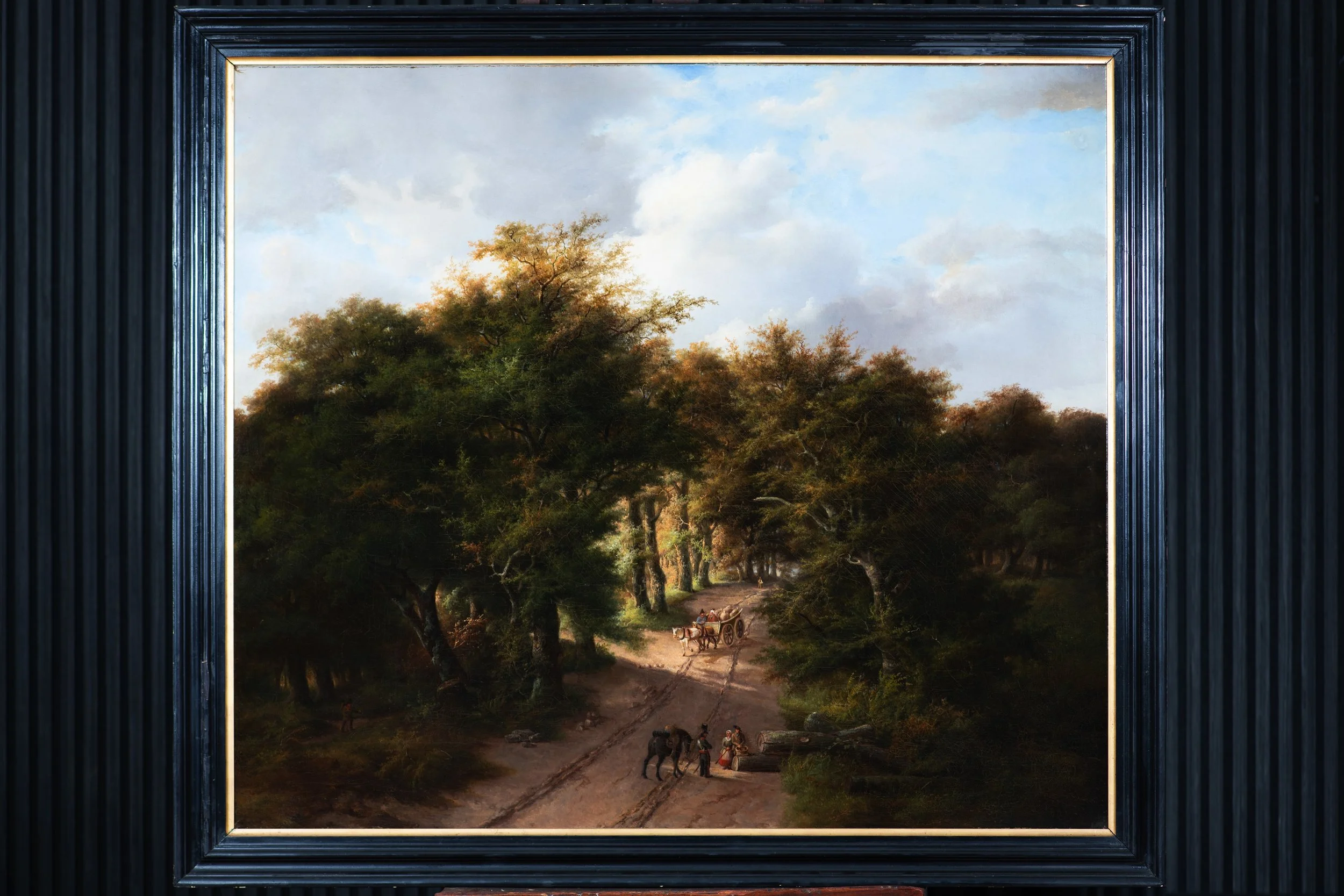 Image 1 of 32
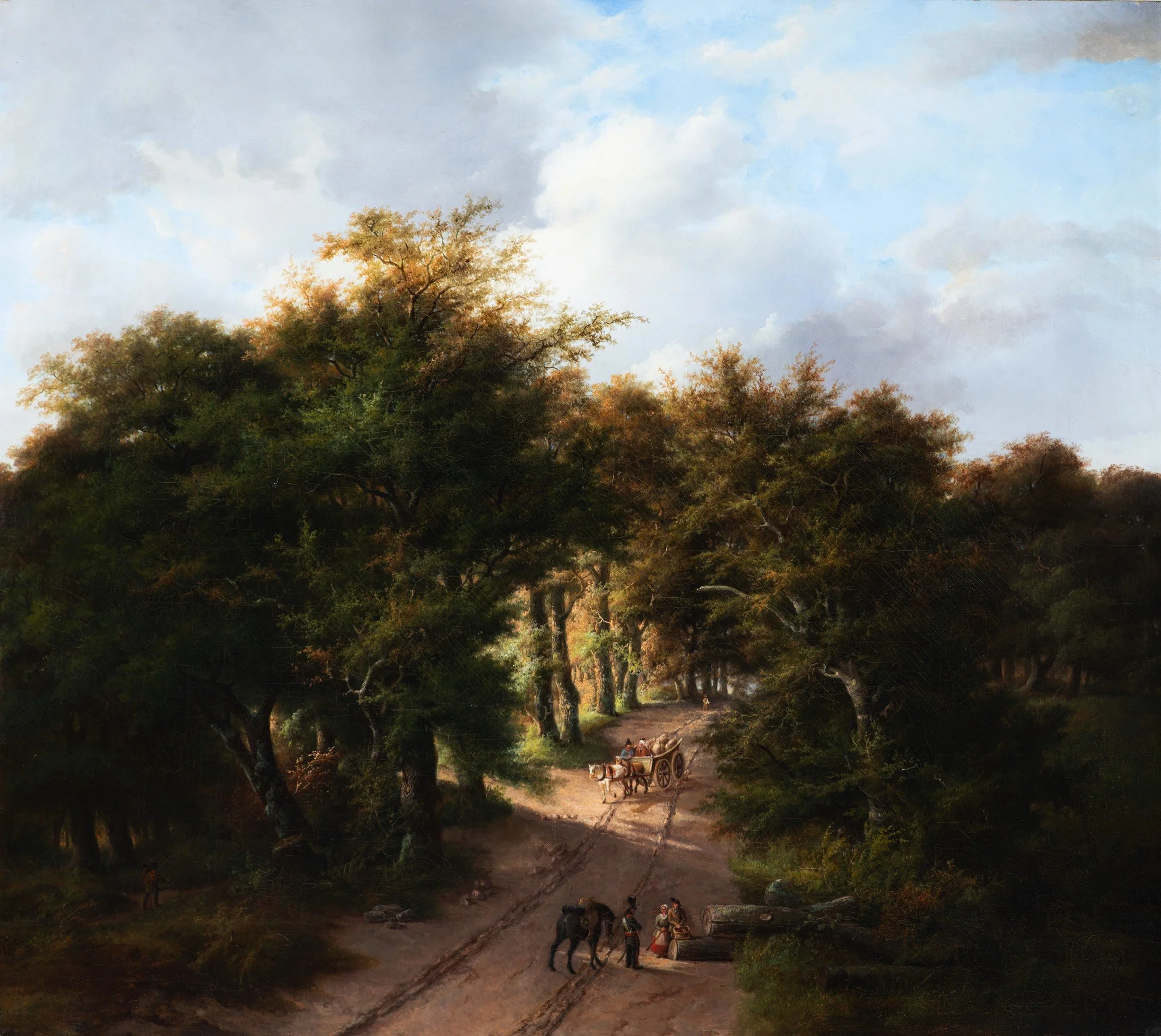 Image 2 of 32
 Image 3 of 32
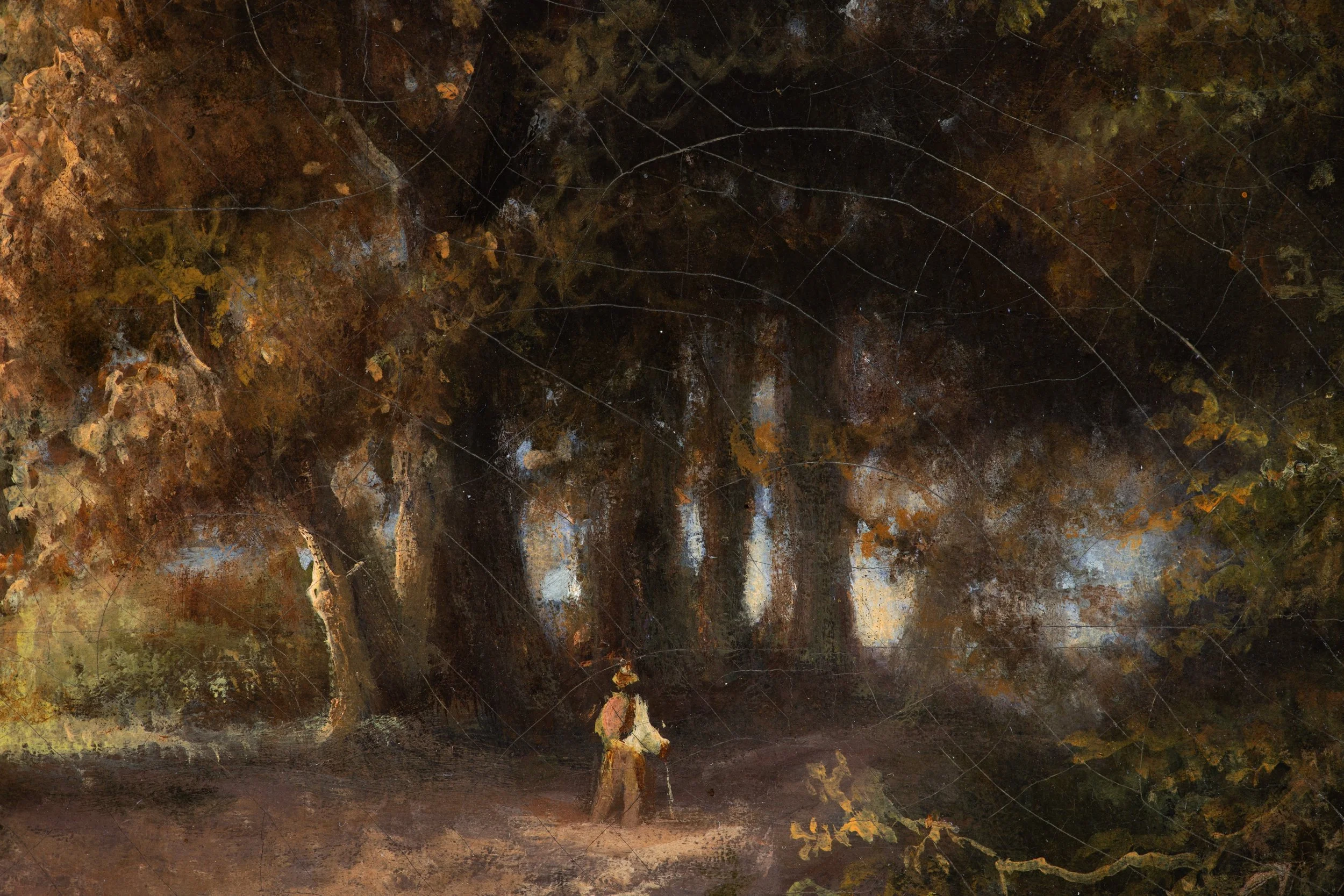 Image 4 of 32
 Image 5 of 32
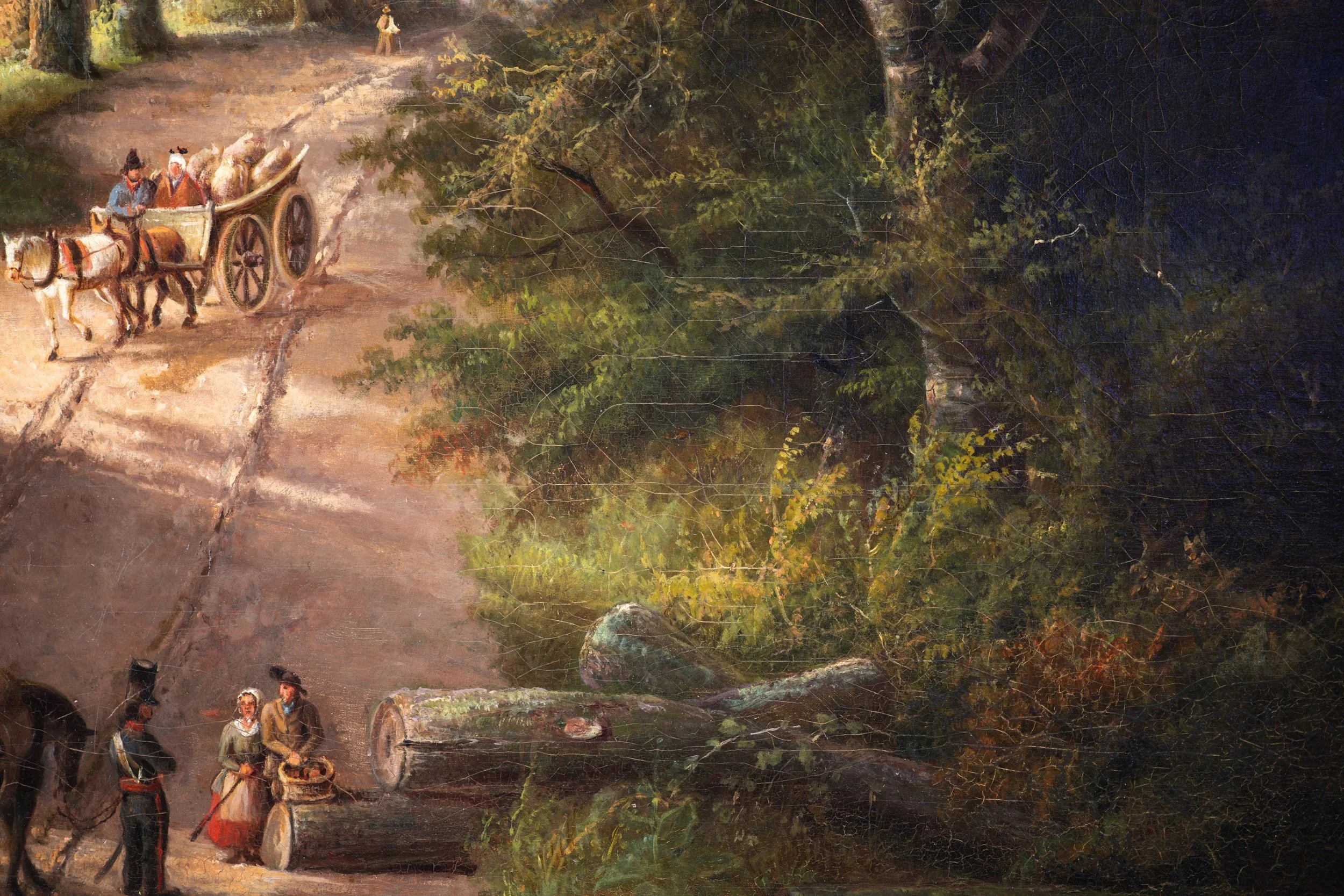 Image 7 of 32
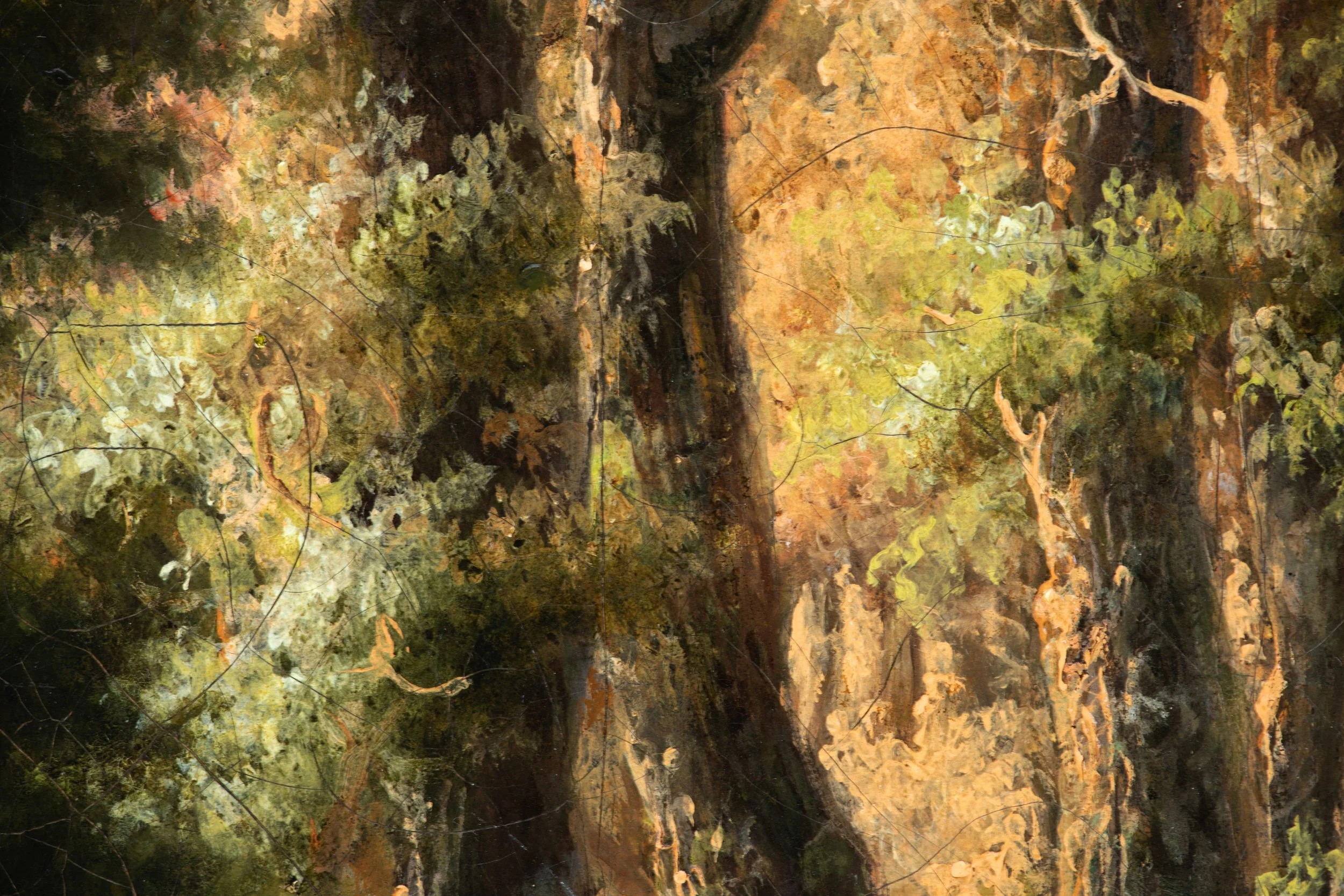 Image 8 of 32
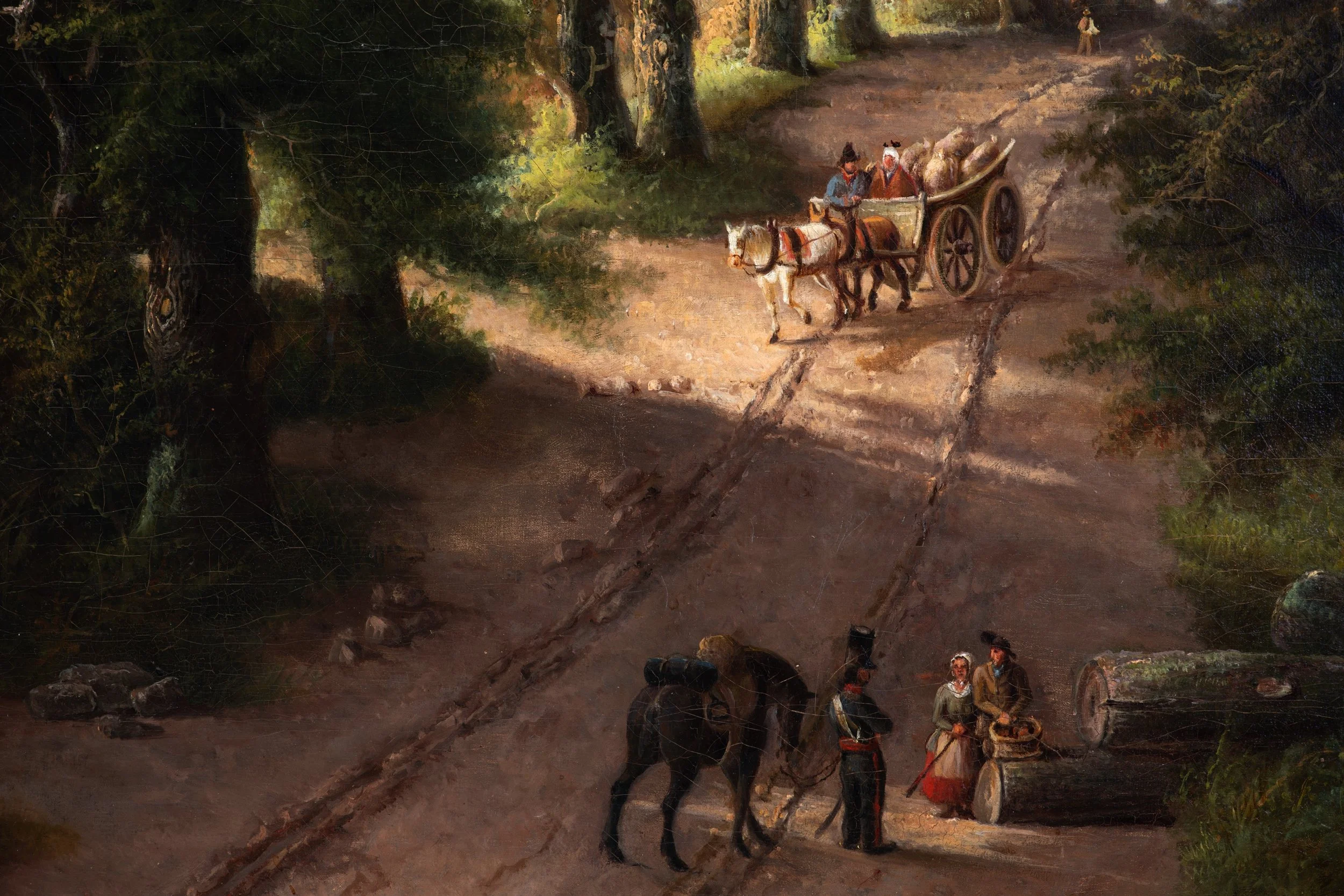 Image 9 of 32
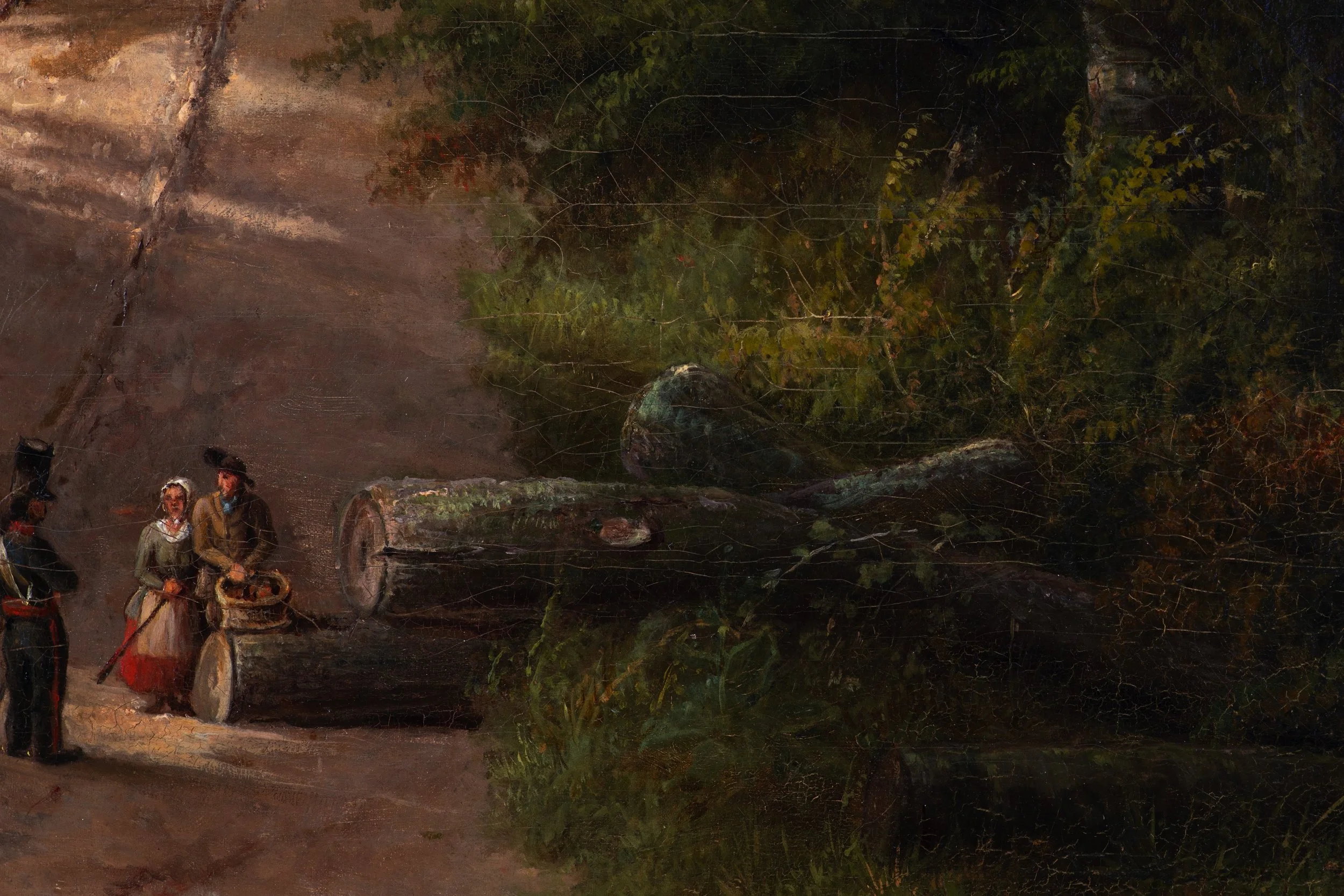 Image 10 of 32
 Image 11 of 32
 Image 12 of 32
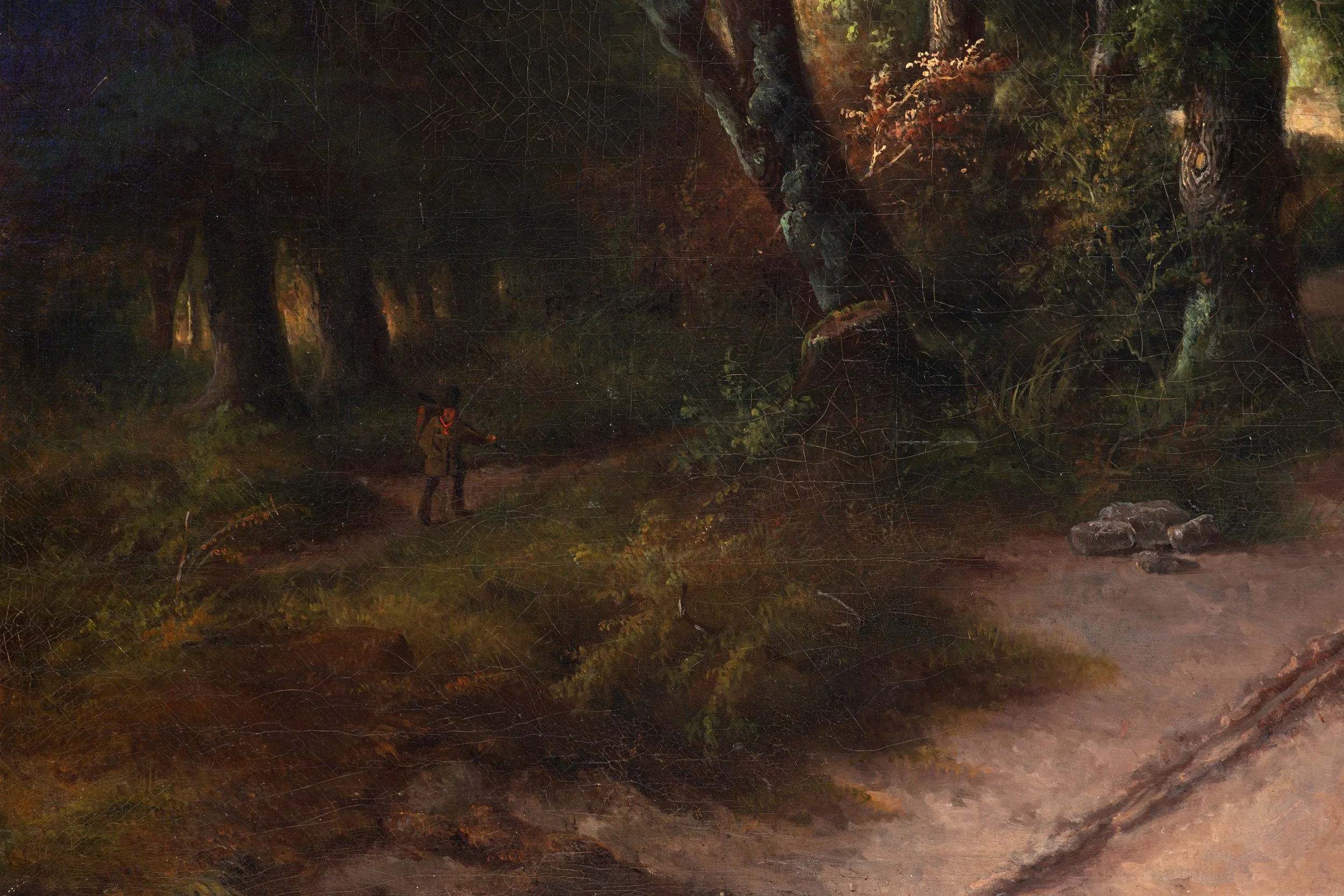 Image 13 of 32
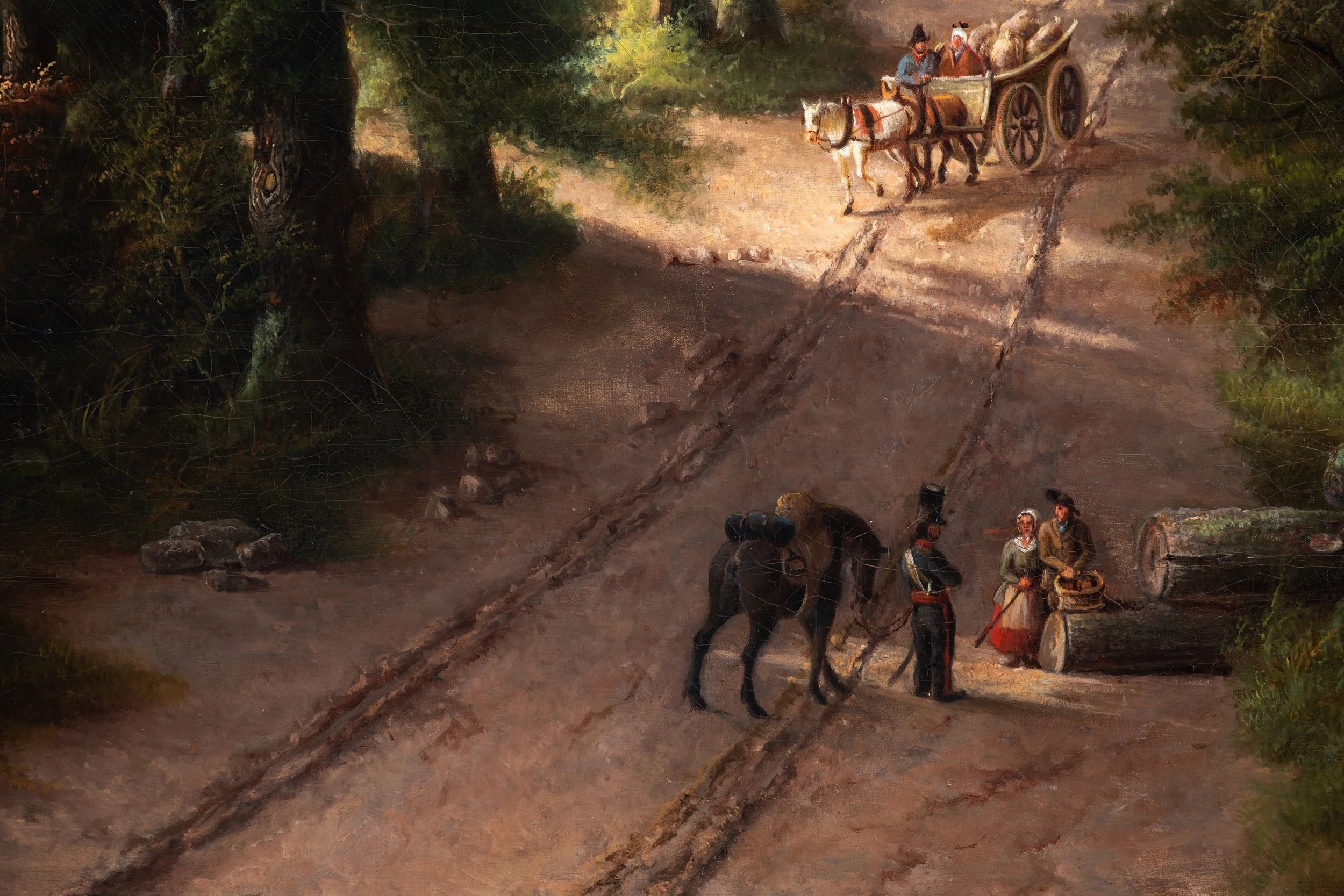 Image 14 of 32
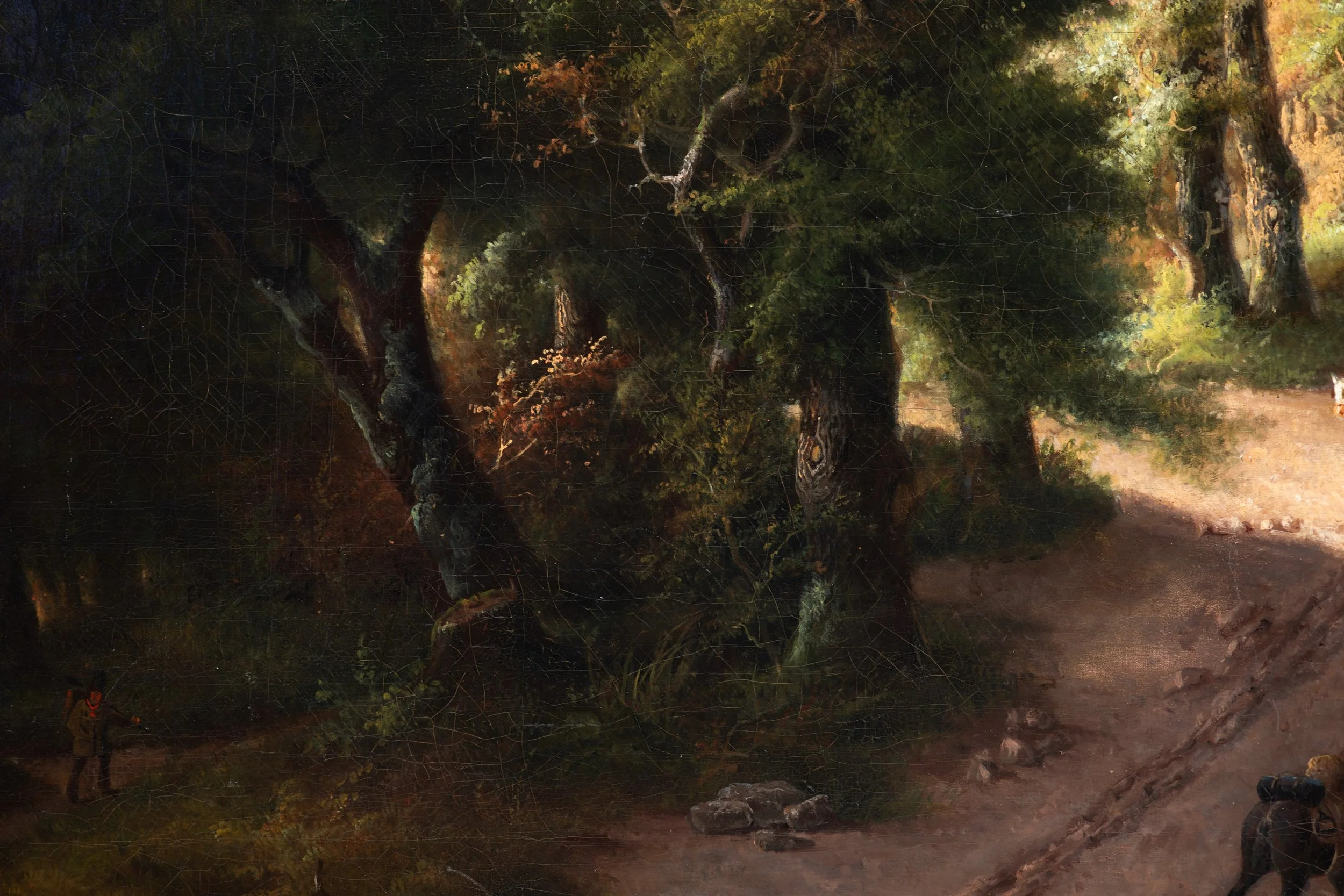 Image 15 of 32
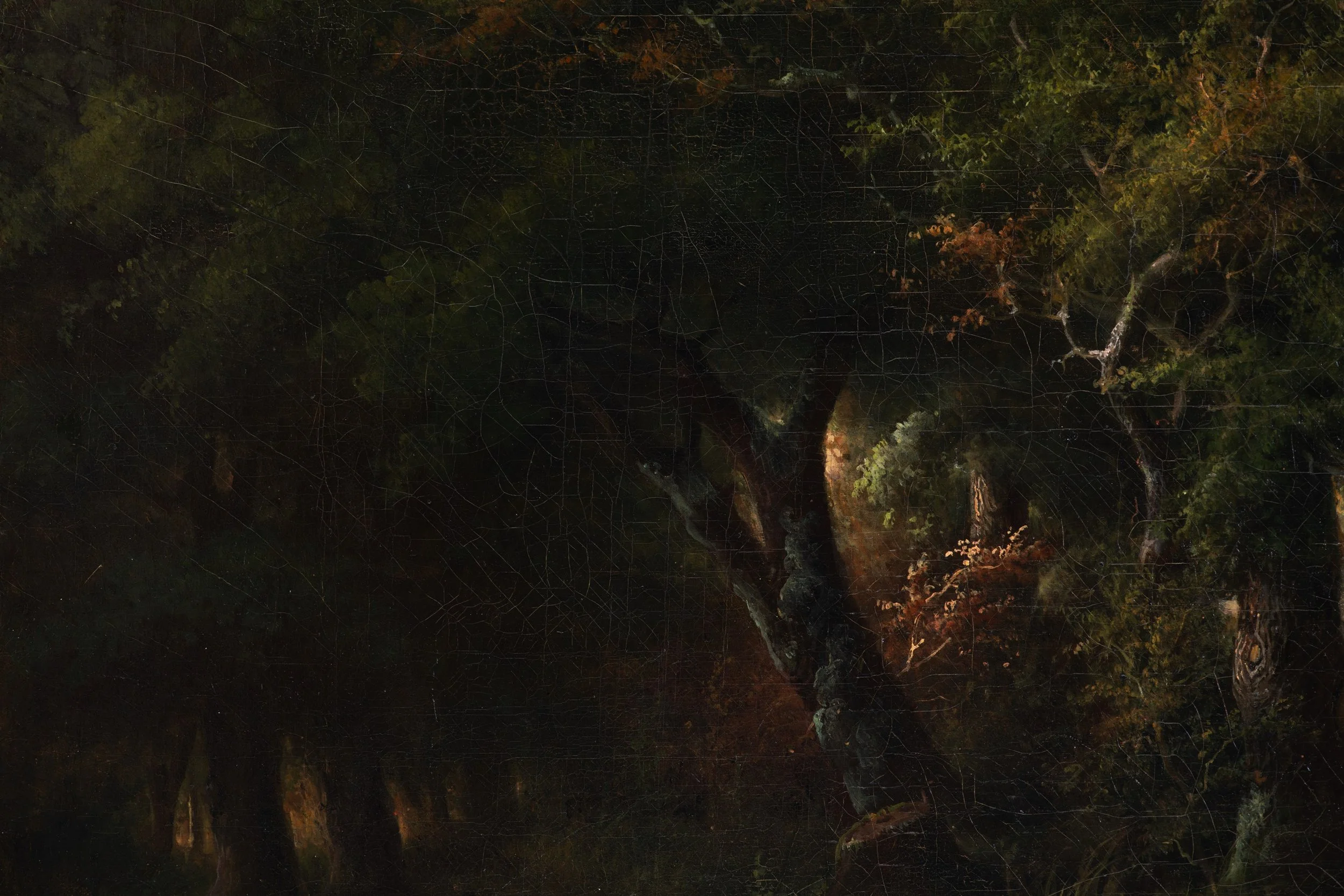 Image 16 of 32
 Image 17 of 32
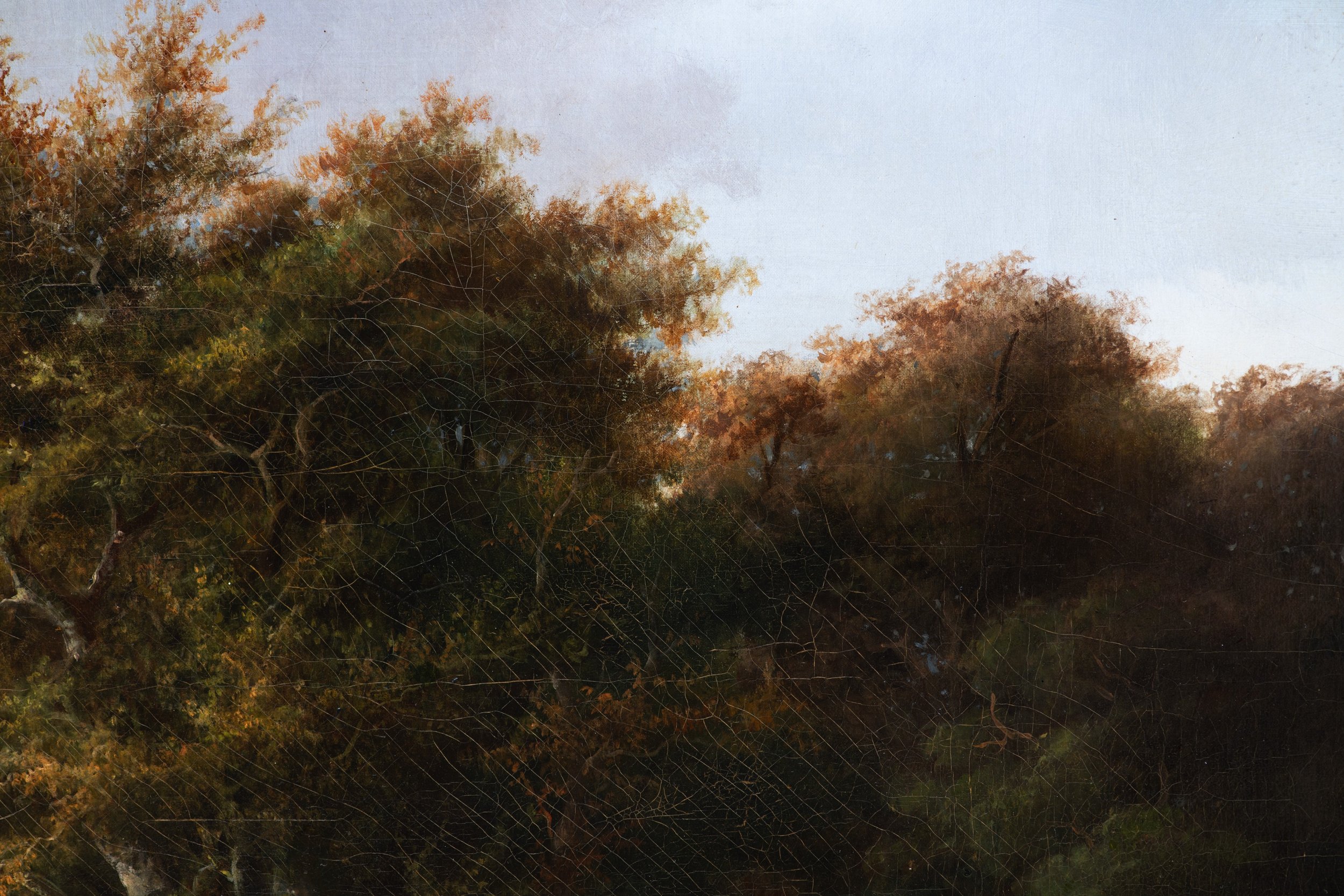 Image 18 of 32
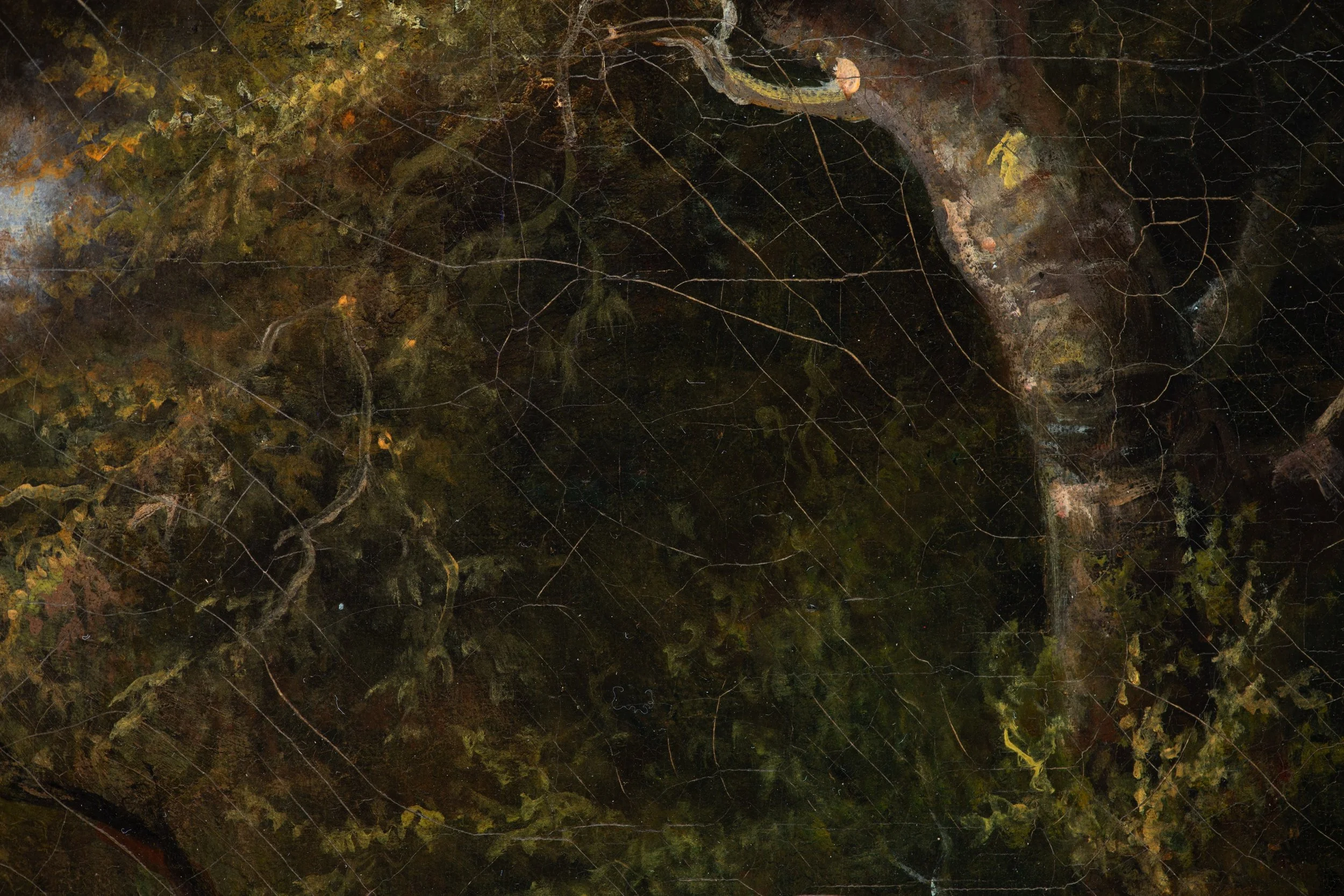 Image 19 of 32
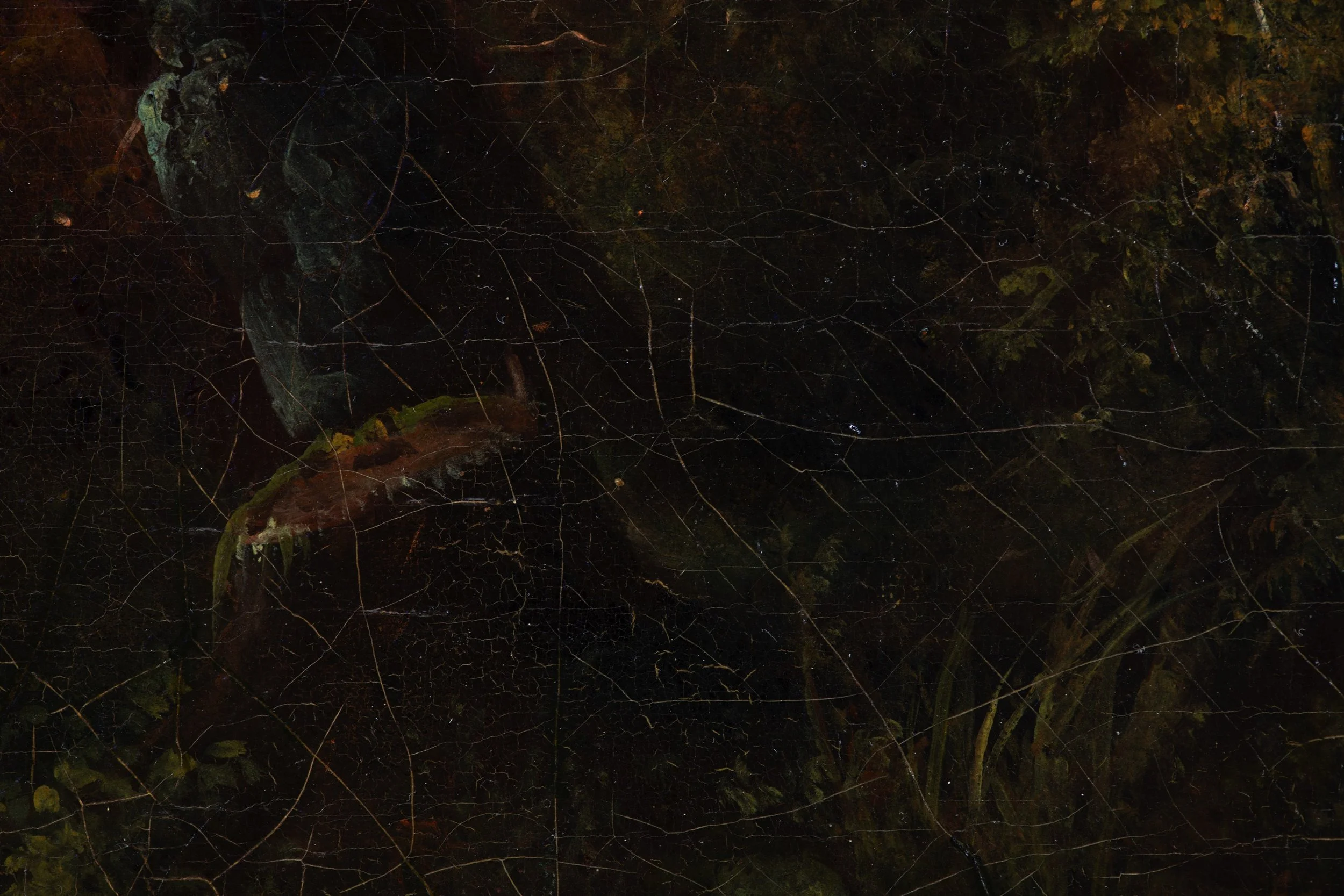 Image 21 of 32
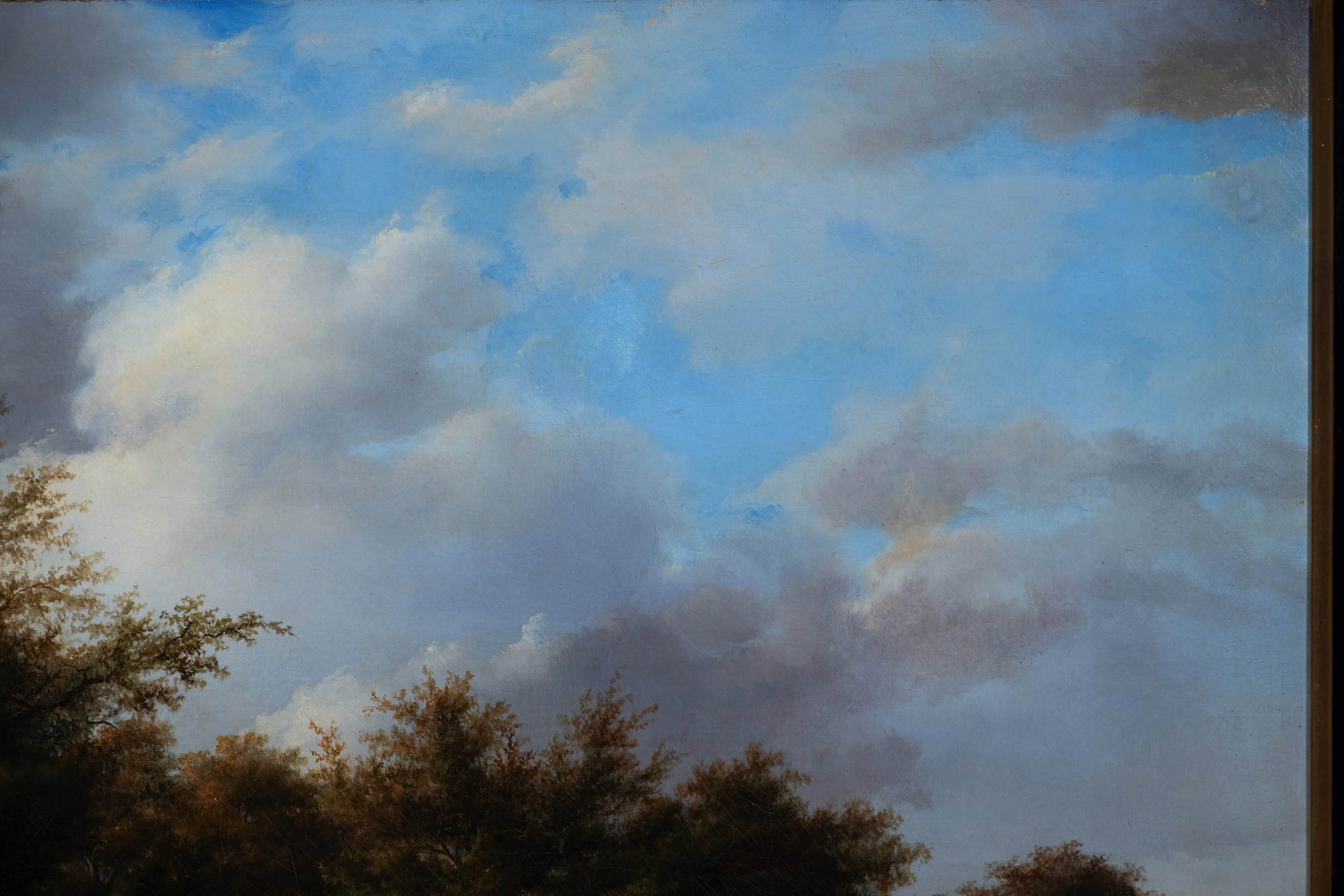 Image 22 of 32
 Image 23 of 32
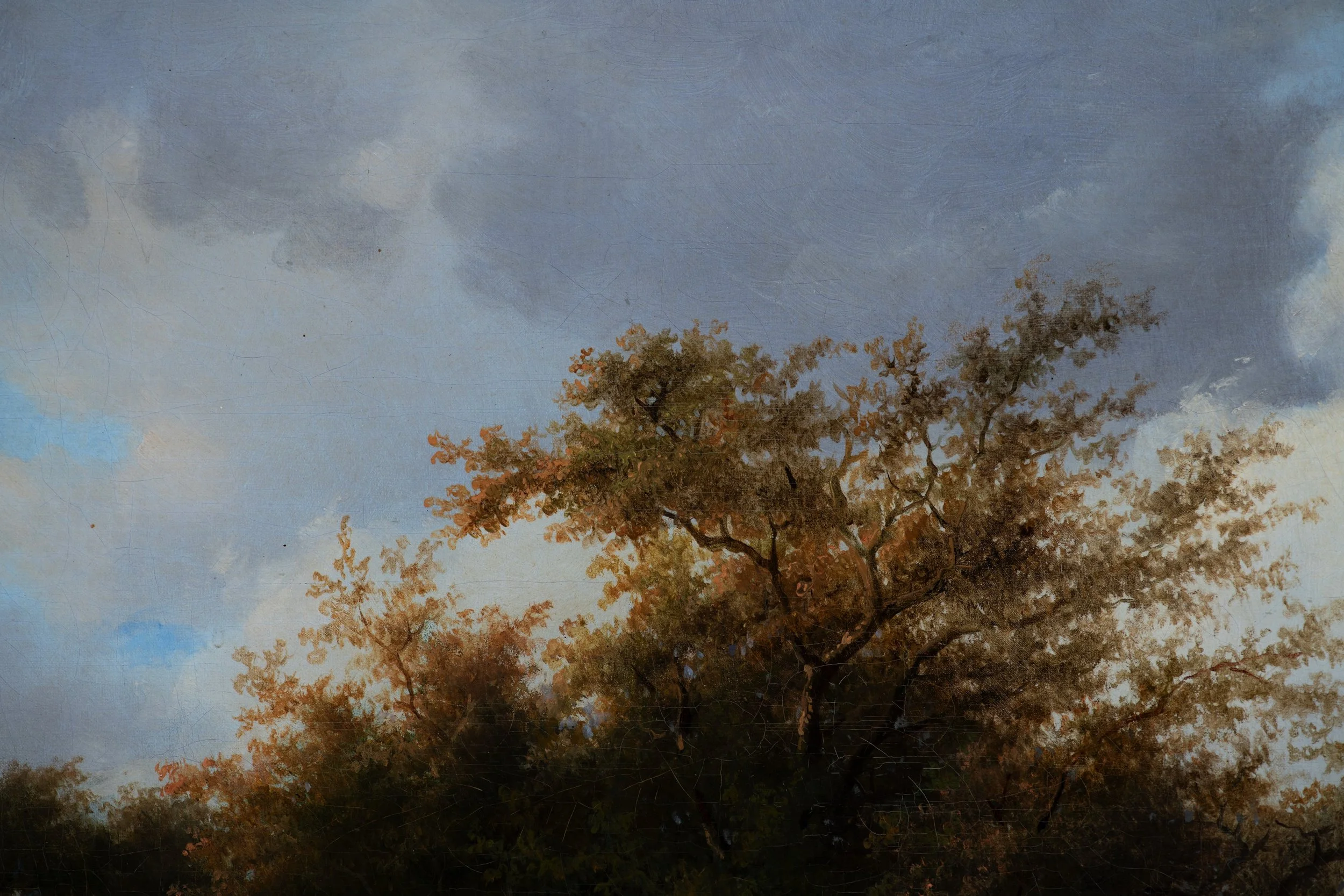 Image 24 of 32
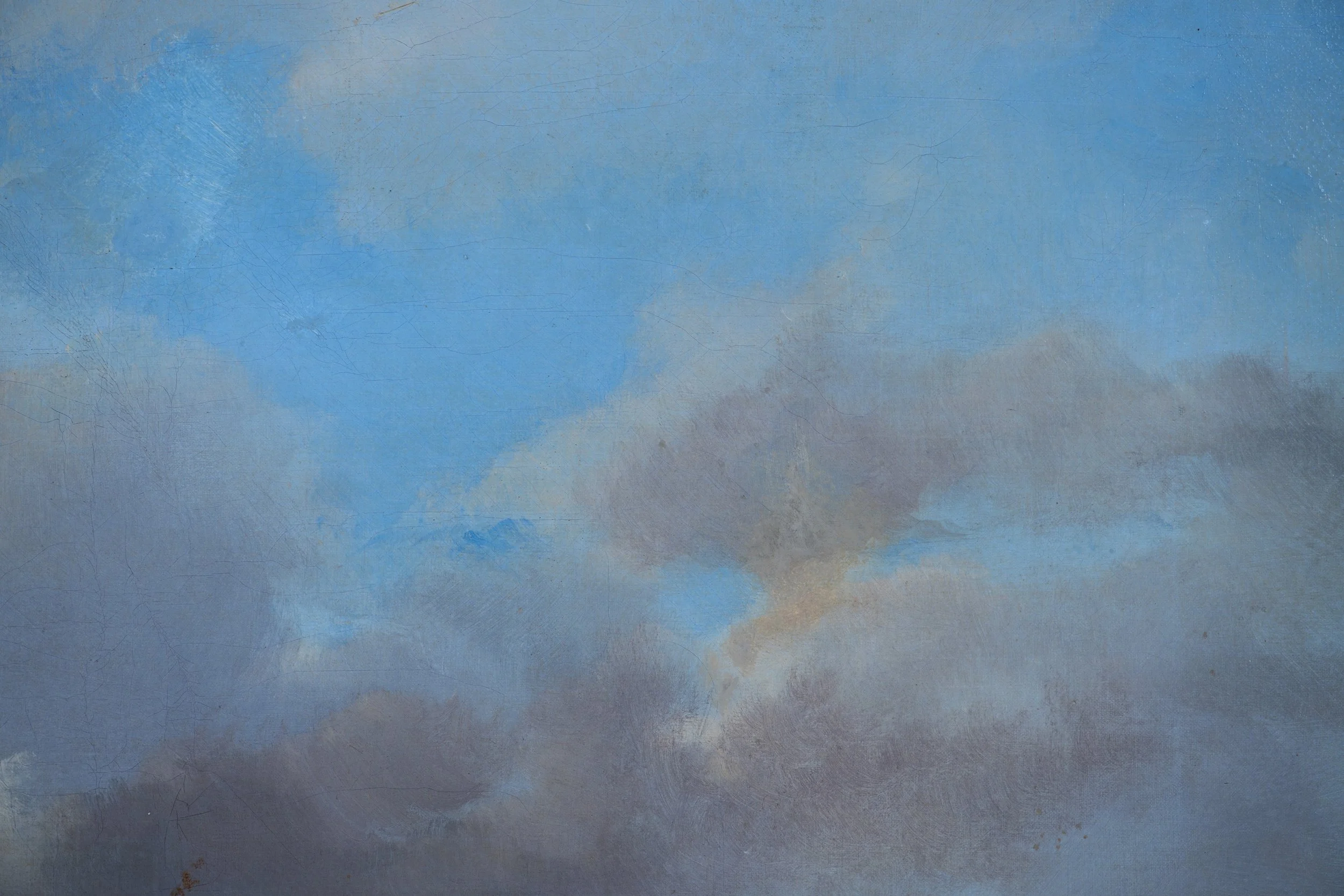 Image 25 of 32
 Image 26 of 32
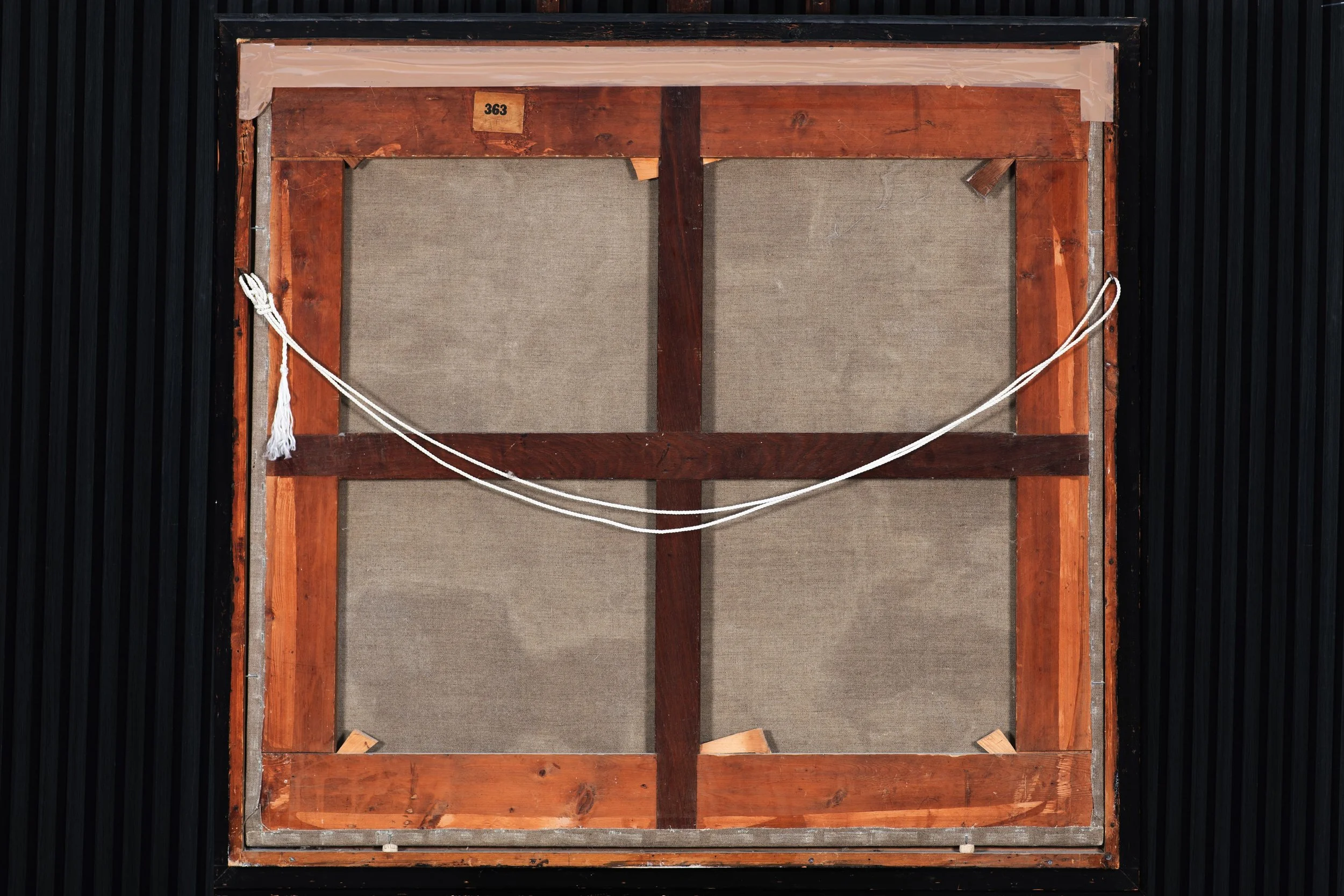 Image 27 of 32
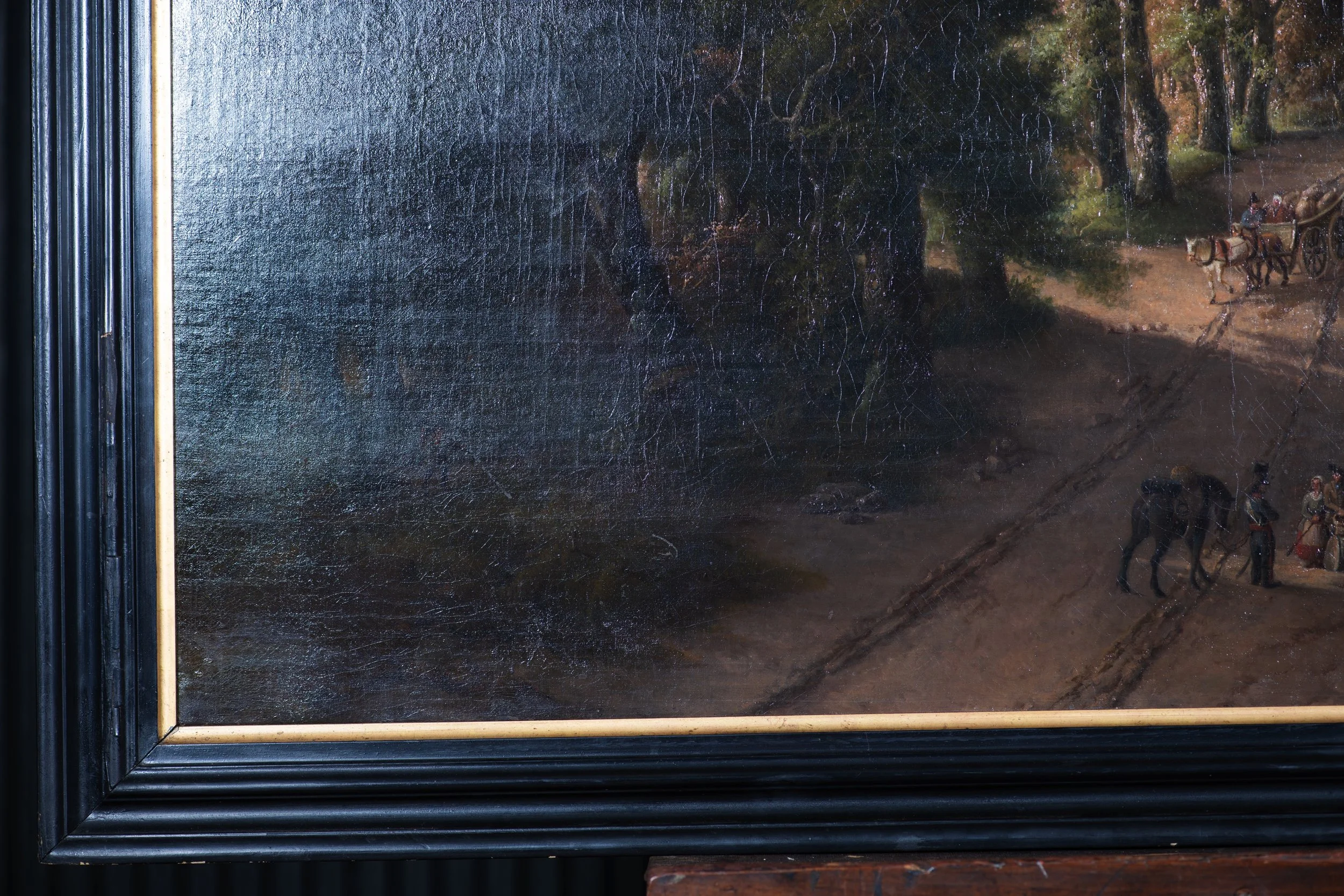 Image 28 of 32
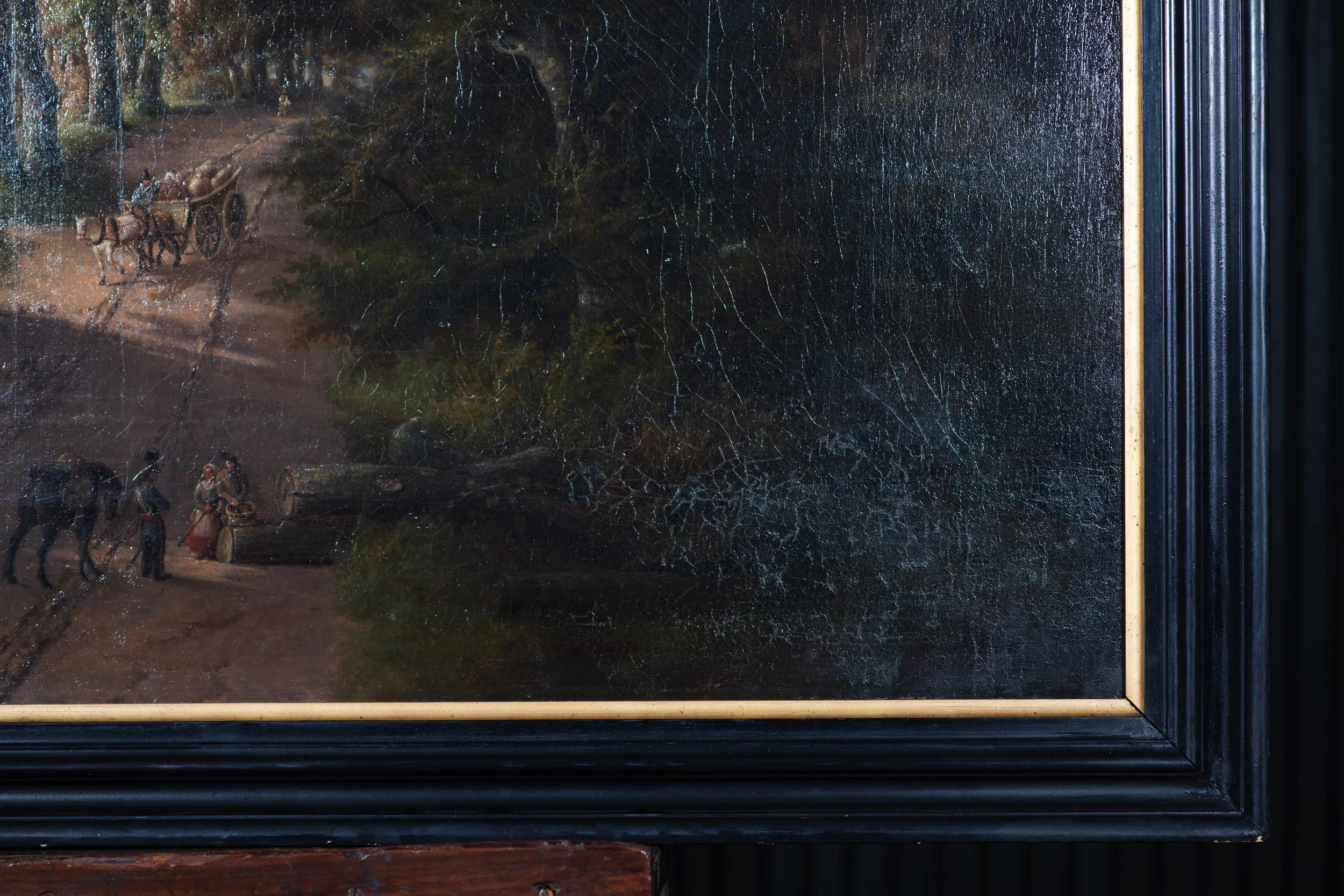 Image 29 of 32
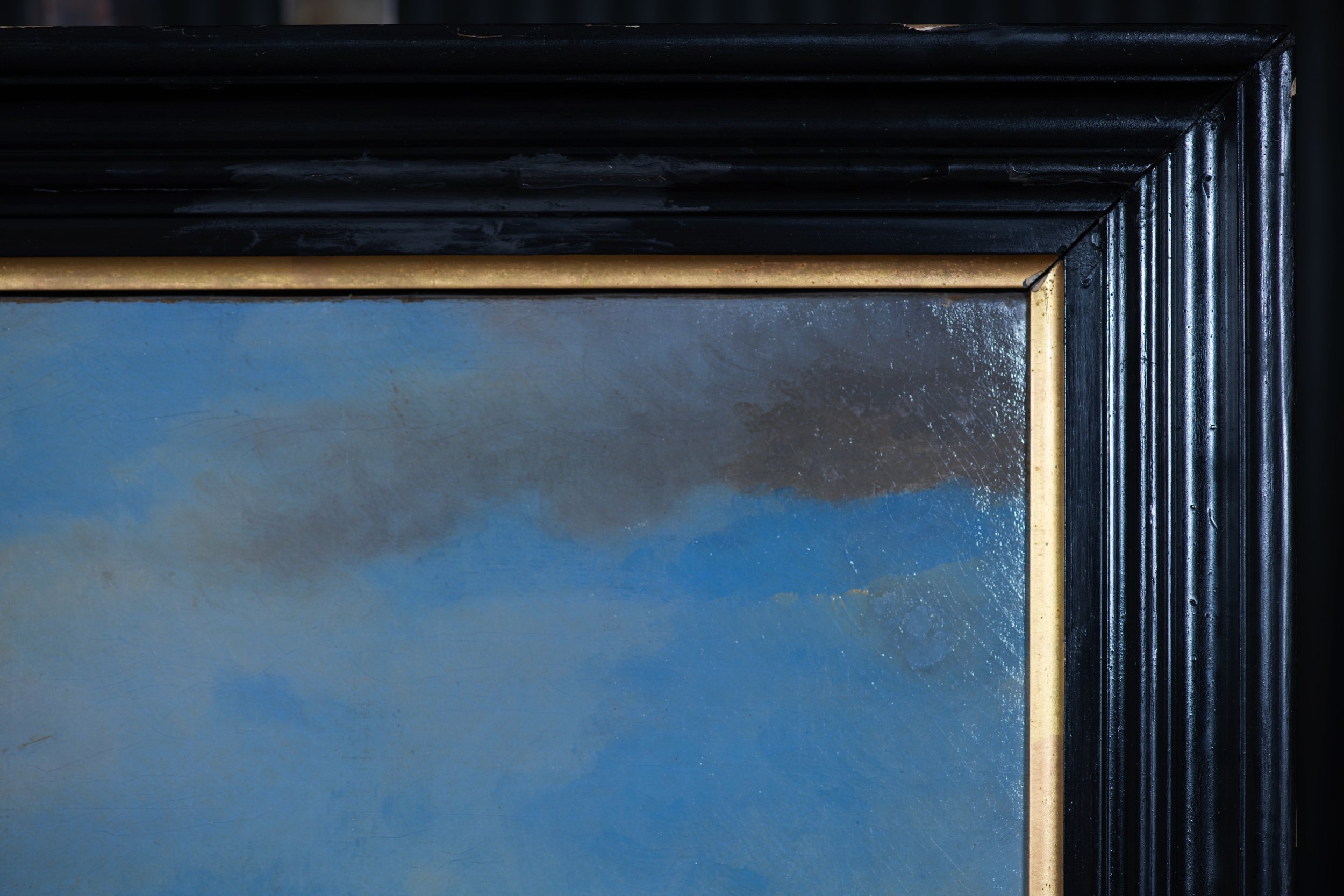 Image 30 of 32
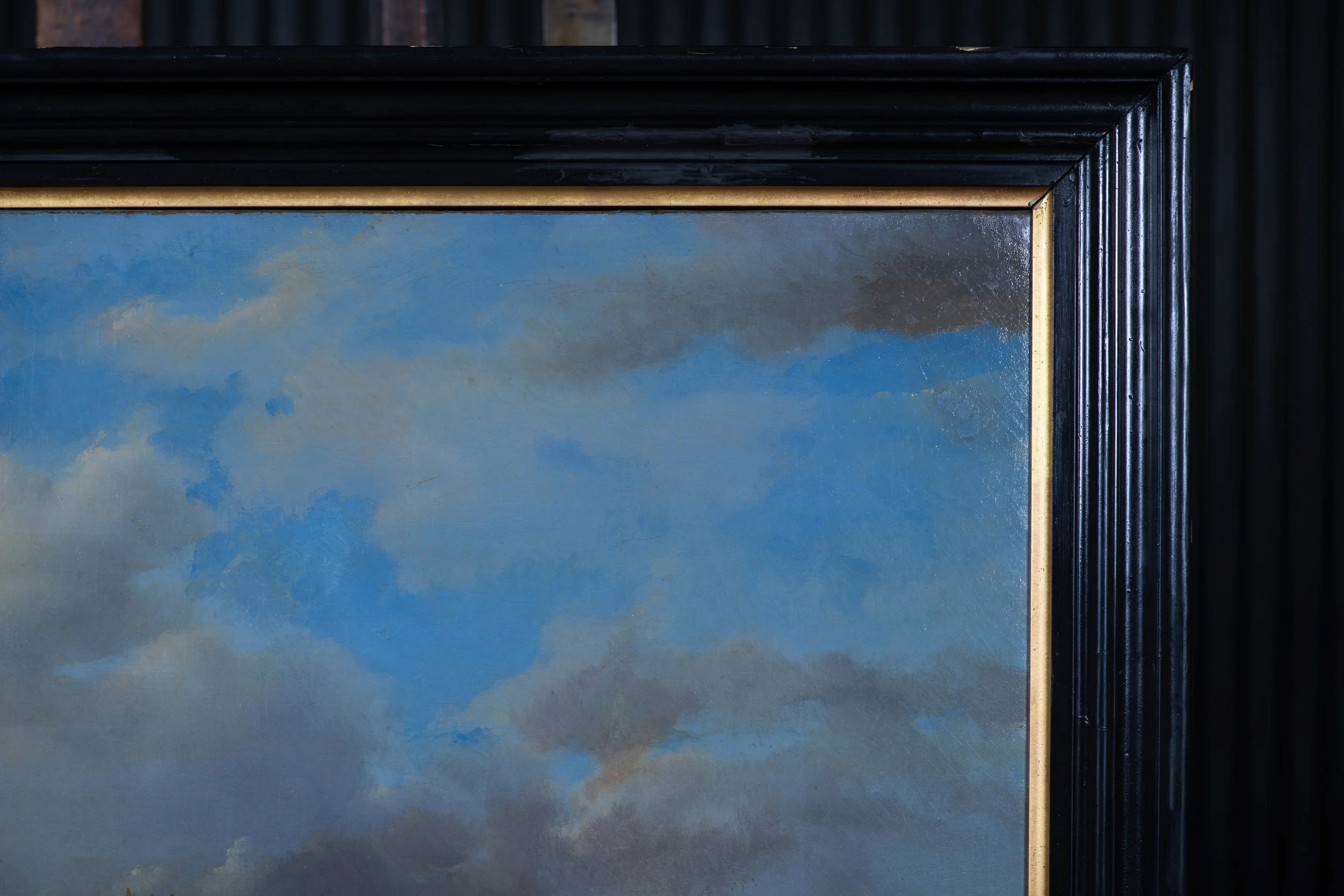 Image 31 of 32
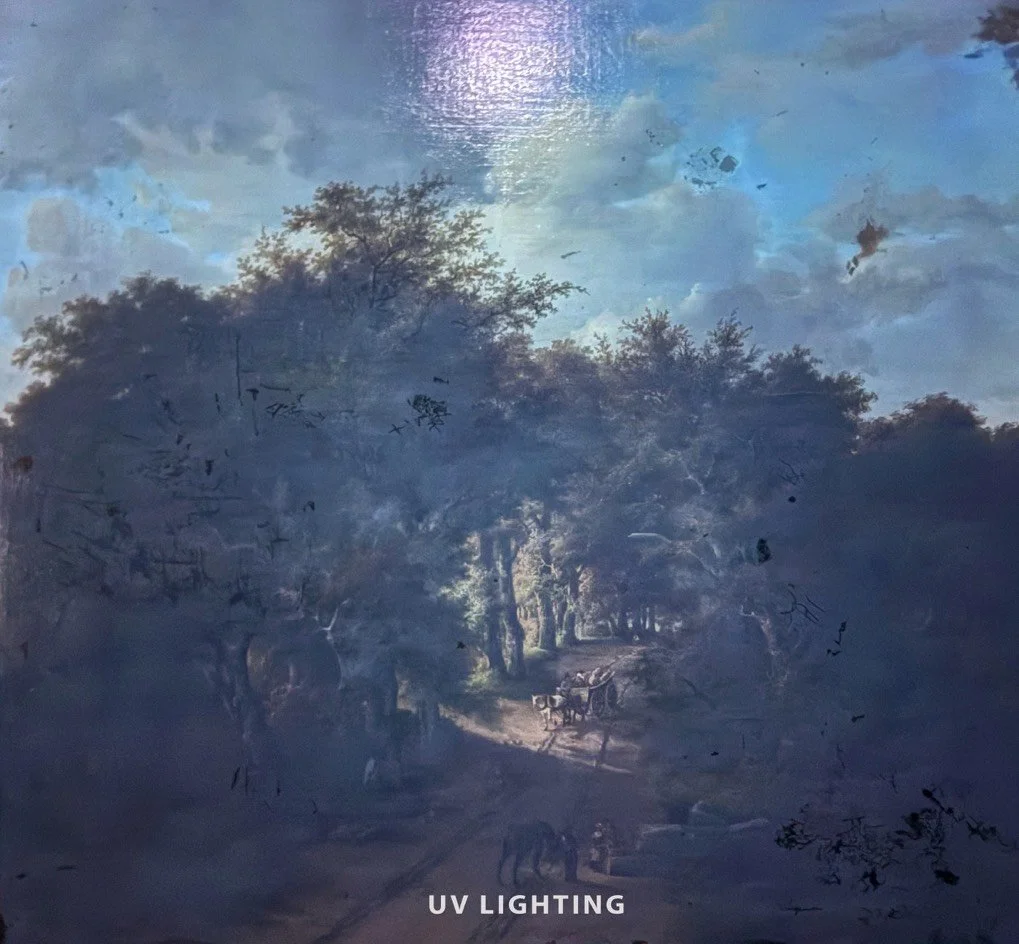 Image 32 of 32