CONTACT US
Caspar Netscher (1635/39–1684), Circle of
Child Blowing Soap Bubbles
Oil on panel, 16.5 × 13 cm; with frame 28 × 24.5 cm
Unsigned; old annotations on verso
Baroque; retouching visible under UV
Introduction
This refined seventeenth-century cabinet piece aligns closely with the intimate genre painting for which Caspar Netscher became widely celebrated. Netscher, born in Heidelberg and artistically formed in the Northern Netherlands after training with Hendrick Coster and, most notably, Gerard ter Borch, developed into a leading figure among the Dutch fijnschilders. His oeuvre is distinguished by technical precision, elegant textile rendering, and subtle psychological nuance. This work, produced within his circle, reflects the same refinement and delicate execution that shaped Netscher’s reputation.
Description of the Work
The panel depicts a child positioned behind a stone window opening, a favoured motif among the fijnschilders, designed to enhance the illusion of immediacy. The figure is dressed in luxurious garments rendered in deep reds, ivory-toned folds, and topped with a fashionable cap adorned with a prominently painted plume. The modelling of the face is carefully built up through thin glazes, resulting in a soft, natural complexion. The child blows a soap bubble through a reed, while the other hand rests on the ledge—a subtle and characteristic detail that draws attention to the fragility of the moment. The darkened background accentuates the figure and enhances the luminosity of the costume and flesh tones.
Technique & Colour Palette
The execution follows the tradition of Netscher’s refined painting technique, with transparent glazes, fine brushwork, and precise control of light. The colour palette is warm and harmonious, dominated by deep reds, ivory shades, and soft blue-green accents in the plume and background. The rendering of textile texture and sheen reflects the influence of Netscher’s teacher, Ter Borch. Under UV light, retouching becomes visible, particularly in the background and certain passages of the face and costume, consistent with the age of the work.
Composition
The composition is constructed around the trompe-l’œil architectural niche, which creates a sense of immediate presence. The diagonal movement of the arm and reed directs the viewer’s eye to the soap bubble, the compositional focal point. The subtle modelling of light and shadow establishes depth and a calm, contemplative atmosphere, characteristic of high-quality fijnschilder artistry of the late Dutch Golden Age.
Art Historical Context & Style
The motif of soap bubbles relates to the moralising symbolism of the seventeenth century, referring to the transience of life. Netscher and his followers frequently incorporated such themes into intimate interior and genre scenes sought after by collectors. The stylistic features of this panel align with the Leiden fijnschilders and the elegant The Hague genre tradition. Notable national stylistic counterparts include Gerard Dou, Eglon van der Neer, Godfried Schalcken; internationally, parallels may be drawn with Gabriel Metsu and Frans van Mieris the Elder.
The Artist
Caspar Netscher developed his artistic career within the Confrerie Pictura in The Hague, following his training in the Northern Netherlands. His early work included a series of small cabinet pieces distinguished by refined genre motifs and meticulous attention to fabric and light. He later achieved considerable renown as a portraitist for aristocratic patrons. His technical virtuosity and elegant compositions positioned him as an influential figure of seventeenth-century Dutch painting, with a broad circle of followers producing works in close stylistic alignment with his own.
Condition
The panel is stable and exhibits age-related craquelure. UV photography reveals retouching in the background and scattered areas of the face and costume. The early-style moulded dark wooden frame enhances the work’s period character and its presentation as an authentic cabinet piece.
Conclusion
This carefully executed panel embodies the aesthetic, technical refinement, and thematic sensitivity characteristic of the circle of Caspar Netscher. Its combination of a poetic vanitas motif, meticulous figural rendering, and harmonious composition makes it an exceptionally appealing cabinet work within the Dutch Baroque tradition, and a distinguished addition to any collection of high-quality seventeenth-century genre painting.
CONTACT US
Caspar Netscher (1635/39–1684), Circle of
Child Blowing Soap Bubbles
Oil on panel, 16.5 × 13 cm; with frame 28 × 24.5 cm
Unsigned; old annotations on verso
Baroque; retouching visible under UV
Introduction
This refined seventeenth-century cabinet piece aligns closely with the intimate genre painting for which Caspar Netscher became widely celebrated. Netscher, born in Heidelberg and artistically formed in the Northern Netherlands after training with Hendrick Coster and, most notably, Gerard ter Borch, developed into a leading figure among the Dutch fijnschilders. His oeuvre is distinguished by technical precision, elegant textile rendering, and subtle psychological nuance. This work, produced within his circle, reflects the same refinement and delicate execution that shaped Netscher’s reputation.
Description of the Work
The panel depicts a child positioned behind a stone window opening, a favoured motif among the fijnschilders, designed to enhance the illusion of immediacy. The figure is dressed in luxurious garments rendered in deep reds, ivory-toned folds, and topped with a fashionable cap adorned with a prominently painted plume. The modelling of the face is carefully built up through thin glazes, resulting in a soft, natural complexion. The child blows a soap bubble through a reed, while the other hand rests on the ledge—a subtle and characteristic detail that draws attention to the fragility of the moment. The darkened background accentuates the figure and enhances the luminosity of the costume and flesh tones.
Technique & Colour Palette
The execution follows the tradition of Netscher’s refined painting technique, with transparent glazes, fine brushwork, and precise control of light. The colour palette is warm and harmonious, dominated by deep reds, ivory shades, and soft blue-green accents in the plume and background. The rendering of textile texture and sheen reflects the influence of Netscher’s teacher, Ter Borch. Under UV light, retouching becomes visible, particularly in the background and certain passages of the face and costume, consistent with the age of the work.
Composition
The composition is constructed around the trompe-l’œil architectural niche, which creates a sense of immediate presence. The diagonal movement of the arm and reed directs the viewer’s eye to the soap bubble, the compositional focal point. The subtle modelling of light and shadow establishes depth and a calm, contemplative atmosphere, characteristic of high-quality fijnschilder artistry of the late Dutch Golden Age.
Art Historical Context & Style
The motif of soap bubbles relates to the moralising symbolism of the seventeenth century, referring to the transience of life. Netscher and his followers frequently incorporated such themes into intimate interior and genre scenes sought after by collectors. The stylistic features of this panel align with the Leiden fijnschilders and the elegant The Hague genre tradition. Notable national stylistic counterparts include Gerard Dou, Eglon van der Neer, Godfried Schalcken; internationally, parallels may be drawn with Gabriel Metsu and Frans van Mieris the Elder.
The Artist
Caspar Netscher developed his artistic career within the Confrerie Pictura in The Hague, following his training in the Northern Netherlands. His early work included a series of small cabinet pieces distinguished by refined genre motifs and meticulous attention to fabric and light. He later achieved considerable renown as a portraitist for aristocratic patrons. His technical virtuosity and elegant compositions positioned him as an influential figure of seventeenth-century Dutch painting, with a broad circle of followers producing works in close stylistic alignment with his own.
Condition
The panel is stable and exhibits age-related craquelure. UV photography reveals retouching in the background and scattered areas of the face and costume. The early-style moulded dark wooden frame enhances the work’s period character and its presentation as an authentic cabinet piece.
Conclusion
This carefully executed panel embodies the aesthetic, technical refinement, and thematic sensitivity characteristic of the circle of Caspar Netscher. Its combination of a poetic vanitas motif, meticulous figural rendering, and harmonious composition makes it an exceptionally appealing cabinet work within the Dutch Baroque tradition, and a distinguished addition to any collection of high-quality seventeenth-century genre painting.

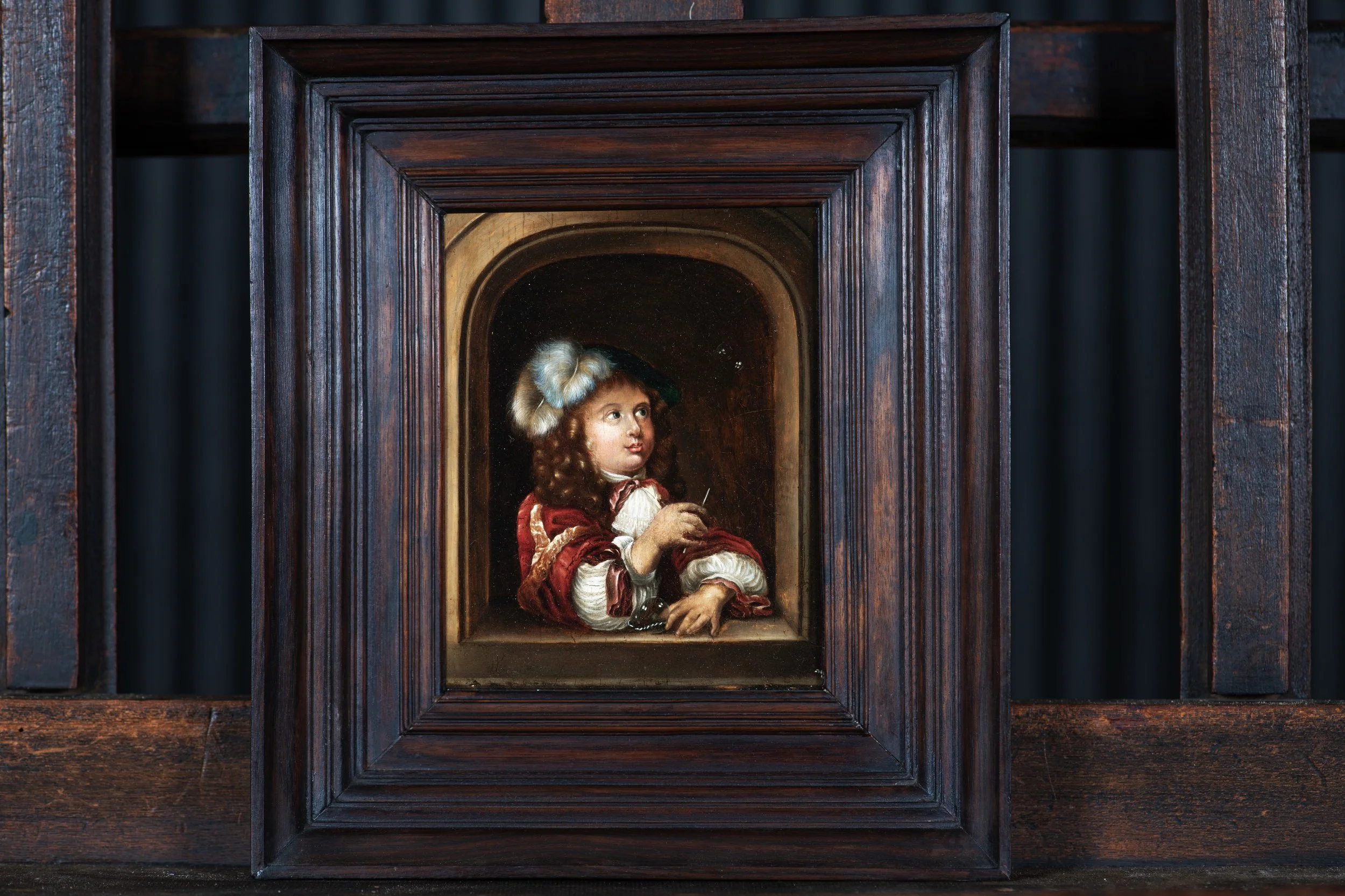 Image 1 of 18
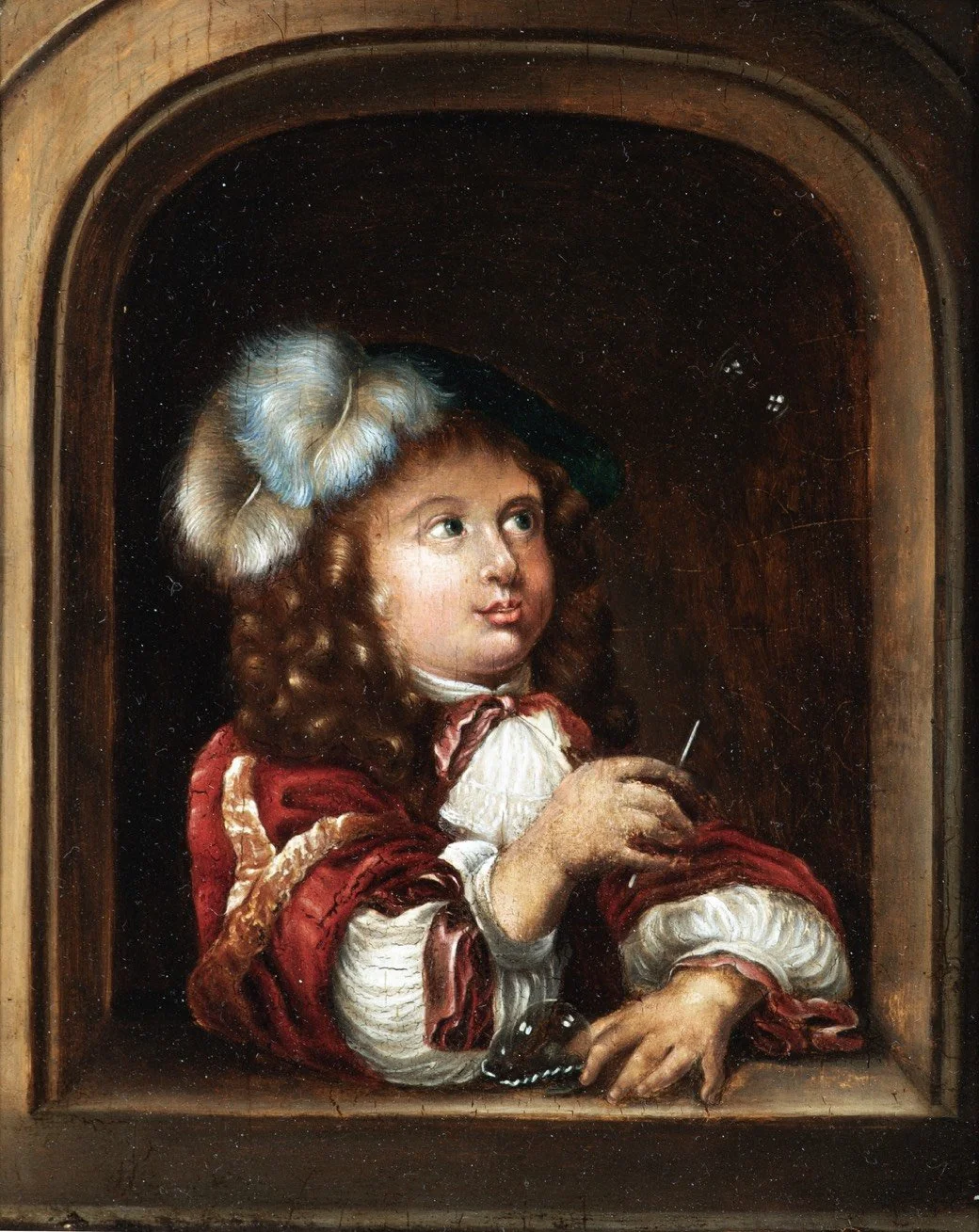 Image 2 of 18
 Image 3 of 18
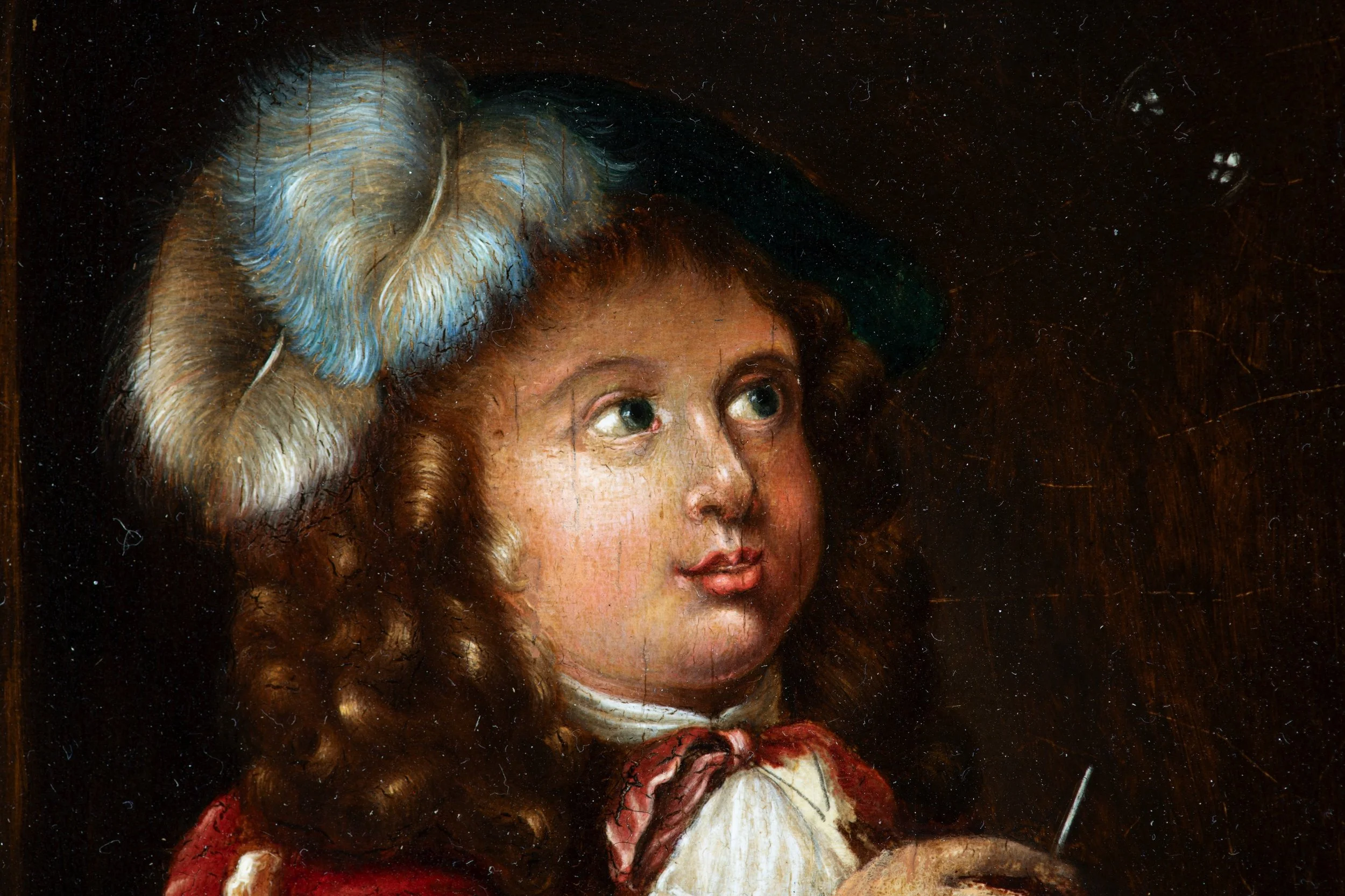 Image 4 of 18
 Image 5 of 18
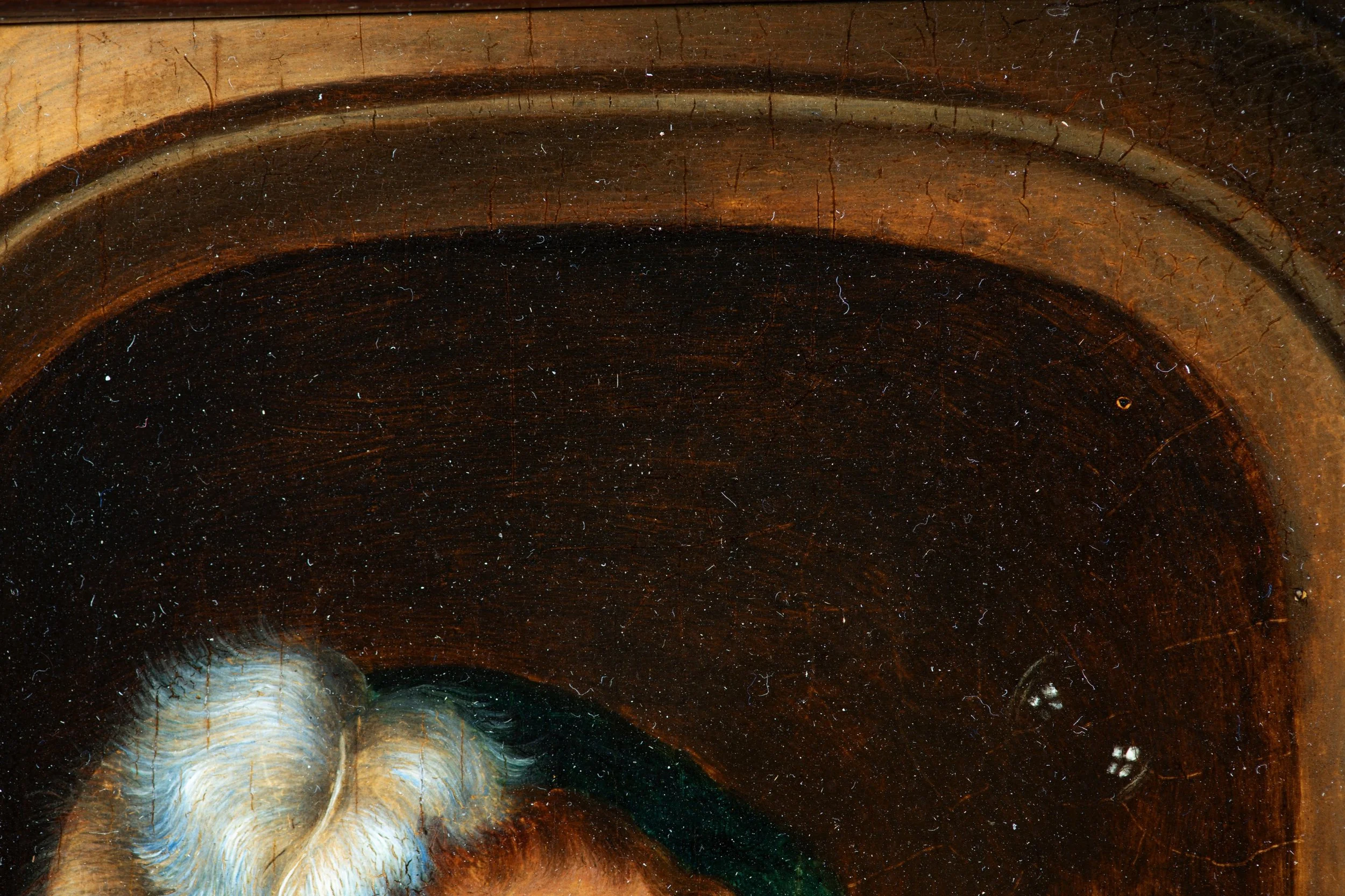 Image 6 of 18
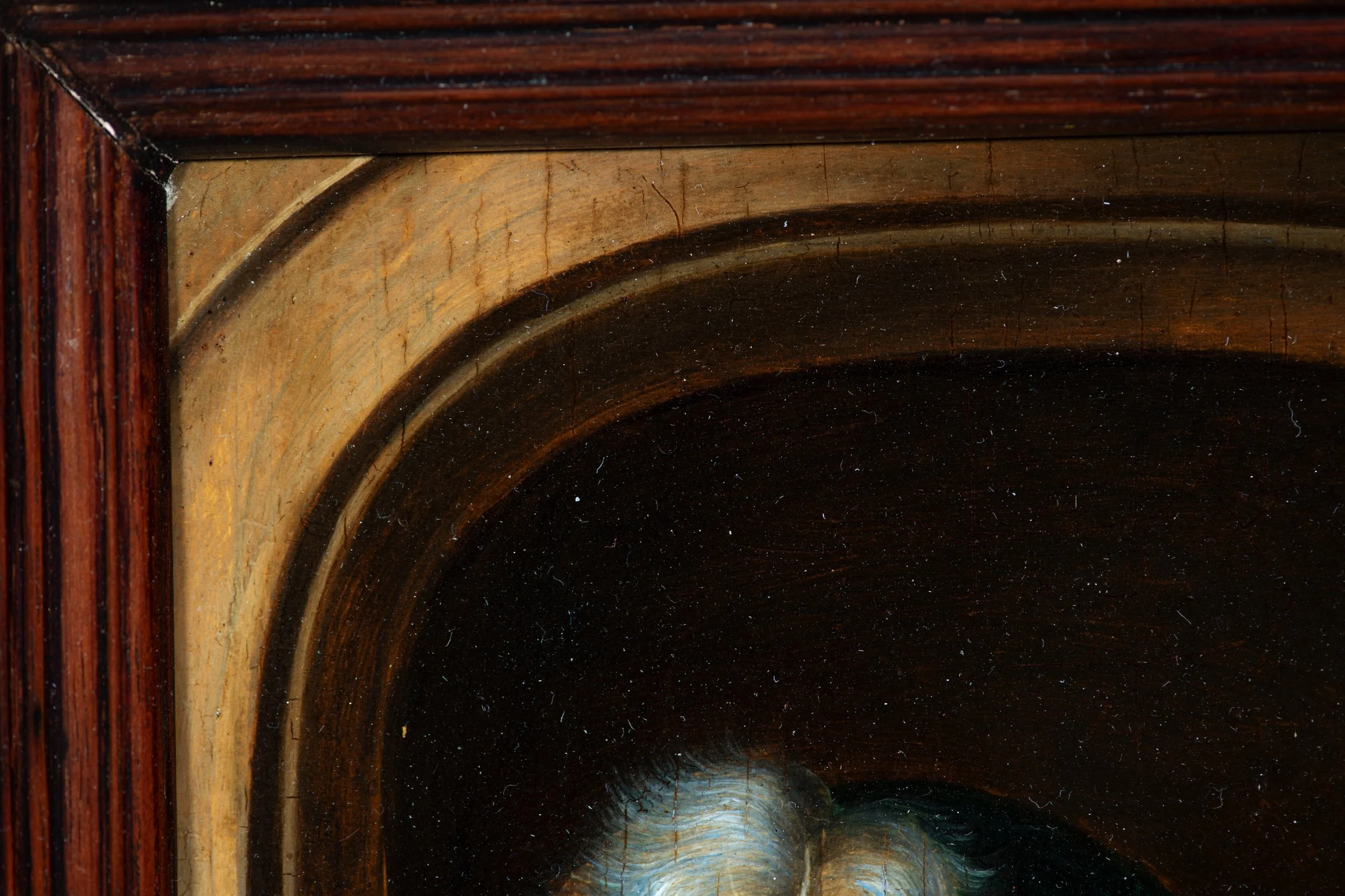 Image 7 of 18
 Image 8 of 18
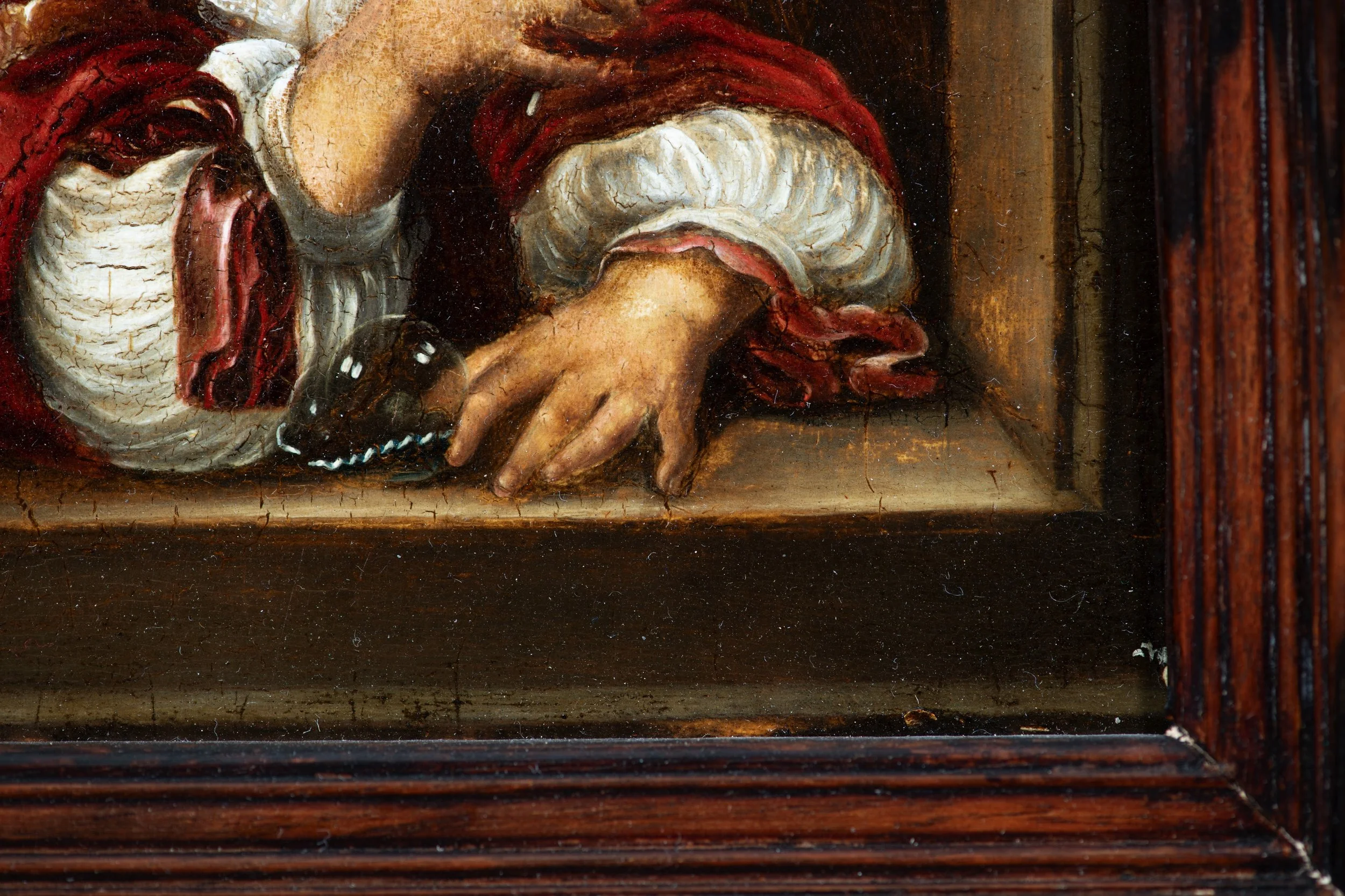 Image 9 of 18
 Image 10 of 18
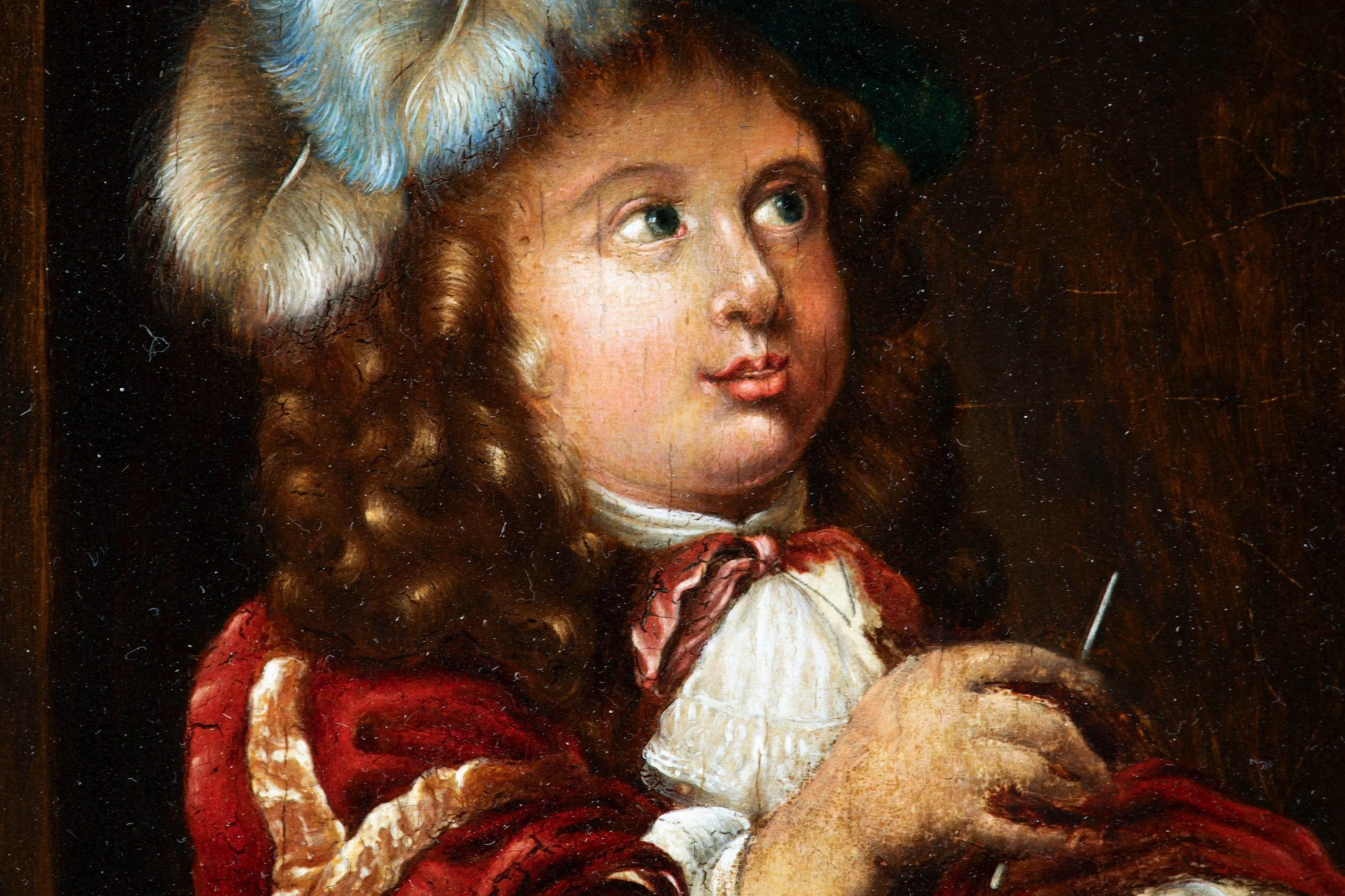 Image 11 of 18
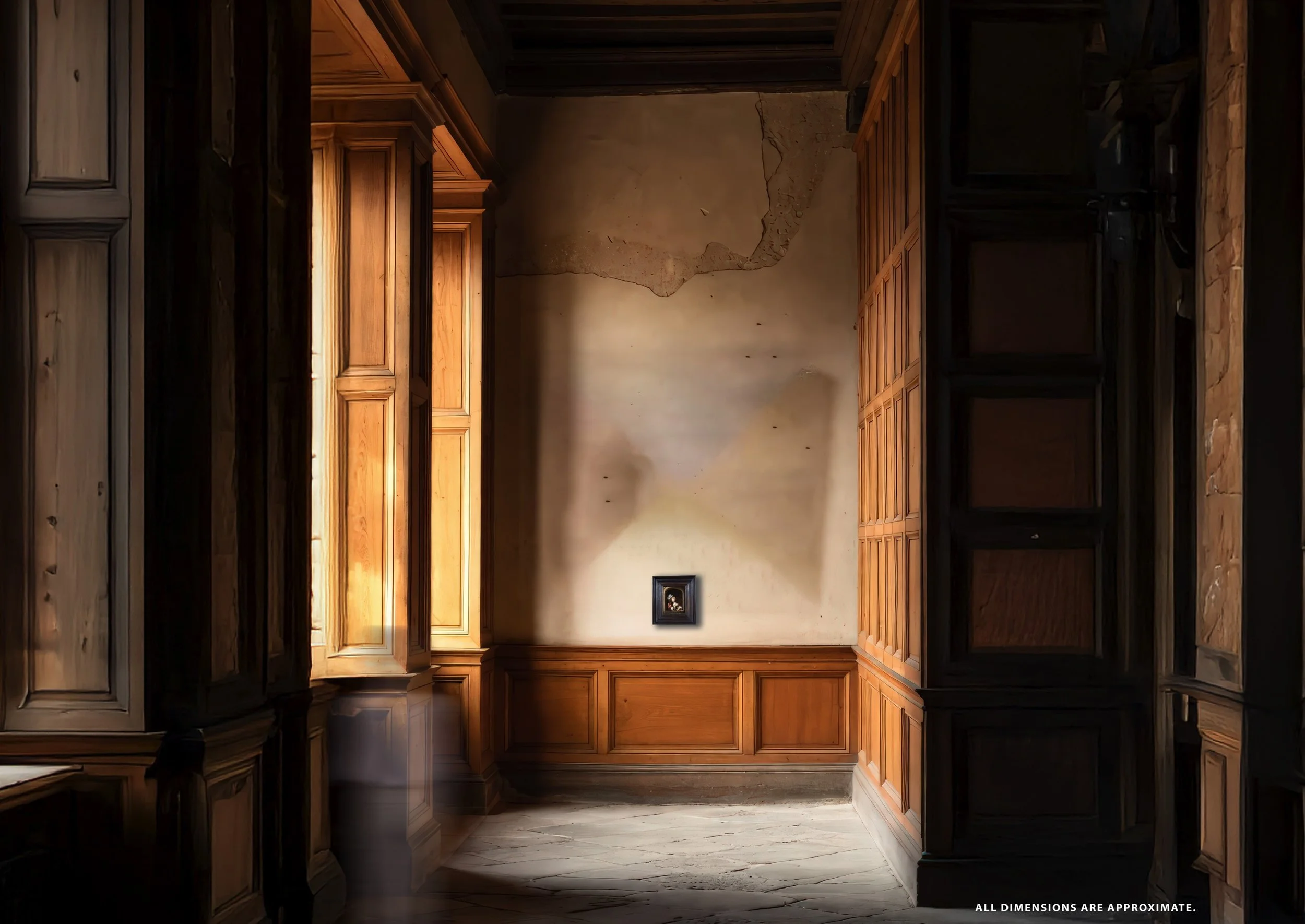 Image 12 of 18
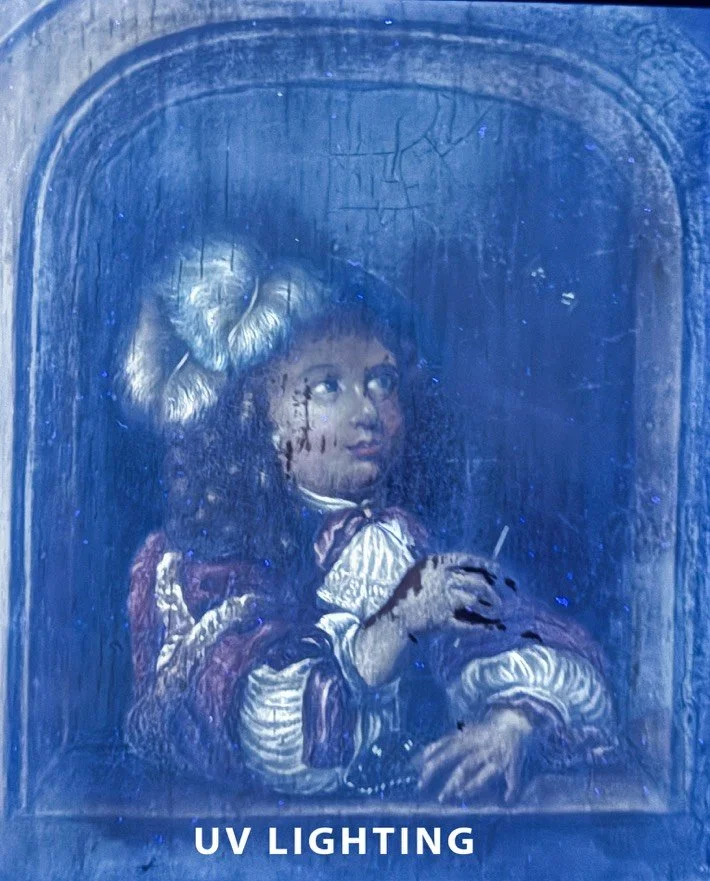 Image 13 of 18
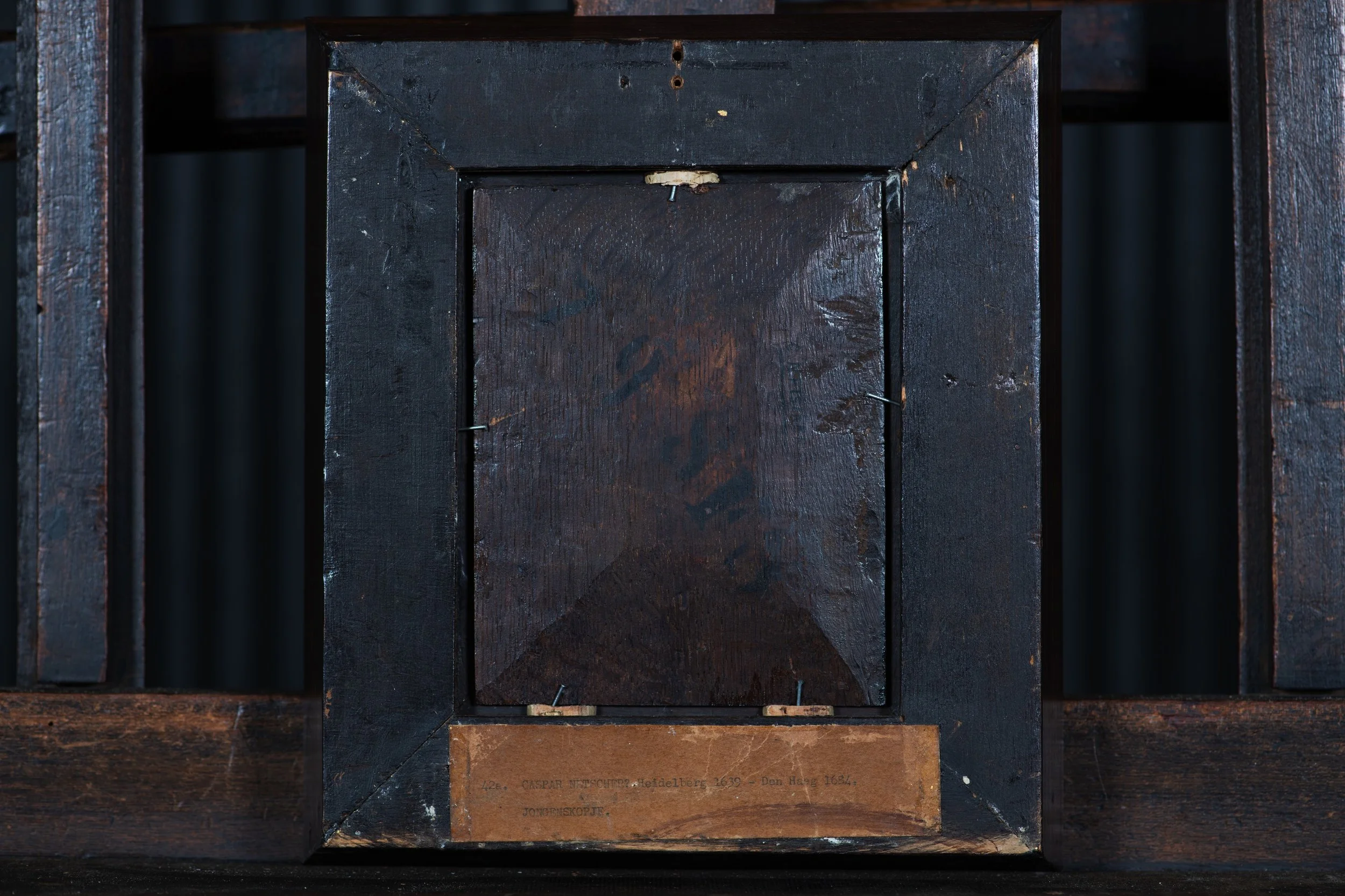 Image 14 of 18
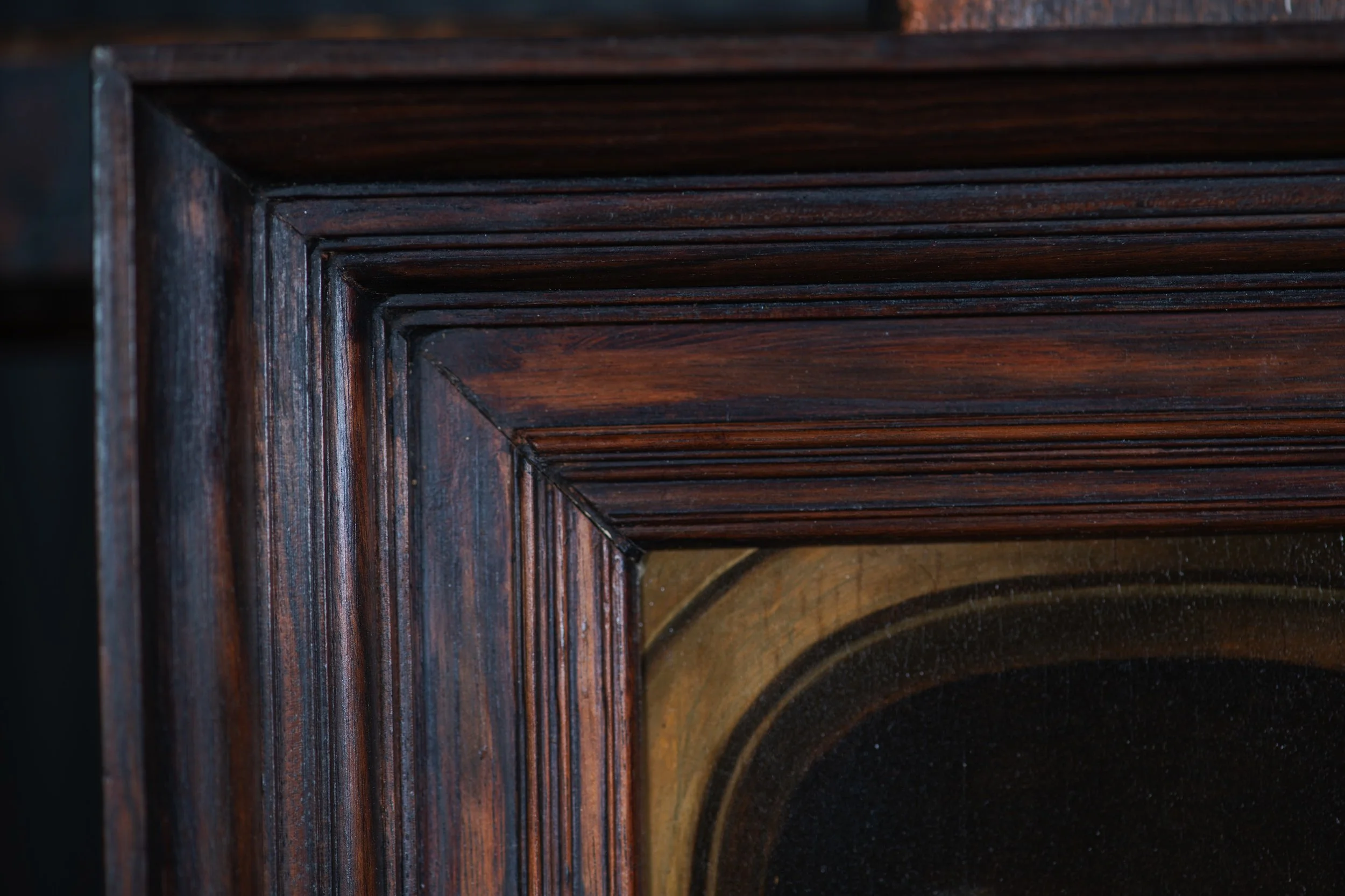 Image 15 of 18
 Image 16 of 18
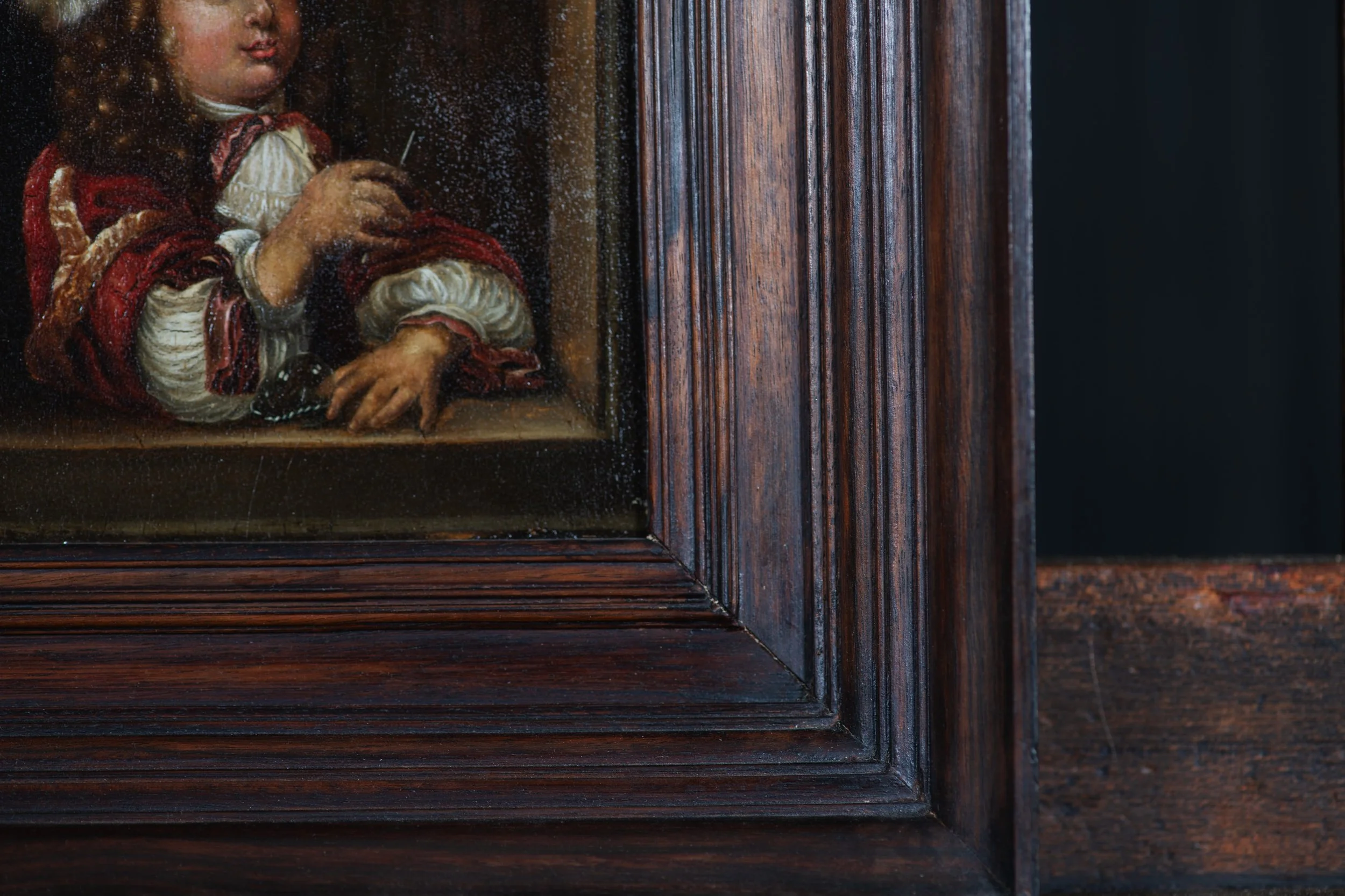 Image 17 of 18
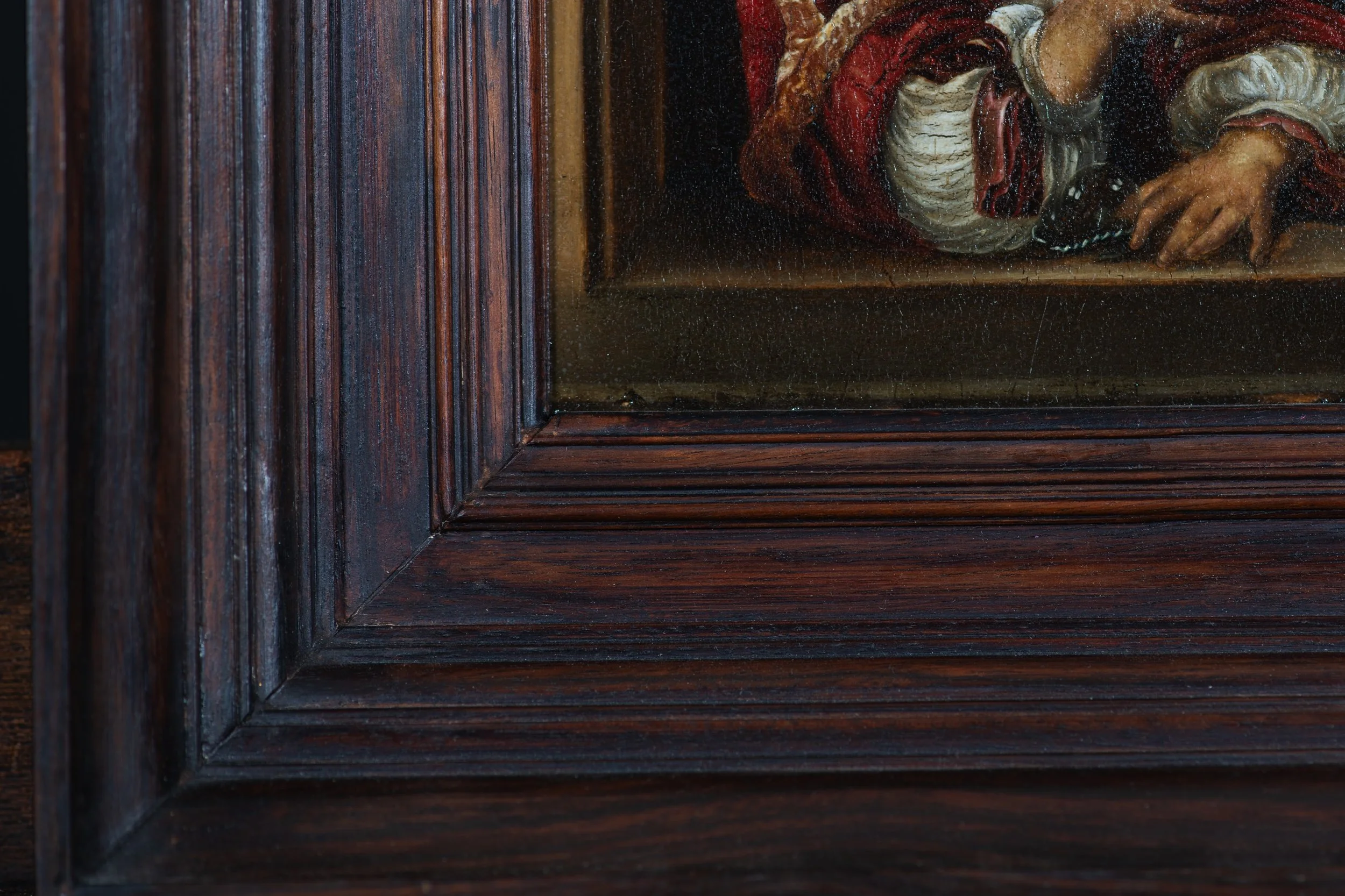 Image 18 of 18