CONTACT US
German School (18th–19th Century)
Friendship
Oil on canvas, approx. 100.5 × 78.5 cm (frame: 111.5 × 95 cm)
Unsigned – Romanticism
Introduction
This monumental painting from the German School of the late eighteenth to early nineteenth century is a distinguished example of early Romanticism, a movement defined by introspection, emotional depth, and a renewed appreciation for nature and idealised beauty. The refined emotional expression and the classically inspired idealisation reflect the cultural climate of the German lands at the time—a period in which literature, music, and painting intertwined to elevate sentiment into a central artistic principle. The depiction of two young women in an intimate embrace belongs to the sentimental genre scenes highly favoured in this era, where themes of companionship, morality, and virtue occupied a prominent place.
Detailed Description of the Work
Seated in a wooded landscape partly enveloped in soft dusk, two young women rest closely together. Their posture forms the emotional core of the composition: one woman places her arm gently yet protectively around the other, who inclines her head affectionately toward her companion in a gesture of trust and tenderness. The painter shapes this exchange with remarkable subtlety, achieving a perfect balance between expressive content and quiet restraint. Their facial features are delicately modelled, illuminated by subtle highlights that enhance the intimate, serene atmosphere.
Their attire, with flowing garments in blue, yellow, white, and red, shows clear classicising influences. The draperies evoke neoclassical ideals that dominated German art around 1800, reinforced by the period’s widespread admiration for the visual language of antiquity. Jewellery, floral wreaths, and elegant sashes further contribute to the timeless quality of the scene.
The landscape itself functions as a carefully constructed frame around the figures. Deep shadowed areas create atmospheric depth, executed with a near-tonal sensitivity that directs the viewer’s gaze toward the central duo. To the left, the scenery opens up into a pale band of light on the horizon—a distinctly Romantic device symbolising both the fragility of the moment and the infinite dimension of nature. The foreground, with its subtle vegetation and rocky textures, is convincingly rendered and demonstrates careful observation of natural forms.
Technique, Material & Colour Use
The painting is executed in oil on canvas with multiple layers and transparent glazes that lend depth to the darker passages. The refined palette supports both the mood of the woodland setting and the intimacy of the scene. Dominant earth tones—deep greens, warm browns, and muted ochres—contrast gracefully with the lighter hues of the garments. This balance creates visual harmony while allowing expressive accents to emerge. The flesh tones are smoothly modelled with soft transitions, indicating solid academic training and strong figurative command.
The surface shows a natural craquelure typical for works of this age. Under UV light, old retouchings are visible, particularly in the background and certain areas of the drapery. These restorations are consistent with the painting’s age and do not compromise the overall aesthetic integrity.
Composition & Stylistic Context within Art History
The structure of the composition rests on a classical triangular arrangement, with the two figures forming the visual and emotional anchor. The lighter opening of the landscape on the left acts as an atmospheric counterbalance to the denser woodland on the right, creating spatial dynamism characteristic of Romantic landscape settings.
Within the artistic landscape of German Romanticism, this approach reflects the intrinsic bond between human emotion and natural surroundings. Nature is presented not merely as a backdrop but as an expressive space mirroring inner sentiment. This painting aligns closely with such ideals and demonstrates the sensitivity and refinement often found in academic art from this period.
Stylistically, the work shows affinities with the elegance and emotional subtlety of Georg Friedrich Kersting, Johann Heinrich Wilhelm Tischbein, and internationally it shares thematic and aesthetic parallels with the refined Neo-classicism of Angelica Kauffman, Louis-Léopold Boilly.
Context of the German School
Although unsigned, the academic character of the brushwork, the classical drapery, the nuanced colour structure, and the distinctly Romantic atmosphere point convincingly to an artist trained within the German School around 1780–1830. Art academies in Dresden, Weimar, Munich, and Berlin played a major role in shaping a synthesis between neoclassical form and Romantic emotionality. The painting reflects these traditions with great clarity and can be regarded as a fine example of the transition from Classicism to early Romantic expression in German art.
Condition
The canvas is structurally stable, with a uniform craquelure consistent with its age. Under UV light, earlier retouches are visible, especially in the background and in several drapery passages. The paint layer is coherent and shows no significant instability. The reverse displays age-appropriate wear. The gilded classical frame enhances the work’s presentation and is stylistically appropriate for the period.
Conclusion
This painting is an exceptionally fine example of early German Romanticism, uniting nature, emotion, and idealised beauty with remarkable harmony. The portrayal of two young women in tender companionship embodies a timeless theme deeply rooted in European sensibility at the beginning of the nineteenth century. The combination of academic refinement, emotional depth, and a carefully constructed composition renders this work highly appealing to collectors of historical art. It is a compelling and museum-worthy piece that will undoubtedly attract broad international interest at a premium auction offered without reserve.
CONTACT US
German School (18th–19th Century)
Friendship
Oil on canvas, approx. 100.5 × 78.5 cm (frame: 111.5 × 95 cm)
Unsigned – Romanticism
Introduction
This monumental painting from the German School of the late eighteenth to early nineteenth century is a distinguished example of early Romanticism, a movement defined by introspection, emotional depth, and a renewed appreciation for nature and idealised beauty. The refined emotional expression and the classically inspired idealisation reflect the cultural climate of the German lands at the time—a period in which literature, music, and painting intertwined to elevate sentiment into a central artistic principle. The depiction of two young women in an intimate embrace belongs to the sentimental genre scenes highly favoured in this era, where themes of companionship, morality, and virtue occupied a prominent place.
Detailed Description of the Work
Seated in a wooded landscape partly enveloped in soft dusk, two young women rest closely together. Their posture forms the emotional core of the composition: one woman places her arm gently yet protectively around the other, who inclines her head affectionately toward her companion in a gesture of trust and tenderness. The painter shapes this exchange with remarkable subtlety, achieving a perfect balance between expressive content and quiet restraint. Their facial features are delicately modelled, illuminated by subtle highlights that enhance the intimate, serene atmosphere.
Their attire, with flowing garments in blue, yellow, white, and red, shows clear classicising influences. The draperies evoke neoclassical ideals that dominated German art around 1800, reinforced by the period’s widespread admiration for the visual language of antiquity. Jewellery, floral wreaths, and elegant sashes further contribute to the timeless quality of the scene.
The landscape itself functions as a carefully constructed frame around the figures. Deep shadowed areas create atmospheric depth, executed with a near-tonal sensitivity that directs the viewer’s gaze toward the central duo. To the left, the scenery opens up into a pale band of light on the horizon—a distinctly Romantic device symbolising both the fragility of the moment and the infinite dimension of nature. The foreground, with its subtle vegetation and rocky textures, is convincingly rendered and demonstrates careful observation of natural forms.
Technique, Material & Colour Use
The painting is executed in oil on canvas with multiple layers and transparent glazes that lend depth to the darker passages. The refined palette supports both the mood of the woodland setting and the intimacy of the scene. Dominant earth tones—deep greens, warm browns, and muted ochres—contrast gracefully with the lighter hues of the garments. This balance creates visual harmony while allowing expressive accents to emerge. The flesh tones are smoothly modelled with soft transitions, indicating solid academic training and strong figurative command.
The surface shows a natural craquelure typical for works of this age. Under UV light, old retouchings are visible, particularly in the background and certain areas of the drapery. These restorations are consistent with the painting’s age and do not compromise the overall aesthetic integrity.
Composition & Stylistic Context within Art History
The structure of the composition rests on a classical triangular arrangement, with the two figures forming the visual and emotional anchor. The lighter opening of the landscape on the left acts as an atmospheric counterbalance to the denser woodland on the right, creating spatial dynamism characteristic of Romantic landscape settings.
Within the artistic landscape of German Romanticism, this approach reflects the intrinsic bond between human emotion and natural surroundings. Nature is presented not merely as a backdrop but as an expressive space mirroring inner sentiment. This painting aligns closely with such ideals and demonstrates the sensitivity and refinement often found in academic art from this period.
Stylistically, the work shows affinities with the elegance and emotional subtlety of Georg Friedrich Kersting, Johann Heinrich Wilhelm Tischbein, and internationally it shares thematic and aesthetic parallels with the refined Neo-classicism of Angelica Kauffman, Louis-Léopold Boilly.
Context of the German School
Although unsigned, the academic character of the brushwork, the classical drapery, the nuanced colour structure, and the distinctly Romantic atmosphere point convincingly to an artist trained within the German School around 1780–1830. Art academies in Dresden, Weimar, Munich, and Berlin played a major role in shaping a synthesis between neoclassical form and Romantic emotionality. The painting reflects these traditions with great clarity and can be regarded as a fine example of the transition from Classicism to early Romantic expression in German art.
Condition
The canvas is structurally stable, with a uniform craquelure consistent with its age. Under UV light, earlier retouches are visible, especially in the background and in several drapery passages. The paint layer is coherent and shows no significant instability. The reverse displays age-appropriate wear. The gilded classical frame enhances the work’s presentation and is stylistically appropriate for the period.
Conclusion
This painting is an exceptionally fine example of early German Romanticism, uniting nature, emotion, and idealised beauty with remarkable harmony. The portrayal of two young women in tender companionship embodies a timeless theme deeply rooted in European sensibility at the beginning of the nineteenth century. The combination of academic refinement, emotional depth, and a carefully constructed composition renders this work highly appealing to collectors of historical art. It is a compelling and museum-worthy piece that will undoubtedly attract broad international interest at a premium auction offered without reserve.

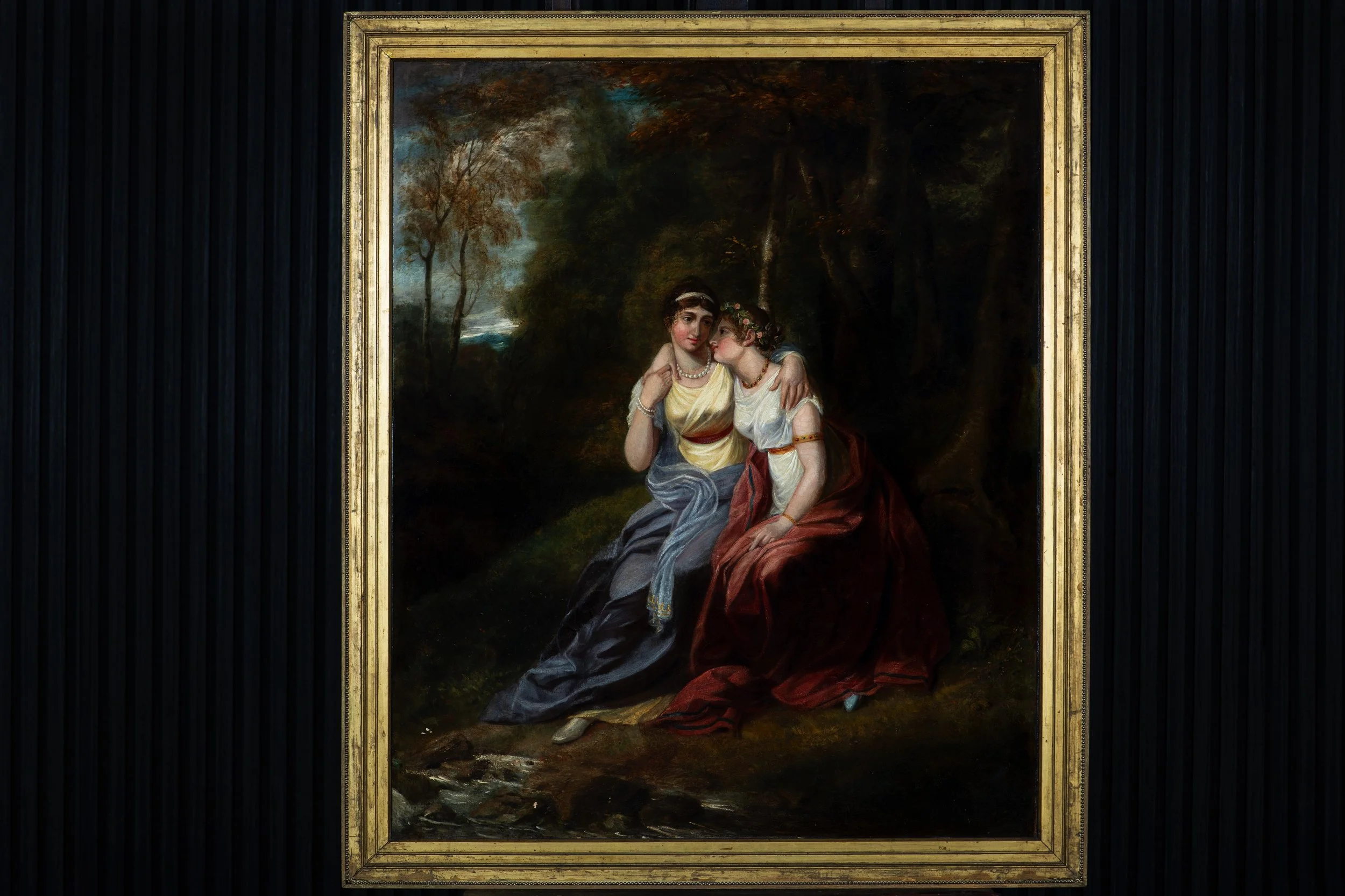 Image 1 of 20
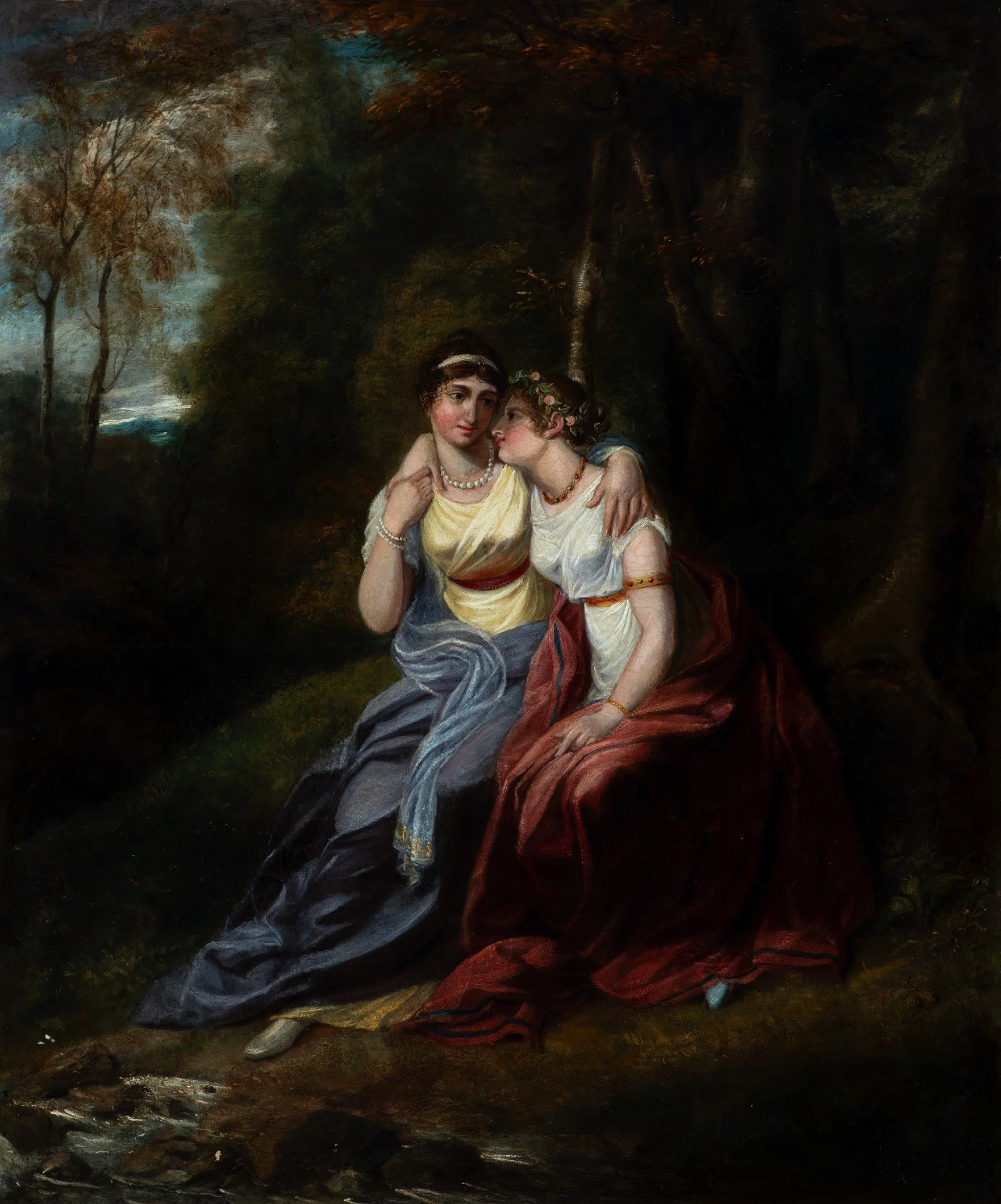 Image 2 of 20
 Image 3 of 20
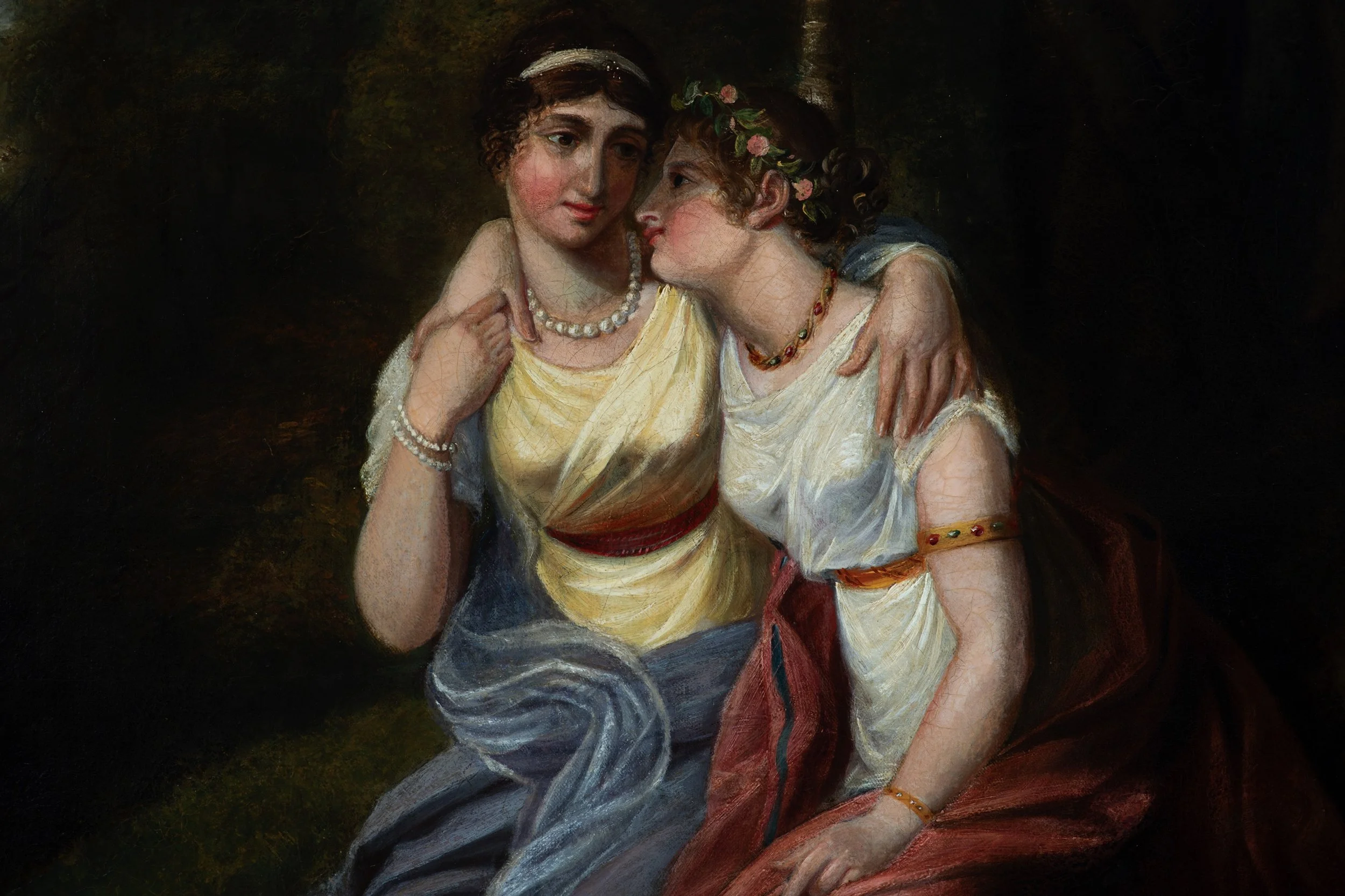 Image 4 of 20
 Image 5 of 20
 Image 6 of 20
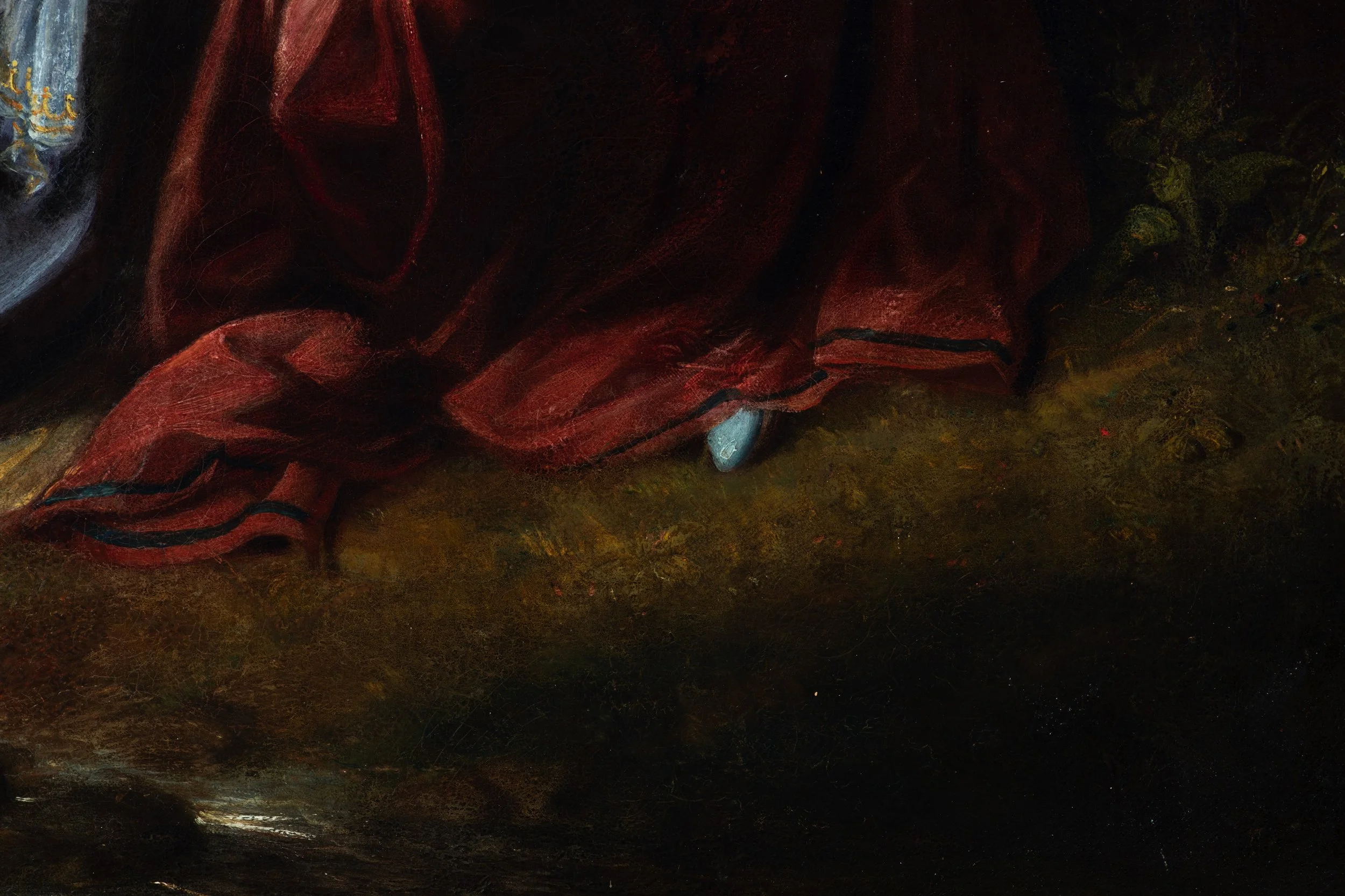 Image 7 of 20
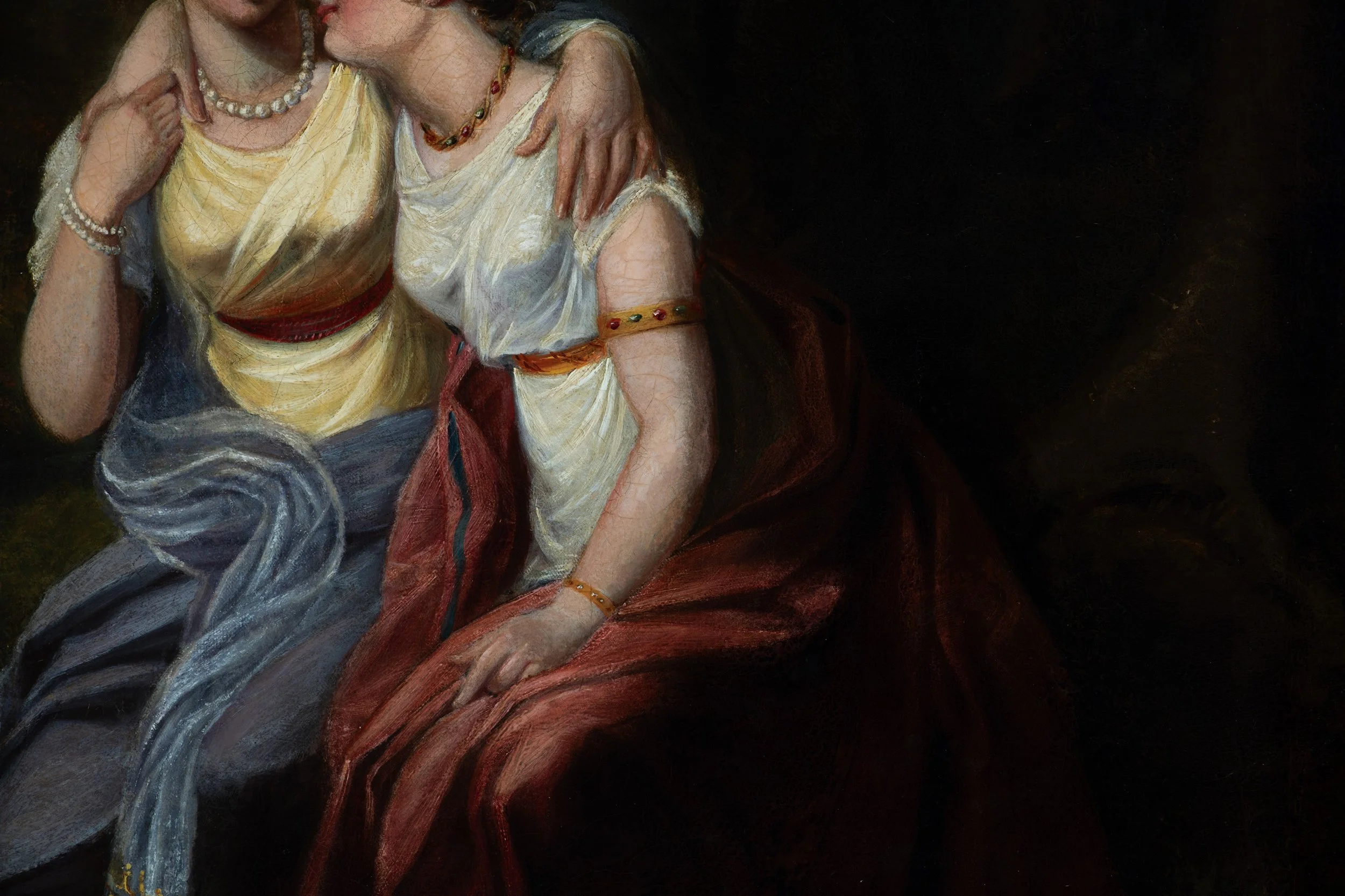 Image 8 of 20
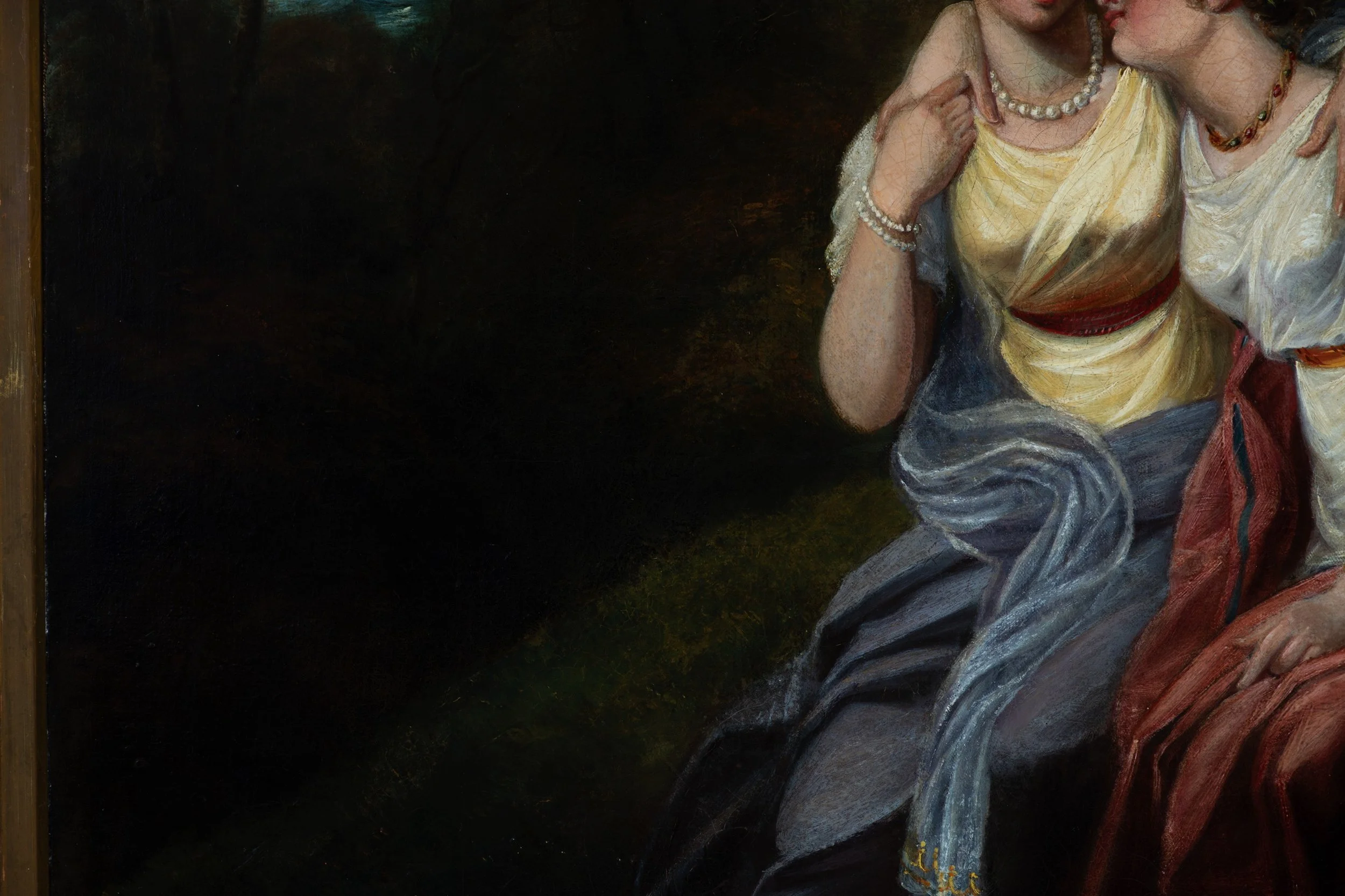 Image 9 of 20
 Image 10 of 20
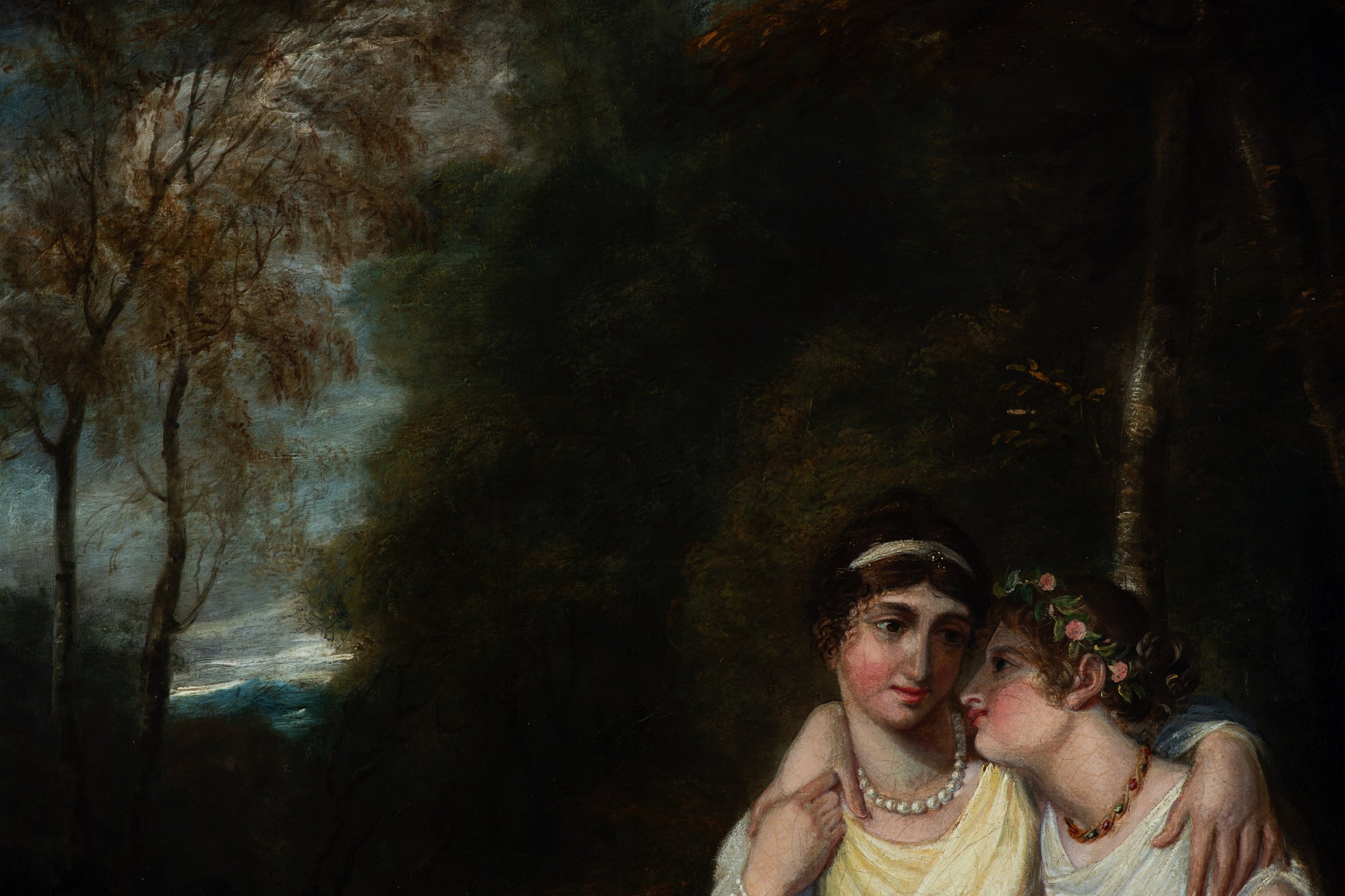 Image 11 of 20
 Image 12 of 20
 Image 13 of 20
 Image 14 of 20
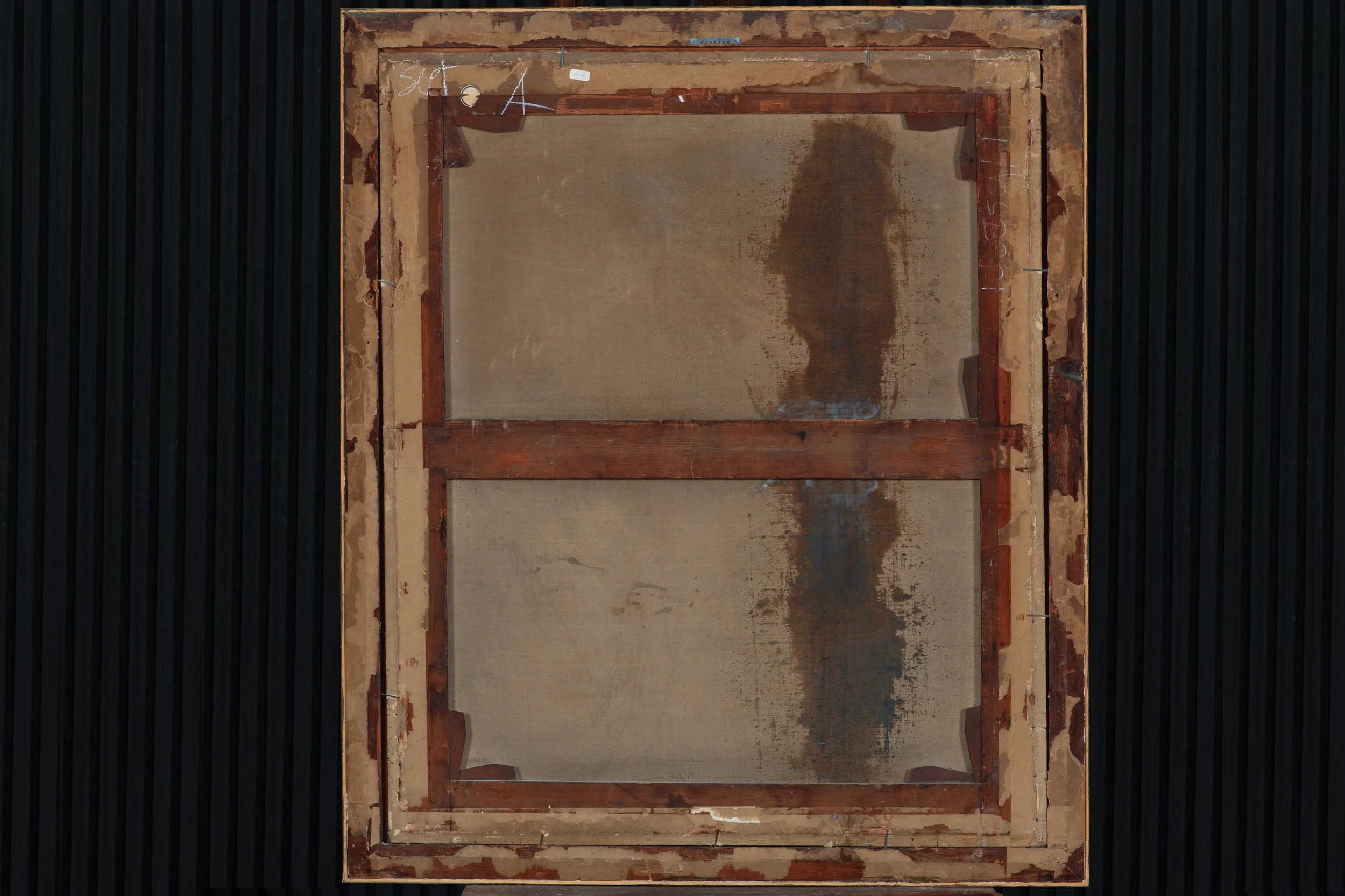 Image 15 of 20
 Image 16 of 20
 Image 17 of 20
 Image 18 of 20
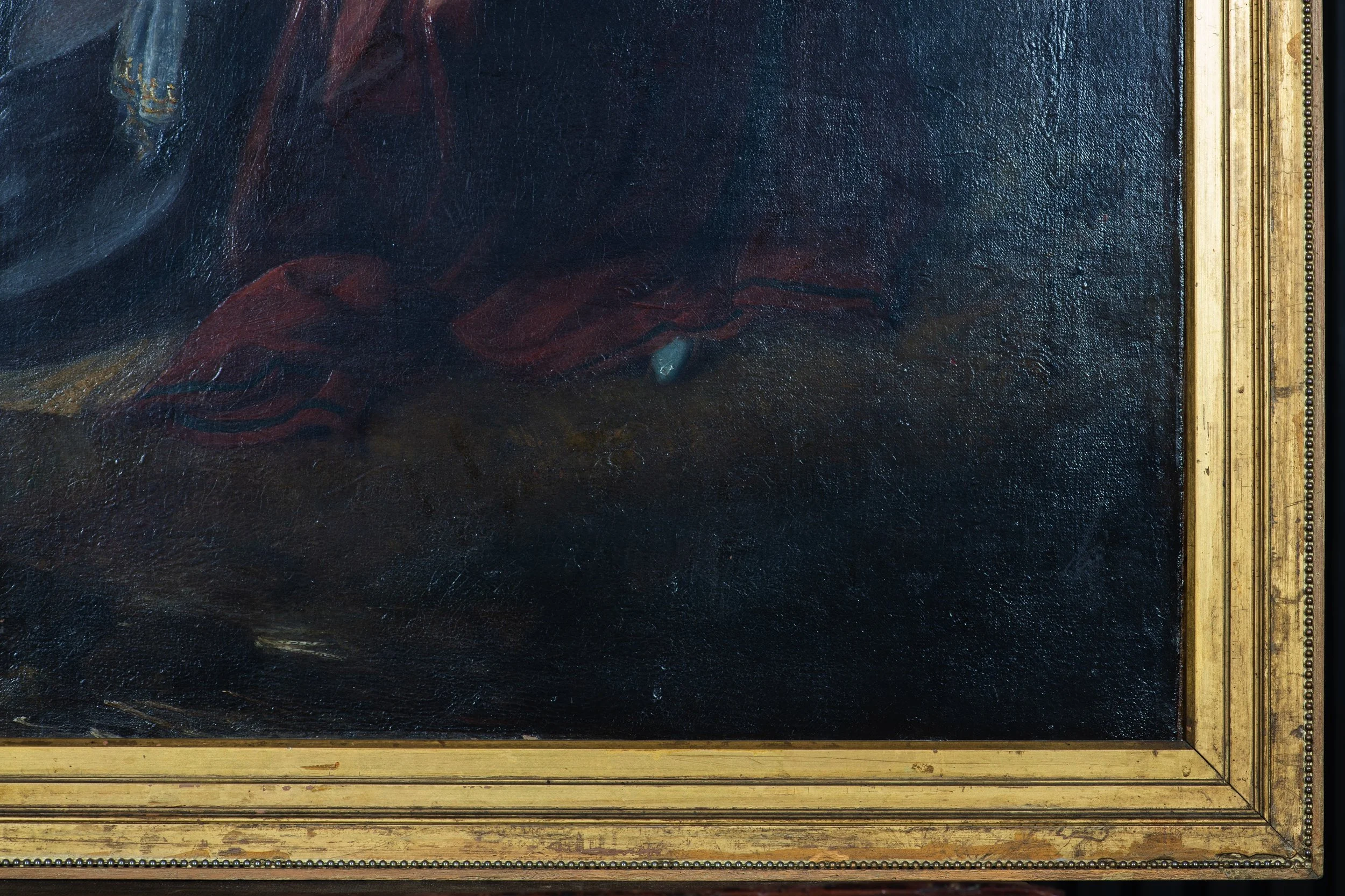 Image 19 of 20
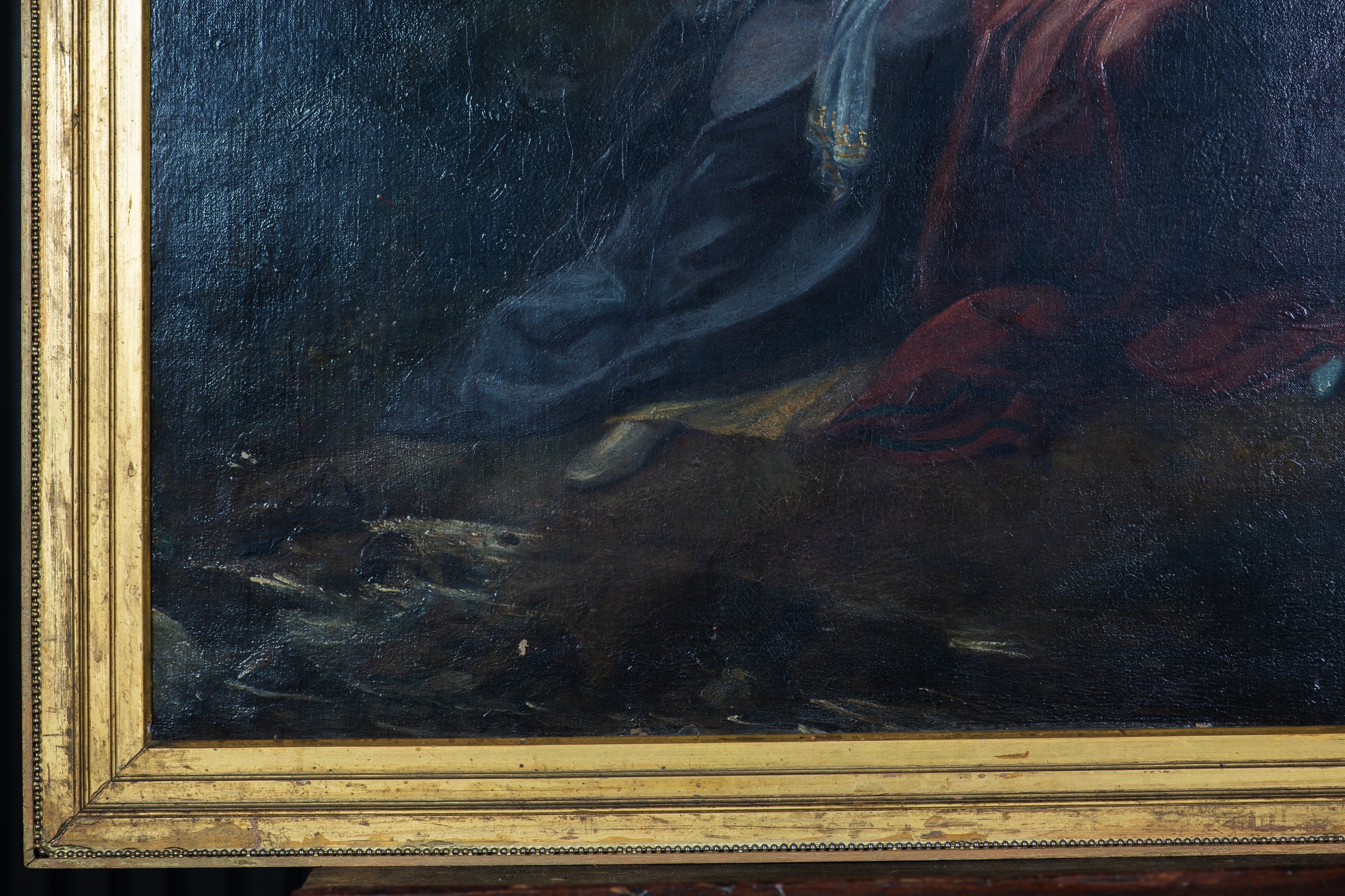 Image 20 of 20