CONTACT US
Circle of Jacob Maris (1837–1899)
The Farmer’s Wife and Her Cattle
Oil on canvas – Hague School
Professionally restored; relined; retouching visible under UV; presented in a museum-quality gilt frame
Introduction
This atmospheric rural scene, executed within the artistic orbit of Jacob Maris, exemplifies the qualities that made the Hague School a defining force in nineteenth-century Dutch painting. The subtle interplay between light, landscape and everyday agricultural life places the work firmly within the tonal and naturalistic tradition that Maris helped shape. As one of the central figures of the Hague School, Jacob Maris championed a restrained realism in which mood, luminosity and tonal harmony were paramount. This painting reflects those principles with remarkable fidelity.
Description of the Work
The composition depicts a farmer’s wife guiding three cows along a sandy path, moving directly towards the viewer. The robust animals — rendered with lively, varied brushwork — form a monumental foreground group that anchors the scene. The woman, modest in scale yet confidently painted, naturally occupies her place within the agrarian setting, her basket and attire evoking the rhythm of rural labour.
Behind them, the landscape opens in expansive horizontal bands: soft green meadows, farm buildings and haystacks, and a luminous horizon where land blends seamlessly into sky. The painter has devoted particular care to atmospheric perspective, creating a convincing sense of depth and spaciousness that is characteristic of Hague School landscape painting.
Technique and Colour Palette
The technique reflects the tonal naturalism closely associated with Jacob Maris and his circle. The paint layers combine textured, impasto passages — especially in the cattle and foreground vegetation — with thinner, more transparent applications in the sky and distance. Natural craquelure across the surface attests to the work’s age and authentic material character.
The palette is dominated by muted earth tones, grey-greens, and nuanced blues, supported by warm brown and white accents. The sky — a crucial component in Maris’s oeuvre — is executed with broad, almost impressionistic strokes that imbue the work with vitality. Light and shadow are carefully balanced, particularly in the depiction of the cattle and the sunlit path, enhancing both realism and poetic atmosphere.
Composition and Artistic Context
The composition is deliberately balanced: the cattle form a sculptural, frontal grouping, creating immediate engagement with the viewer. The diagonal position of the farmer’s wife introduces movement and leads the eye back through the landscape and upward into the expansive sky. The trees on either side frame the central motif and reinforce the natural structure of the scene.
This pictorial approach is quintessentially Hague School: understated, atmospheric, and grounded in the quiet grandeur of the Dutch landscape. The subdued palette and tonal coherence place the painting squarely within the tradition that Jacob Maris helped define. National contemporaries: Anton Mauve, Willem Maris, J.H. Weissenbruch. International counterparts: Jean-Baptiste-Camille Corot, Charles-François Daubigny.
The Artist and His Circle
Jacob Maris trained at the Royal Academy of Art in The Hague and spent formative periods in Belgium and France. His time in Paris exposed him to French Realism and the Barbizon School, influences that left a lasting imprint on his treatment of light and atmosphere. Upon returning to the Netherlands, he became a central figure of the Hague School, shaping its tonal landscape aesthetic and inspiring a circle of followers and pupils.
The present work belongs stylistically to this circle. Its tonal subtlety, atmospheric sky, and sympathetic portrayal of rural life demonstrate clear affinity with Maris’s artistic vision and with the broader movement that evolved around him.
Condition
The painting has been professionally restored and is in stable condition. The canvas has been relined for structural reinforcement. Under UV light, retouching is visible in the sky and select landscape areas, executed with professional care. The natural craquelure of the paint surface is consistent with age and complements the work’s material authenticity.
Presentation
The painting is housed in a finely carved, museum-quality gilt frame that complements the aesthetic language of the Hague School. This presentation heightens its visual impact and makes it suitable for display in both private collections and institutional settings.
Conclusion
This work from the circle of Jacob Maris stands as a refined example of the atmospheric subtlety and poetic realism that define the Hague School. Its harmonious tonal structure, accomplished technique and evocative portrayal of rural life give it a timeless character. Elegantly framed and sensitively restored, it represents a distinguished and collection-worthy piece for any setting where Dutch nineteenth-century painting is appreciated.
CONTACT US
Circle of Jacob Maris (1837–1899)
The Farmer’s Wife and Her Cattle
Oil on canvas – Hague School
Professionally restored; relined; retouching visible under UV; presented in a museum-quality gilt frame
Introduction
This atmospheric rural scene, executed within the artistic orbit of Jacob Maris, exemplifies the qualities that made the Hague School a defining force in nineteenth-century Dutch painting. The subtle interplay between light, landscape and everyday agricultural life places the work firmly within the tonal and naturalistic tradition that Maris helped shape. As one of the central figures of the Hague School, Jacob Maris championed a restrained realism in which mood, luminosity and tonal harmony were paramount. This painting reflects those principles with remarkable fidelity.
Description of the Work
The composition depicts a farmer’s wife guiding three cows along a sandy path, moving directly towards the viewer. The robust animals — rendered with lively, varied brushwork — form a monumental foreground group that anchors the scene. The woman, modest in scale yet confidently painted, naturally occupies her place within the agrarian setting, her basket and attire evoking the rhythm of rural labour.
Behind them, the landscape opens in expansive horizontal bands: soft green meadows, farm buildings and haystacks, and a luminous horizon where land blends seamlessly into sky. The painter has devoted particular care to atmospheric perspective, creating a convincing sense of depth and spaciousness that is characteristic of Hague School landscape painting.
Technique and Colour Palette
The technique reflects the tonal naturalism closely associated with Jacob Maris and his circle. The paint layers combine textured, impasto passages — especially in the cattle and foreground vegetation — with thinner, more transparent applications in the sky and distance. Natural craquelure across the surface attests to the work’s age and authentic material character.
The palette is dominated by muted earth tones, grey-greens, and nuanced blues, supported by warm brown and white accents. The sky — a crucial component in Maris’s oeuvre — is executed with broad, almost impressionistic strokes that imbue the work with vitality. Light and shadow are carefully balanced, particularly in the depiction of the cattle and the sunlit path, enhancing both realism and poetic atmosphere.
Composition and Artistic Context
The composition is deliberately balanced: the cattle form a sculptural, frontal grouping, creating immediate engagement with the viewer. The diagonal position of the farmer’s wife introduces movement and leads the eye back through the landscape and upward into the expansive sky. The trees on either side frame the central motif and reinforce the natural structure of the scene.
This pictorial approach is quintessentially Hague School: understated, atmospheric, and grounded in the quiet grandeur of the Dutch landscape. The subdued palette and tonal coherence place the painting squarely within the tradition that Jacob Maris helped define. National contemporaries: Anton Mauve, Willem Maris, J.H. Weissenbruch. International counterparts: Jean-Baptiste-Camille Corot, Charles-François Daubigny.
The Artist and His Circle
Jacob Maris trained at the Royal Academy of Art in The Hague and spent formative periods in Belgium and France. His time in Paris exposed him to French Realism and the Barbizon School, influences that left a lasting imprint on his treatment of light and atmosphere. Upon returning to the Netherlands, he became a central figure of the Hague School, shaping its tonal landscape aesthetic and inspiring a circle of followers and pupils.
The present work belongs stylistically to this circle. Its tonal subtlety, atmospheric sky, and sympathetic portrayal of rural life demonstrate clear affinity with Maris’s artistic vision and with the broader movement that evolved around him.
Condition
The painting has been professionally restored and is in stable condition. The canvas has been relined for structural reinforcement. Under UV light, retouching is visible in the sky and select landscape areas, executed with professional care. The natural craquelure of the paint surface is consistent with age and complements the work’s material authenticity.
Presentation
The painting is housed in a finely carved, museum-quality gilt frame that complements the aesthetic language of the Hague School. This presentation heightens its visual impact and makes it suitable for display in both private collections and institutional settings.
Conclusion
This work from the circle of Jacob Maris stands as a refined example of the atmospheric subtlety and poetic realism that define the Hague School. Its harmonious tonal structure, accomplished technique and evocative portrayal of rural life give it a timeless character. Elegantly framed and sensitively restored, it represents a distinguished and collection-worthy piece for any setting where Dutch nineteenth-century painting is appreciated.

 Image 1 of 25
 Image 2 of 25
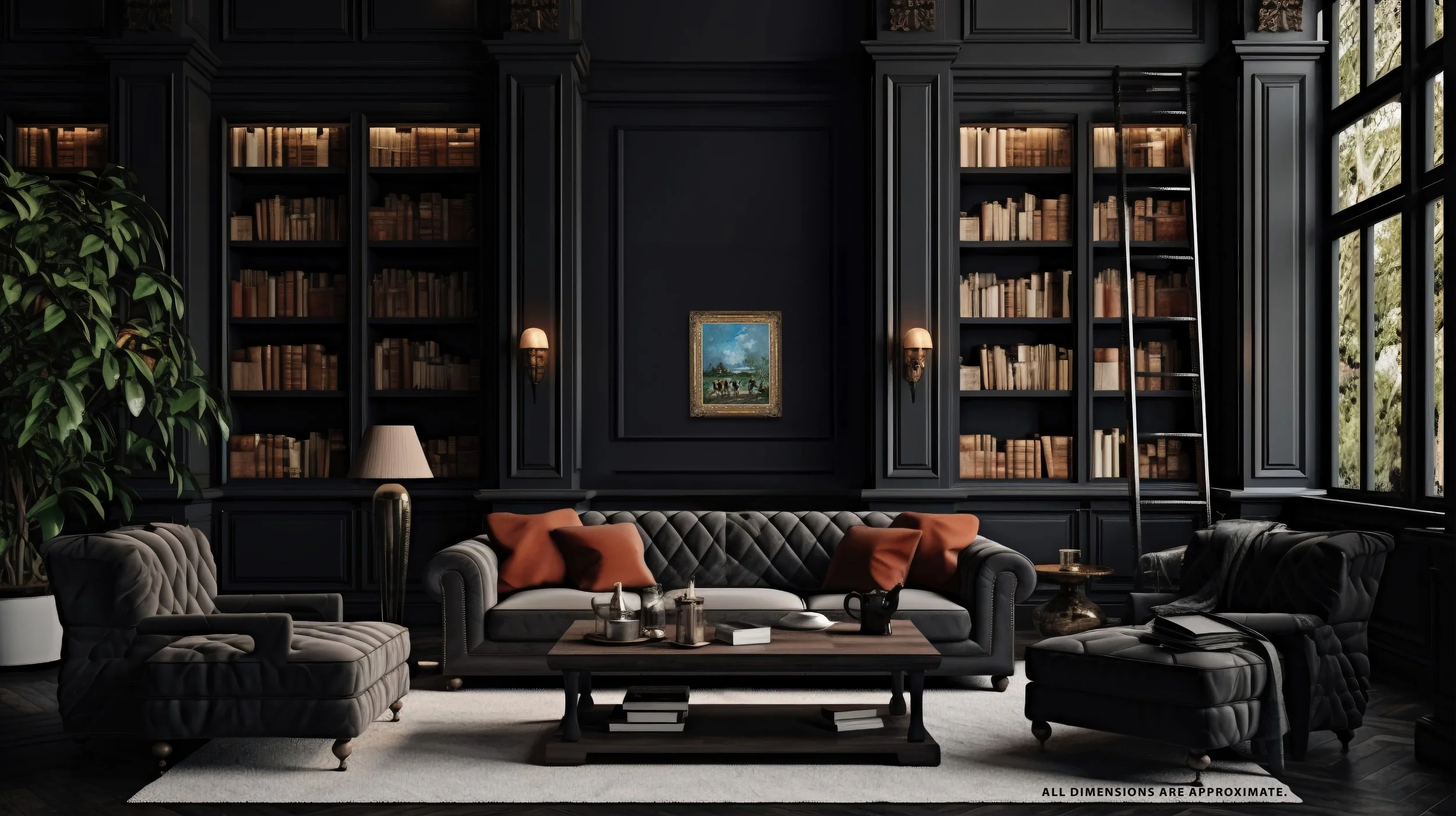 Image 3 of 25
 Image 4 of 25
 Image 5 of 25
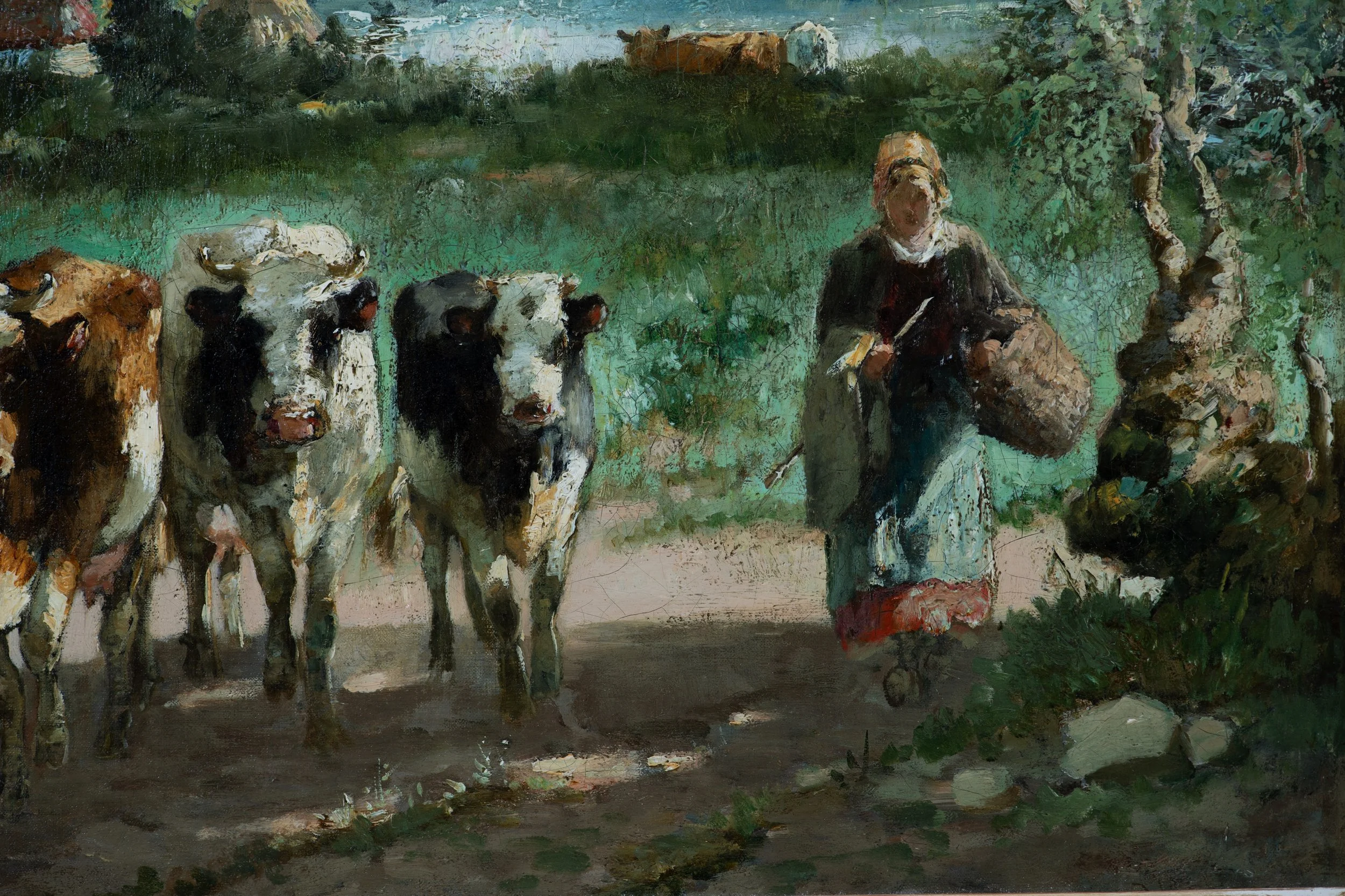 Image 6 of 25
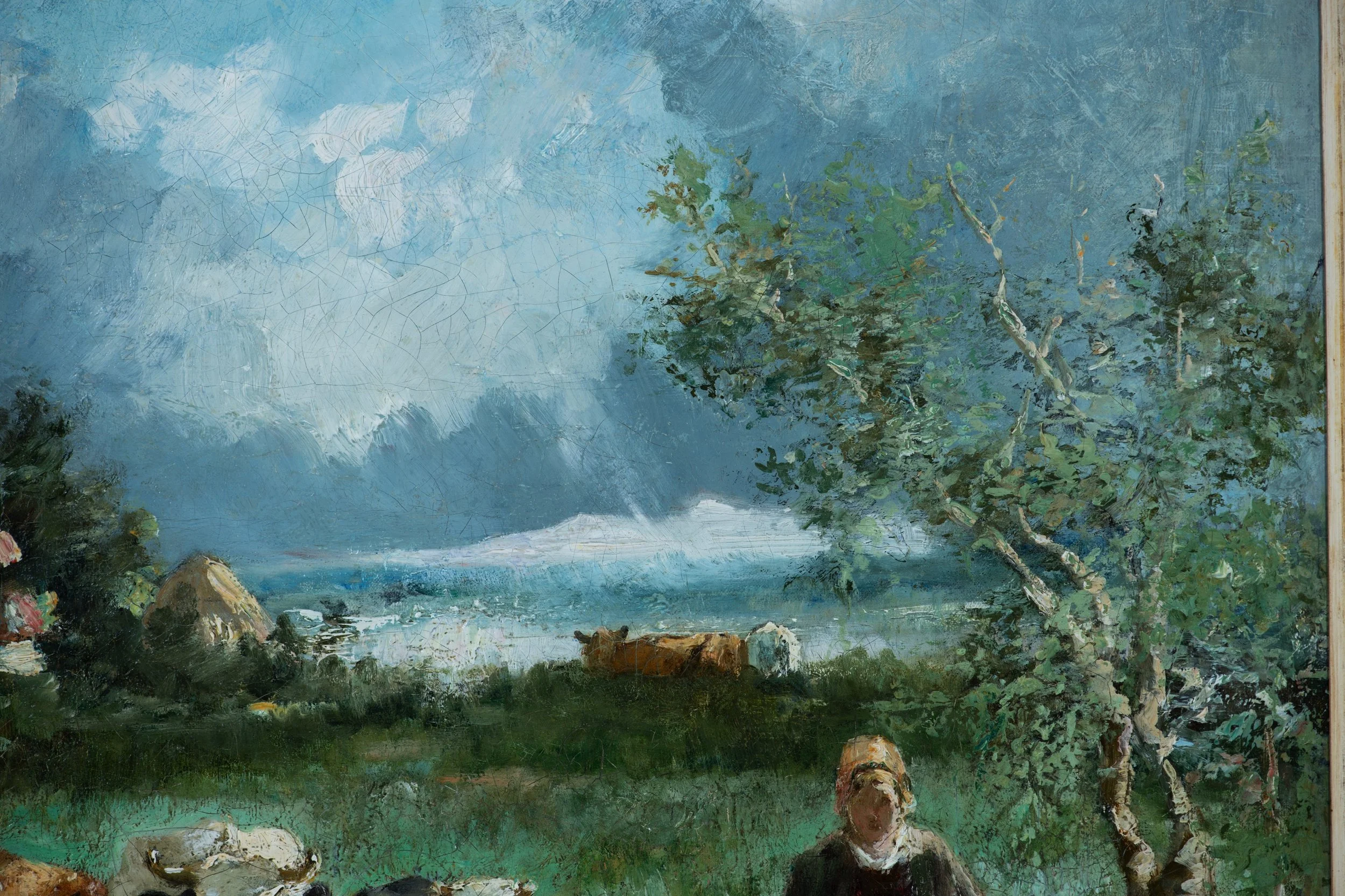 Image 7 of 25
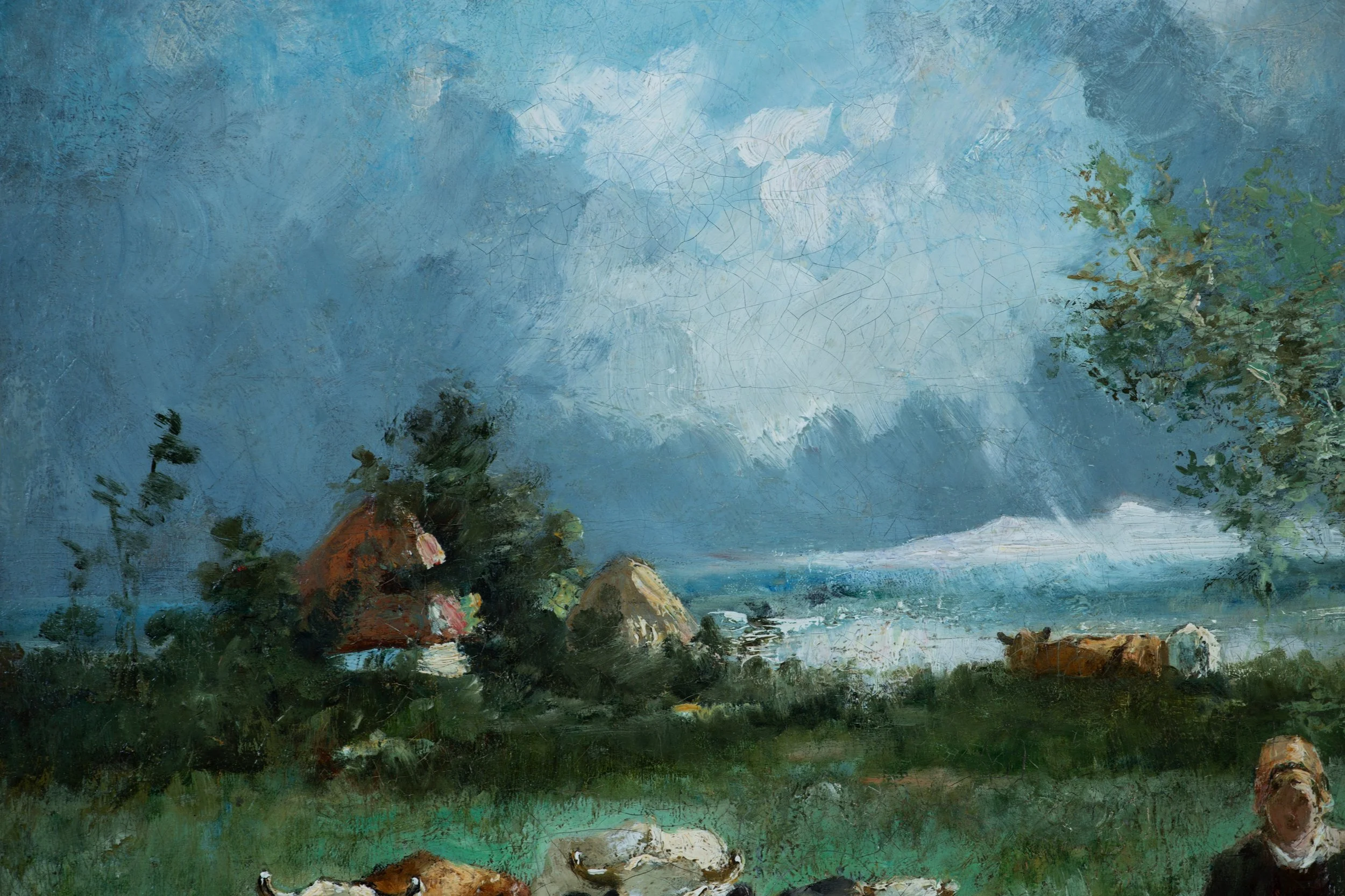 Image 8 of 25
 Image 9 of 25
 Image 10 of 25
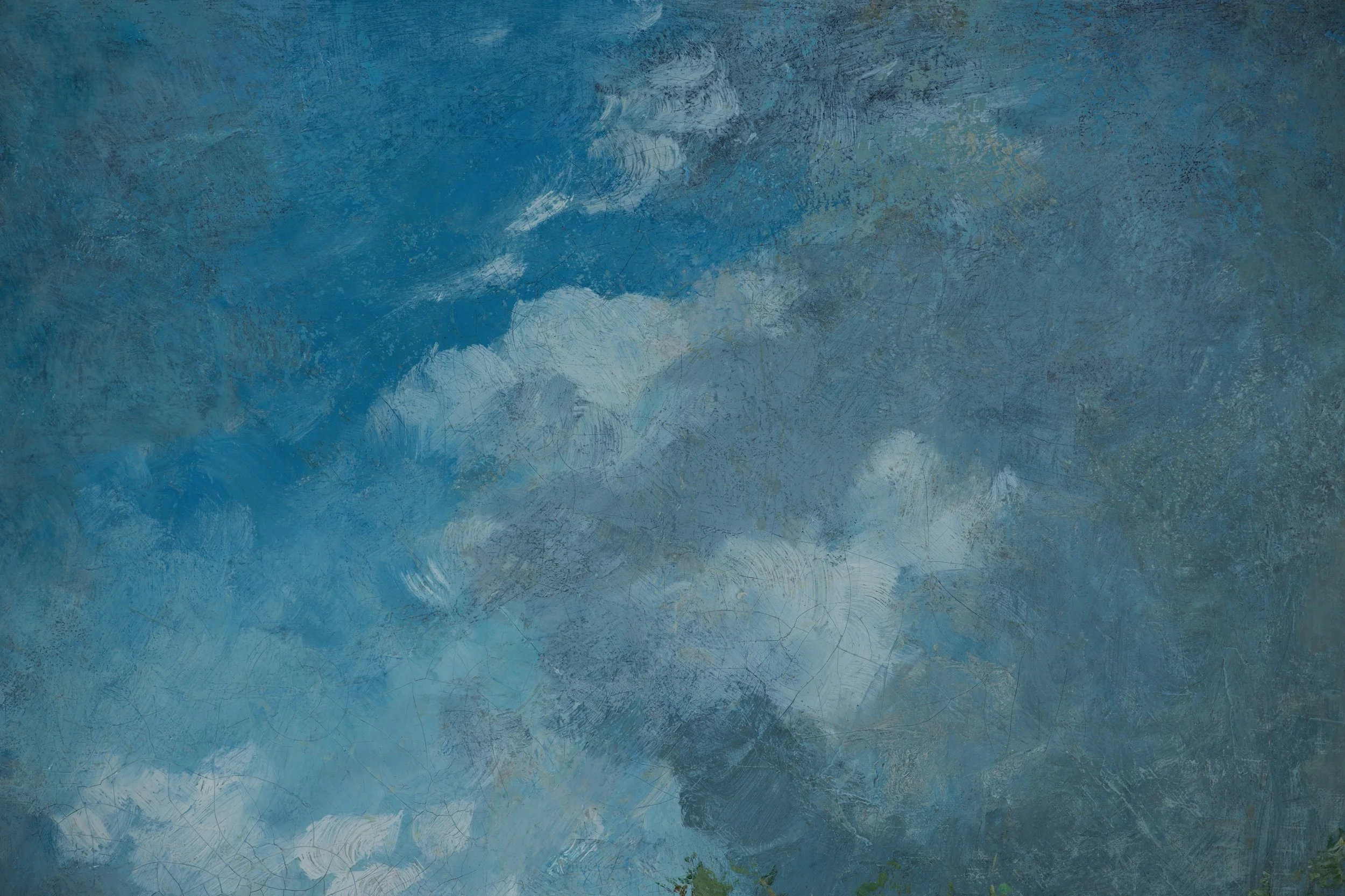 Image 11 of 25
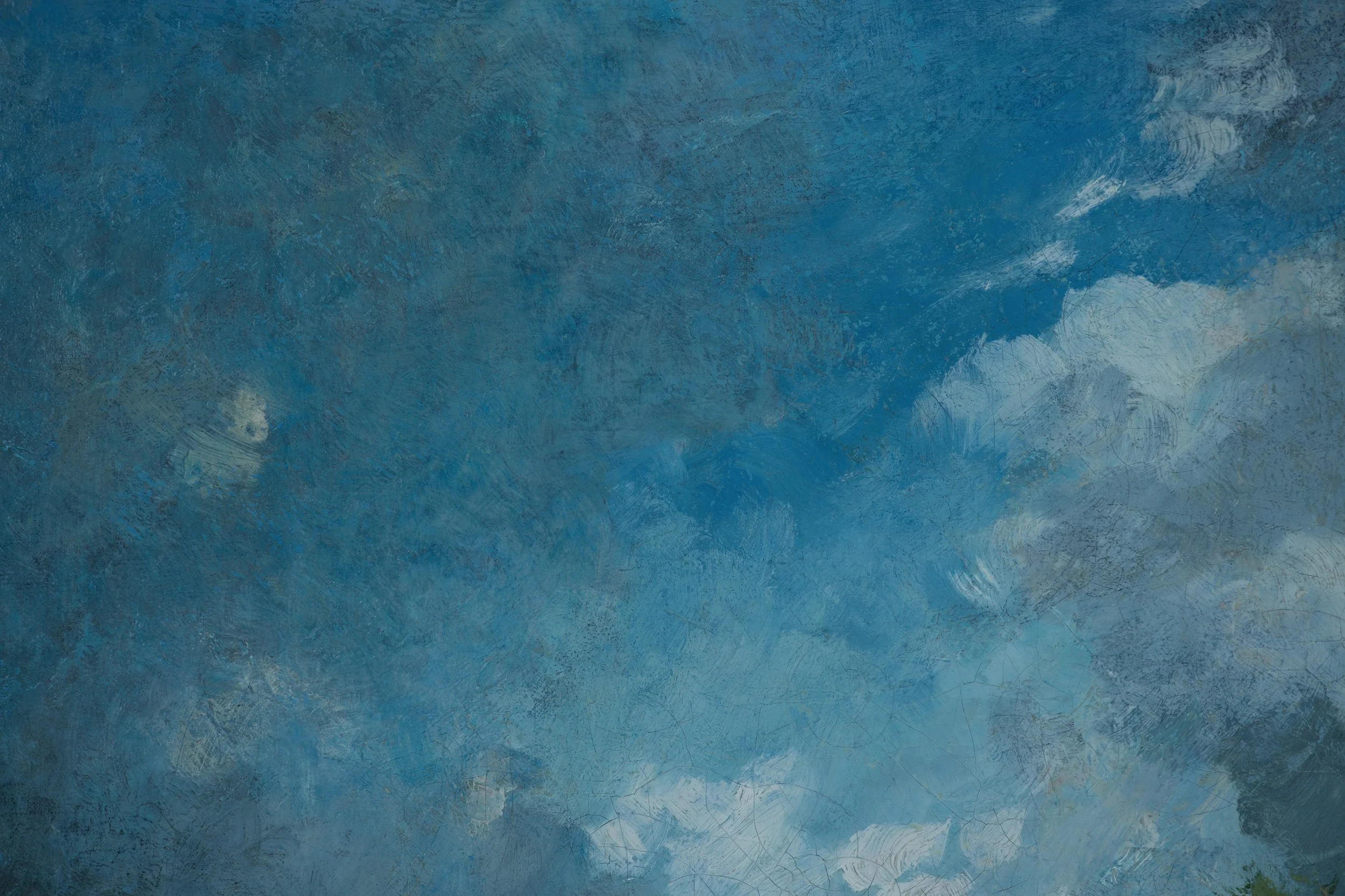 Image 12 of 25
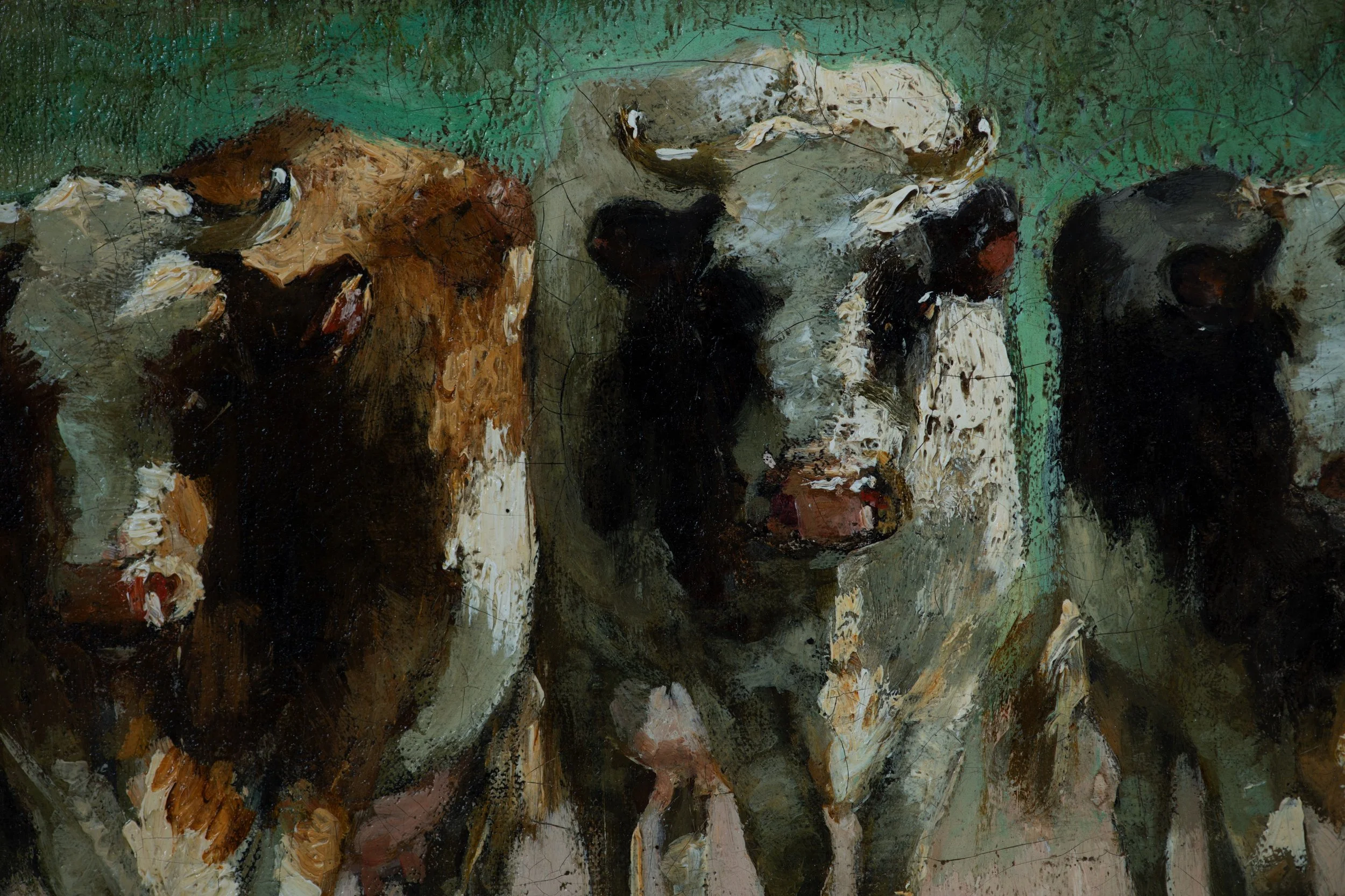 Image 13 of 25
 Image 14 of 25
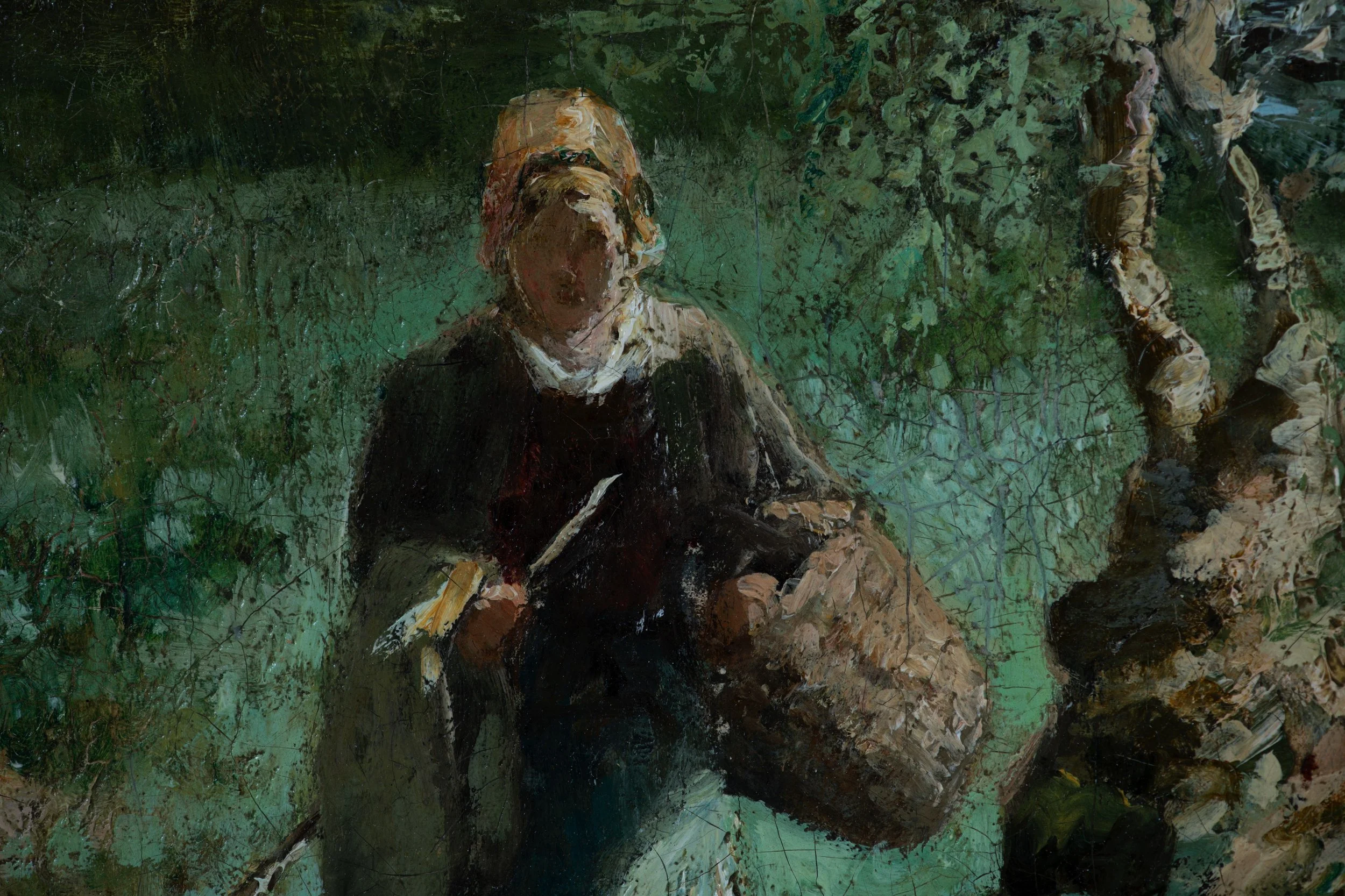 Image 15 of 25
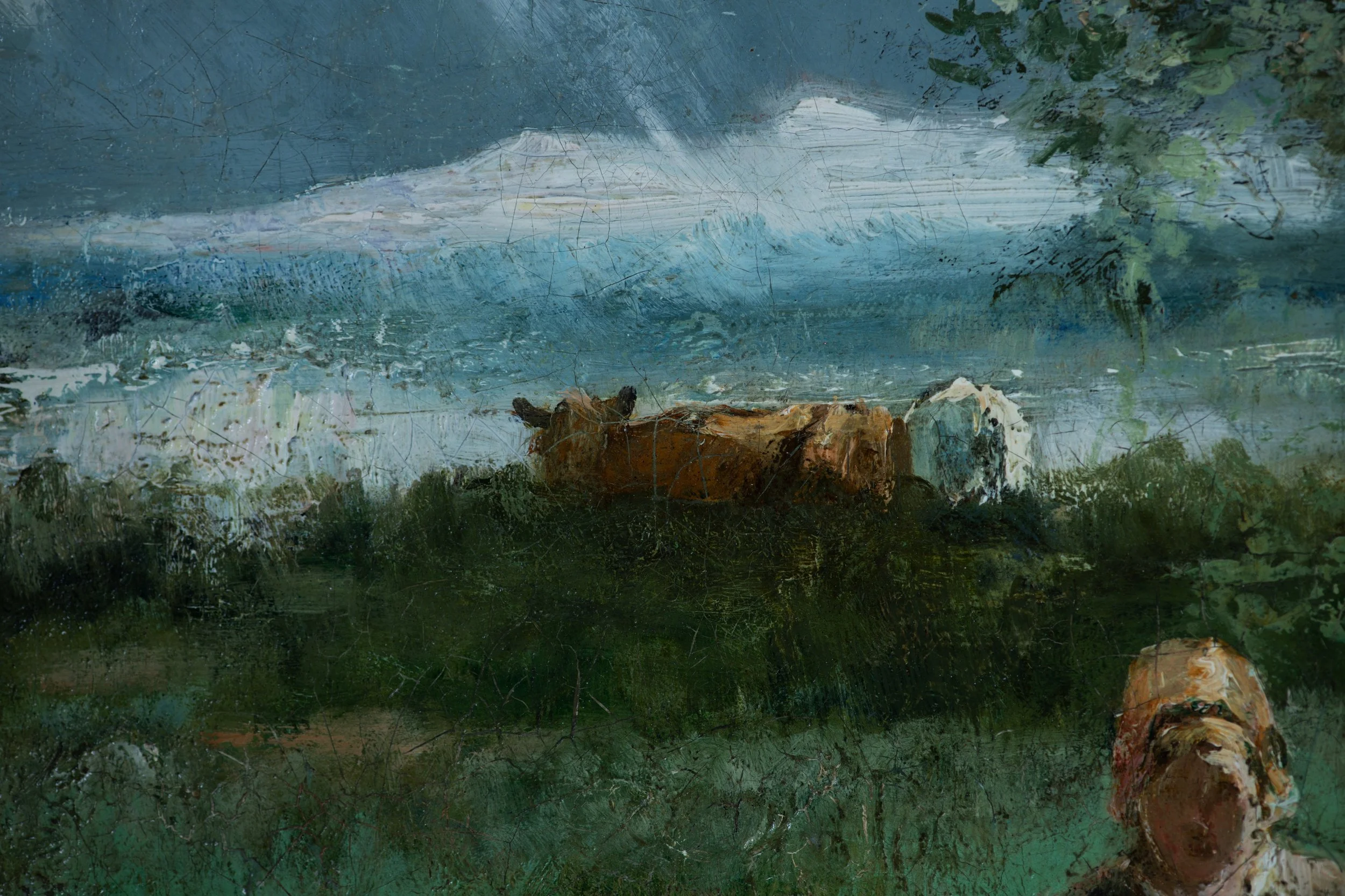 Image 16 of 25
 Image 17 of 25
 Image 18 of 25
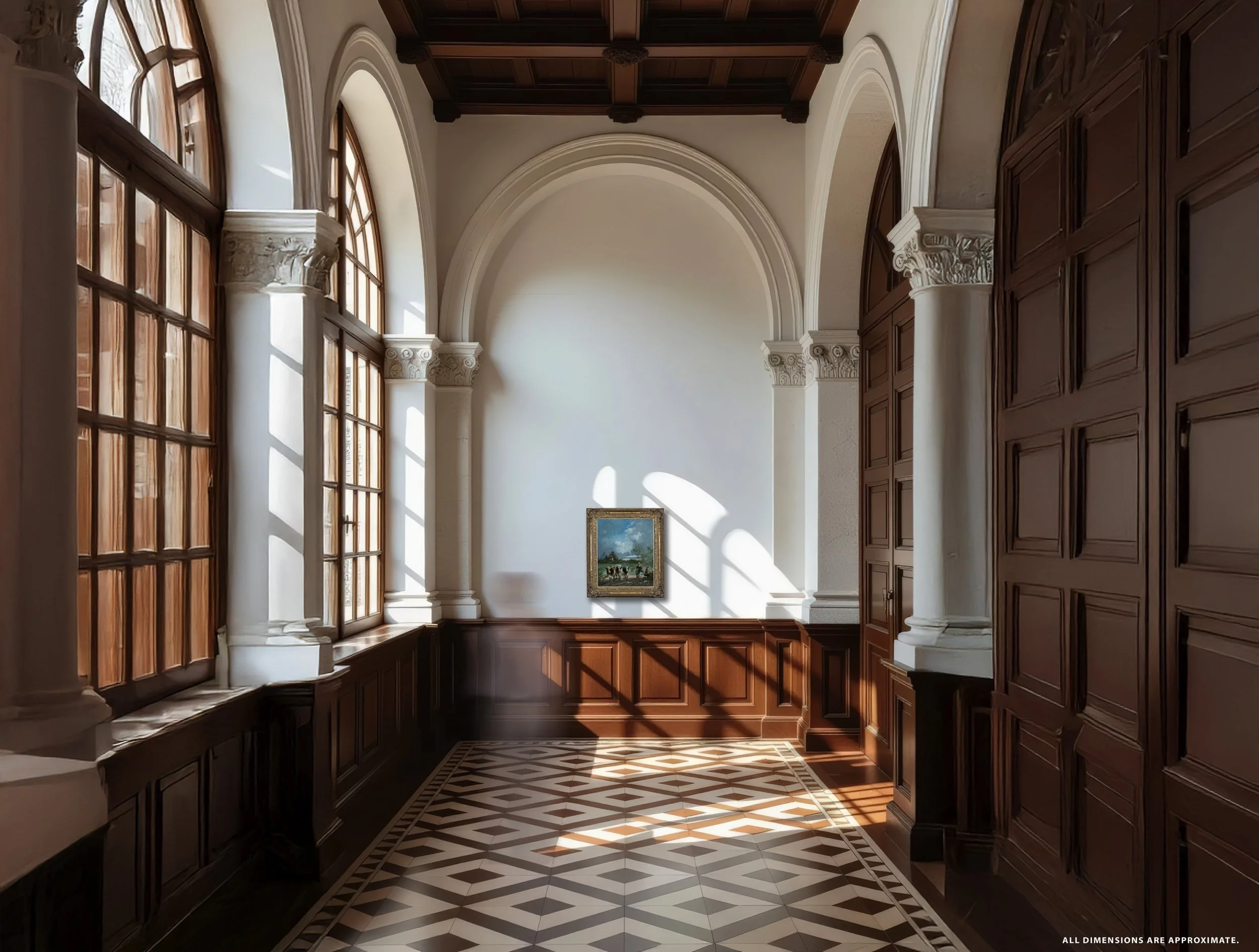 Image 19 of 25
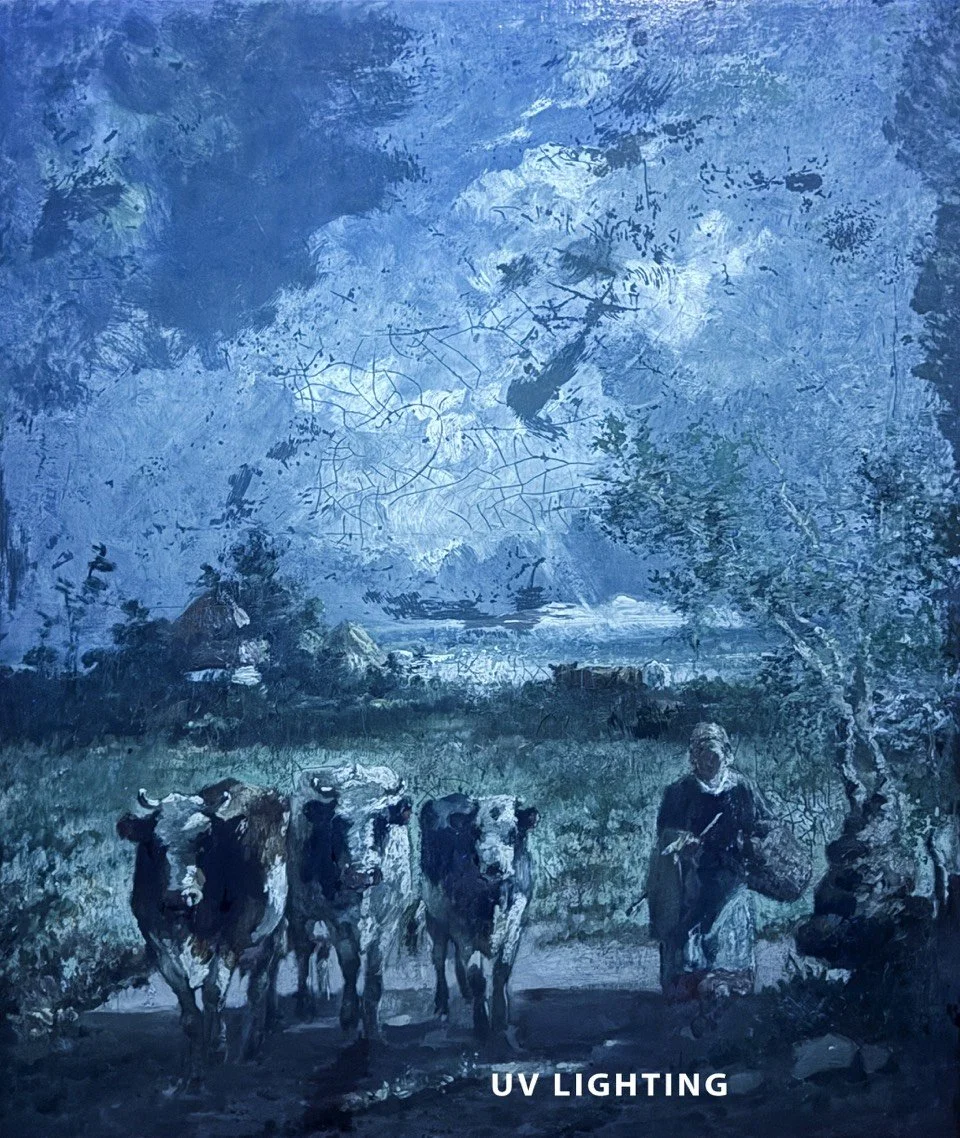 Image 20 of 25
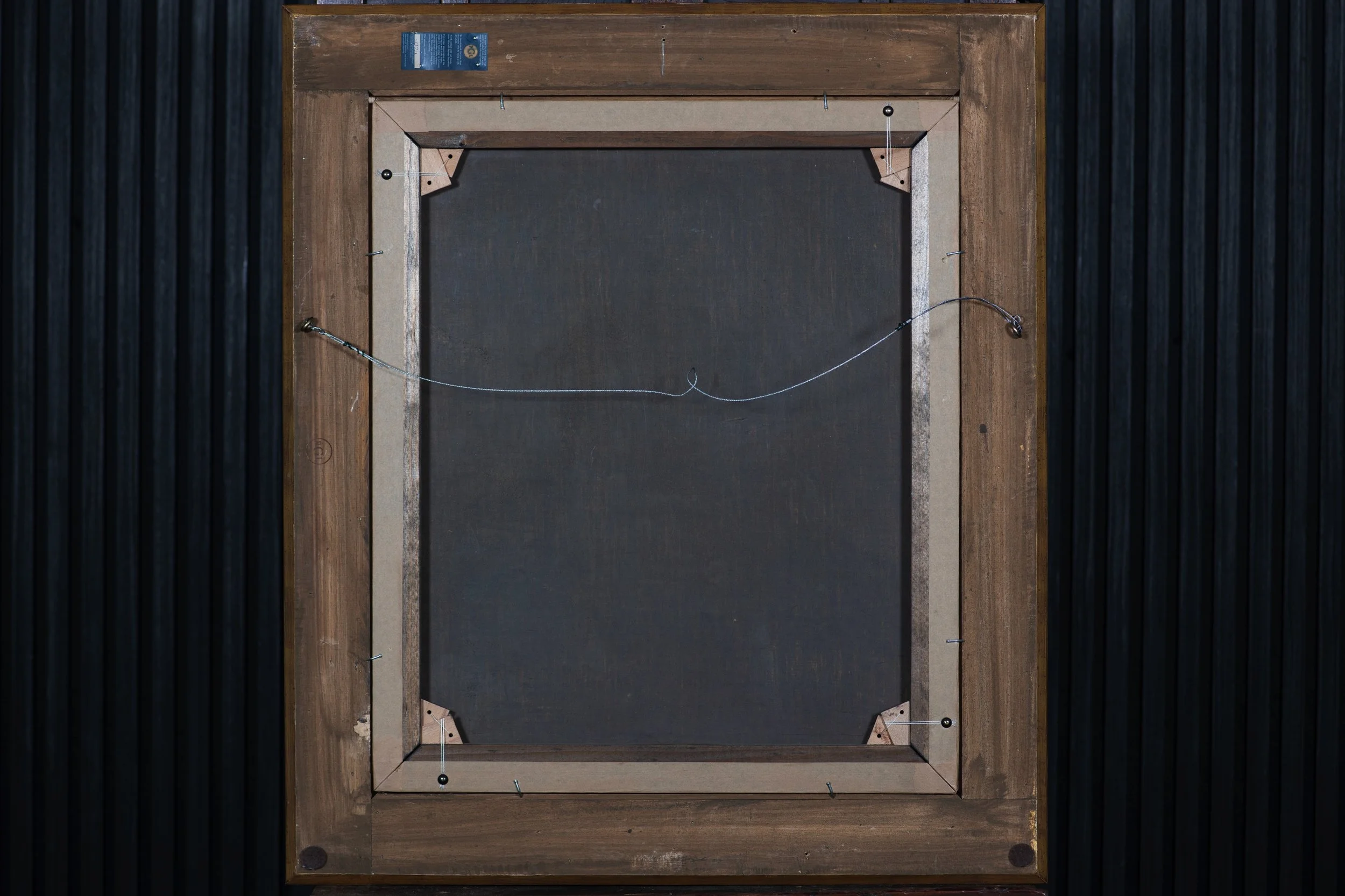 Image 21 of 25
 Image 22 of 25
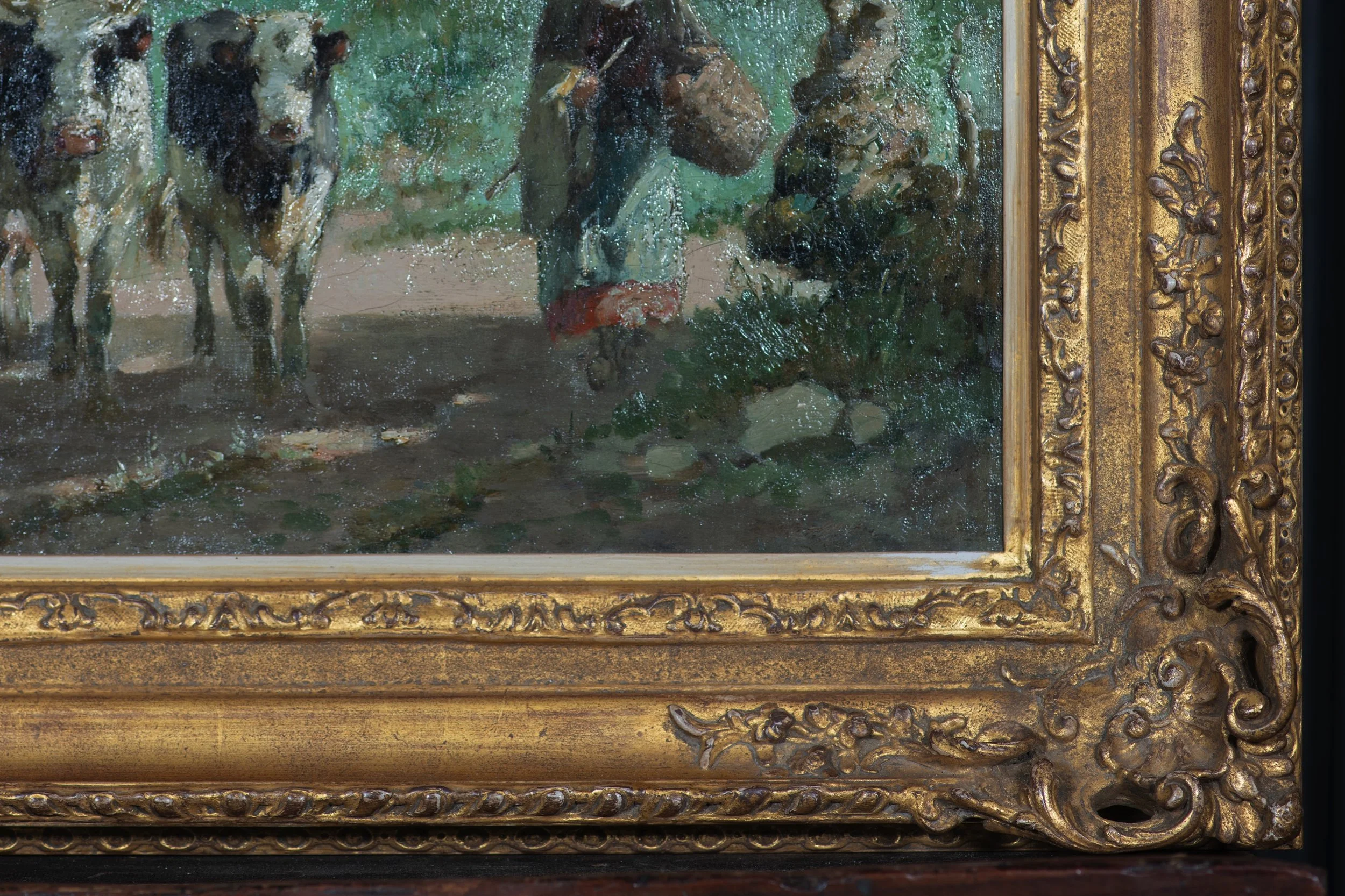 Image 23 of 25
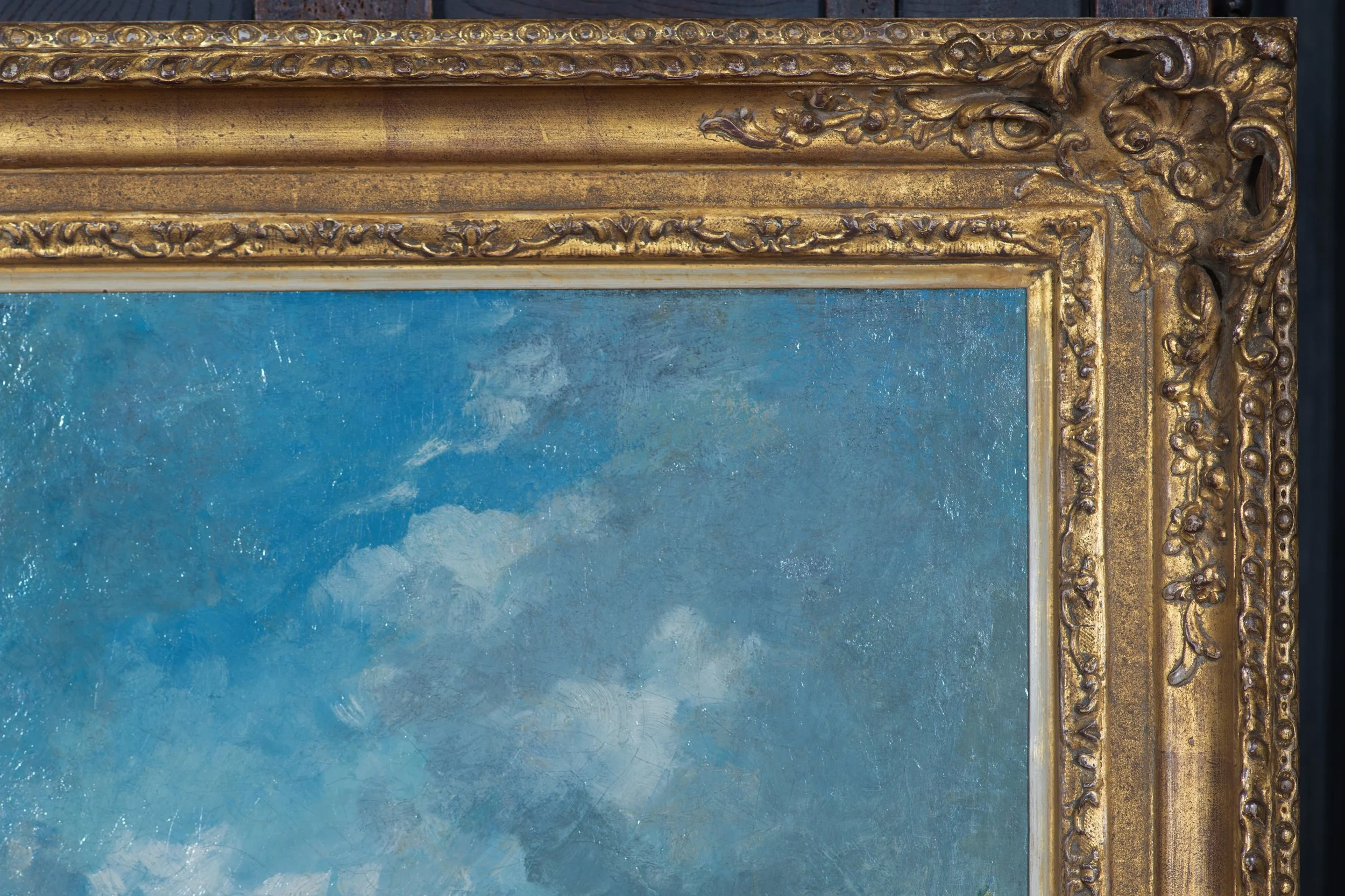 Image 24 of 25
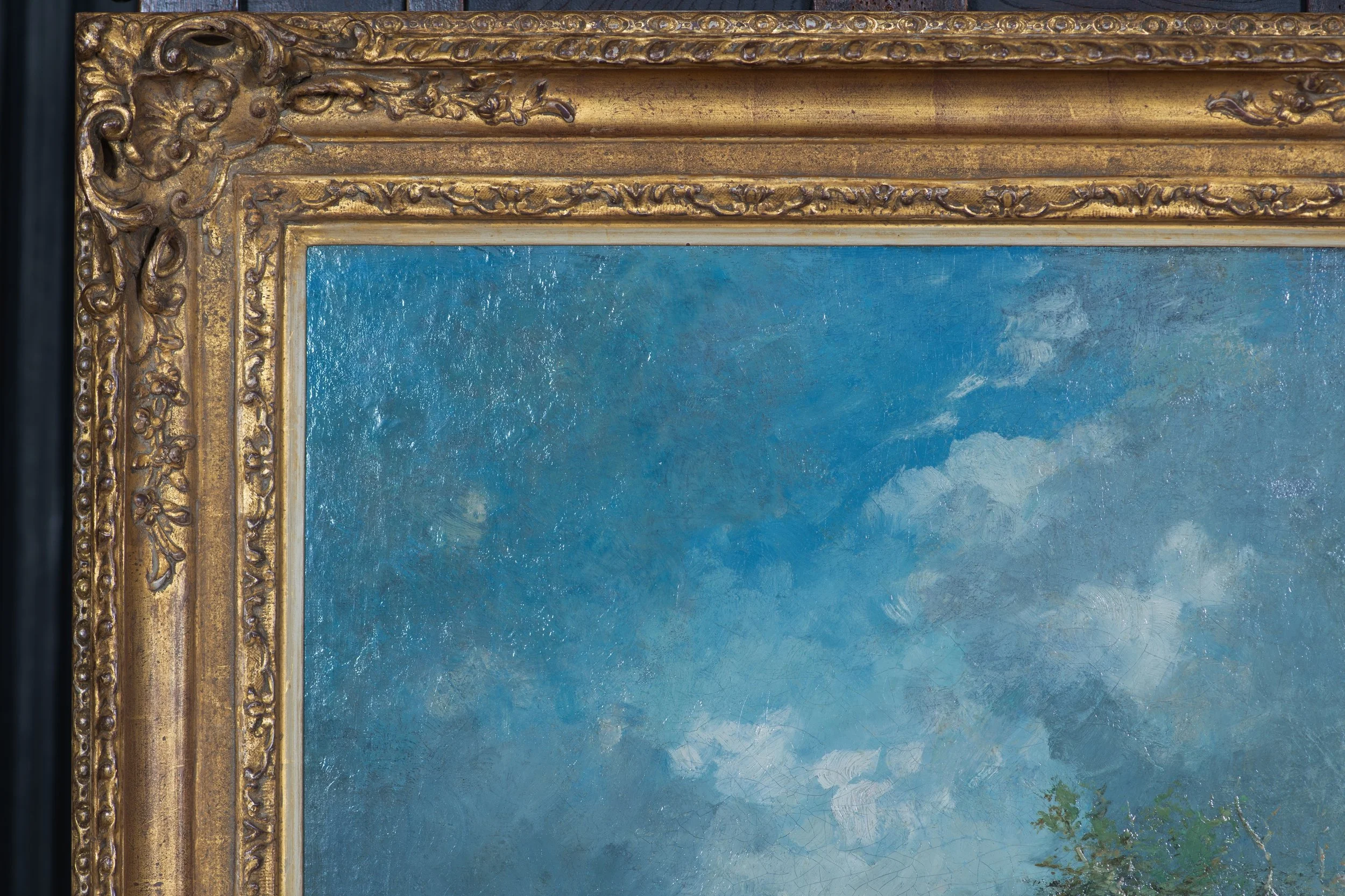 Image 25 of 25