CONTACT US
John Callow (1822–1878)
Seascape with Vessels – Oil on canvas, signed and dated 1859
Introduction
This monumental seascape belongs to the refined and atmospherically charged oeuvre of the British marine painter John Callow, an artist who, in the mid-nineteenth century, distinguished himself through his masterful command of light, movement, and atmospheric tension. Painted in 1859 and clearly hand-signed in the lower left, the work exemplifies the most compelling qualities of Romantic marine painting. Its composition, powerful colour palette, and meticulous depiction of vessels at sea place it among the representative highlights of Callow’s maritime production.
Description of the work
The painting presents a dynamic seascape in which fishing boats and smaller craft navigate a landscape governed by wind and tide. The waves rise high and forceful, rendered with sweeping diagonal brushstrokes that make the movement of the water almost palpable. Callow captures both the drama and poetry of the sea; the horizon stretches wide and open, dotted with sailing vessels manoeuvring through the turbulent waters. At the right, a coastal strip with windmills and buildings introduces a sense of proximity to the land and provides a visual counterbalance to the expansive sky.
In the foreground, a small rowing boat with fishermen is painted in fine detail, with careful attention given to clothing, posture, and the functional attributes of the fishing trade. Subtle highlights evoke the filtered glow of light over the water, while the sky unfolds in veils of blue-grey, white, and pale yellow. The brushwork is transparent and layered, characteristic of Callow’s technique, combining thin glazes with more impasto accents, particularly noticeable in the cresting waves.
Technique and colour palette
Callow employs a refined maritime palette dominated by cool blues, grey-greens, and pearly whites. The sea is built up in translucent layers that lend it depth, while the sky is treated with broad, soft strokes that reveal a keen observation of atmosphere and light. The rigging, hull textures, and other nautical details testify to the artist’s technical knowledge of maritime subjects, for which he was well respected during his lifetime.
Visible craquelure, an old canvas repair on the reverse, and subtle retouchings identifiable under UV light correspond naturally with the work’s age and underscore the authenticity of its historical character without diminishing its aesthetic impact.
Composition and style
The composition adheres to the principles of Romantic marine painting, constructed with a sweeping diagonal movement: the waves draw the viewer’s gaze from the left foreground toward the right background, where a fishing vessel leans into the wind as it approaches the coast. The horizon is placed low, allowing the dramatic expanse of sky to dominate the scene — a quintessential Romantic device underscoring the power and grandeur of nature. The interplay of tension and tranquillity, movement and fine detail, situates the work firmly within the Romantic tradition, in which the sea becomes both subject and metaphor.
Callow’s style aligns with the nineteenth-century British marine painting tradition, placing him among the artists who elevated maritime subjects through atmospheric expression and painterly refinement.
The artist
John Callow was born in 1822 on the Isle of Man and first trained under his elder brother, the esteemed marine painter William Callow. This artistic environment granted him early access to England’s professional artistic circles. Callow developed into an independent marine painter with a distinctive lyrical and atmospheric style. He exhibited at the Society of British Artists, of which he was a member, and built a solid reputation as a perceptive observer of coastline, shipping, and water movement. His oeuvre ranges from dramatic storm scenes to serene coastal impressions.
Art-historical context
Within the Romantic movement, Callow’s work represents a synthesis of natural observation and emotional resonance. His paintings form part of a wider tradition in which the sea is portrayed as a symbol of strength, freedom, and uncertainty. National and international contemporaries whose work aligns stylistically include Clarkson Stanfield, William Turner, Eugène Isabey, Andreas Achenbach.
Conclusion
This signed and dated 1859 seascape is an impressive example of John Callow’s mature maritime vision. The forceful waves, subtle atmospheric tonalities, and finely rendered vessels combine to create a work of both aesthetic sophistication and historical significance within nineteenth-century marine painting. Its condition — with craquelure, old repair, and minor retouching — is consistent with its age and does not detract from the monumental, poetic presence of this distinguished Romantic seascape.
CONTACT US
John Callow (1822–1878)
Seascape with Vessels – Oil on canvas, signed and dated 1859
Introduction
This monumental seascape belongs to the refined and atmospherically charged oeuvre of the British marine painter John Callow, an artist who, in the mid-nineteenth century, distinguished himself through his masterful command of light, movement, and atmospheric tension. Painted in 1859 and clearly hand-signed in the lower left, the work exemplifies the most compelling qualities of Romantic marine painting. Its composition, powerful colour palette, and meticulous depiction of vessels at sea place it among the representative highlights of Callow’s maritime production.
Description of the work
The painting presents a dynamic seascape in which fishing boats and smaller craft navigate a landscape governed by wind and tide. The waves rise high and forceful, rendered with sweeping diagonal brushstrokes that make the movement of the water almost palpable. Callow captures both the drama and poetry of the sea; the horizon stretches wide and open, dotted with sailing vessels manoeuvring through the turbulent waters. At the right, a coastal strip with windmills and buildings introduces a sense of proximity to the land and provides a visual counterbalance to the expansive sky.
In the foreground, a small rowing boat with fishermen is painted in fine detail, with careful attention given to clothing, posture, and the functional attributes of the fishing trade. Subtle highlights evoke the filtered glow of light over the water, while the sky unfolds in veils of blue-grey, white, and pale yellow. The brushwork is transparent and layered, characteristic of Callow’s technique, combining thin glazes with more impasto accents, particularly noticeable in the cresting waves.
Technique and colour palette
Callow employs a refined maritime palette dominated by cool blues, grey-greens, and pearly whites. The sea is built up in translucent layers that lend it depth, while the sky is treated with broad, soft strokes that reveal a keen observation of atmosphere and light. The rigging, hull textures, and other nautical details testify to the artist’s technical knowledge of maritime subjects, for which he was well respected during his lifetime.
Visible craquelure, an old canvas repair on the reverse, and subtle retouchings identifiable under UV light correspond naturally with the work’s age and underscore the authenticity of its historical character without diminishing its aesthetic impact.
Composition and style
The composition adheres to the principles of Romantic marine painting, constructed with a sweeping diagonal movement: the waves draw the viewer’s gaze from the left foreground toward the right background, where a fishing vessel leans into the wind as it approaches the coast. The horizon is placed low, allowing the dramatic expanse of sky to dominate the scene — a quintessential Romantic device underscoring the power and grandeur of nature. The interplay of tension and tranquillity, movement and fine detail, situates the work firmly within the Romantic tradition, in which the sea becomes both subject and metaphor.
Callow’s style aligns with the nineteenth-century British marine painting tradition, placing him among the artists who elevated maritime subjects through atmospheric expression and painterly refinement.
The artist
John Callow was born in 1822 on the Isle of Man and first trained under his elder brother, the esteemed marine painter William Callow. This artistic environment granted him early access to England’s professional artistic circles. Callow developed into an independent marine painter with a distinctive lyrical and atmospheric style. He exhibited at the Society of British Artists, of which he was a member, and built a solid reputation as a perceptive observer of coastline, shipping, and water movement. His oeuvre ranges from dramatic storm scenes to serene coastal impressions.
Art-historical context
Within the Romantic movement, Callow’s work represents a synthesis of natural observation and emotional resonance. His paintings form part of a wider tradition in which the sea is portrayed as a symbol of strength, freedom, and uncertainty. National and international contemporaries whose work aligns stylistically include Clarkson Stanfield, William Turner, Eugène Isabey, Andreas Achenbach.
Conclusion
This signed and dated 1859 seascape is an impressive example of John Callow’s mature maritime vision. The forceful waves, subtle atmospheric tonalities, and finely rendered vessels combine to create a work of both aesthetic sophistication and historical significance within nineteenth-century marine painting. Its condition — with craquelure, old repair, and minor retouching — is consistent with its age and does not detract from the monumental, poetic presence of this distinguished Romantic seascape.

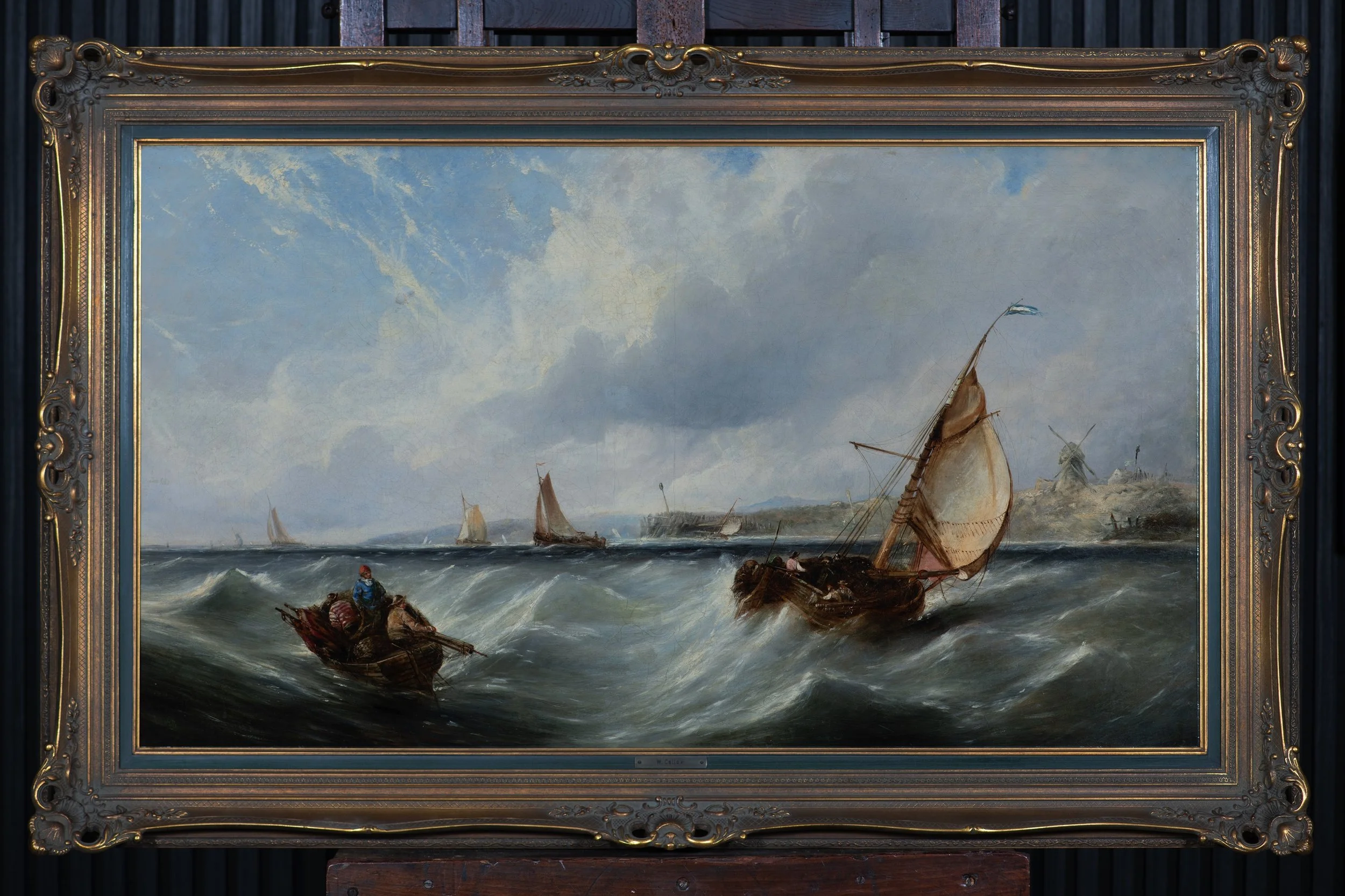 Image 1 of 25
 Image 2 of 25
 Image 3 of 25
 Image 4 of 25
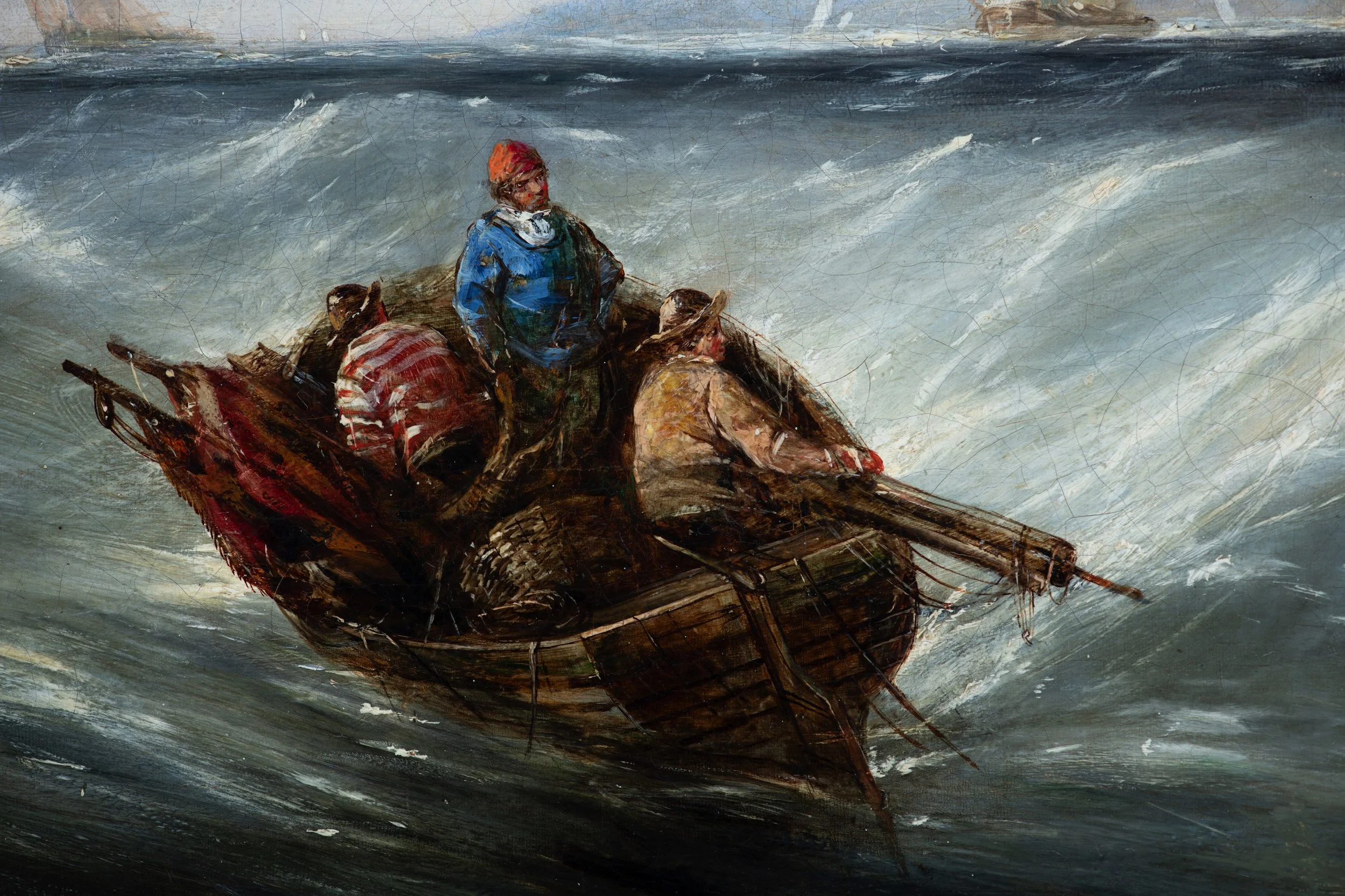 Image 5 of 25
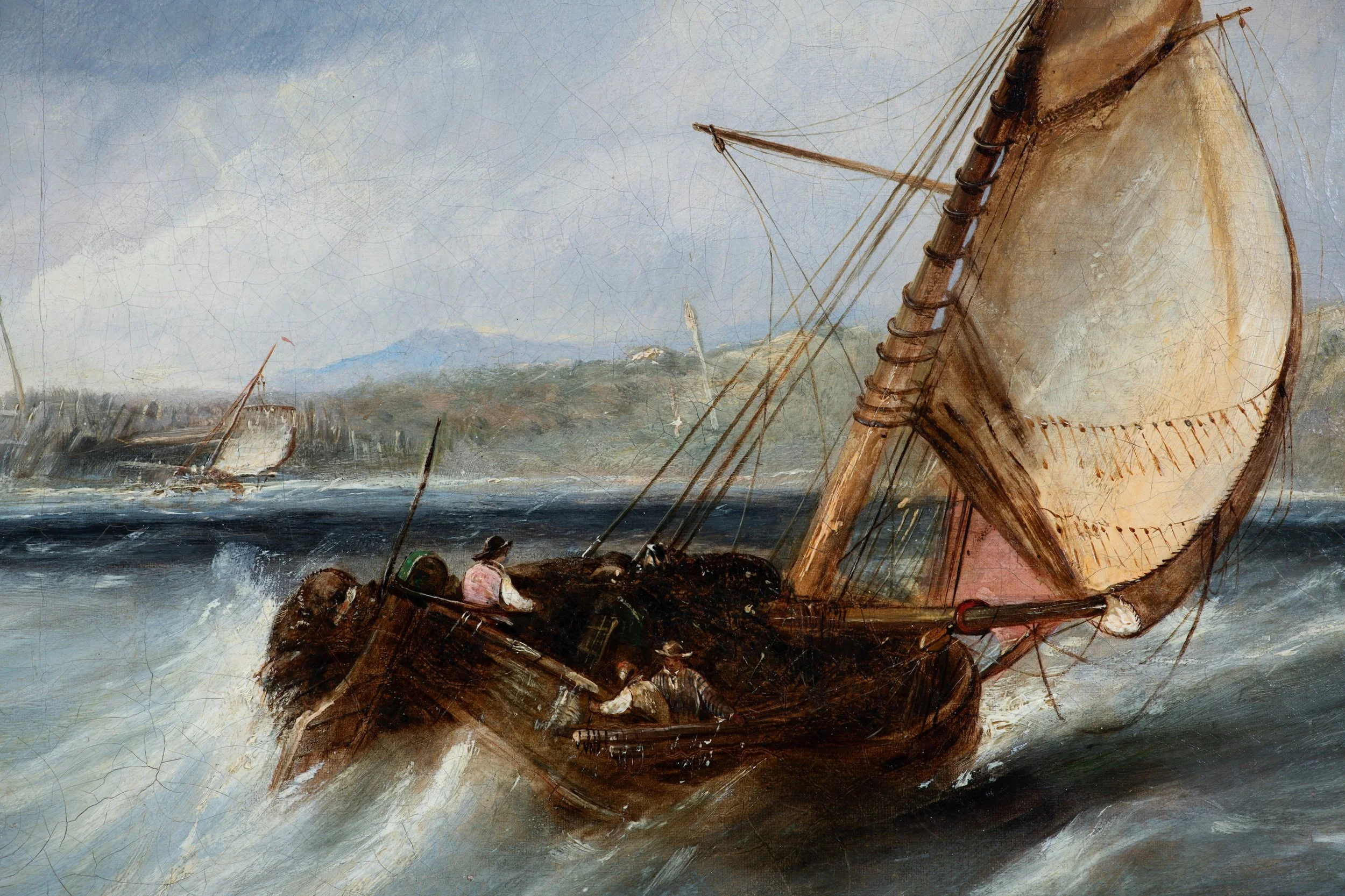 Image 6 of 25
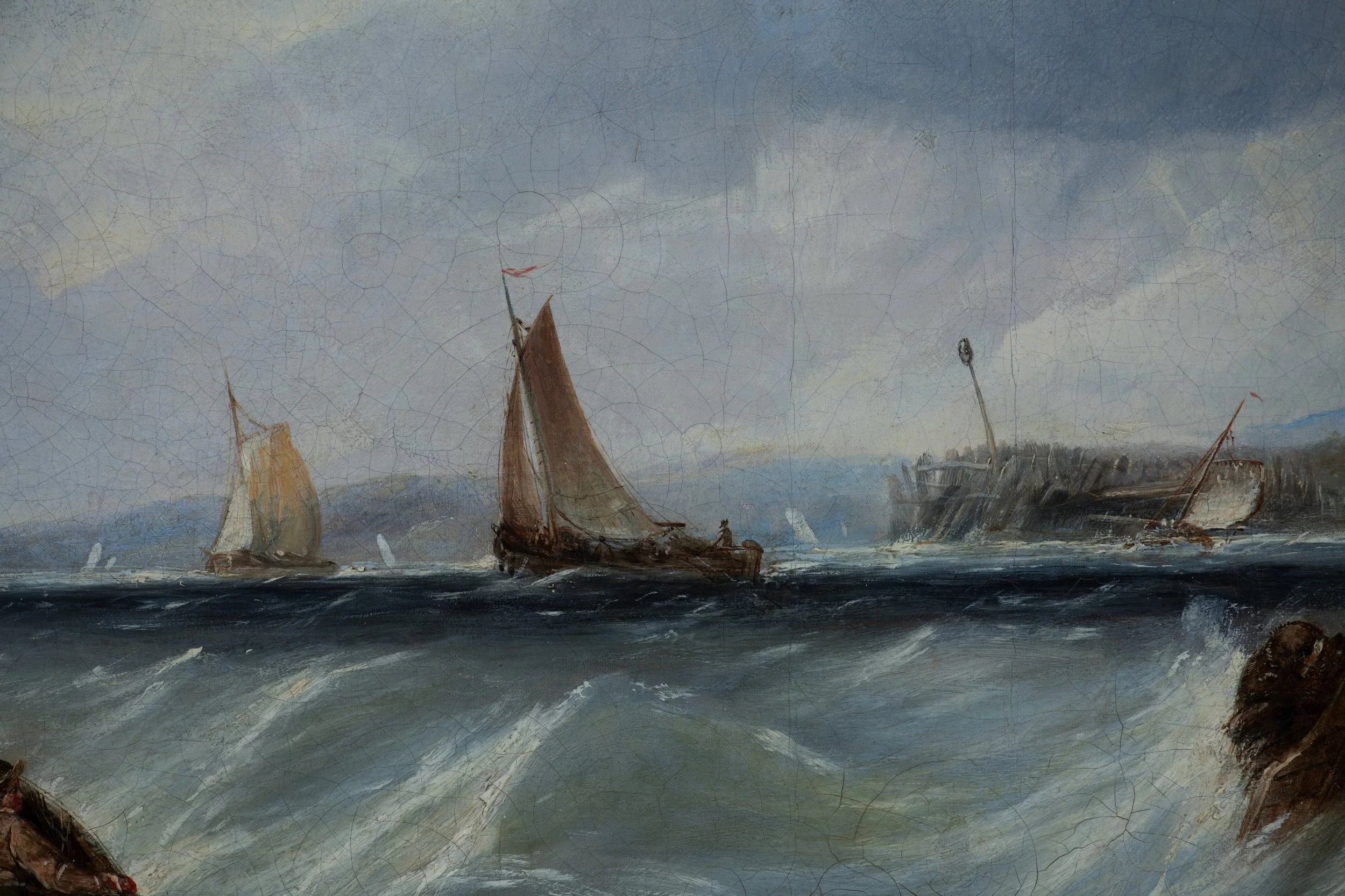 Image 7 of 25
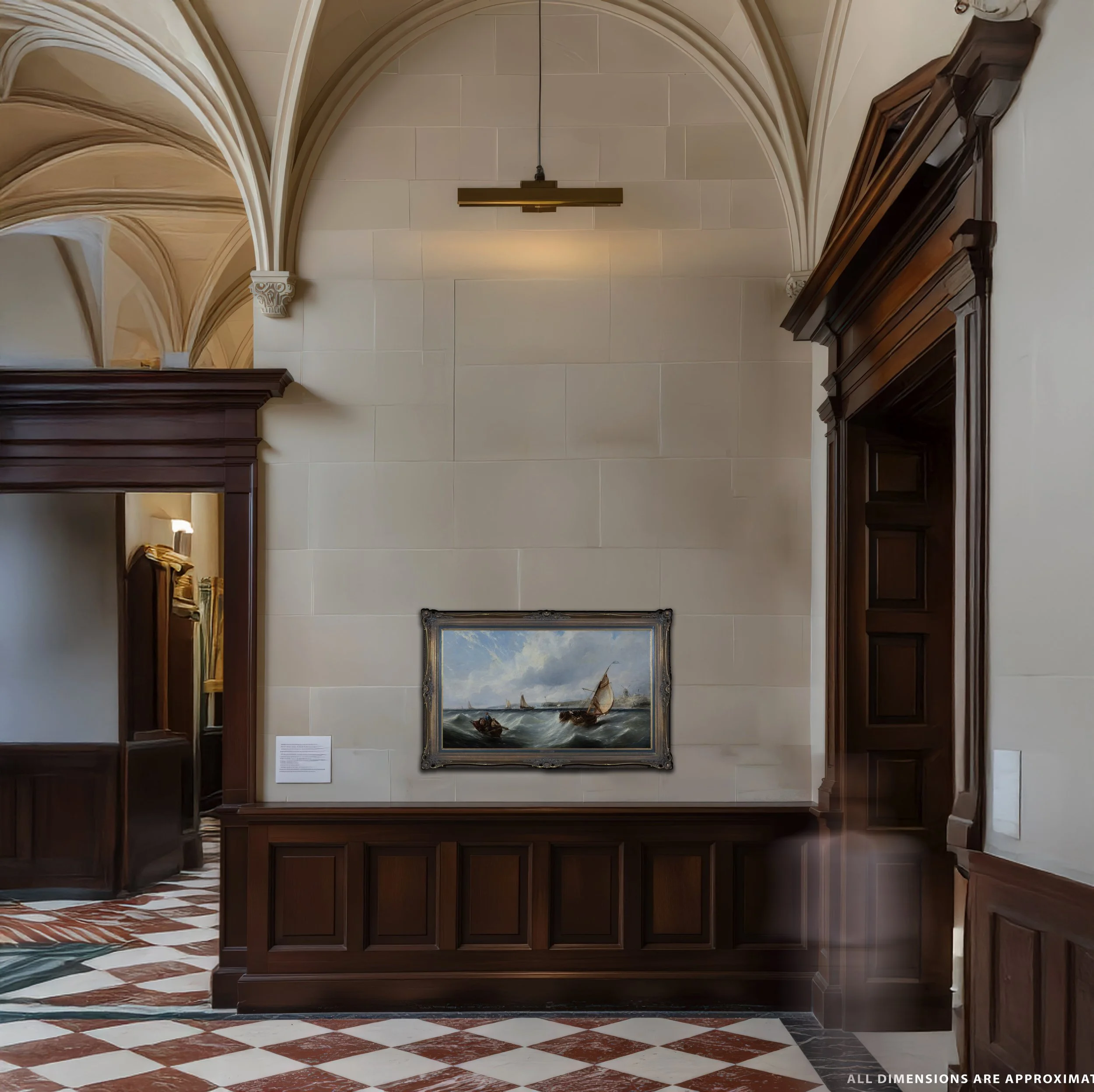 Image 8 of 25
 Image 9 of 25
 Image 10 of 25
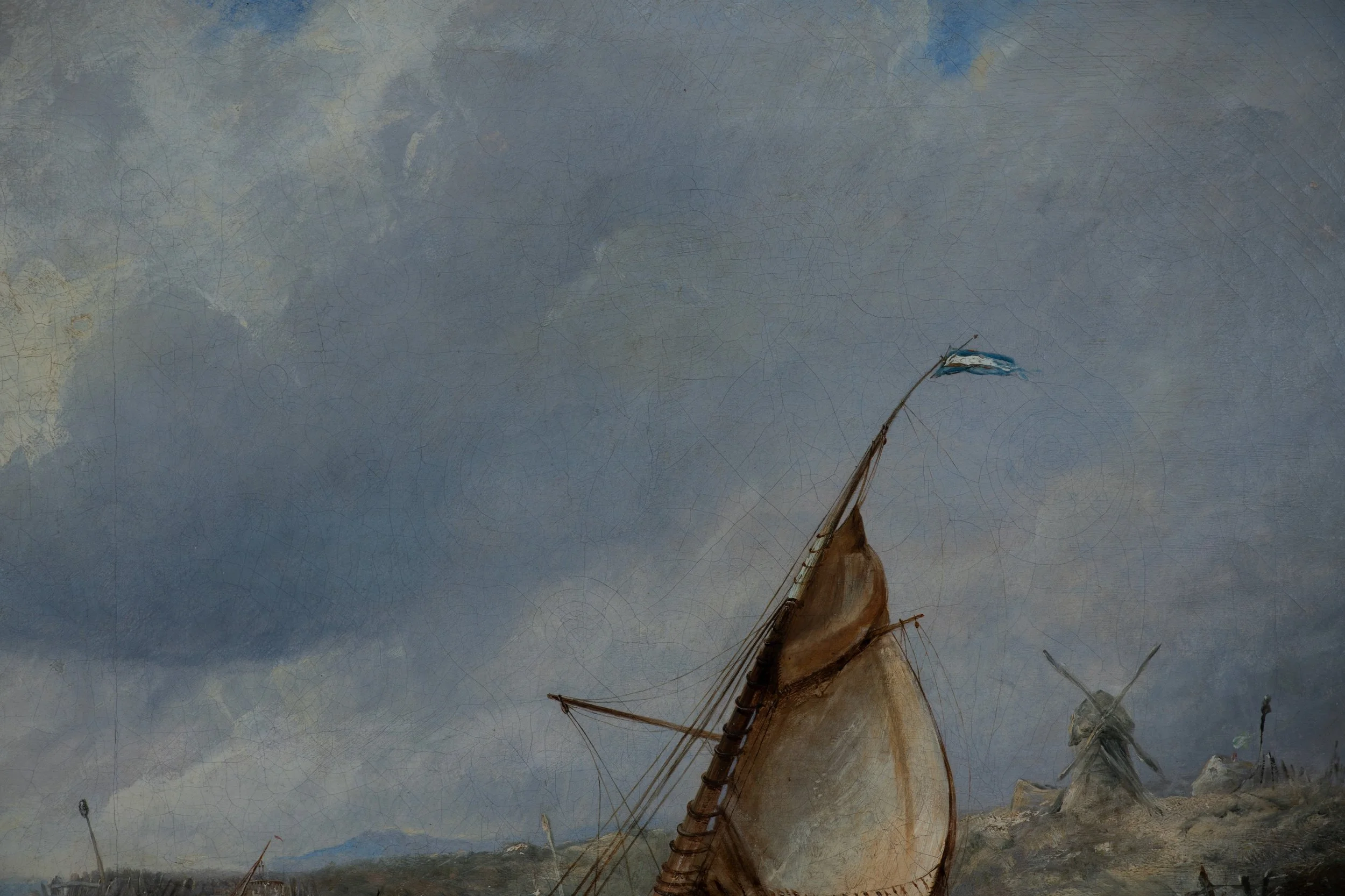 Image 11 of 25
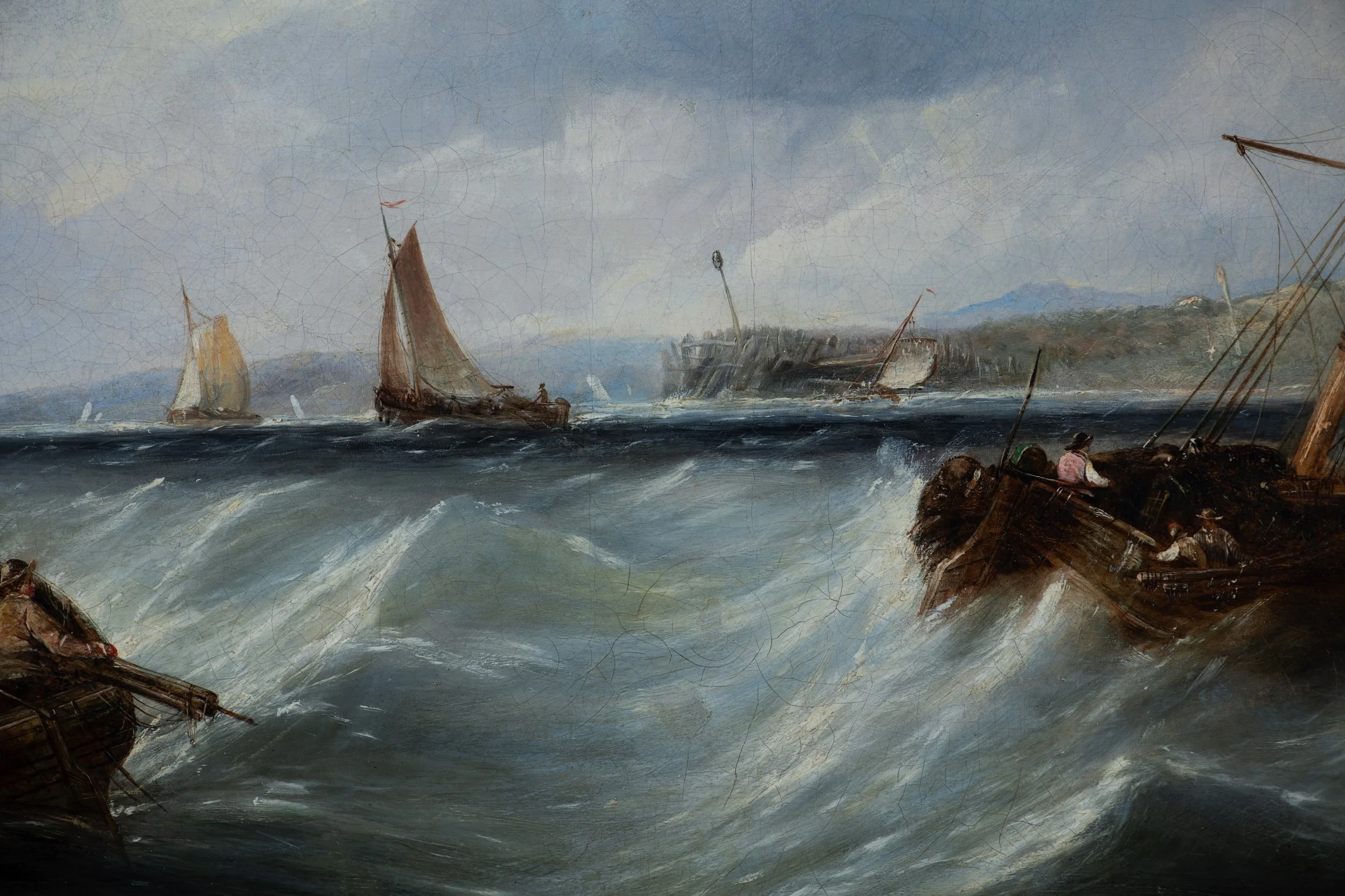 Image 12 of 25
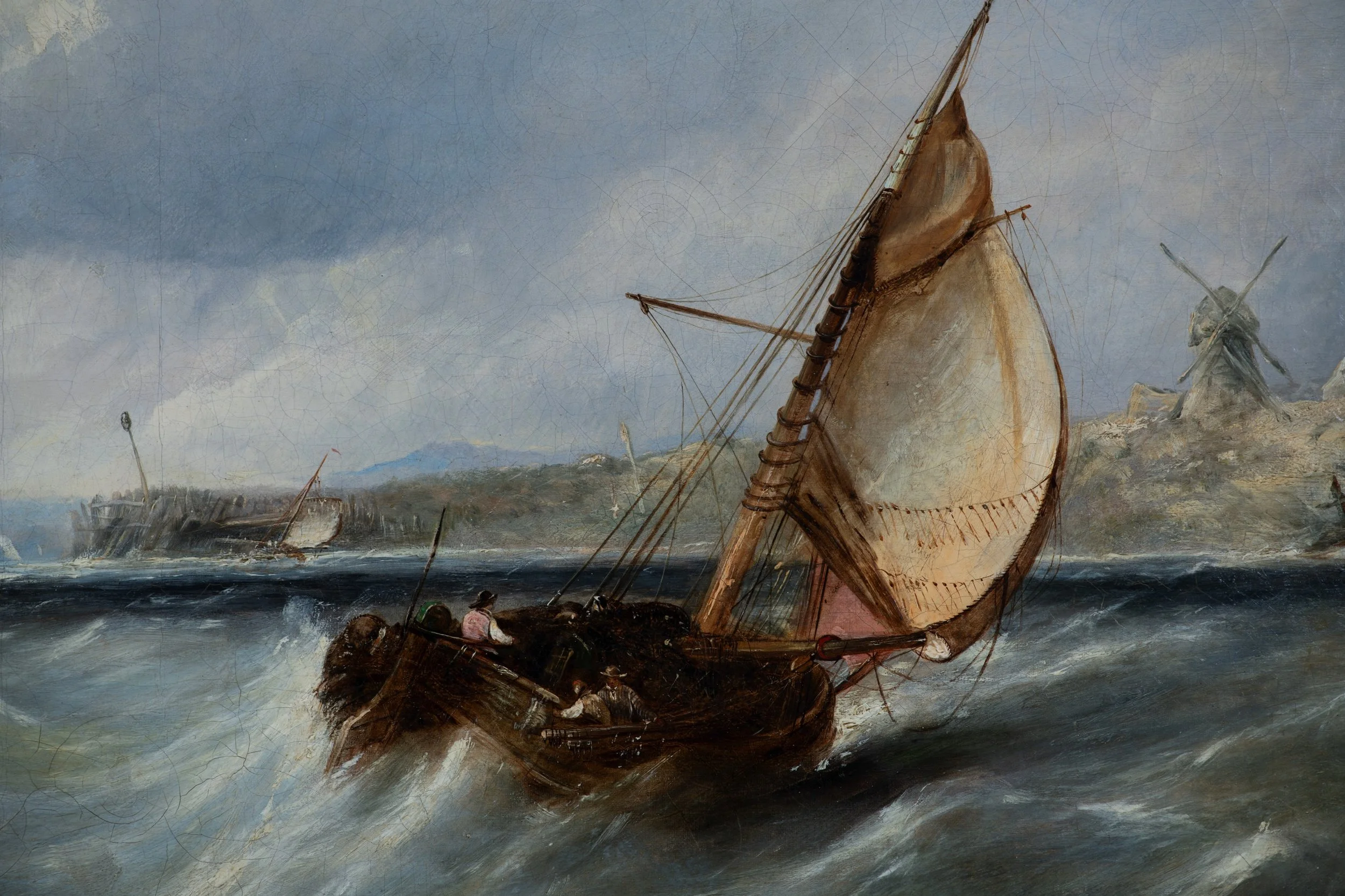 Image 13 of 25
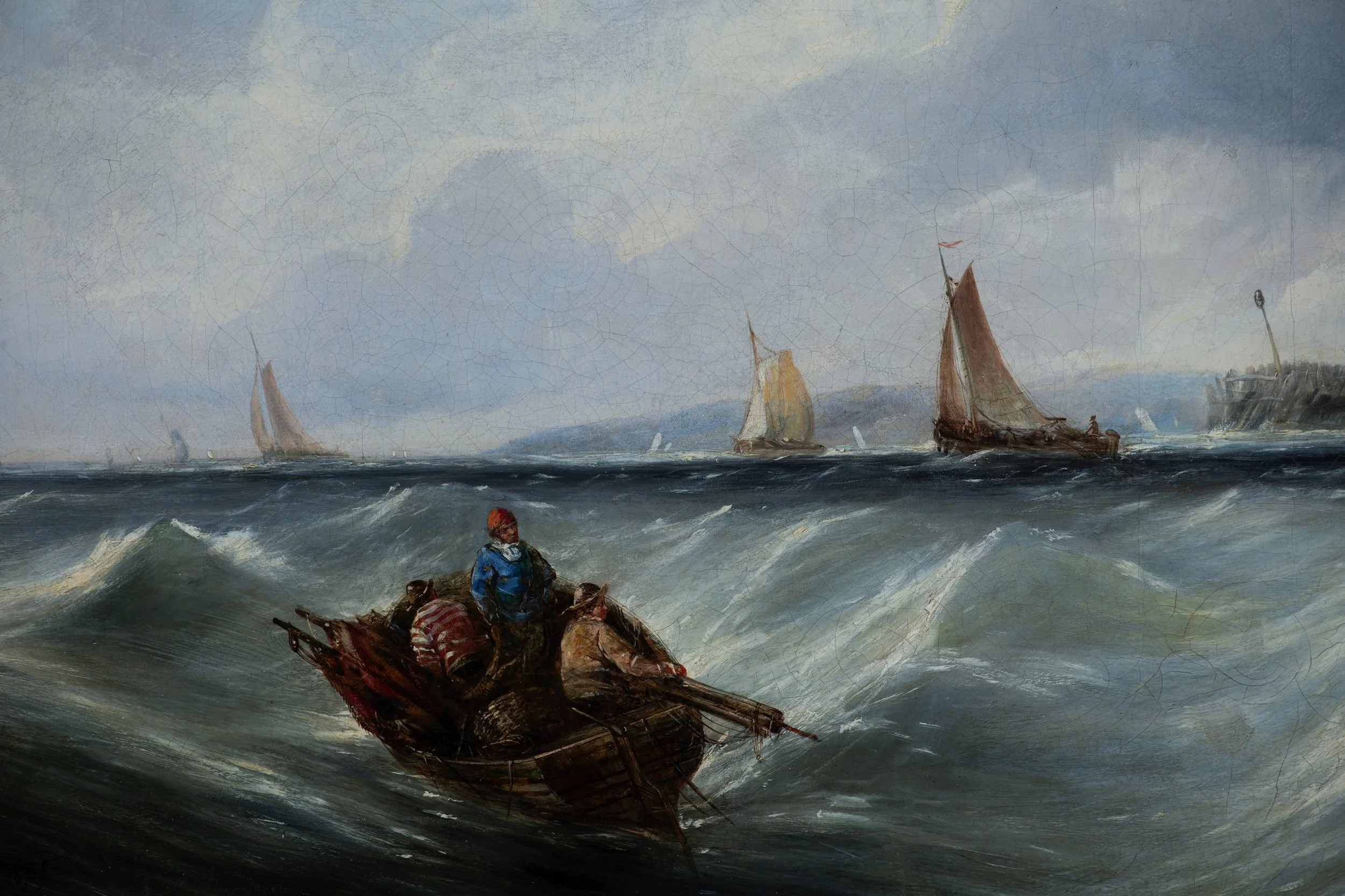 Image 14 of 25
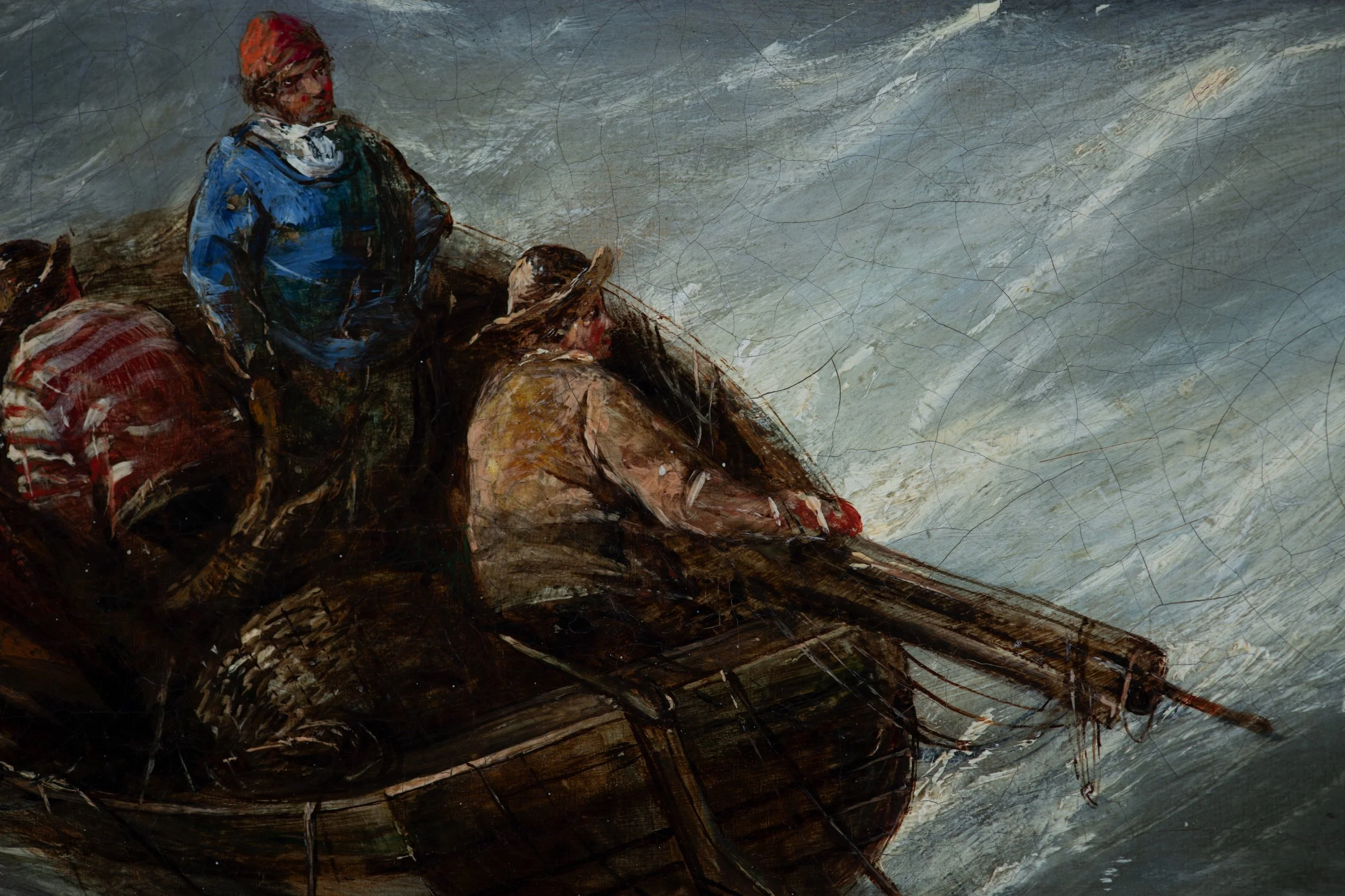 Image 15 of 25
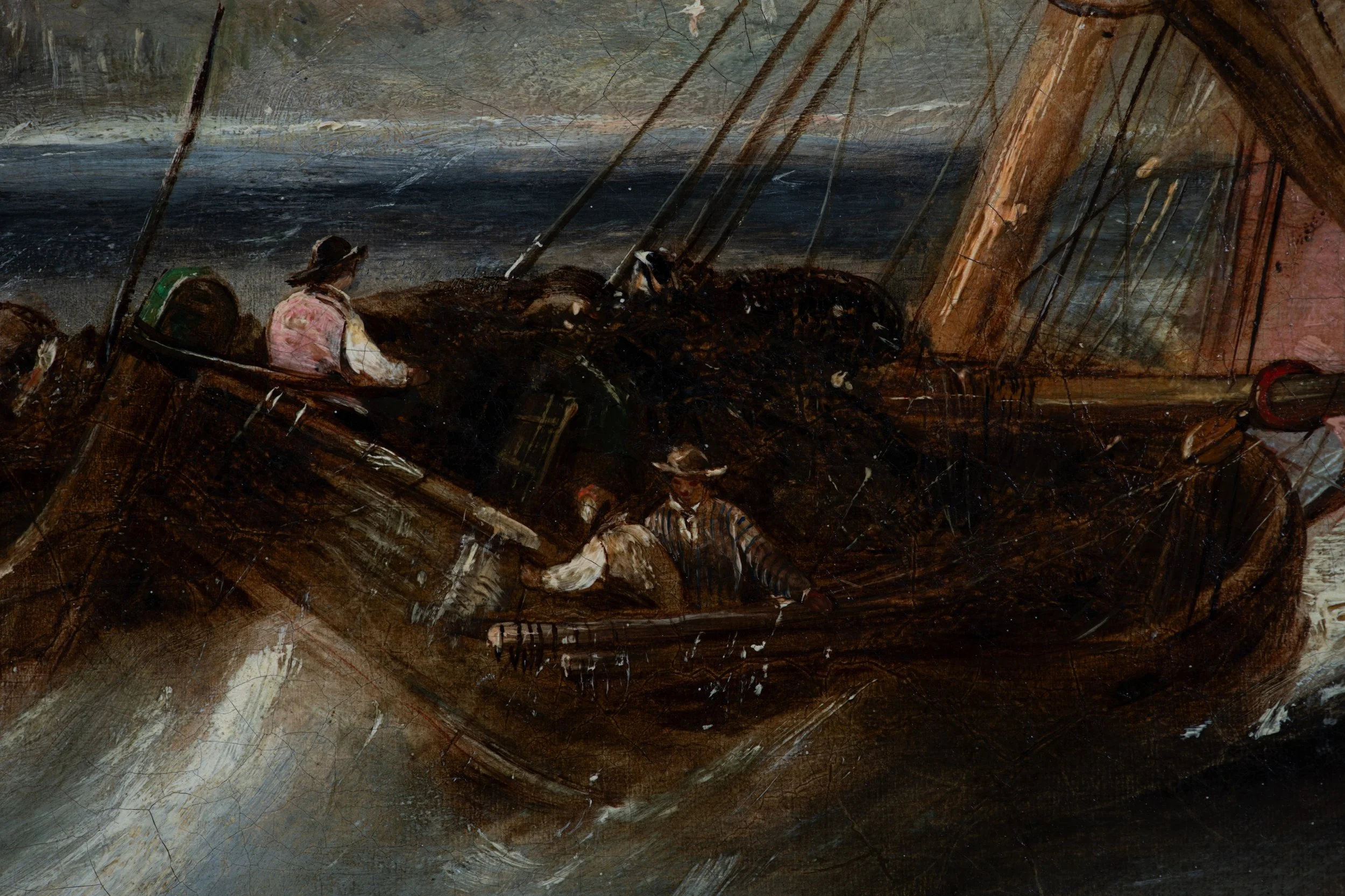 Image 16 of 25
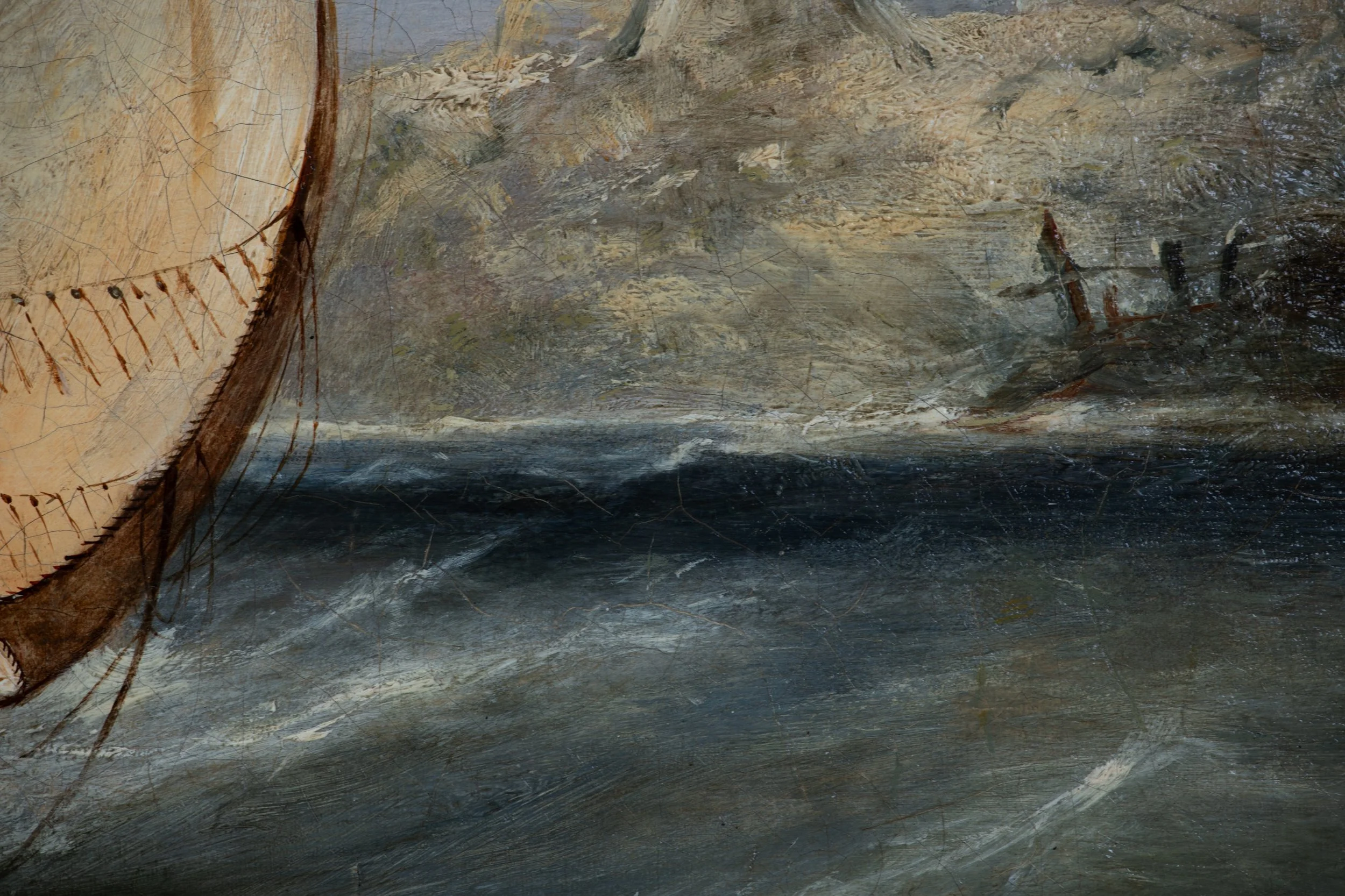 Image 17 of 25
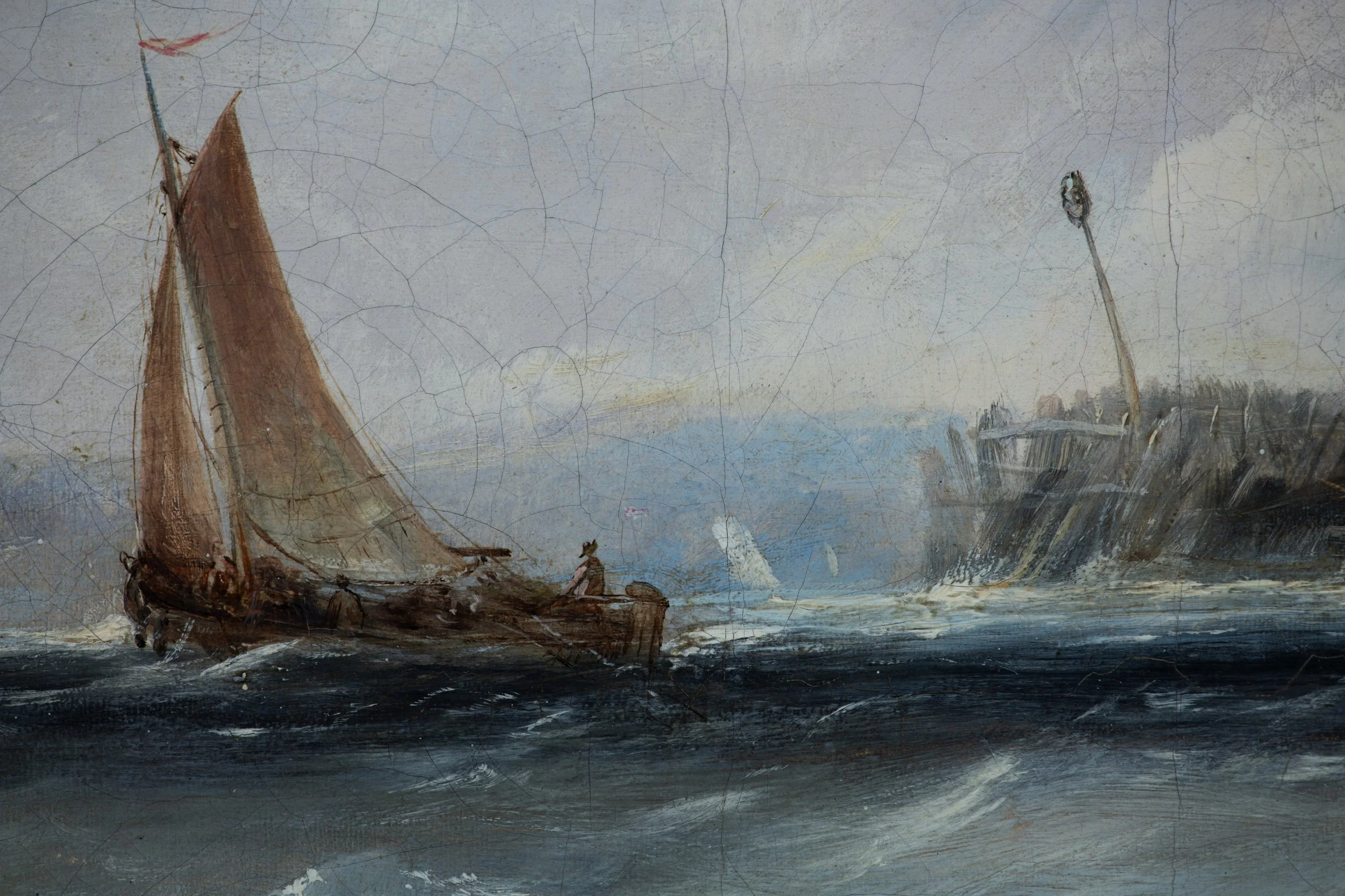 Image 18 of 25
 Image 19 of 25
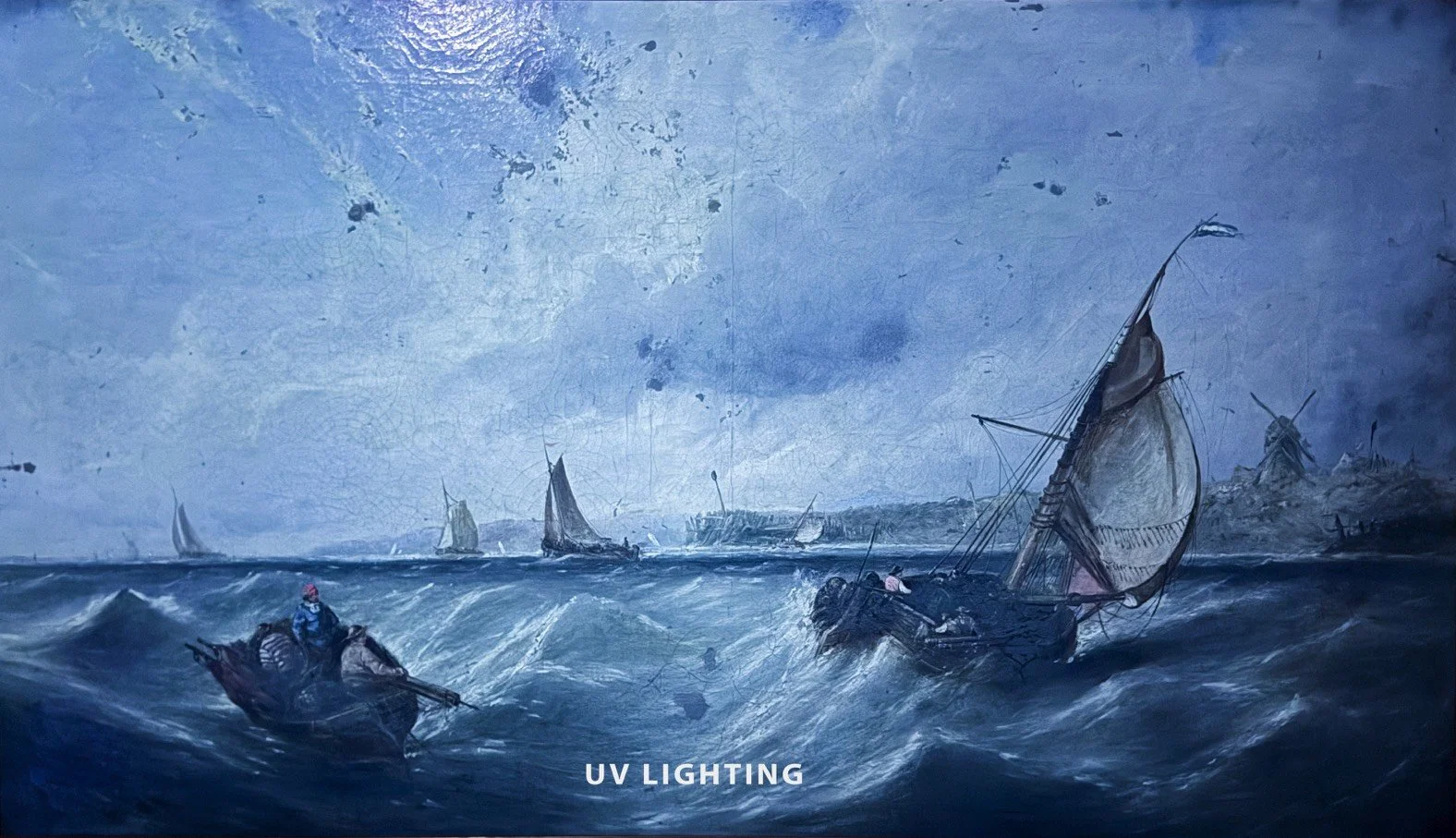 Image 20 of 25
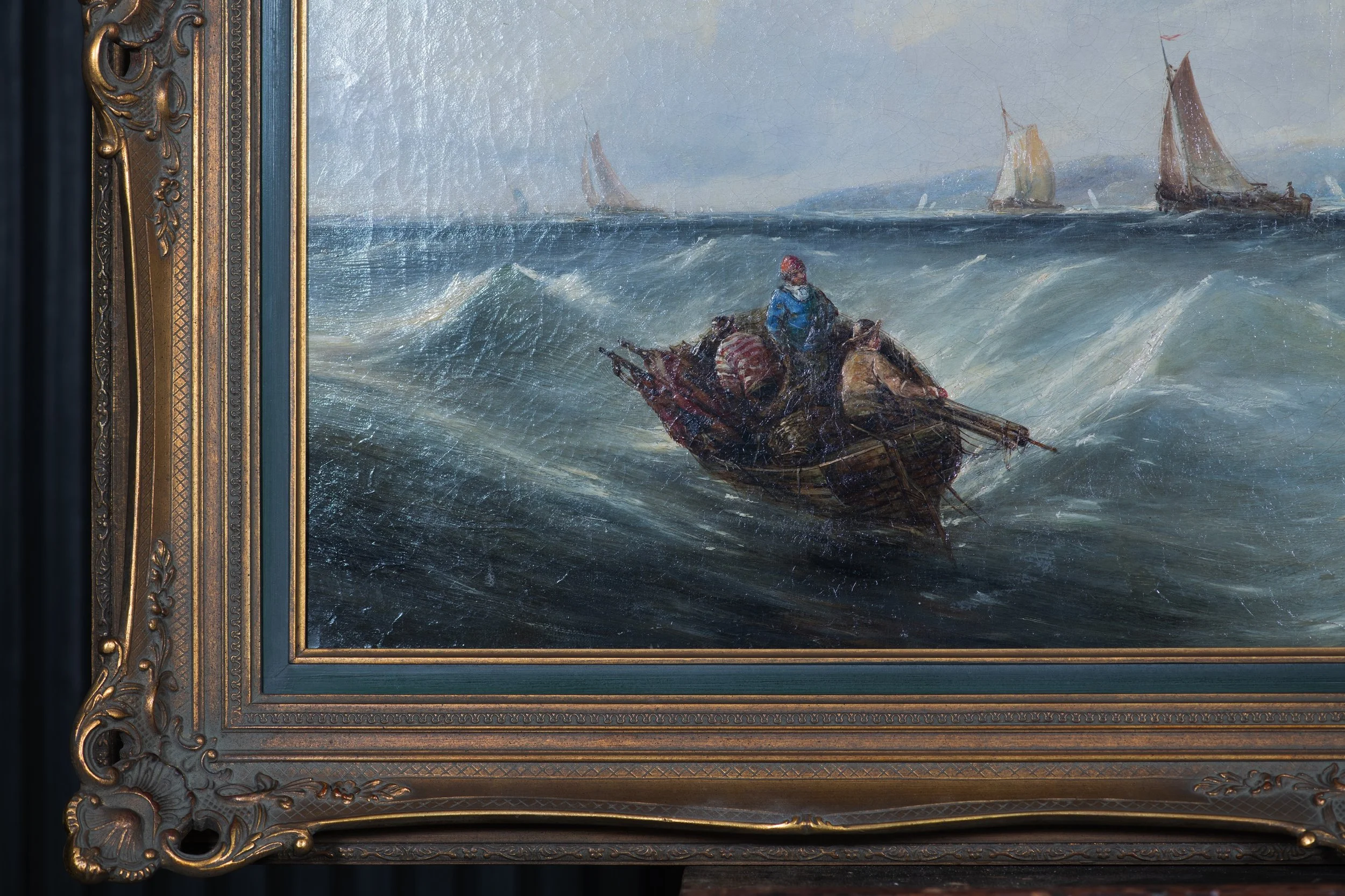 Image 21 of 25
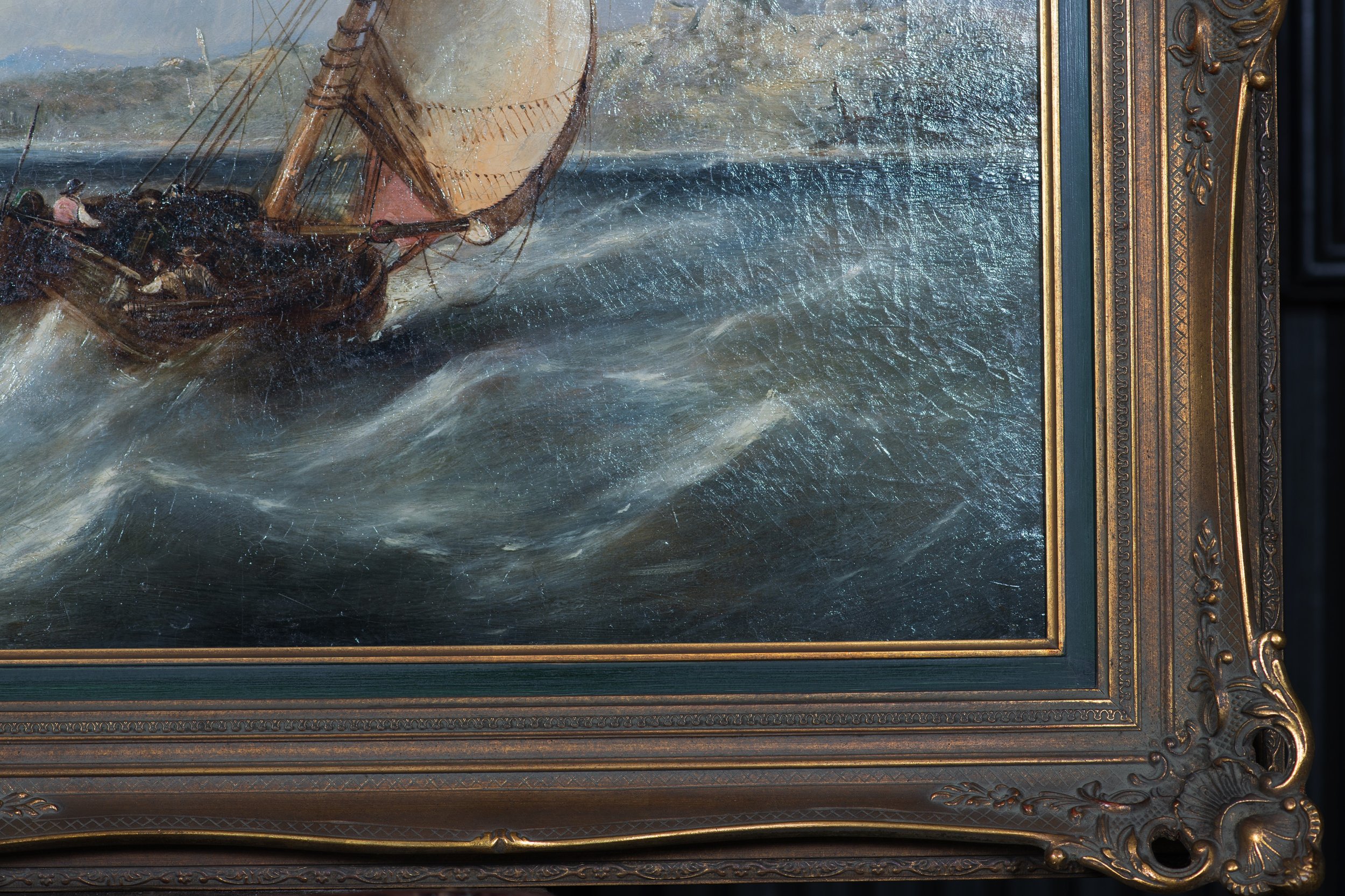 Image 22 of 25
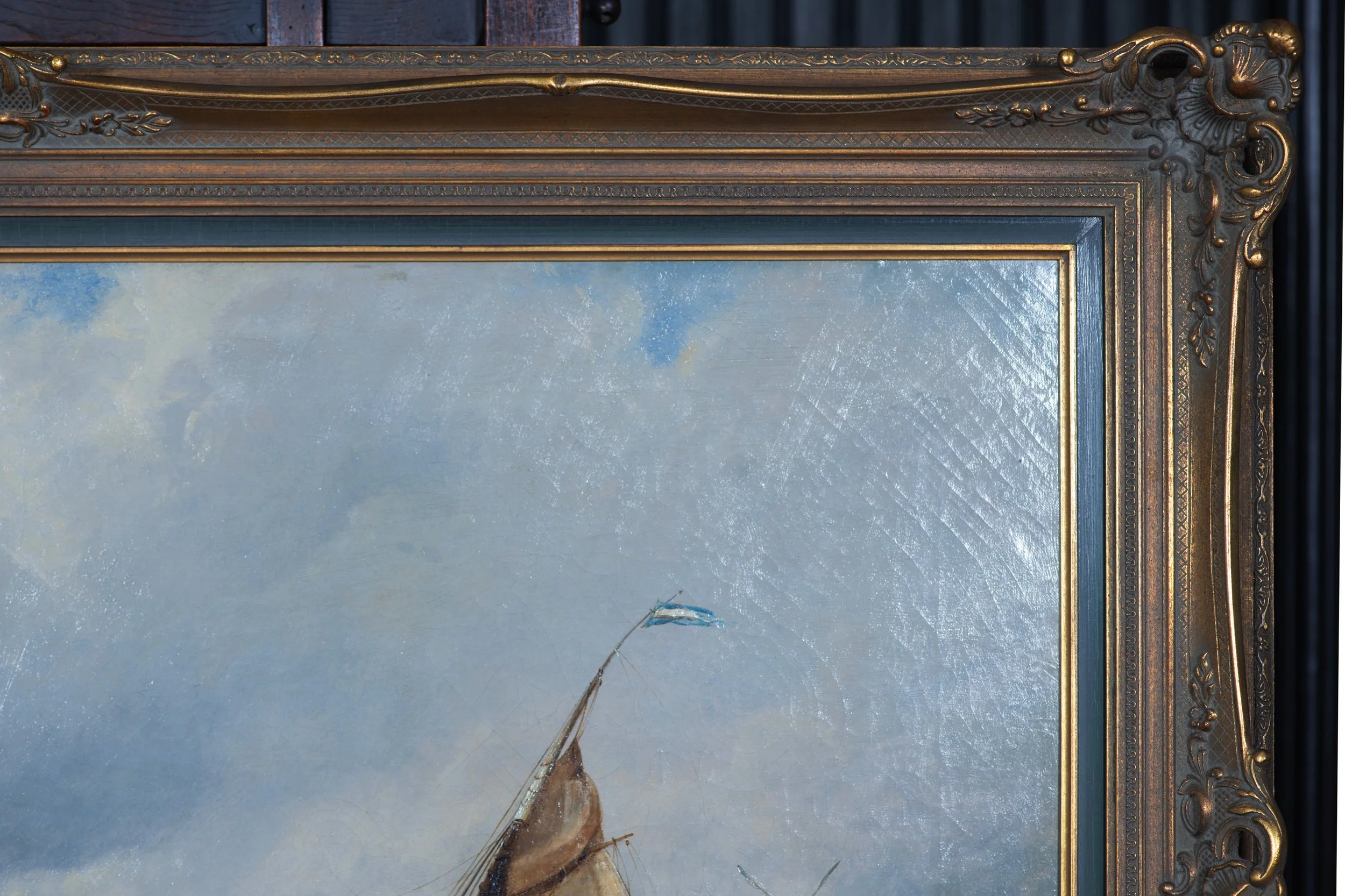 Image 23 of 25
 Image 24 of 25
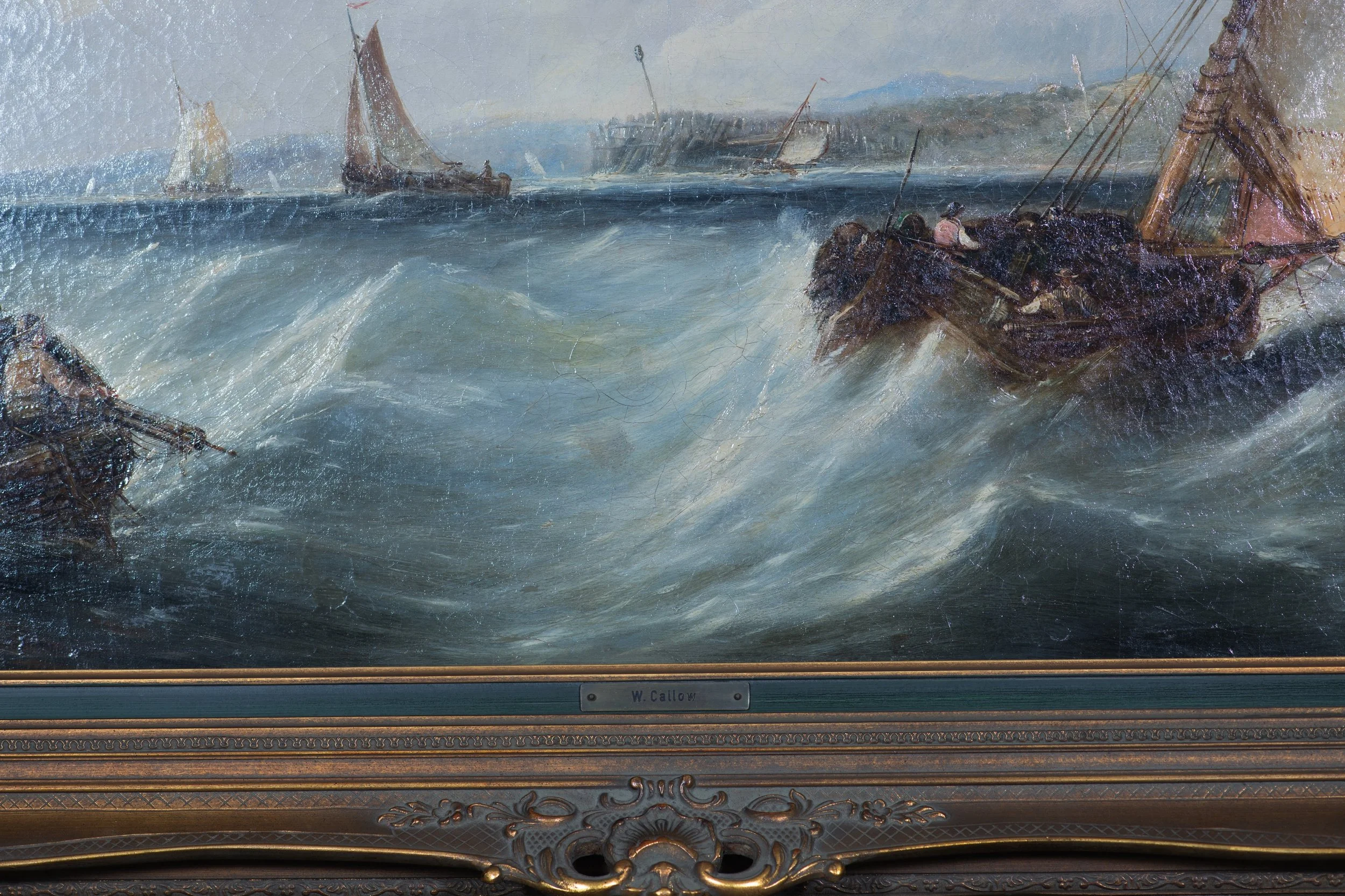 Image 25 of 25