CONTACT US
Karl Heinrich Hoff (1838–1890), follower
Son Bidding Farewell to His Dying Father
Oil on canvas, 90 × 128 cm (frame: 126 × 163 cm)
Romanticism – unsigned – relined, craquelure, retouching visible under UV
Introduction
This monumental nineteenth-century painting is an exemplary instance of high-Romantic genre art, a field in which emotional intensity and refined historical detail converge seamlessly. The subject — a son, dressed as an officer, taking leave of his dying father — belongs to the quintessential themes of the Biedermeier and Düsseldorf School, the artistic milieu in which Karl Heinrich Hoff played a significant role. Although unsigned and therefore attributed to a follower, the precision, compositional clarity, and emotional drama reveal a close affinity with the visual language Hoff developed throughout his career.
The artist has constructed an intimate domestic interior in which grief, duty, and familial tenderness coalesce into a single narrative moment. The scene possesses a cinematic stillness: the farewell is not expressed through sweeping gestures, but rather through quiet, almost frozen movements. This restrained emotionality is characteristic of German Romantic sensibility, where inner sentiment prevails over theatrical display.
Description of the Work
At the heart of the composition sits the dying father, resting in an elaborately carved armchair, his head gently supported by his hand. His closed eyes and faint expression convey the threshold between life and death without explicitly depicting the final moment. Beside him stands a clergyman, recognizable by his austere black robe and white collar. His hand placed on the father’s shoulder is a subtle yet pivotal gesture, reinforcing the moral and spiritual weight of the scene.
To the left stands a young girl, presumably the daughter, watching the dying man with quiet sorrow. Her posture is tense, her fingers slightly curved in emotional restraint. Her white satin gown with turquoise bodice is rendered with remarkable precision; the sheen of the fabric and the embroidered panel attest to the painter’s technical mastery. Behind her, a set table with flowers, a timepiece, a document box, and personal belongings symbolizes both domestic continuity and the transience of life.
On the right stands the son, dressed as an officer, holding his sword, mantle, and hat. His half-averted gaze suggests the internal struggle between military duty and personal loss. The red sash across his torso lends a warm, almost heroic note, while his subtle stance embodies the tragedy of parting. At his feet, the family dog — depicted with soft, naturalistic detail — symbolizes loyalty and silent vigilance.
The background is richly appointed with architectural and decorative elements: a wall clock, a shrine-like cabinet, wood paneling, a painted wall hanging, and a finely patterned Oriental carpet. These details situate the narrative within a historicized interior typical of the nineteenth-century fascination with earlier epochs.
Technique and Use of Colour
The execution reflects a painter thoroughly versed in the fine-painting tradition. Transparent glazes lend convincing tactility to materials such as satin, wool, wood, and metal. The flesh tones are modelled in soft transitions, giving the facial expressions a pronounced psychological depth.
The colour palette is composed of rich turquoises, deep purples, ochres, warm reddish-browns, and delicate skin tones. Light enters the scene diagonally, illuminating the figures on the left and thereby reinforcing the emotional centre of the composition.
The canvas has been relined; the consistent craquelure across the surface corresponds with an age of over a century. UV examination reveals retouching mainly in the darker passages and around portions of the figures. These restorations are professionally executed and preserve the legibility and integrity of the work.
Composition
The composition unfolds horizontally, almost like a stage tableau in which the figures are arranged in a balanced frieze. Diagonal lines — the gentle forward bend of the father, the supporting gesture of the clergyman, and the slight rotation of the son — guide the viewer’s eye and establish the emotional arc of the scene.
The spatial gap between the family and the son creates both a visual and symbolic divide, alluding to imminent departure: military, existential, and familial. The deliberate orchestration of the scene reflects the Düsseldorf School’s emphasis on narrative clarity, precision of detail, and morally charged domestic drama.
Style and Art-Historical Context
The painting belongs firmly within the Romantic tradition, more specifically the Biedermeier narrative idiom and the Düsseldorf School of genre painting. Its focus on domestic interiors, historical costume, sentimental expression, and psychologically nuanced familial relationships aligns it with a broader nineteenth-century European current that flourished particularly in Germany and Austria.
Its stylistic affinities resonate with artists known for emotional storytelling and meticulous detail. Comparable national artists include Carl Hübner, Eduard Kurzweil and Otto Erdmann; internationally, parallels can be drawn with Charles Baugniet and Francesco Vinea.
The Artist
Karl Heinrich Hoff was born in 1838 in Elberfeld (now Wuppertal) and trained at the renowned Kunstakademie Düsseldorf, a pivotal institution in shaping German Romanticism. The academy was celebrated for its technically refined, literature-inspired genre painting. Hoff specialised in interiors marked by historical dress, psychological realism, and carefully constructed dramatic tension. His works found appreciative audiences both in Germany and abroad, and his characteristic style continued to influence followers and related artists well after his death.
Conclusion
With its monumental scale, intricate detail, and profound narrative depth, this painting stands as an exceptional example of nineteenth-century Romantic genre art. Its emotional resonance, technical sophistication, and carefully crafted historicist setting make it both an art-historically significant and visually compelling work. Despite natural signs of age and subsequent restorations, the painting retains its expressive force and presence, securing its place as a distinguished and meaningful pièce de collection within any curated setting.
CONTACT US
Karl Heinrich Hoff (1838–1890), follower
Son Bidding Farewell to His Dying Father
Oil on canvas, 90 × 128 cm (frame: 126 × 163 cm)
Romanticism – unsigned – relined, craquelure, retouching visible under UV
Introduction
This monumental nineteenth-century painting is an exemplary instance of high-Romantic genre art, a field in which emotional intensity and refined historical detail converge seamlessly. The subject — a son, dressed as an officer, taking leave of his dying father — belongs to the quintessential themes of the Biedermeier and Düsseldorf School, the artistic milieu in which Karl Heinrich Hoff played a significant role. Although unsigned and therefore attributed to a follower, the precision, compositional clarity, and emotional drama reveal a close affinity with the visual language Hoff developed throughout his career.
The artist has constructed an intimate domestic interior in which grief, duty, and familial tenderness coalesce into a single narrative moment. The scene possesses a cinematic stillness: the farewell is not expressed through sweeping gestures, but rather through quiet, almost frozen movements. This restrained emotionality is characteristic of German Romantic sensibility, where inner sentiment prevails over theatrical display.
Description of the Work
At the heart of the composition sits the dying father, resting in an elaborately carved armchair, his head gently supported by his hand. His closed eyes and faint expression convey the threshold between life and death without explicitly depicting the final moment. Beside him stands a clergyman, recognizable by his austere black robe and white collar. His hand placed on the father’s shoulder is a subtle yet pivotal gesture, reinforcing the moral and spiritual weight of the scene.
To the left stands a young girl, presumably the daughter, watching the dying man with quiet sorrow. Her posture is tense, her fingers slightly curved in emotional restraint. Her white satin gown with turquoise bodice is rendered with remarkable precision; the sheen of the fabric and the embroidered panel attest to the painter’s technical mastery. Behind her, a set table with flowers, a timepiece, a document box, and personal belongings symbolizes both domestic continuity and the transience of life.
On the right stands the son, dressed as an officer, holding his sword, mantle, and hat. His half-averted gaze suggests the internal struggle between military duty and personal loss. The red sash across his torso lends a warm, almost heroic note, while his subtle stance embodies the tragedy of parting. At his feet, the family dog — depicted with soft, naturalistic detail — symbolizes loyalty and silent vigilance.
The background is richly appointed with architectural and decorative elements: a wall clock, a shrine-like cabinet, wood paneling, a painted wall hanging, and a finely patterned Oriental carpet. These details situate the narrative within a historicized interior typical of the nineteenth-century fascination with earlier epochs.
Technique and Use of Colour
The execution reflects a painter thoroughly versed in the fine-painting tradition. Transparent glazes lend convincing tactility to materials such as satin, wool, wood, and metal. The flesh tones are modelled in soft transitions, giving the facial expressions a pronounced psychological depth.
The colour palette is composed of rich turquoises, deep purples, ochres, warm reddish-browns, and delicate skin tones. Light enters the scene diagonally, illuminating the figures on the left and thereby reinforcing the emotional centre of the composition.
The canvas has been relined; the consistent craquelure across the surface corresponds with an age of over a century. UV examination reveals retouching mainly in the darker passages and around portions of the figures. These restorations are professionally executed and preserve the legibility and integrity of the work.
Composition
The composition unfolds horizontally, almost like a stage tableau in which the figures are arranged in a balanced frieze. Diagonal lines — the gentle forward bend of the father, the supporting gesture of the clergyman, and the slight rotation of the son — guide the viewer’s eye and establish the emotional arc of the scene.
The spatial gap between the family and the son creates both a visual and symbolic divide, alluding to imminent departure: military, existential, and familial. The deliberate orchestration of the scene reflects the Düsseldorf School’s emphasis on narrative clarity, precision of detail, and morally charged domestic drama.
Style and Art-Historical Context
The painting belongs firmly within the Romantic tradition, more specifically the Biedermeier narrative idiom and the Düsseldorf School of genre painting. Its focus on domestic interiors, historical costume, sentimental expression, and psychologically nuanced familial relationships aligns it with a broader nineteenth-century European current that flourished particularly in Germany and Austria.
Its stylistic affinities resonate with artists known for emotional storytelling and meticulous detail. Comparable national artists include Carl Hübner, Eduard Kurzweil and Otto Erdmann; internationally, parallels can be drawn with Charles Baugniet and Francesco Vinea.
The Artist
Karl Heinrich Hoff was born in 1838 in Elberfeld (now Wuppertal) and trained at the renowned Kunstakademie Düsseldorf, a pivotal institution in shaping German Romanticism. The academy was celebrated for its technically refined, literature-inspired genre painting. Hoff specialised in interiors marked by historical dress, psychological realism, and carefully constructed dramatic tension. His works found appreciative audiences both in Germany and abroad, and his characteristic style continued to influence followers and related artists well after his death.
Conclusion
With its monumental scale, intricate detail, and profound narrative depth, this painting stands as an exceptional example of nineteenth-century Romantic genre art. Its emotional resonance, technical sophistication, and carefully crafted historicist setting make it both an art-historically significant and visually compelling work. Despite natural signs of age and subsequent restorations, the painting retains its expressive force and presence, securing its place as a distinguished and meaningful pièce de collection within any curated setting.

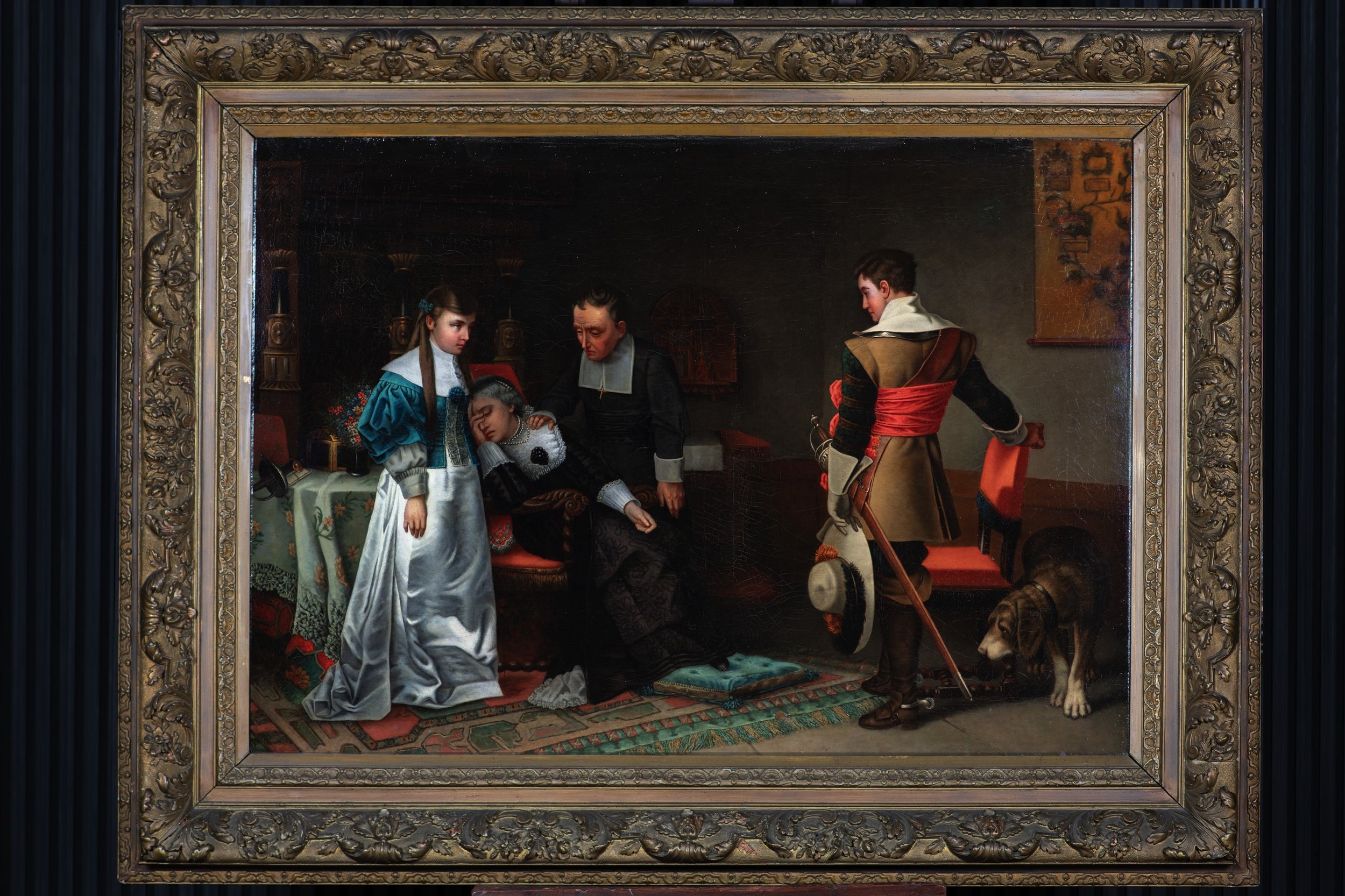 Image 1 of 39
 Image 2 of 39
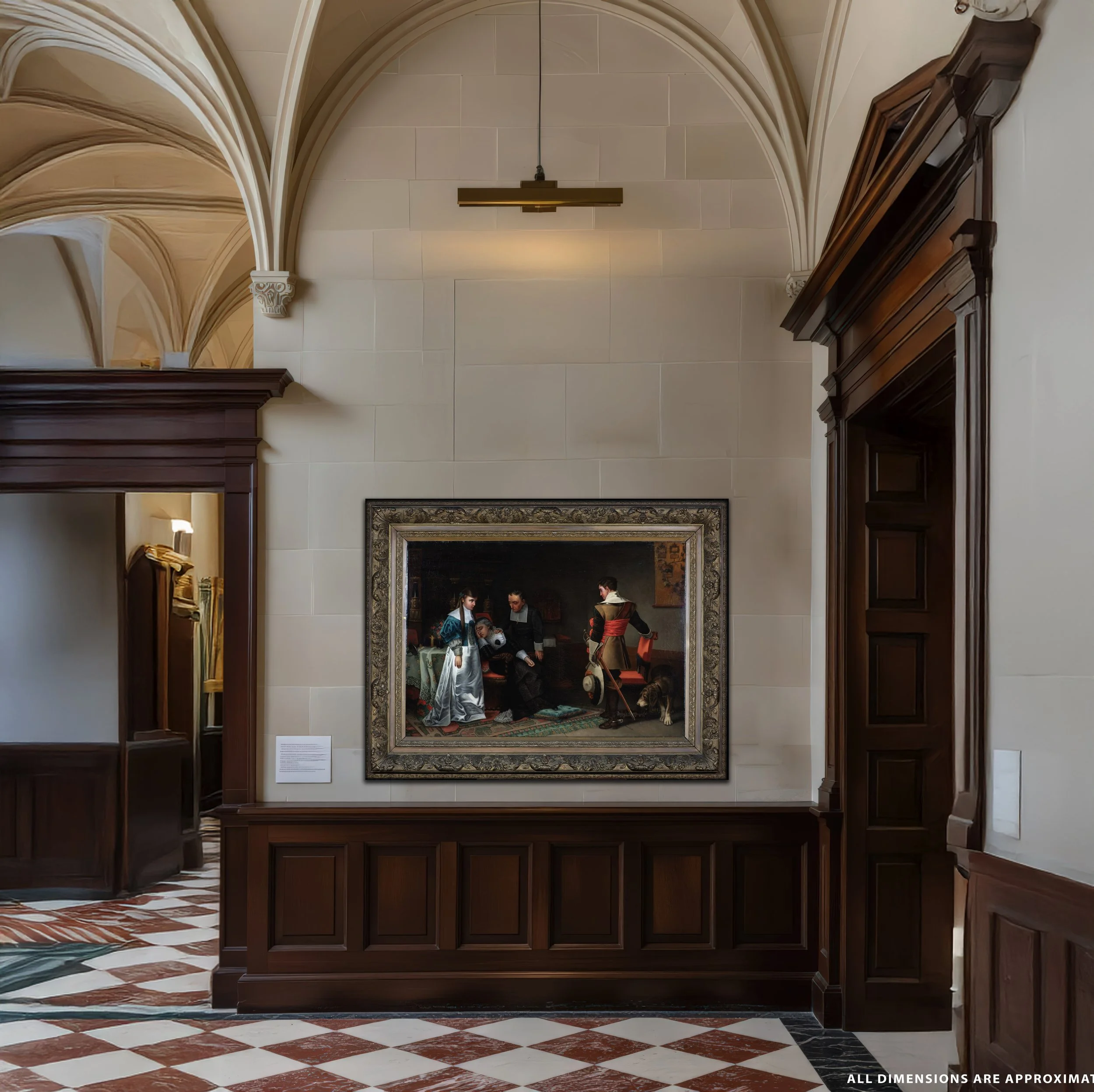 Image 3 of 39
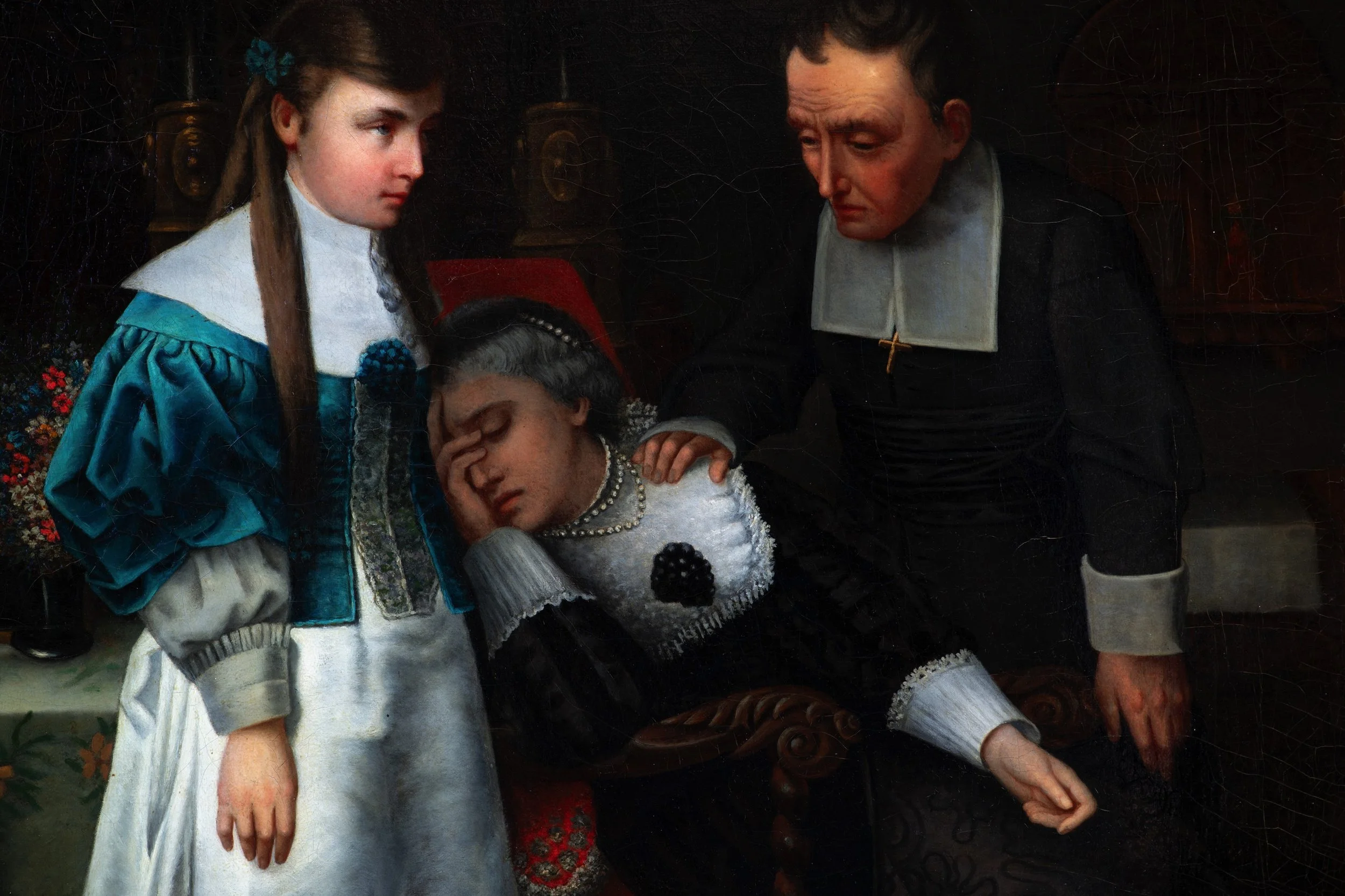 Image 4 of 39
 Image 5 of 39
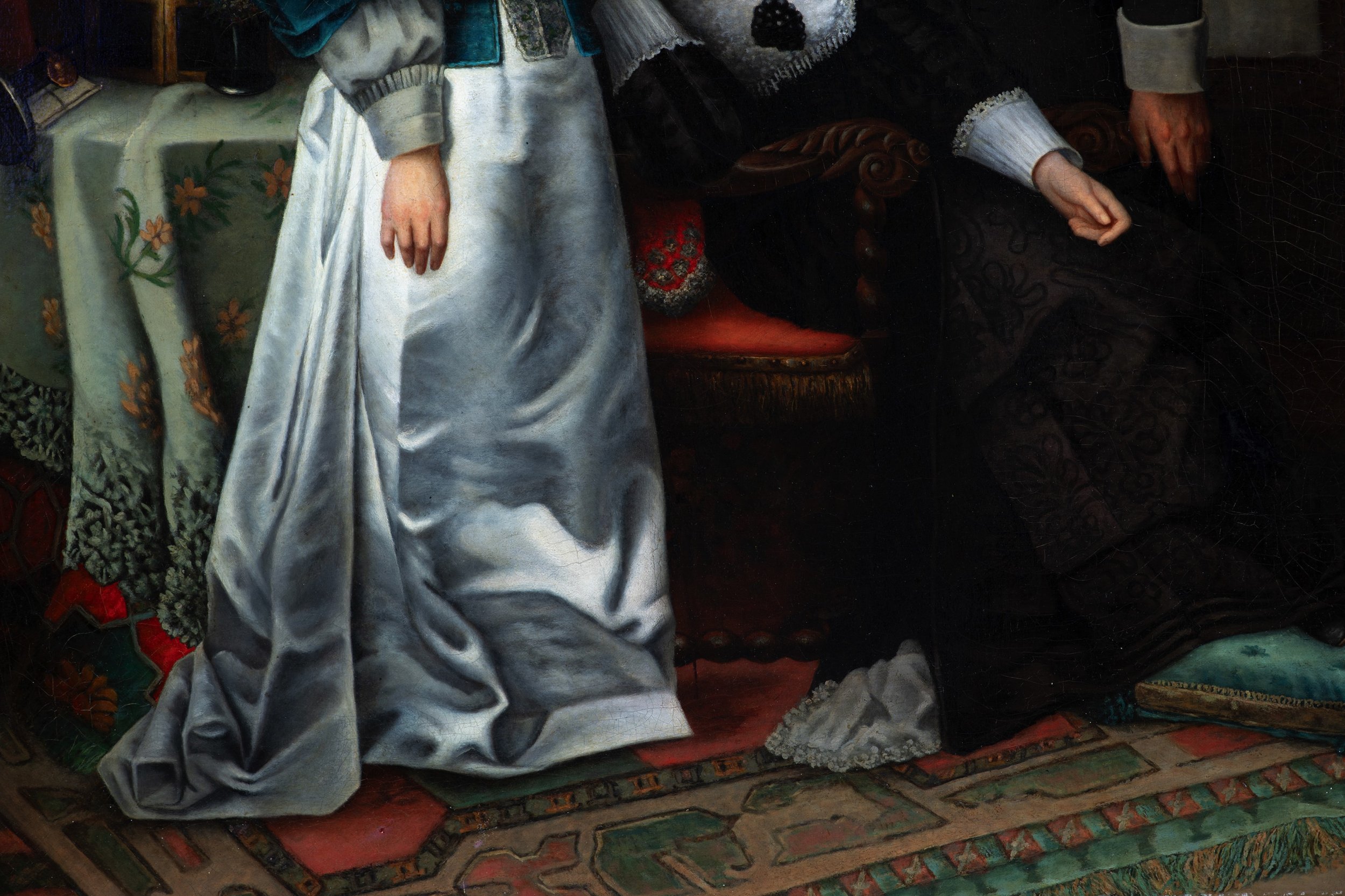 Image 6 of 39
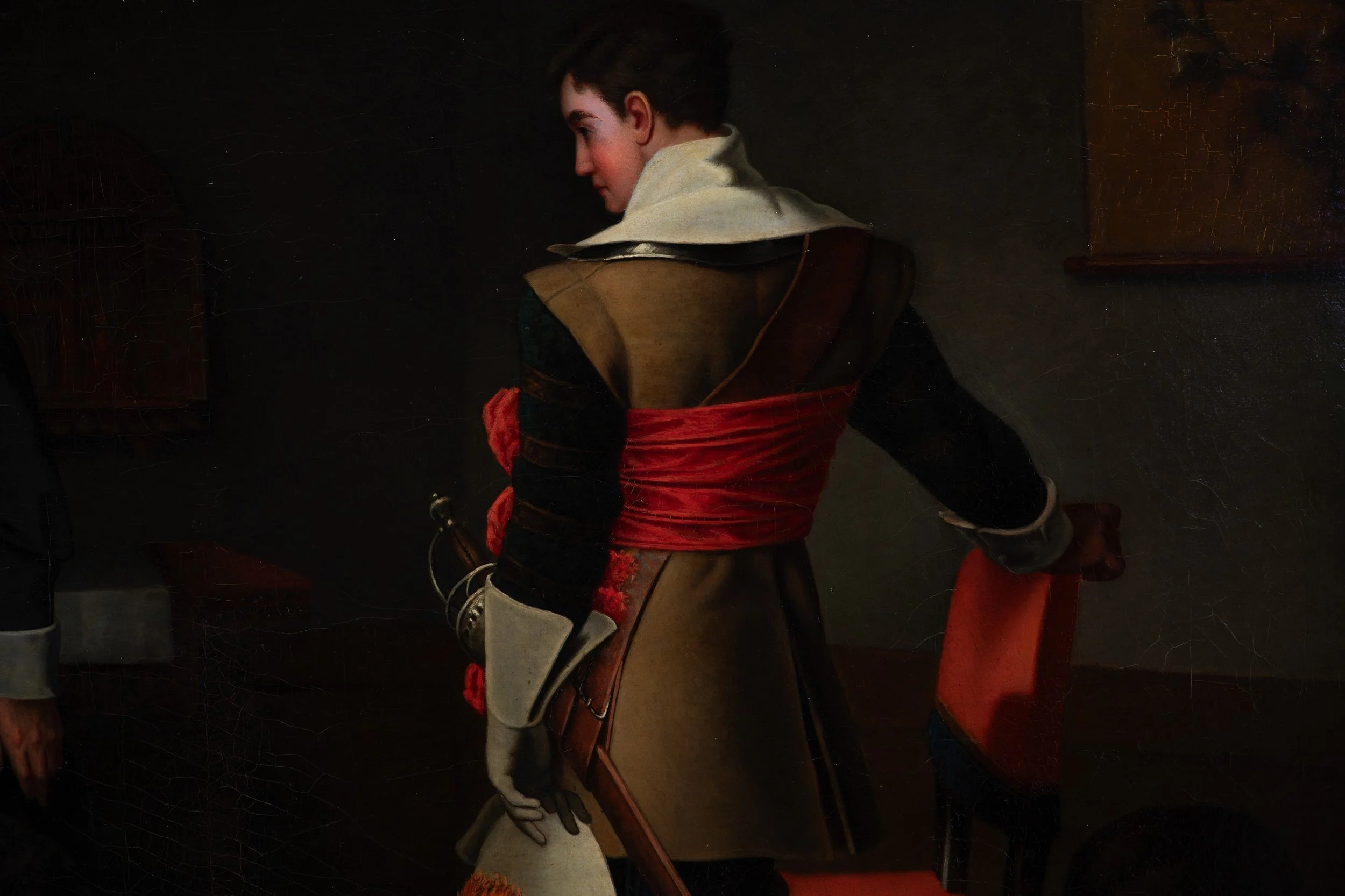 Image 7 of 39
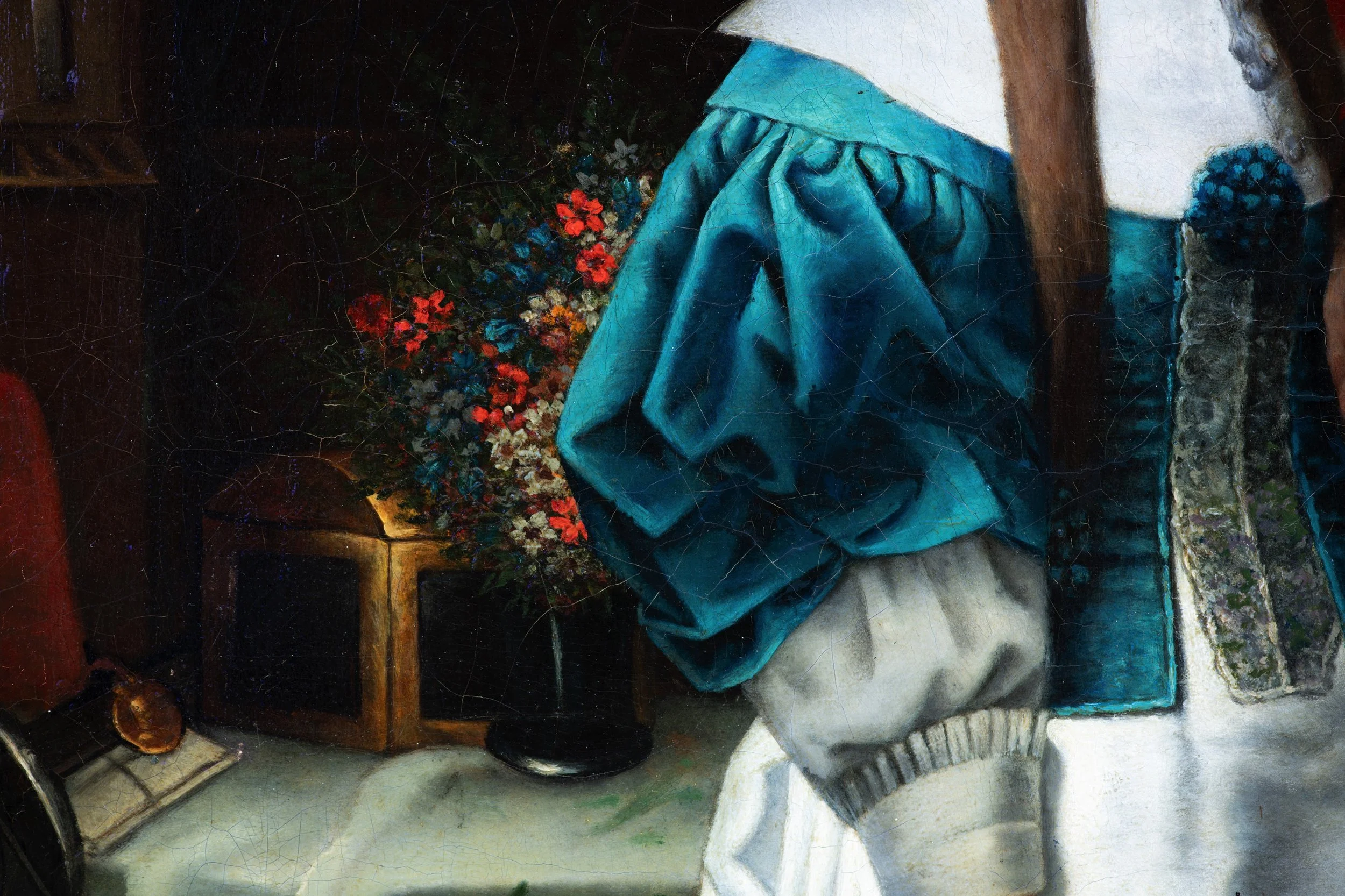 Image 8 of 39
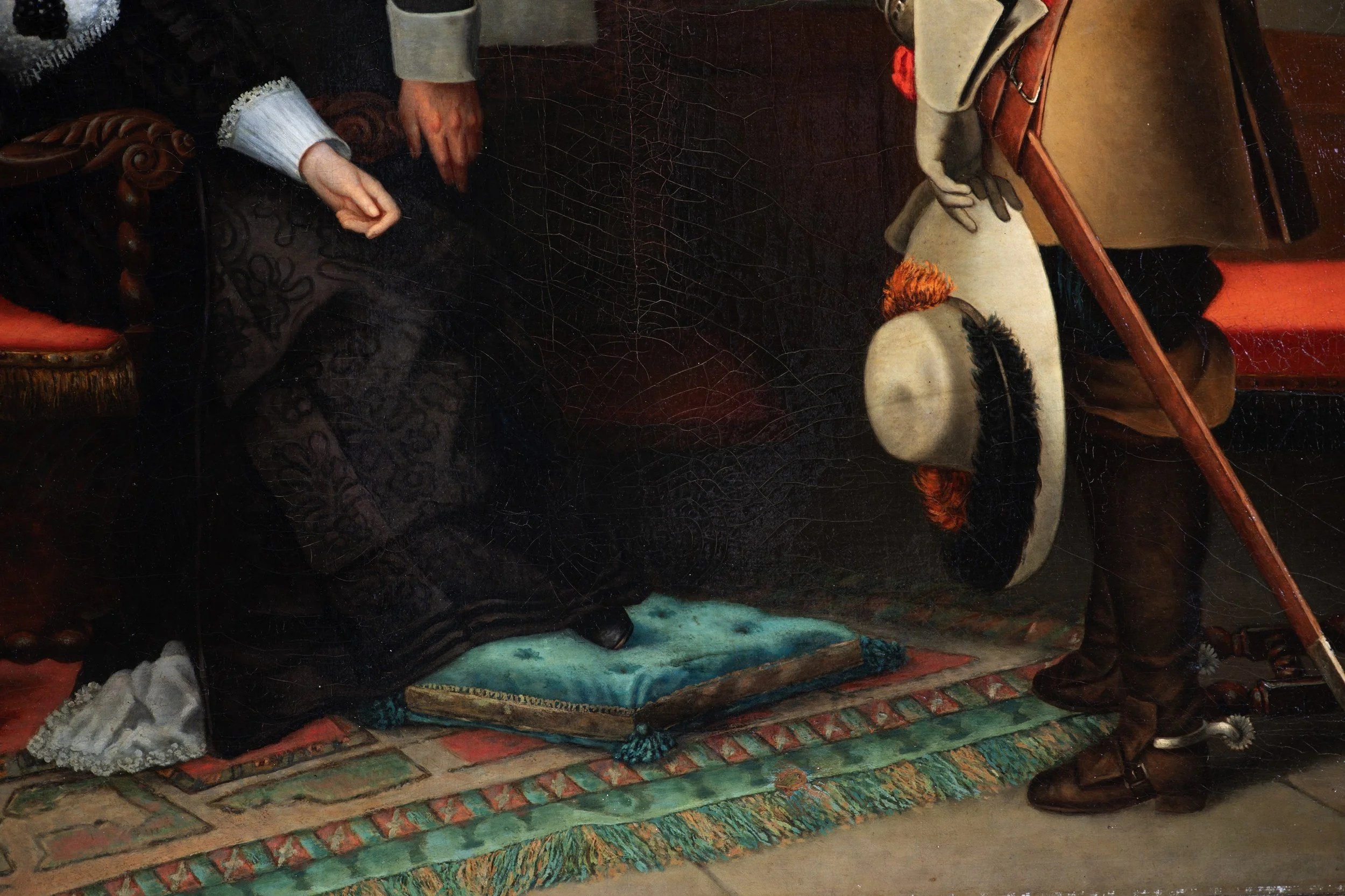 Image 9 of 39
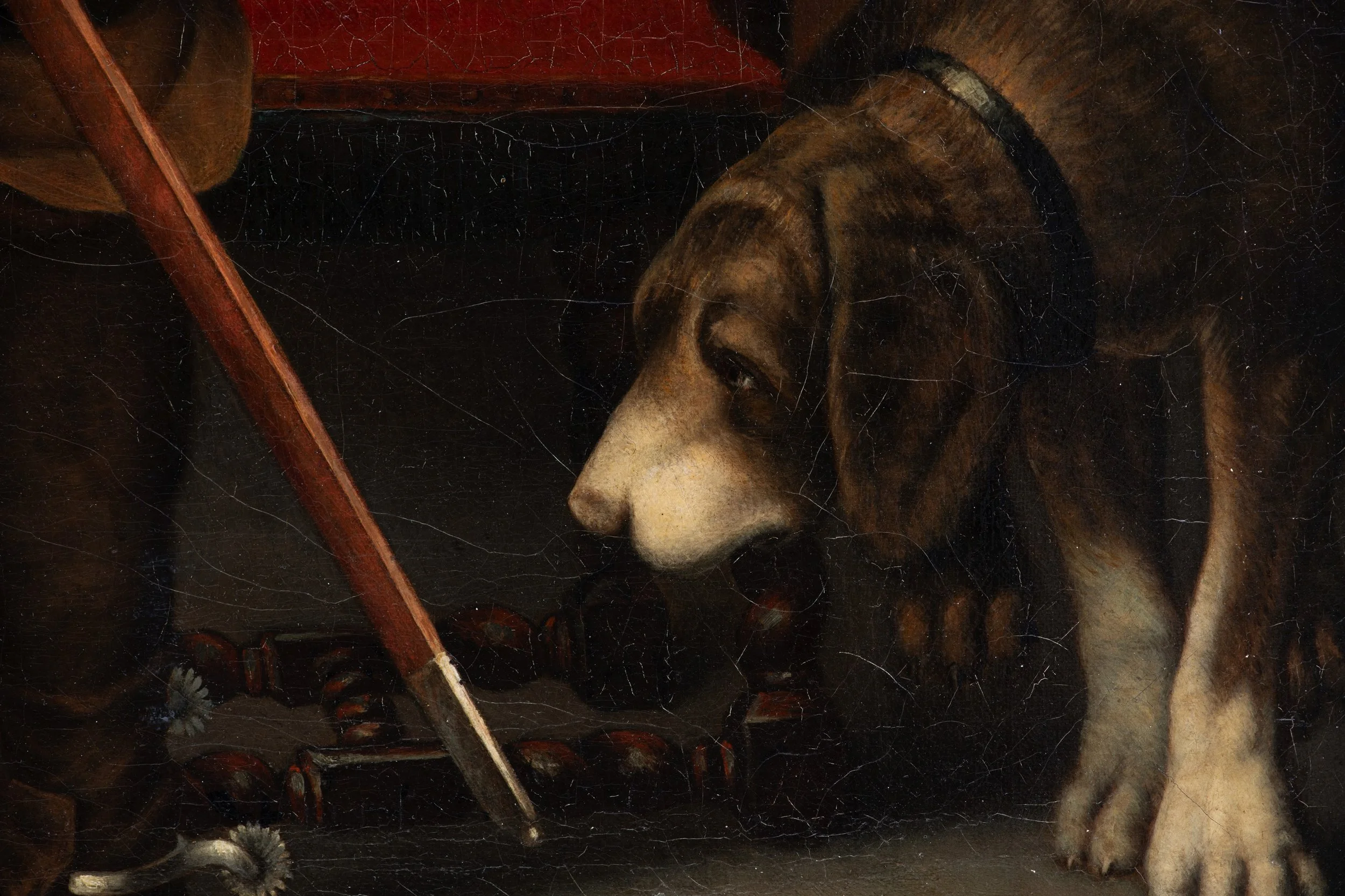 Image 10 of 39
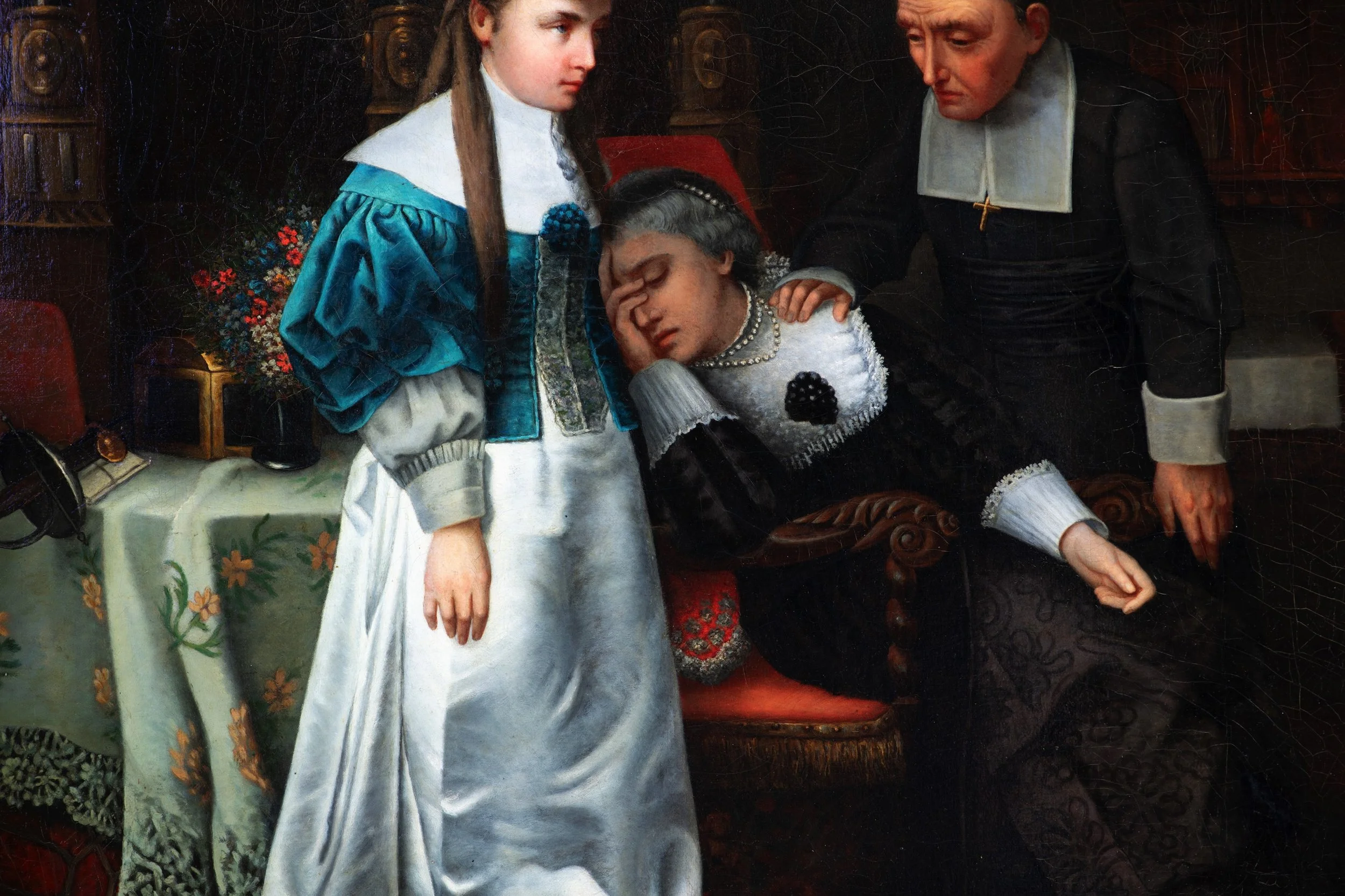 Image 11 of 39
 Image 12 of 39
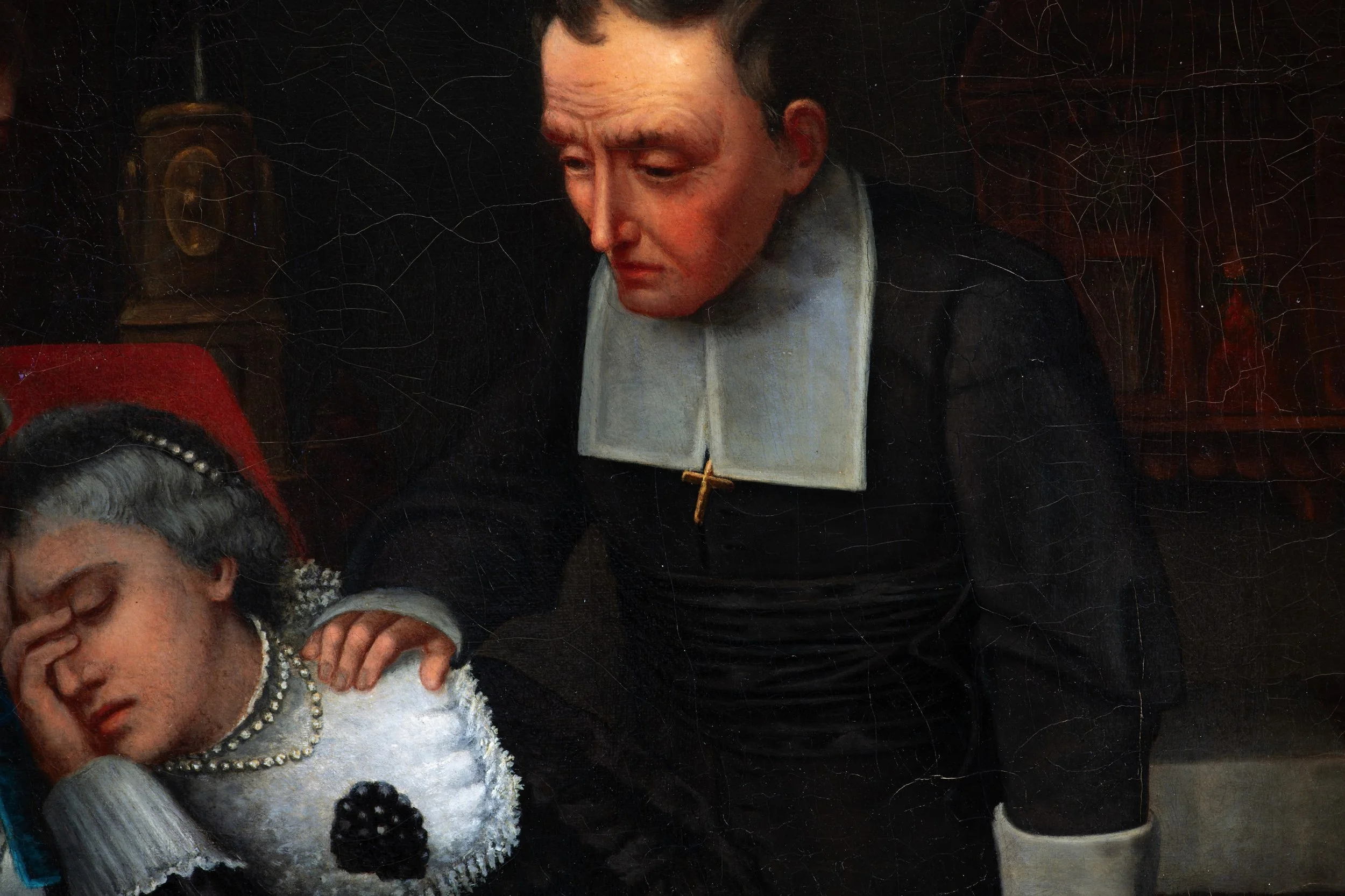 Image 13 of 39
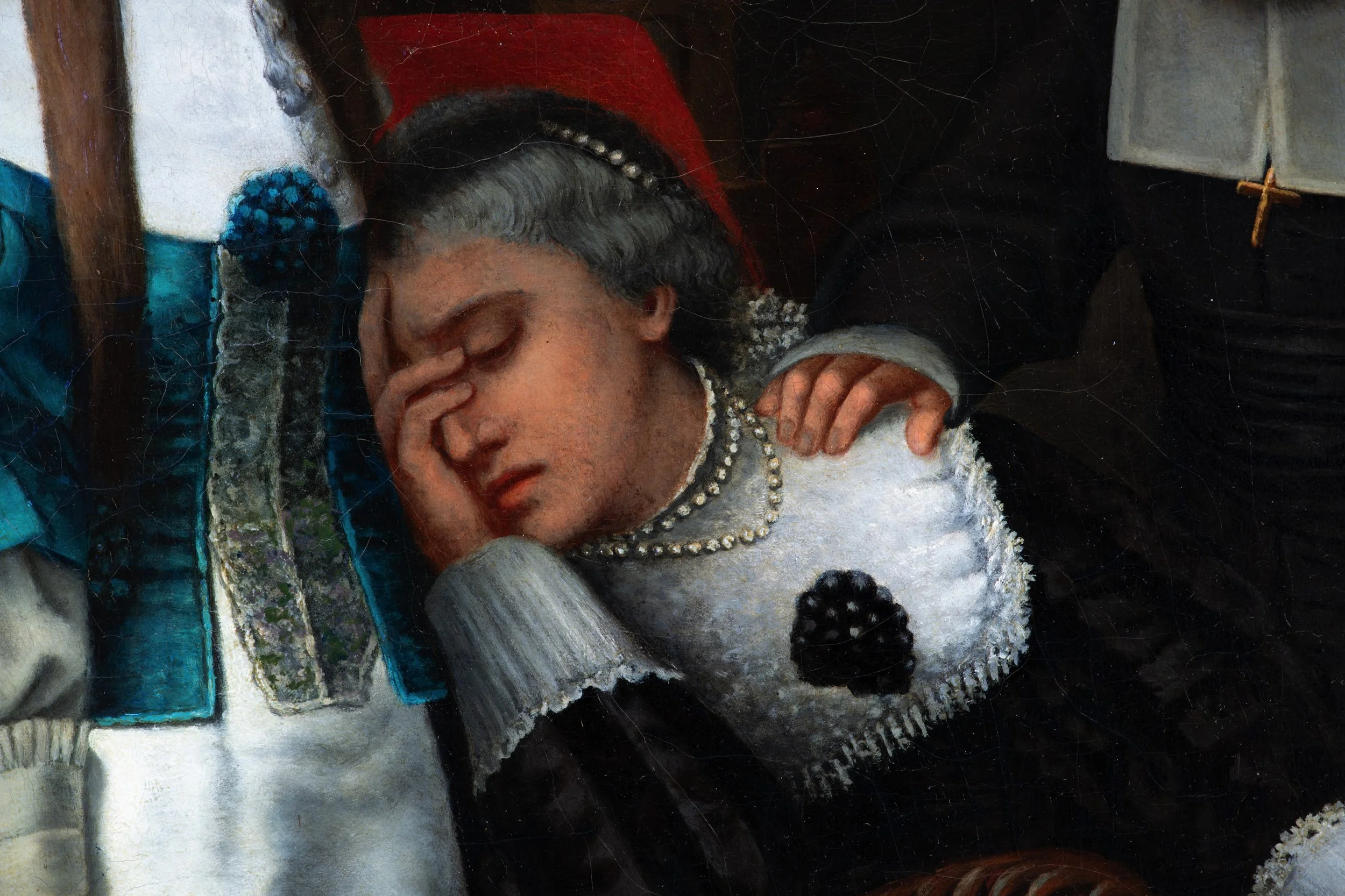 Image 14 of 39
 Image 15 of 39
 Image 16 of 39
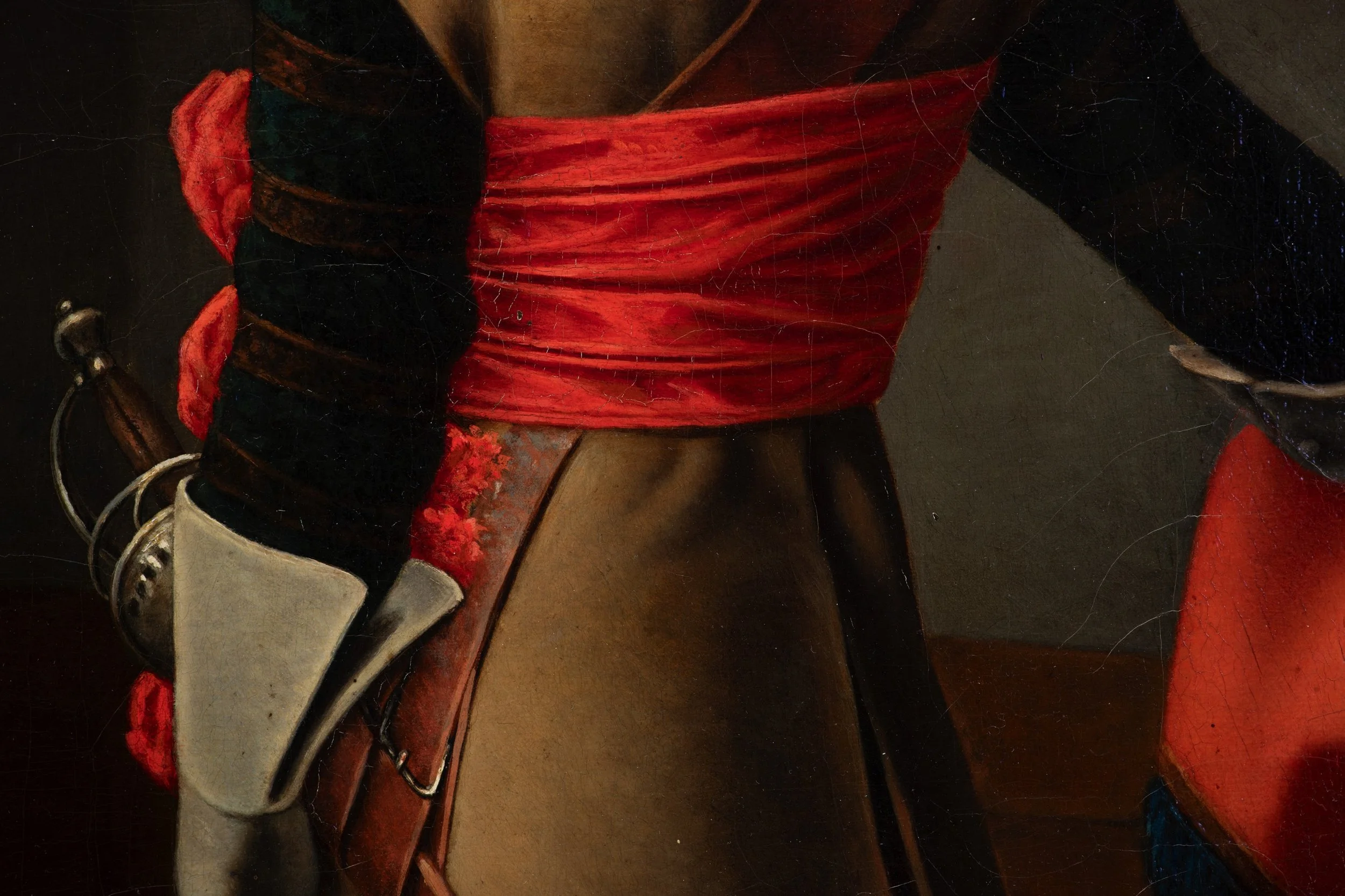 Image 17 of 39
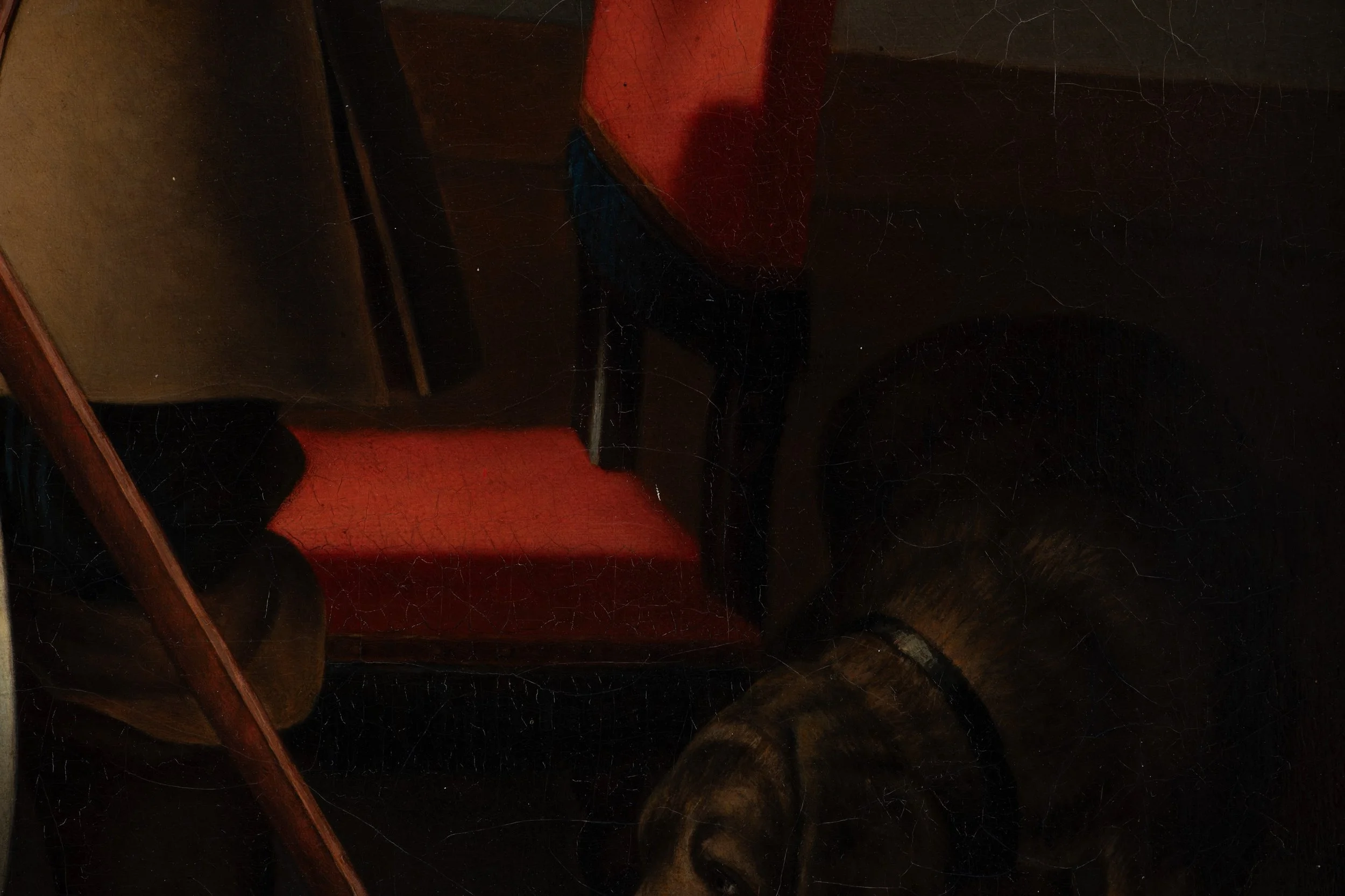 Image 18 of 39
 Image 19 of 39
 Image 20 of 39
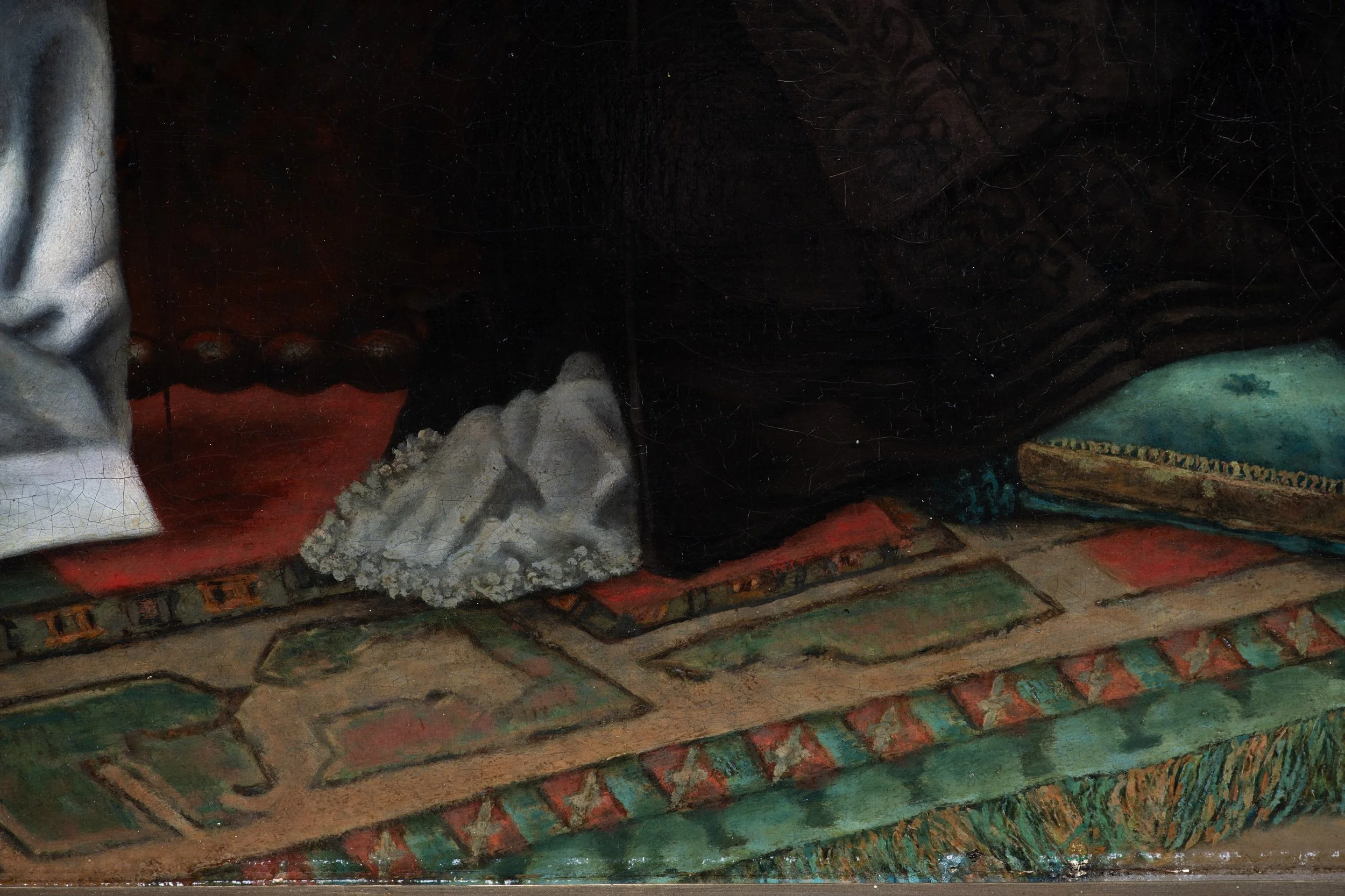 Image 21 of 39
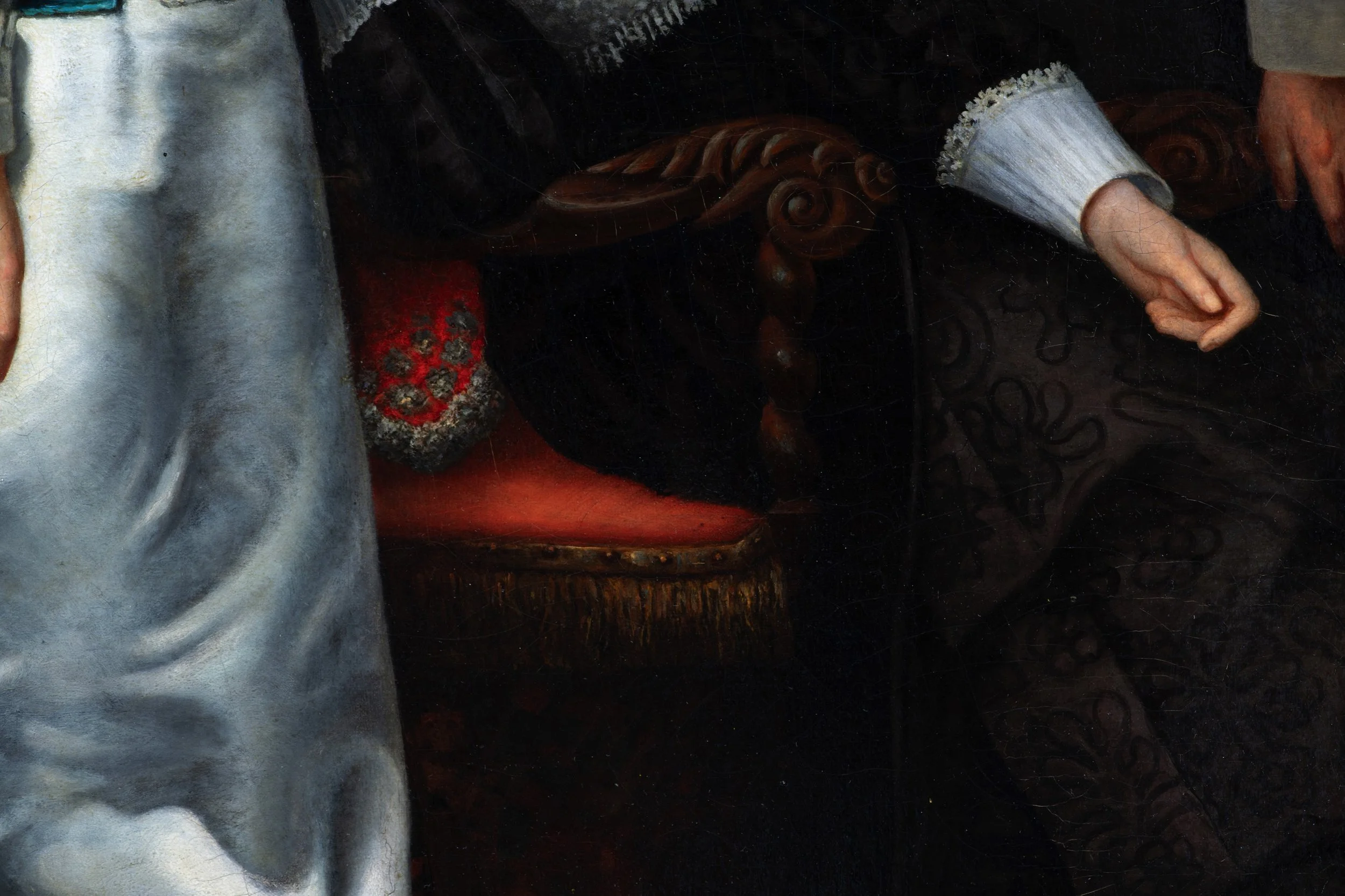 Image 22 of 39
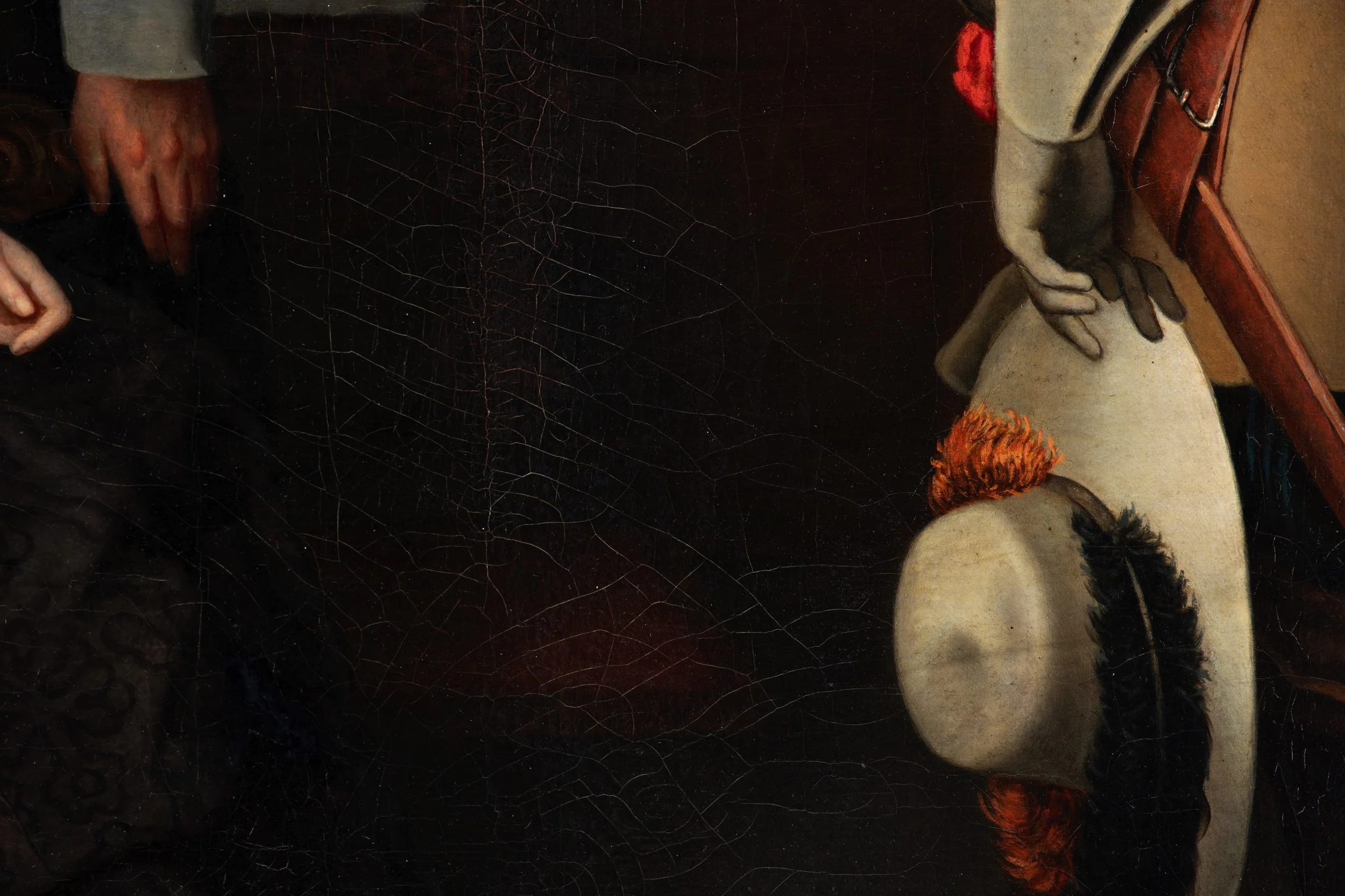 Image 23 of 39
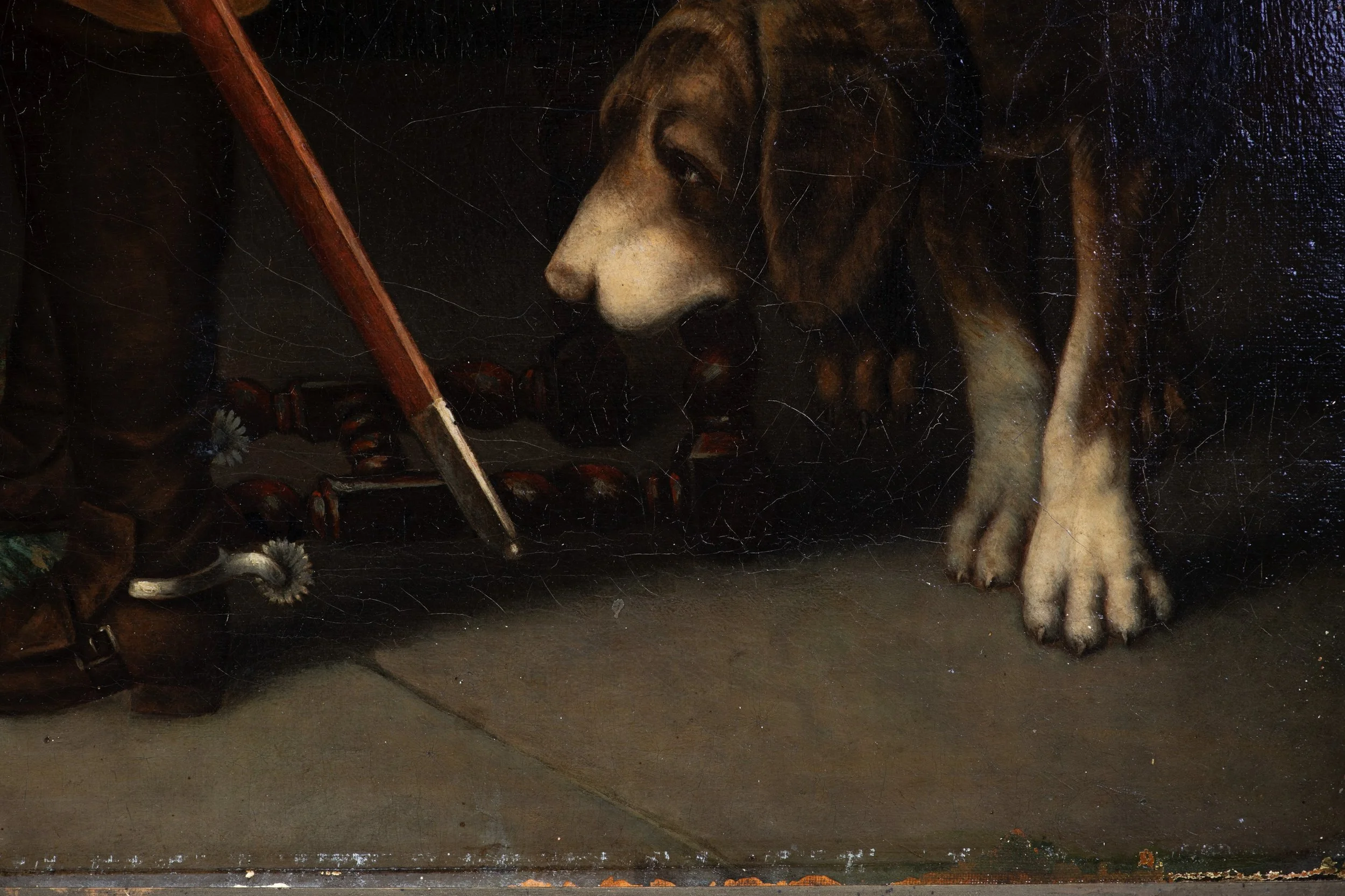 Image 24 of 39
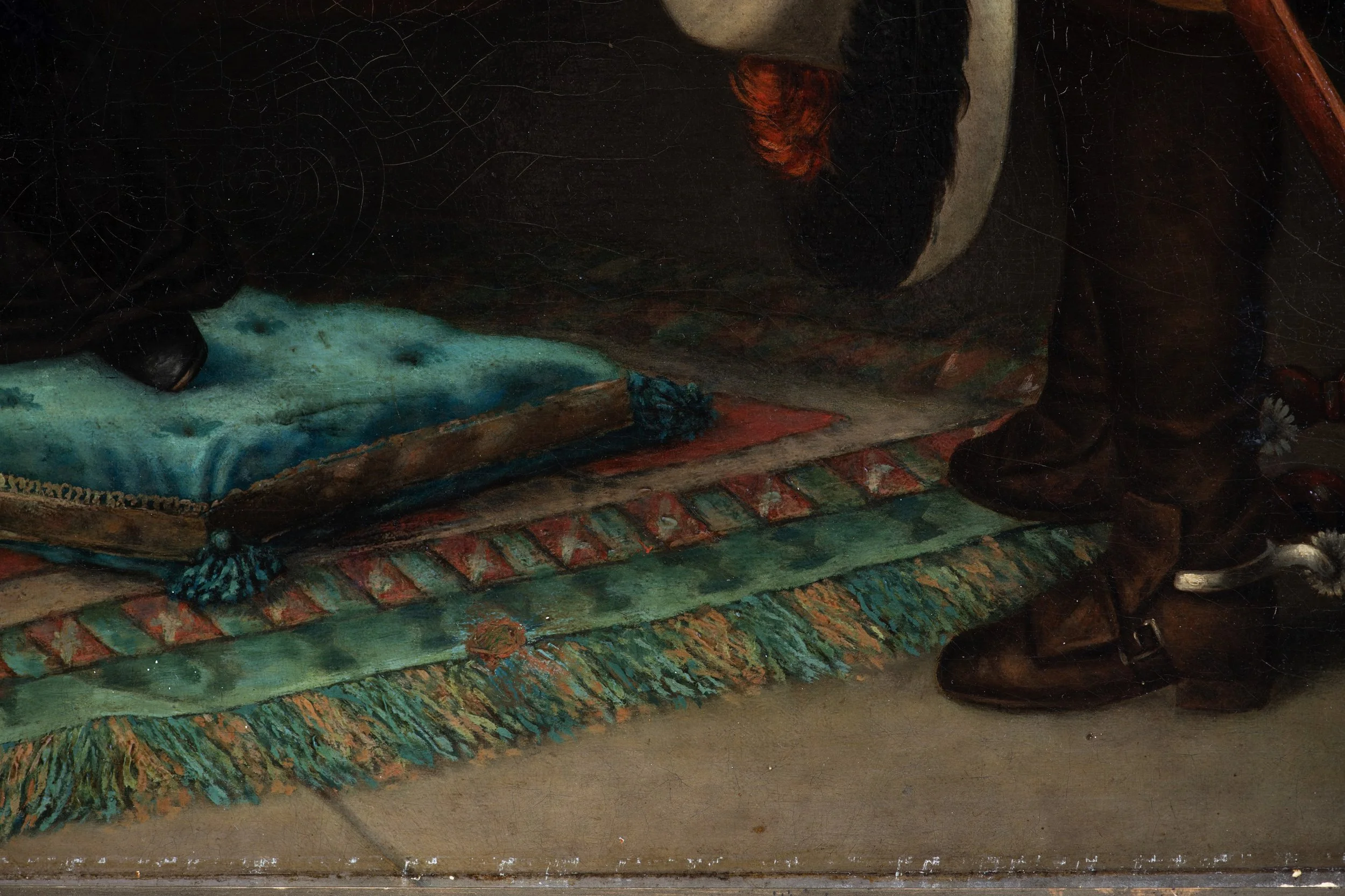 Image 25 of 39
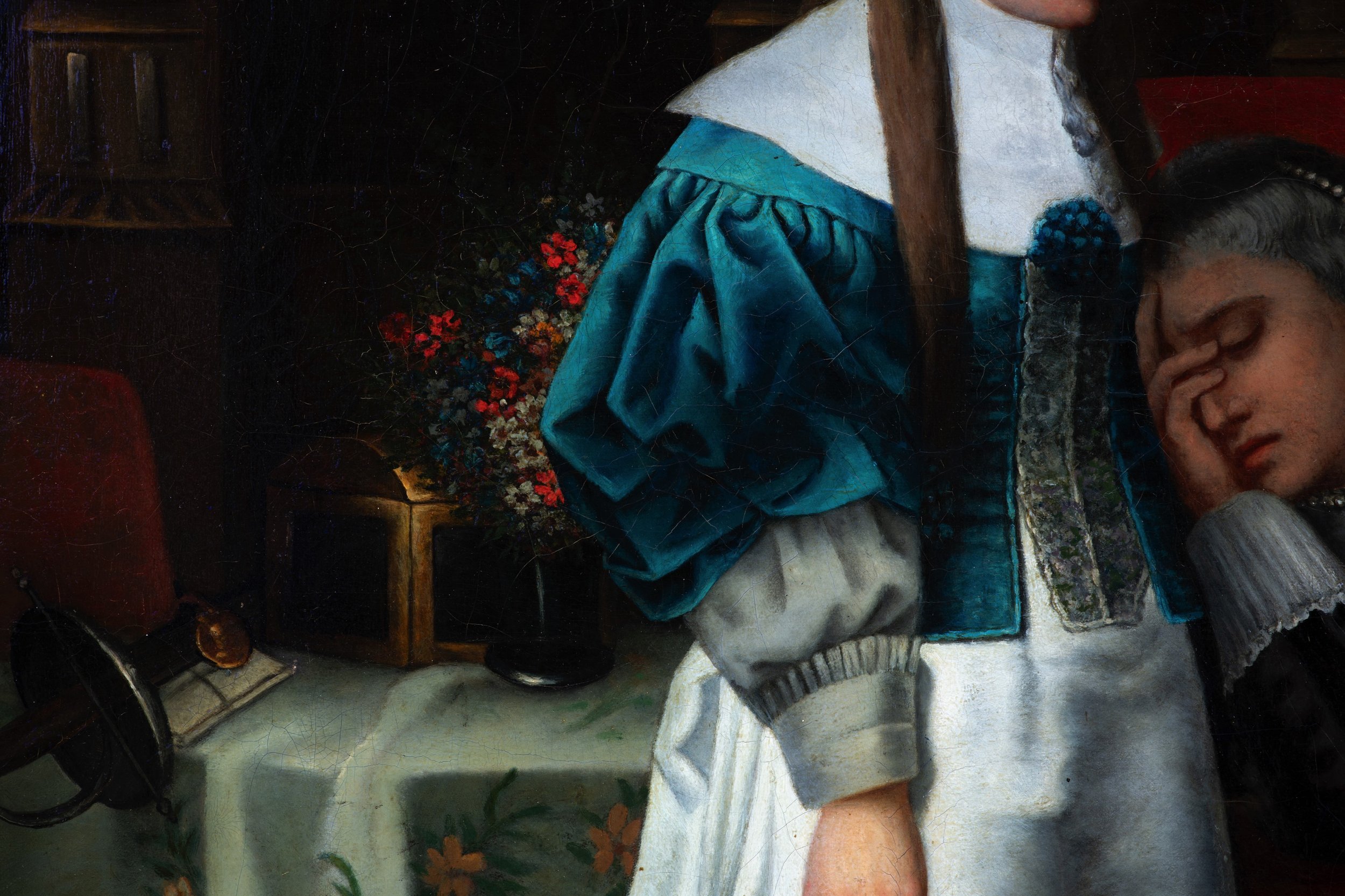 Image 26 of 39
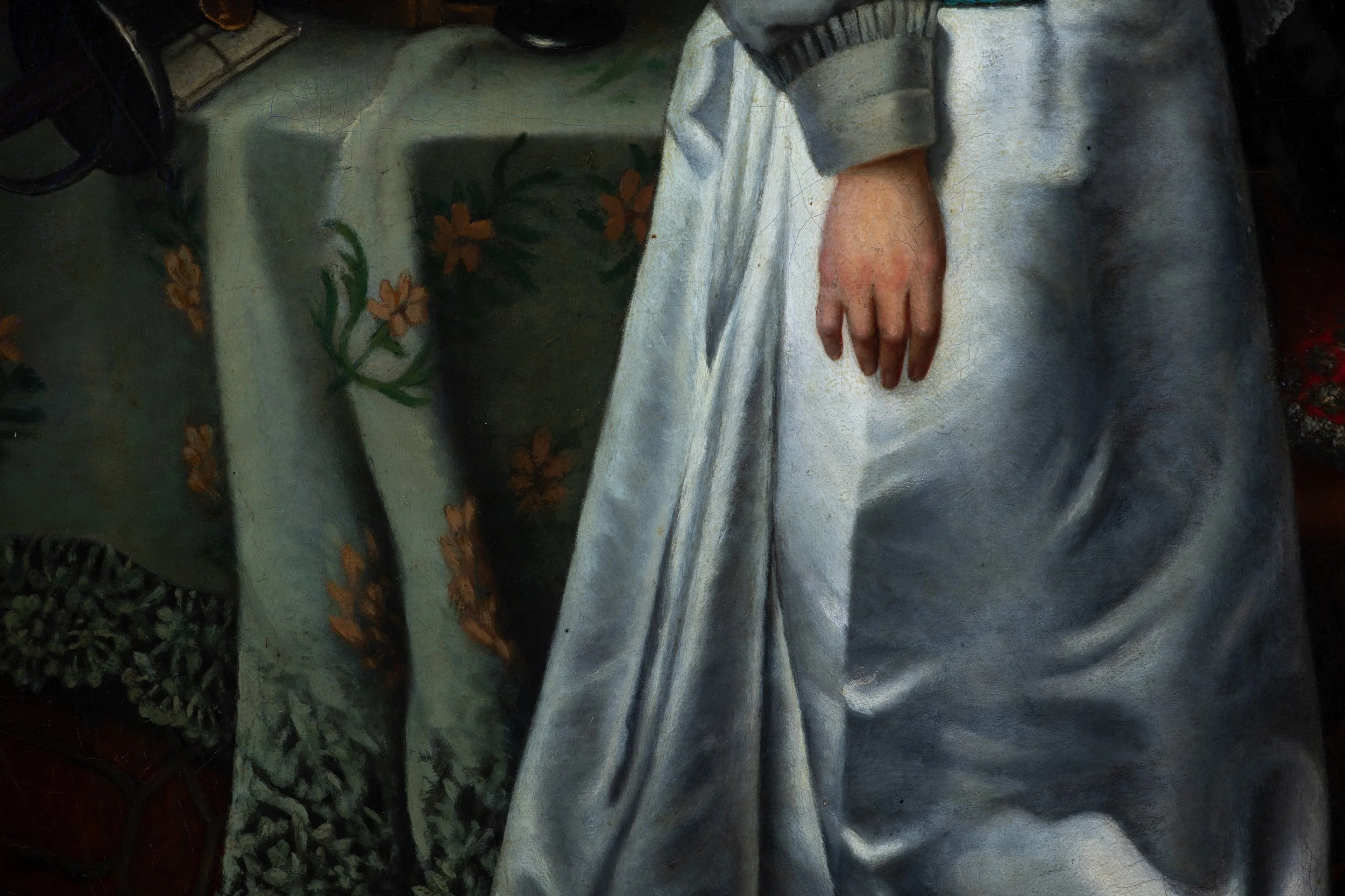 Image 27 of 39
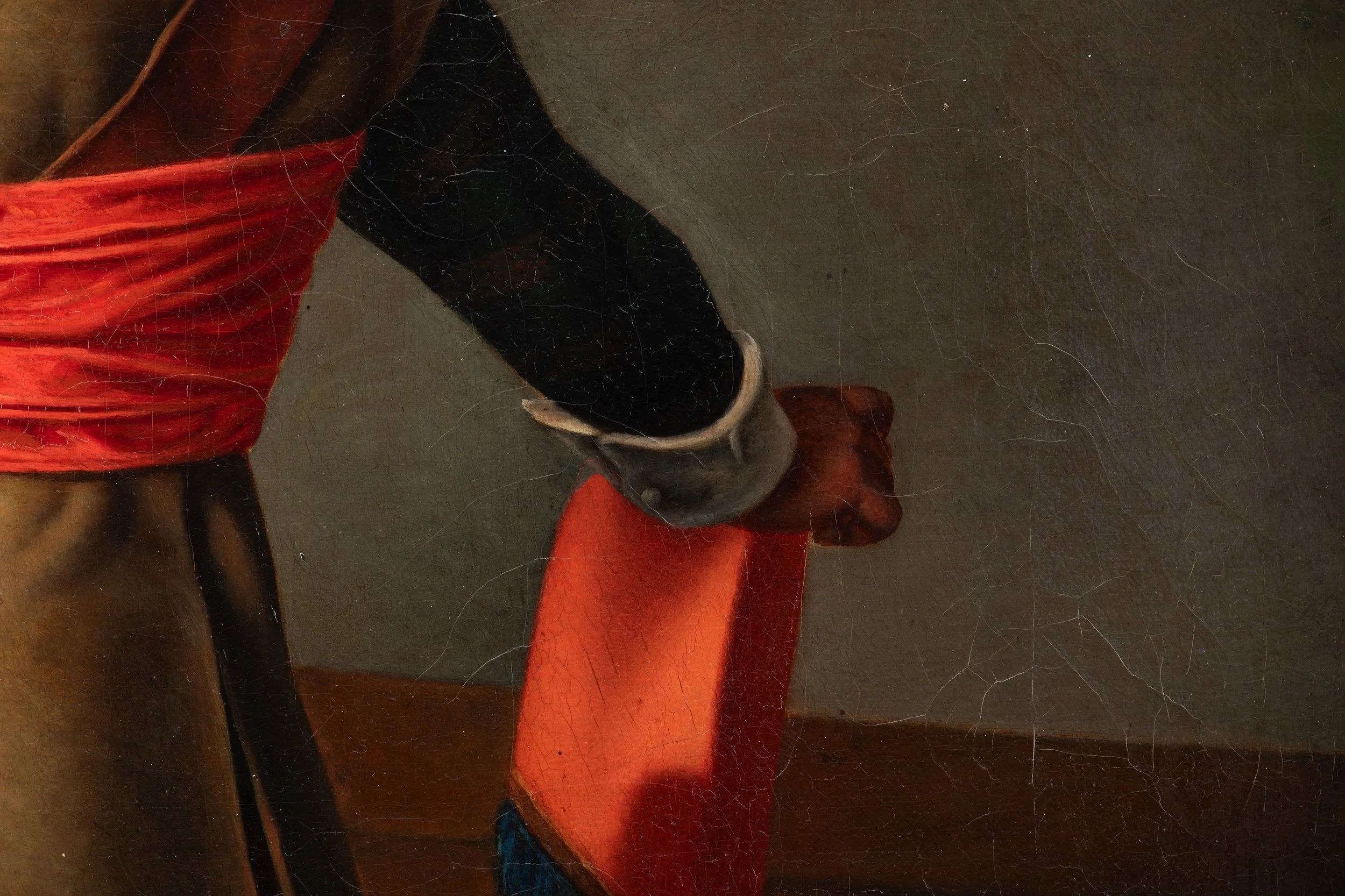 Image 28 of 39
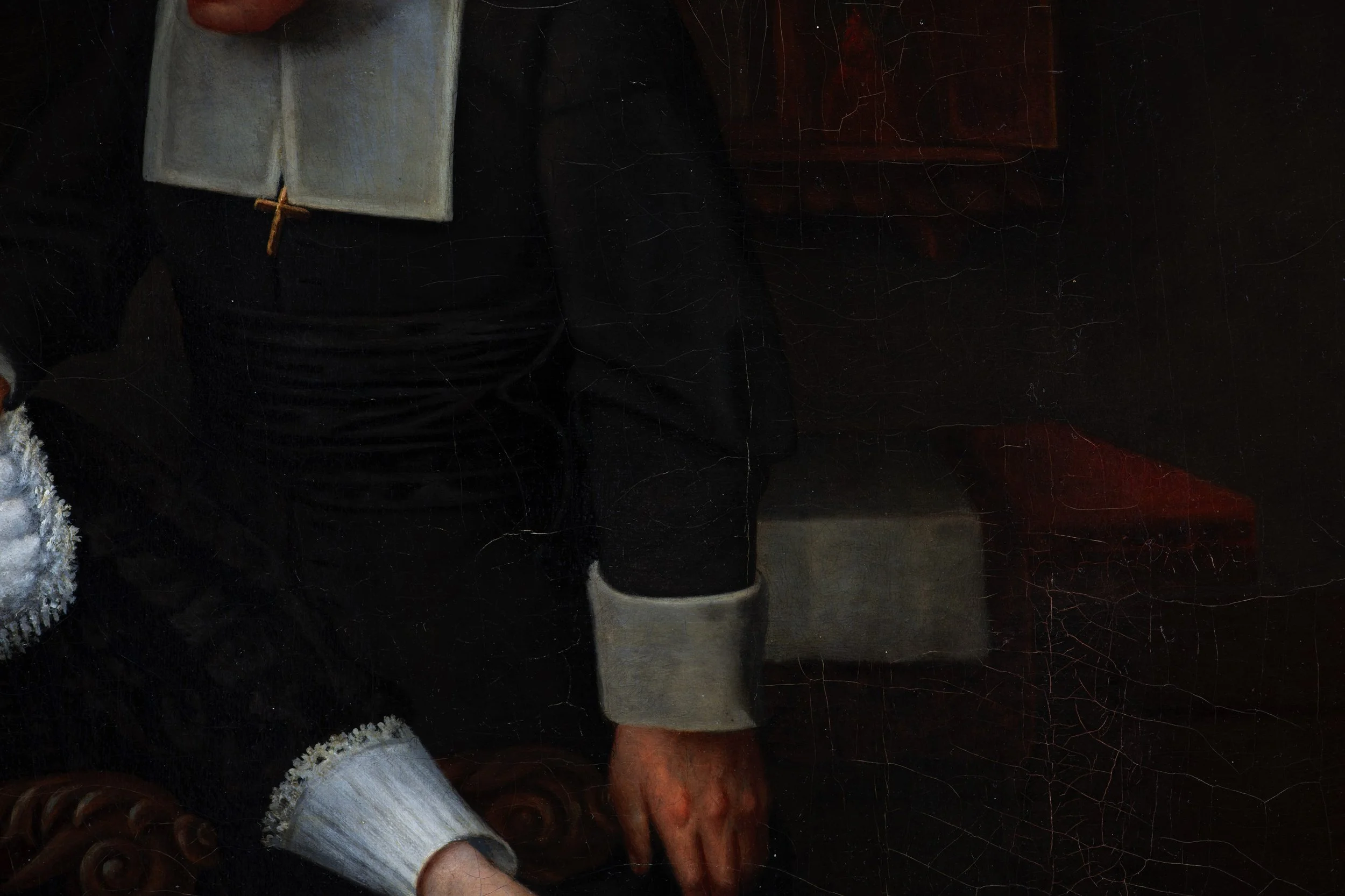 Image 29 of 39
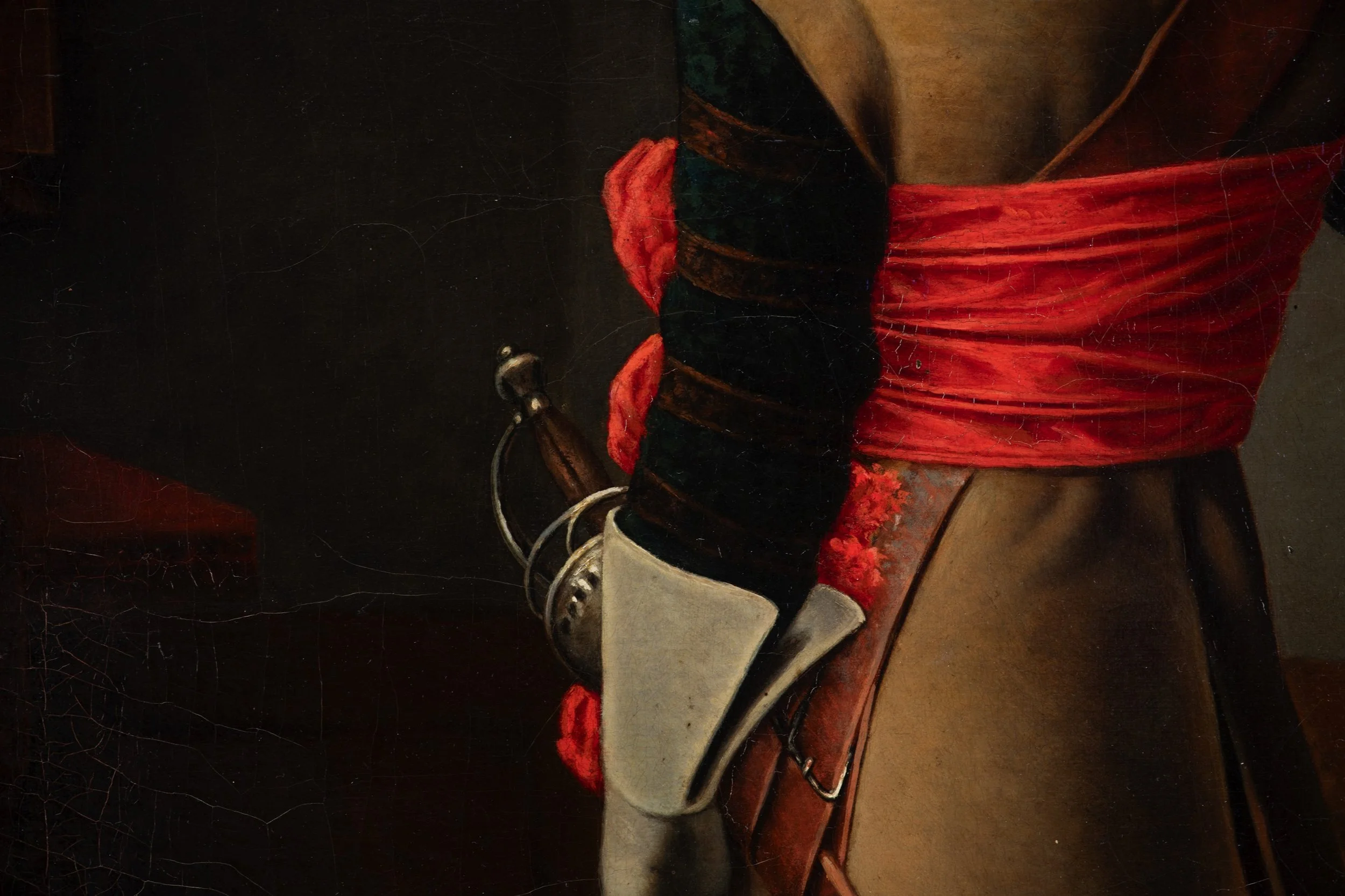 Image 30 of 39
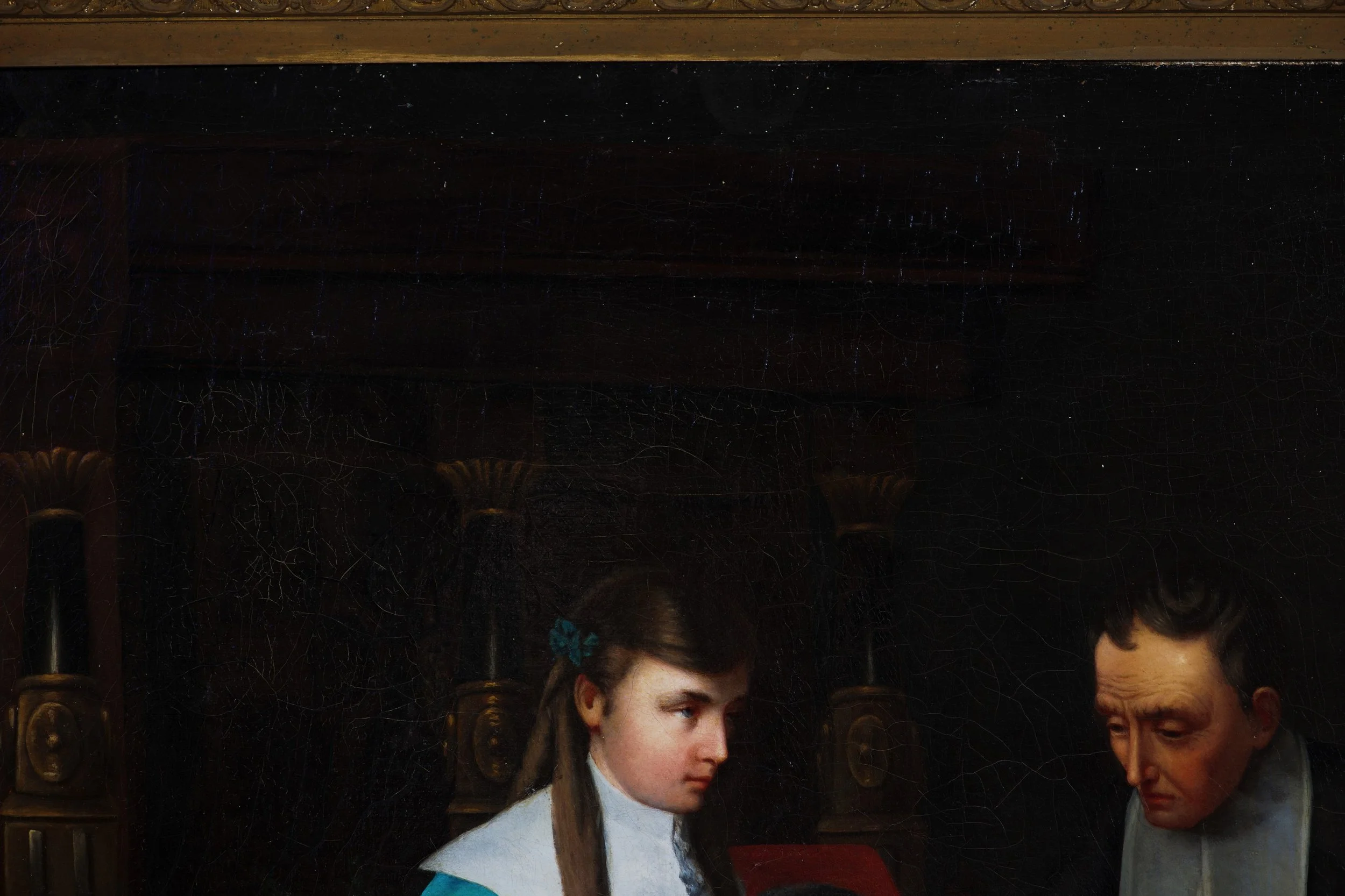 Image 31 of 39
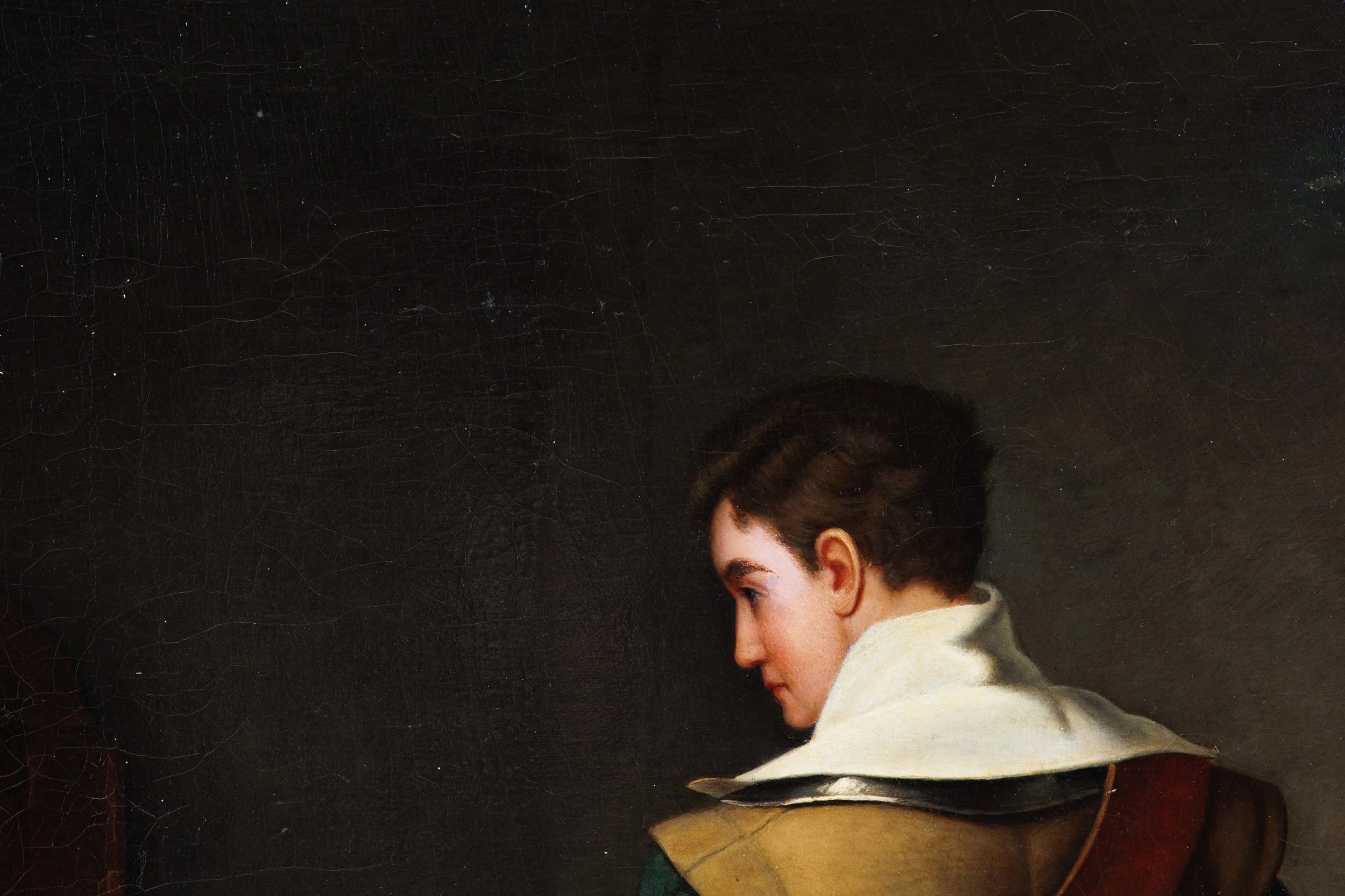 Image 32 of 39
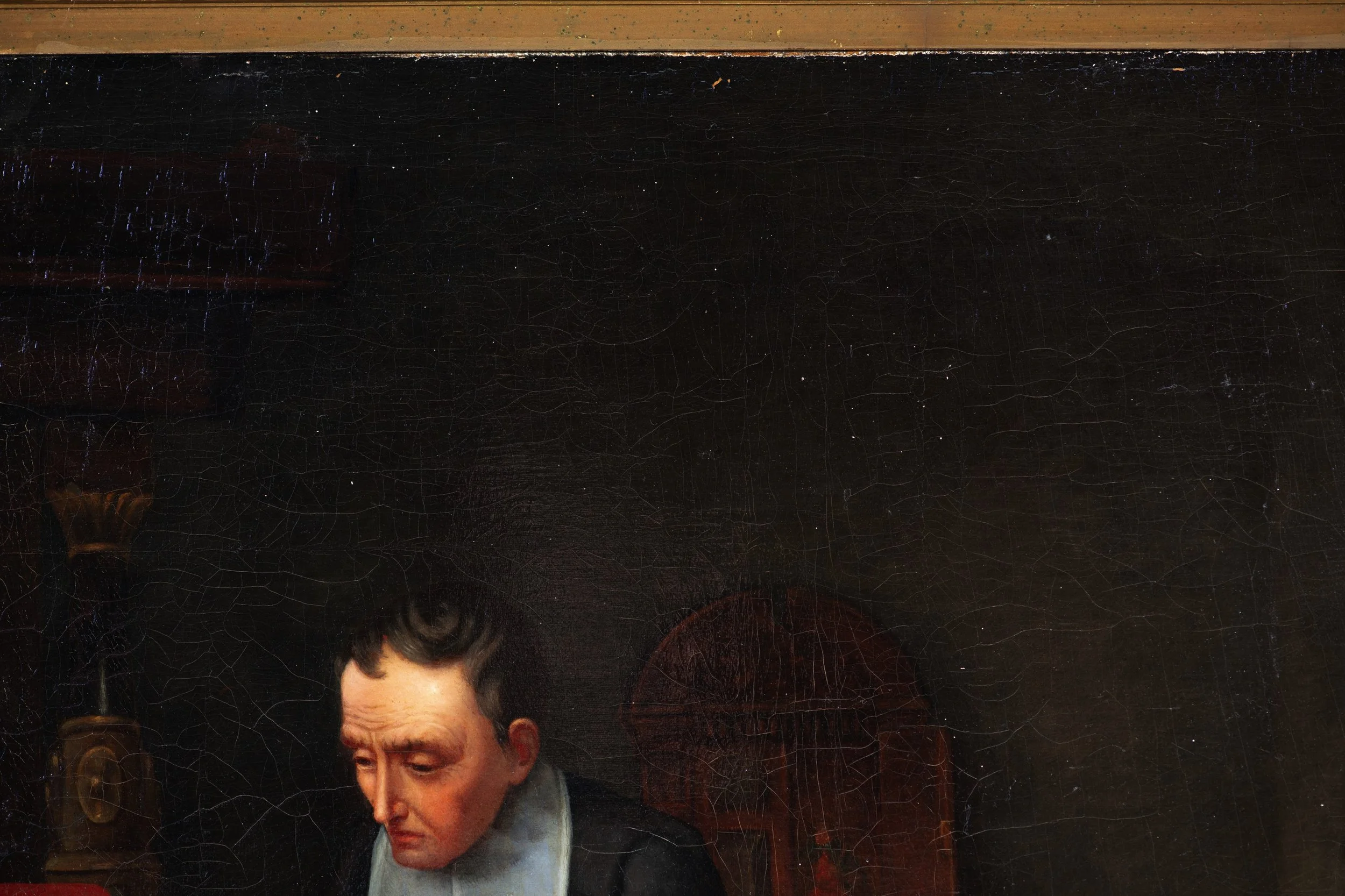 Image 33 of 39
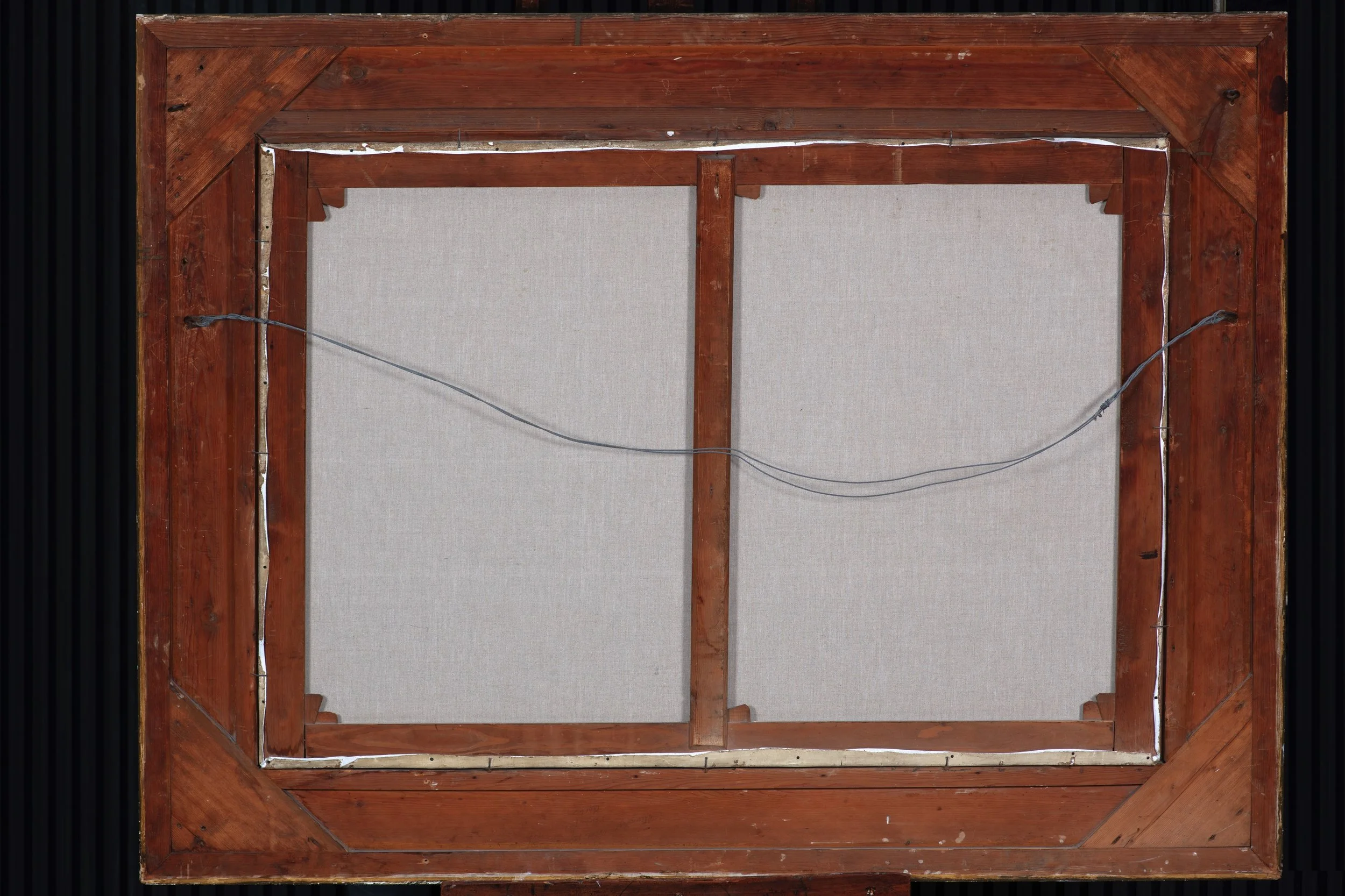 Image 34 of 39
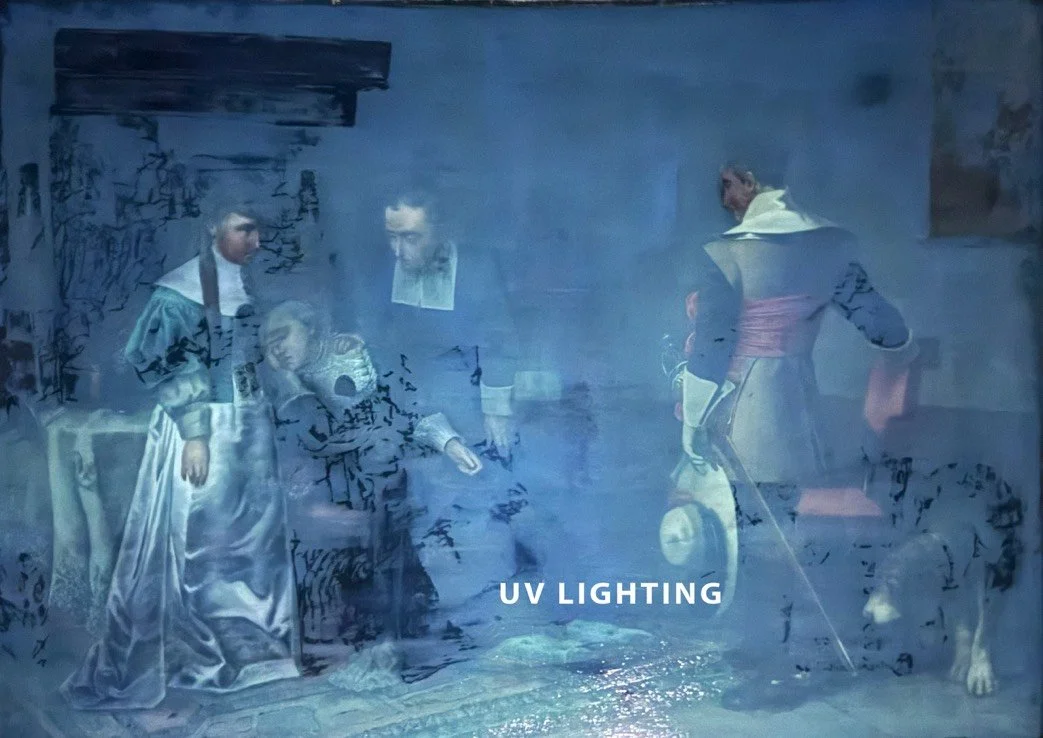 Image 35 of 39
 Image 36 of 39
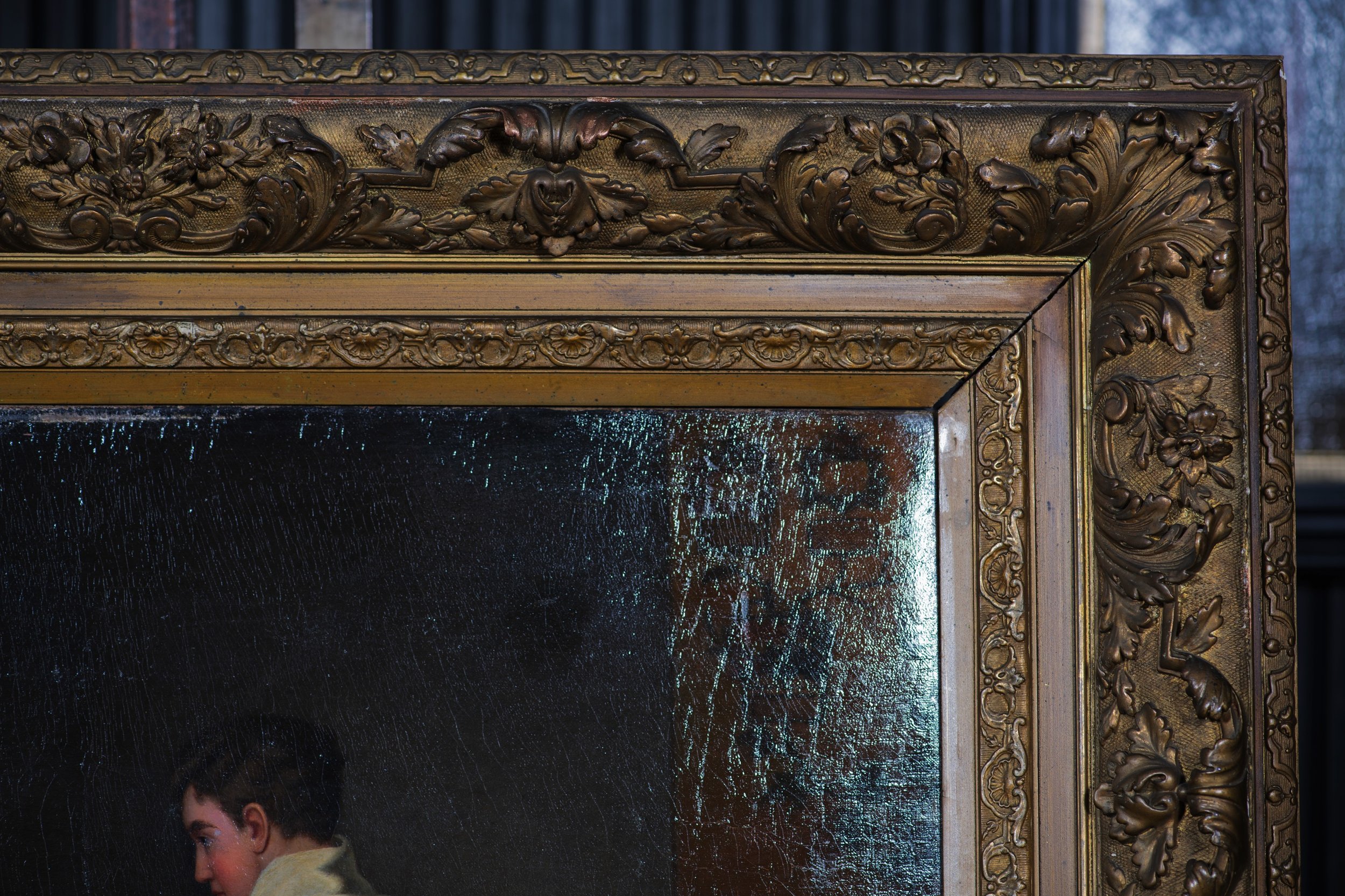 Image 37 of 39
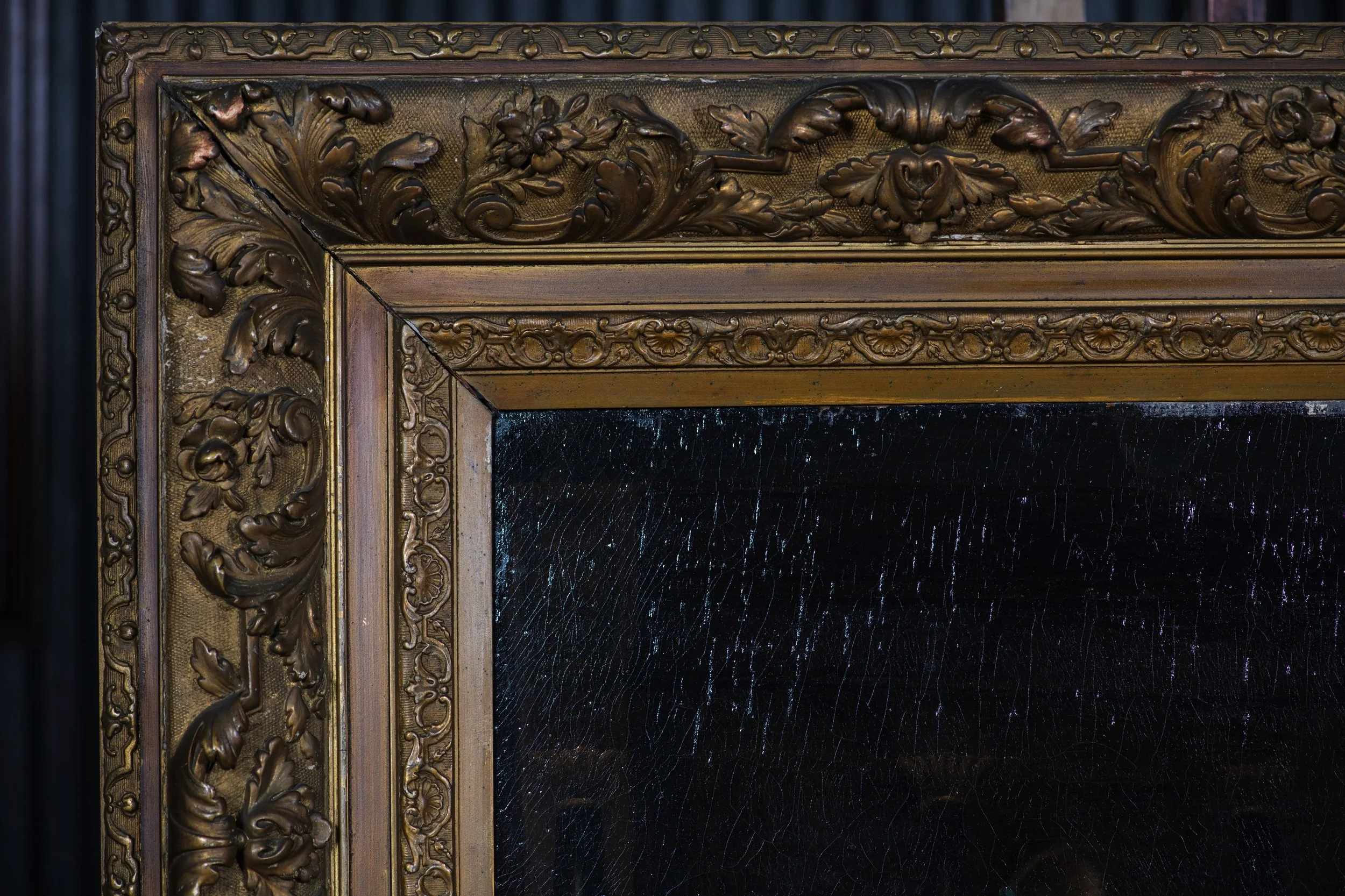 Image 38 of 39
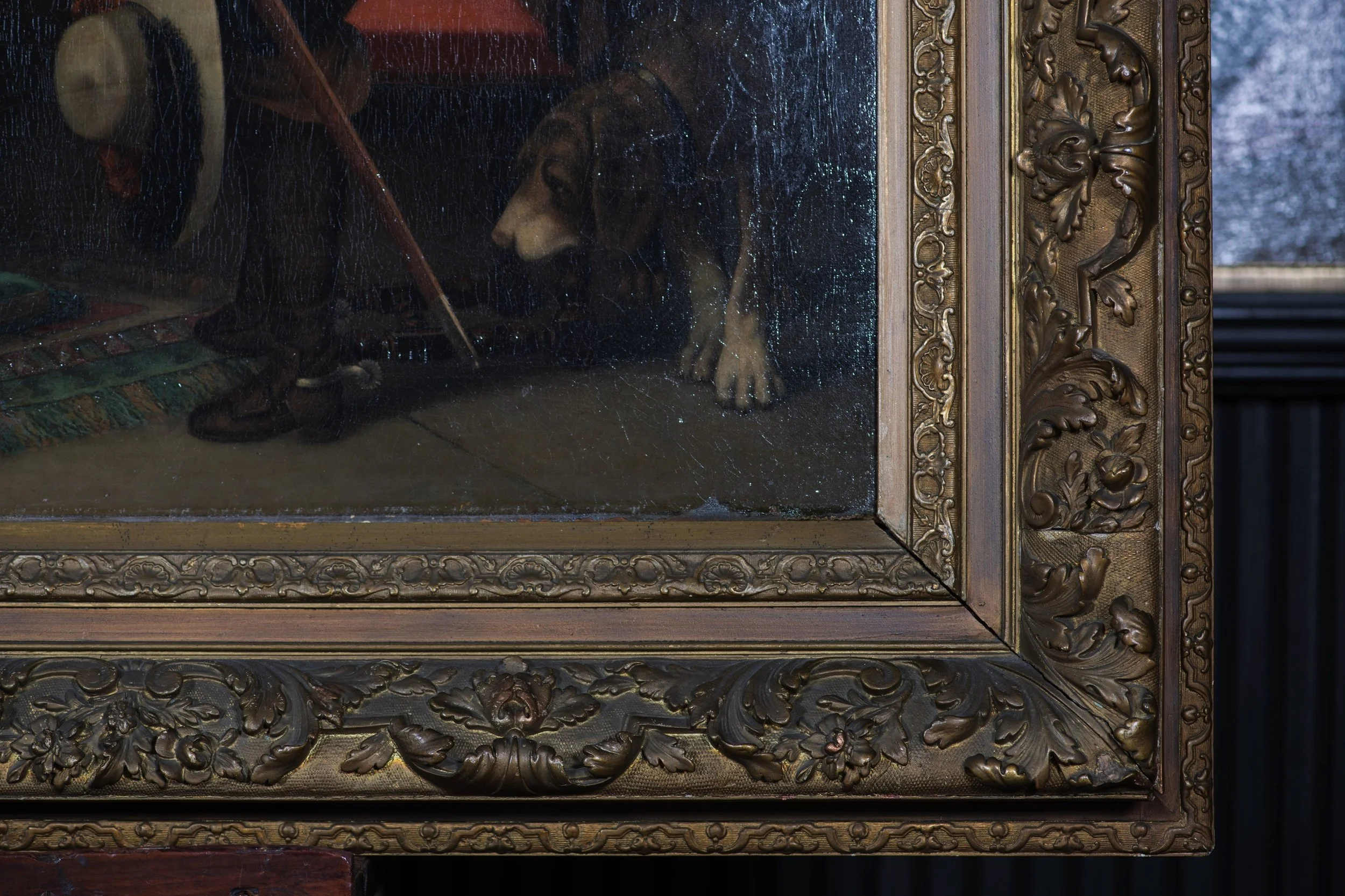 Image 39 of 39