The Death of a Beguine
Circle of Frans Francken II (1581–1642)
*RESERVED
Oil on canvas, 104 × 105 cm; framed 121 × 122 cm
Flemish Baroque – unsigned – relined, craquelure, inpainting visible under UV
Introduction
This monumental Baroque painting is an exceptional and rare example of the religious pictorial culture that flourished in the seventeenth-century Southern Netherlands, particularly within the world of the beguinages. The subject of the pious death of a Beguine is not a conventional hagiographic motif; rather, it belongs to a specific iconographic tradition that emerged strongly from around 1630 onward, shaped by the Counter-Reformation and by the internal identity-building of the Beguine communities. During this period, the beguinages developed a distinct visual language in which Saint Begga—only from the early 1600s adopted as the symbolic patroness—became a central figure of institutional self-representation, spiritual purity, and communal devotion.
Against this background, a cluster of artworks arose in which deathbed scenes, celestial interventions, and exemplary Beguine virtues were visually articulated to reinforce both internal religious discipline and the external legitimacy of the Beguine way of life. The present painting aligns closely with this visual tradition and is stylistically deeply connected to the circle of Frans Francken II, one of Antwerp’s foremost early Baroque painters. The work displays hallmarks typical of painters active within or around Francken’s workshop: clearly modelled figures arranged in complex groups, a dynamic vertical structure guiding the viewer from earth to heaven, and narrative detail conveyed with precision and theatrical clarity.
Description of the Work
The composition is anchored by a powerful diagonal axis running from the deathbed of the Beguine to Christ on the cross above. The dying woman lies enveloped in white funerary linens, her gaze raised in serene anticipation. In her hands she holds a small crucifix, from which a red ray of light ascends—a striking Counter-Reformation motif symbolising the direct connection between the departing soul and the Redeemer. At her side stands Saint Teresa of Ávila, a rare but significant inclusion that underscores the work’s intention as a model of ultimate devotion. An angel assists in the soul’s ascent, reinforcing the theological message of divine mediation at the moment of death.
On the right, a group of Beguines is depicted in various forms of their distinctive attire: the black huyck worn outside the beguinage, the white ceremonial veil, and the characteristic black habit with white wimple. Their presence firmly situates the painting within the cultural and institutional world of the beguinages. Saint Begga—traditionally depicted as a Beguine despite her historical distance from the movement—is also included, consistent with the iconographic proliferation of her image after 1630.
Above unfolds a vibrant celestial tableau: God the Father, surrounded by angelic heads, extends a heavenly crown; a cherub operates the balance of the soul; Christ on the cross forms the luminous centre from which salvation radiates. Beneath the bed, a purgatorial zone glows with figures in flames—an element frequently used in didactic devotional art of the period to emphasise moral urgency and divine justice.
The result is a remarkably layered theological narrative in which death, intercession, judgement, and salvation are woven into a unified visual drama. The number of figures, the complexity of the symbolic program, and the thematic specificity make this work particularly significant within the corpus of Beguine-related Baroque painting.
Technique, Paint Handling, and Colour
Executed in oil on canvas, the painting reveals the refined technique characteristic of the Antwerp school of the early seventeenth century. Transparent glazes create luminous skin tones and soft highlights on drapery and wings, while the darker passages are rendered in deep, warm browns. The palette—rich reds, ochres, muted blues, and silver-grey tones—is strongly aligned with the Francken family’s aesthetic preferences. The modelling of the angelic faces, the delicate rendering of hands, and the smooth transitions of light across the figures all echo the stylistic vocabulary of Francken’s circle.
UV examination reveals scattered retouching, mainly in background areas and selected figure sections, fully consistent with a work of this age. The canvas was relined in the past, contributing to the overall structural stability.
Composition and Art Historical Context
The composition follows a classical Counter-Reformation structure: purgatory below, the earthly realm in the centre, and the heavenly sphere above, united in a continuous vertical movement. This hierarchical model appears frequently in devotional works produced in Antwerp between 1600 and 1650, where art played a crucial role in reinforcing Catholic doctrine through visual means. The Francken family—especially Frans Francken II—was renowned for developing richly populated and theologically expressive compositions of precisely this kind.
Within the broader framework of Flemish Baroque art, this painting reflects the qualities for which the school is celebrated: expressivity, narrative clarity, and finely detailed figuration. Comparable artistic approaches can be found among Francken’s Flemish contemporaries such as Hendrick van Balen and Gaspar de Crayer, as well as among international Baroque masters including Guido Reni and Francesco Albani.
Its thematic relation to the beguinages further enhances the cultural and historical importance of the work. From the 1630s onward, beguinages invested actively in the creation of a coherent visual identity—one that emphasised chastity, devotion, charity, and spiritual aspiration. Paintings such as this served not only as tools of personal contemplation but also as declarations of the community’s religious integrity.
The Artist and His Circle
Frans Francken II was a central figure in the Antwerp artistic milieu and a key contributor to the development of early seventeenth-century Flemish painting. His workshop produced an extraordinary range of religious, allegorical, and narrative works characterised by their lively figural arrangements and elaborate symbolic programs. Artists in his immediate circle often adopted his compositional schemes, expressive physiognomies, and technical methods, creating a large body of works that share a recognisable Francken idiom.
The present painting exhibits these defining characteristics, suggesting execution by an artist deeply familiar with Francken’s style. While the handling does not reach the full dynamism typical of Francken’s autograph works, it demonstrates considerable skill and an intimate understanding of his pictorial language.
Condition
The painting is structurally sound following an earlier relining. A stable craquelure is visible across the surface, consistent with the work’s age. Inpainting is detectable under UV light but remains well integrated. The paint layer retains a strong chromatic presence and fine detail.
Conclusion
This remarkable painting is an outstanding and rarely encountered example of Flemish Baroque religious art directly linked to the spiritual culture of the beguinages. Its rich iconography, impressive scale, sophisticated narrative design, and strong stylistic connection to the circle of Frans Francken II make it an artwork of both artistic and historical significance. For collectors, museums, and connoisseurs of early modern devotional painting, it represents a rare opportunity to acquire a work that is aesthetically compelling, intellectually substantial, and culturally resonant.
The Death of a Beguine
Circle of Frans Francken II (1581–1642)
*RESERVED
Oil on canvas, 104 × 105 cm; framed 121 × 122 cm
Flemish Baroque – unsigned – relined, craquelure, inpainting visible under UV
Introduction
This monumental Baroque painting is an exceptional and rare example of the religious pictorial culture that flourished in the seventeenth-century Southern Netherlands, particularly within the world of the beguinages. The subject of the pious death of a Beguine is not a conventional hagiographic motif; rather, it belongs to a specific iconographic tradition that emerged strongly from around 1630 onward, shaped by the Counter-Reformation and by the internal identity-building of the Beguine communities. During this period, the beguinages developed a distinct visual language in which Saint Begga—only from the early 1600s adopted as the symbolic patroness—became a central figure of institutional self-representation, spiritual purity, and communal devotion.
Against this background, a cluster of artworks arose in which deathbed scenes, celestial interventions, and exemplary Beguine virtues were visually articulated to reinforce both internal religious discipline and the external legitimacy of the Beguine way of life. The present painting aligns closely with this visual tradition and is stylistically deeply connected to the circle of Frans Francken II, one of Antwerp’s foremost early Baroque painters. The work displays hallmarks typical of painters active within or around Francken’s workshop: clearly modelled figures arranged in complex groups, a dynamic vertical structure guiding the viewer from earth to heaven, and narrative detail conveyed with precision and theatrical clarity.
Description of the Work
The composition is anchored by a powerful diagonal axis running from the deathbed of the Beguine to Christ on the cross above. The dying woman lies enveloped in white funerary linens, her gaze raised in serene anticipation. In her hands she holds a small crucifix, from which a red ray of light ascends—a striking Counter-Reformation motif symbolising the direct connection between the departing soul and the Redeemer. At her side stands Saint Teresa of Ávila, a rare but significant inclusion that underscores the work’s intention as a model of ultimate devotion. An angel assists in the soul’s ascent, reinforcing the theological message of divine mediation at the moment of death.
On the right, a group of Beguines is depicted in various forms of their distinctive attire: the black huyck worn outside the beguinage, the white ceremonial veil, and the characteristic black habit with white wimple. Their presence firmly situates the painting within the cultural and institutional world of the beguinages. Saint Begga—traditionally depicted as a Beguine despite her historical distance from the movement—is also included, consistent with the iconographic proliferation of her image after 1630.
Above unfolds a vibrant celestial tableau: God the Father, surrounded by angelic heads, extends a heavenly crown; a cherub operates the balance of the soul; Christ on the cross forms the luminous centre from which salvation radiates. Beneath the bed, a purgatorial zone glows with figures in flames—an element frequently used in didactic devotional art of the period to emphasise moral urgency and divine justice.
The result is a remarkably layered theological narrative in which death, intercession, judgement, and salvation are woven into a unified visual drama. The number of figures, the complexity of the symbolic program, and the thematic specificity make this work particularly significant within the corpus of Beguine-related Baroque painting.
Technique, Paint Handling, and Colour
Executed in oil on canvas, the painting reveals the refined technique characteristic of the Antwerp school of the early seventeenth century. Transparent glazes create luminous skin tones and soft highlights on drapery and wings, while the darker passages are rendered in deep, warm browns. The palette—rich reds, ochres, muted blues, and silver-grey tones—is strongly aligned with the Francken family’s aesthetic preferences. The modelling of the angelic faces, the delicate rendering of hands, and the smooth transitions of light across the figures all echo the stylistic vocabulary of Francken’s circle.
UV examination reveals scattered retouching, mainly in background areas and selected figure sections, fully consistent with a work of this age. The canvas was relined in the past, contributing to the overall structural stability.
Composition and Art Historical Context
The composition follows a classical Counter-Reformation structure: purgatory below, the earthly realm in the centre, and the heavenly sphere above, united in a continuous vertical movement. This hierarchical model appears frequently in devotional works produced in Antwerp between 1600 and 1650, where art played a crucial role in reinforcing Catholic doctrine through visual means. The Francken family—especially Frans Francken II—was renowned for developing richly populated and theologically expressive compositions of precisely this kind.
Within the broader framework of Flemish Baroque art, this painting reflects the qualities for which the school is celebrated: expressivity, narrative clarity, and finely detailed figuration. Comparable artistic approaches can be found among Francken’s Flemish contemporaries such as Hendrick van Balen and Gaspar de Crayer, as well as among international Baroque masters including Guido Reni and Francesco Albani.
Its thematic relation to the beguinages further enhances the cultural and historical importance of the work. From the 1630s onward, beguinages invested actively in the creation of a coherent visual identity—one that emphasised chastity, devotion, charity, and spiritual aspiration. Paintings such as this served not only as tools of personal contemplation but also as declarations of the community’s religious integrity.
The Artist and His Circle
Frans Francken II was a central figure in the Antwerp artistic milieu and a key contributor to the development of early seventeenth-century Flemish painting. His workshop produced an extraordinary range of religious, allegorical, and narrative works characterised by their lively figural arrangements and elaborate symbolic programs. Artists in his immediate circle often adopted his compositional schemes, expressive physiognomies, and technical methods, creating a large body of works that share a recognisable Francken idiom.
The present painting exhibits these defining characteristics, suggesting execution by an artist deeply familiar with Francken’s style. While the handling does not reach the full dynamism typical of Francken’s autograph works, it demonstrates considerable skill and an intimate understanding of his pictorial language.
Condition
The painting is structurally sound following an earlier relining. A stable craquelure is visible across the surface, consistent with the work’s age. Inpainting is detectable under UV light but remains well integrated. The paint layer retains a strong chromatic presence and fine detail.
Conclusion
This remarkable painting is an outstanding and rarely encountered example of Flemish Baroque religious art directly linked to the spiritual culture of the beguinages. Its rich iconography, impressive scale, sophisticated narrative design, and strong stylistic connection to the circle of Frans Francken II make it an artwork of both artistic and historical significance. For collectors, museums, and connoisseurs of early modern devotional painting, it represents a rare opportunity to acquire a work that is aesthetically compelling, intellectually substantial, and culturally resonant.

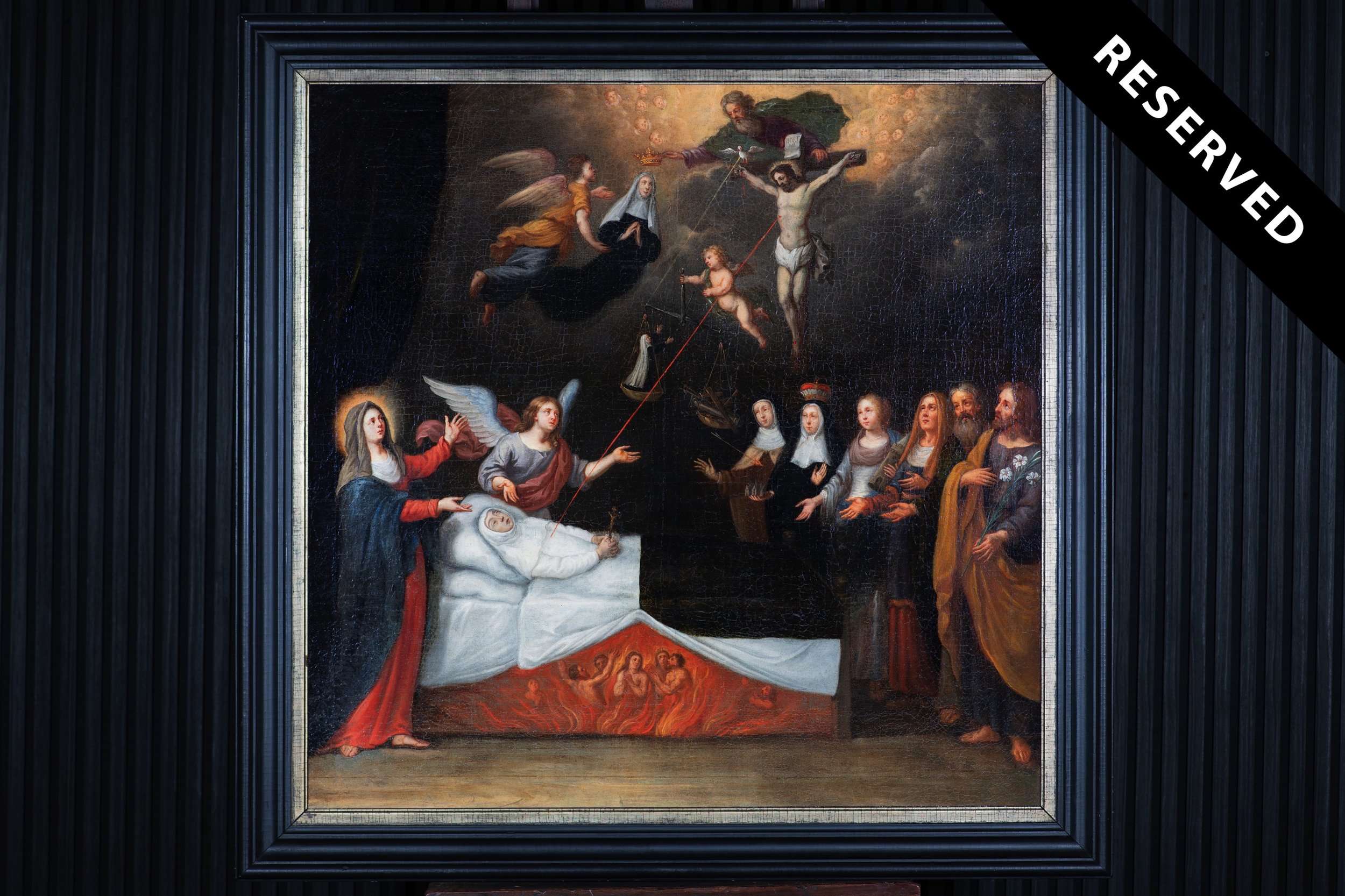 Image 1 of 36
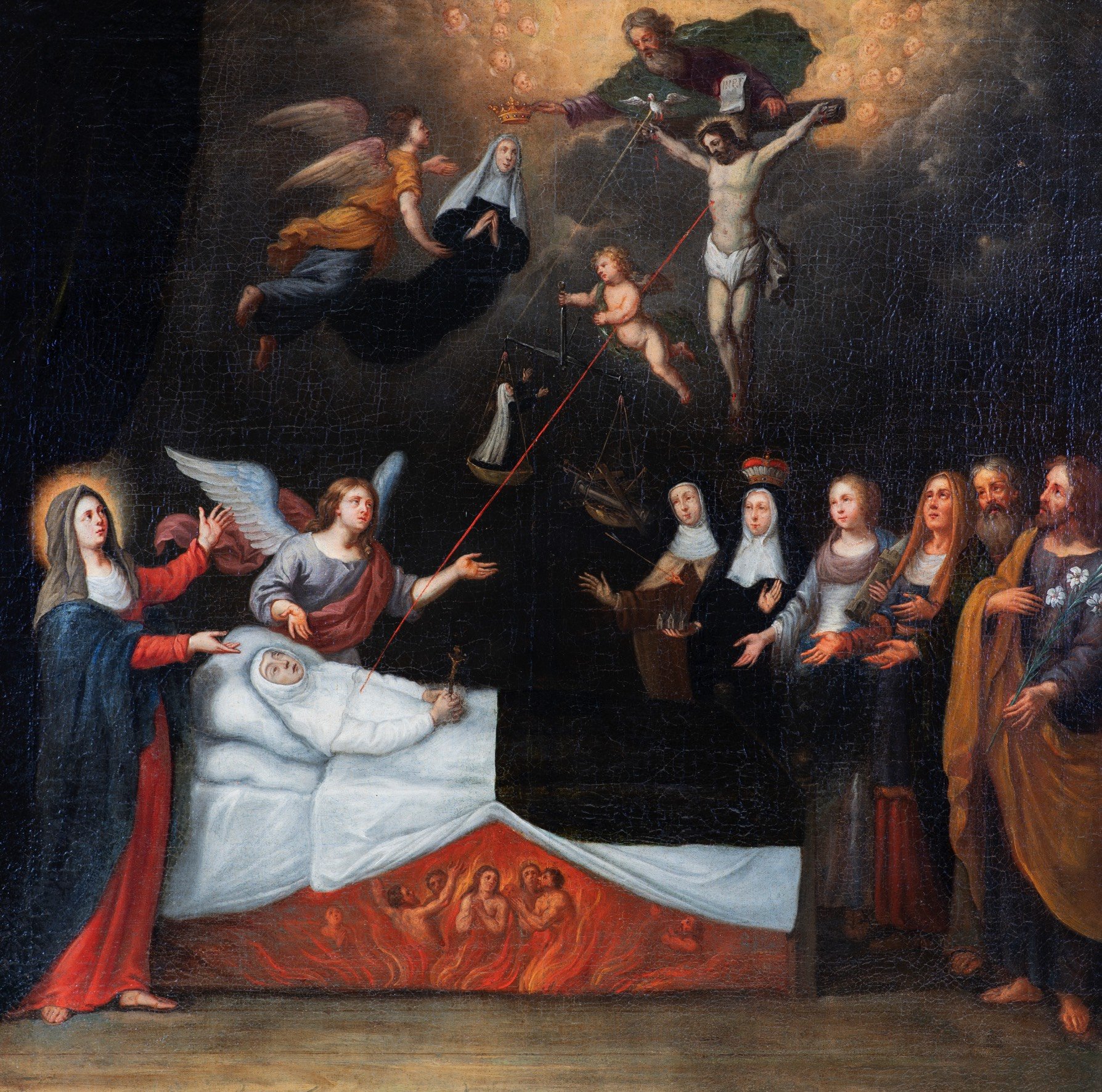 Image 2 of 36
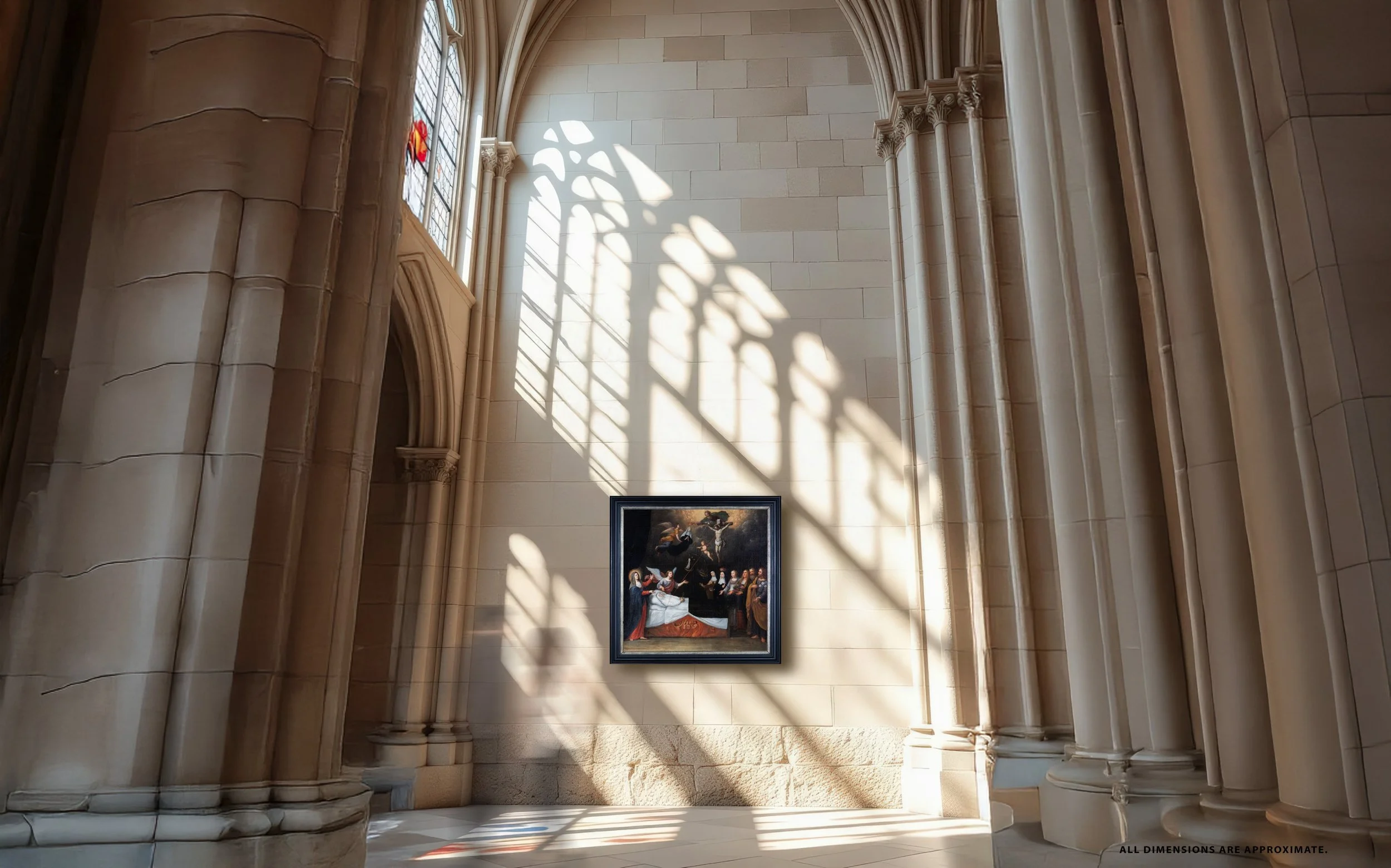 Image 3 of 36
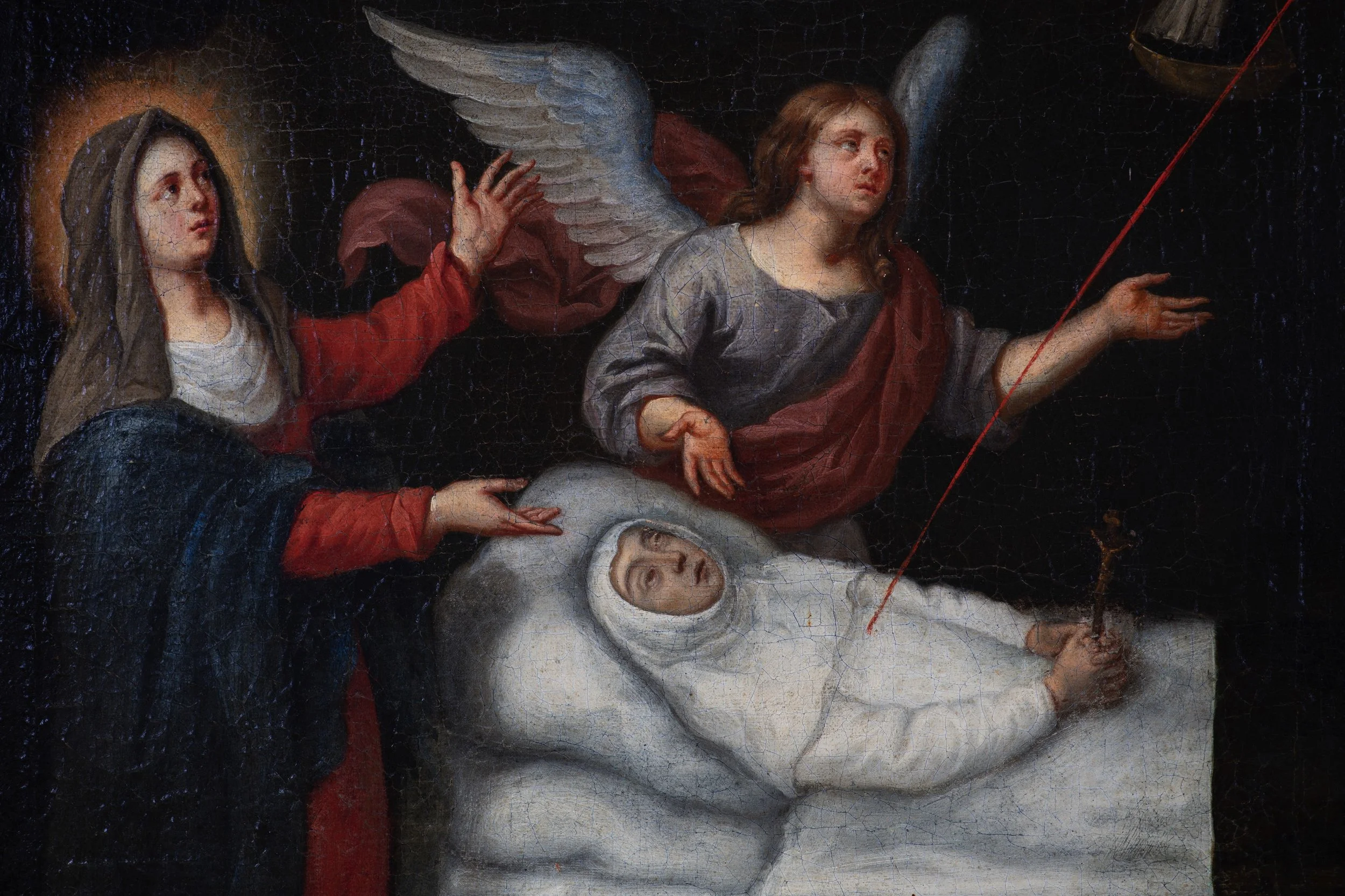 Image 4 of 36
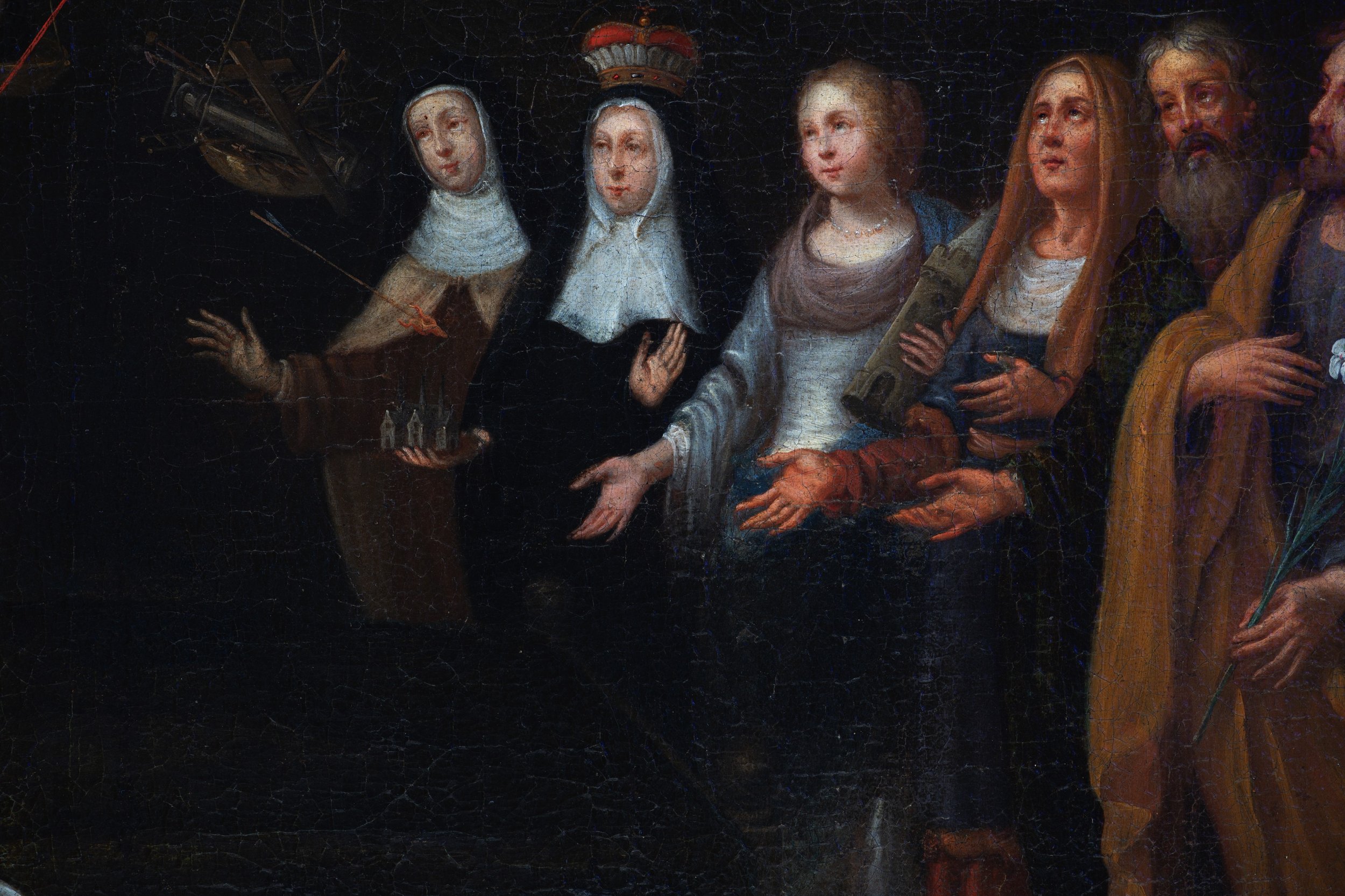 Image 5 of 36
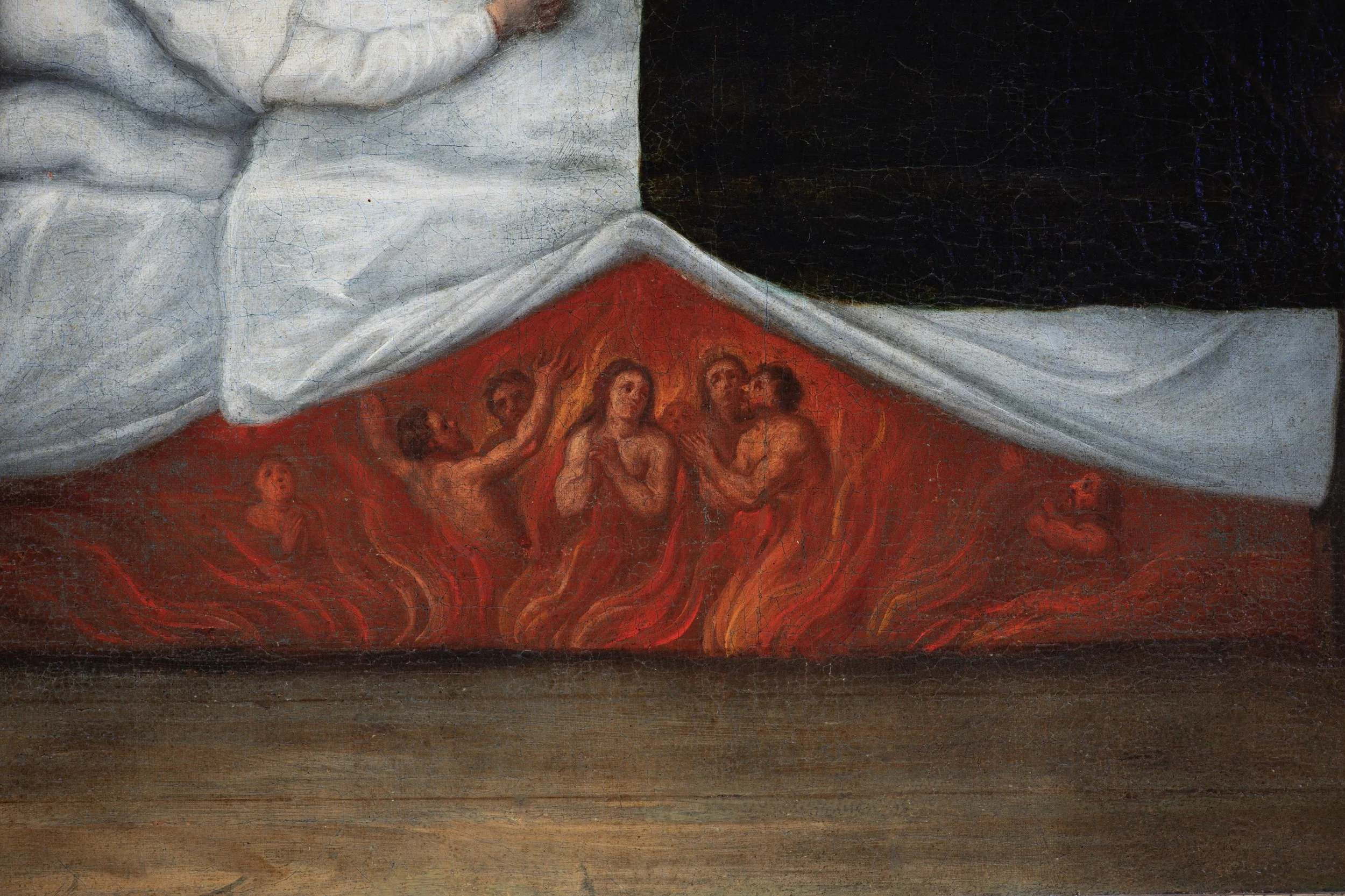 Image 6 of 36
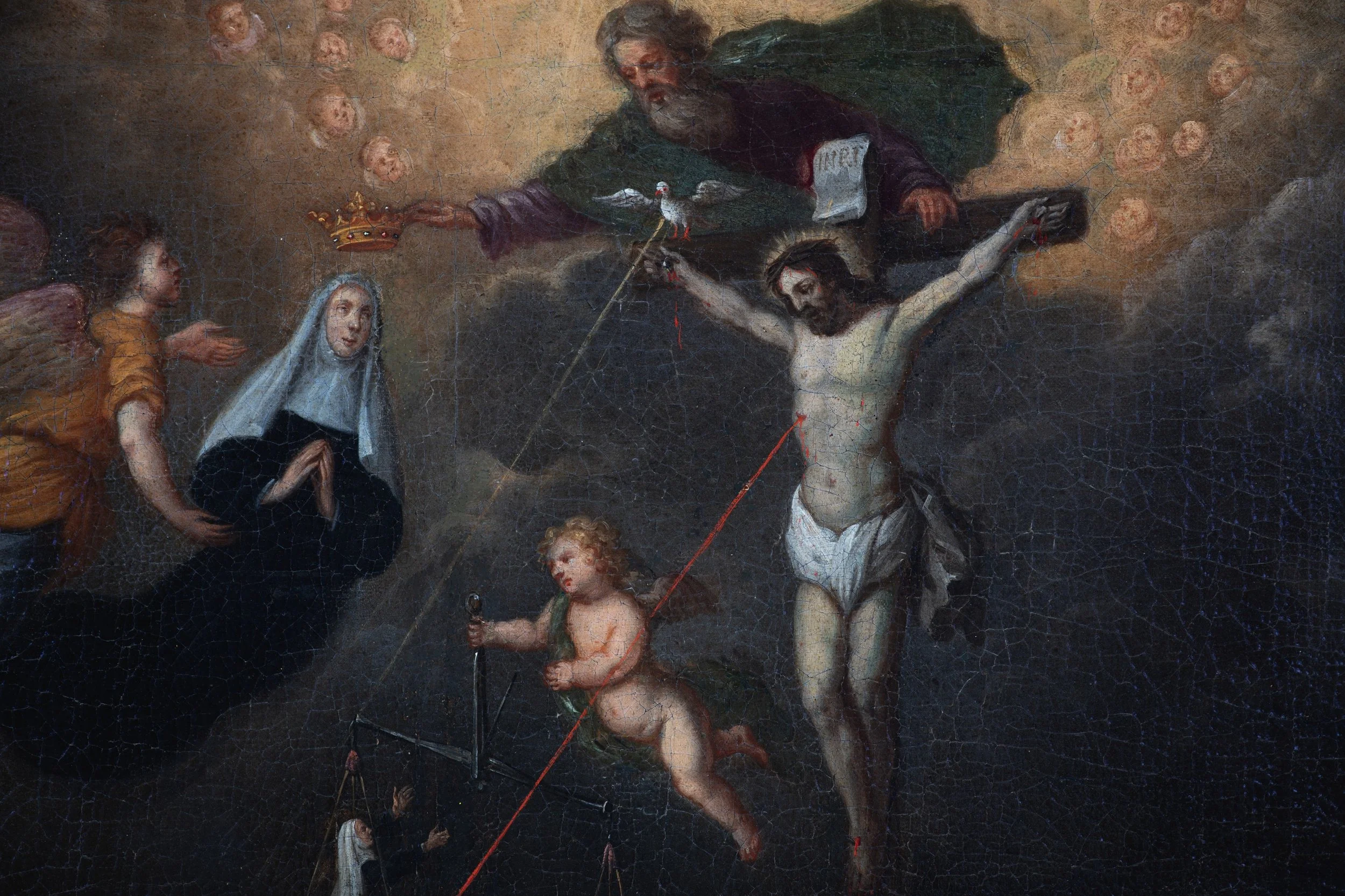 Image 7 of 36
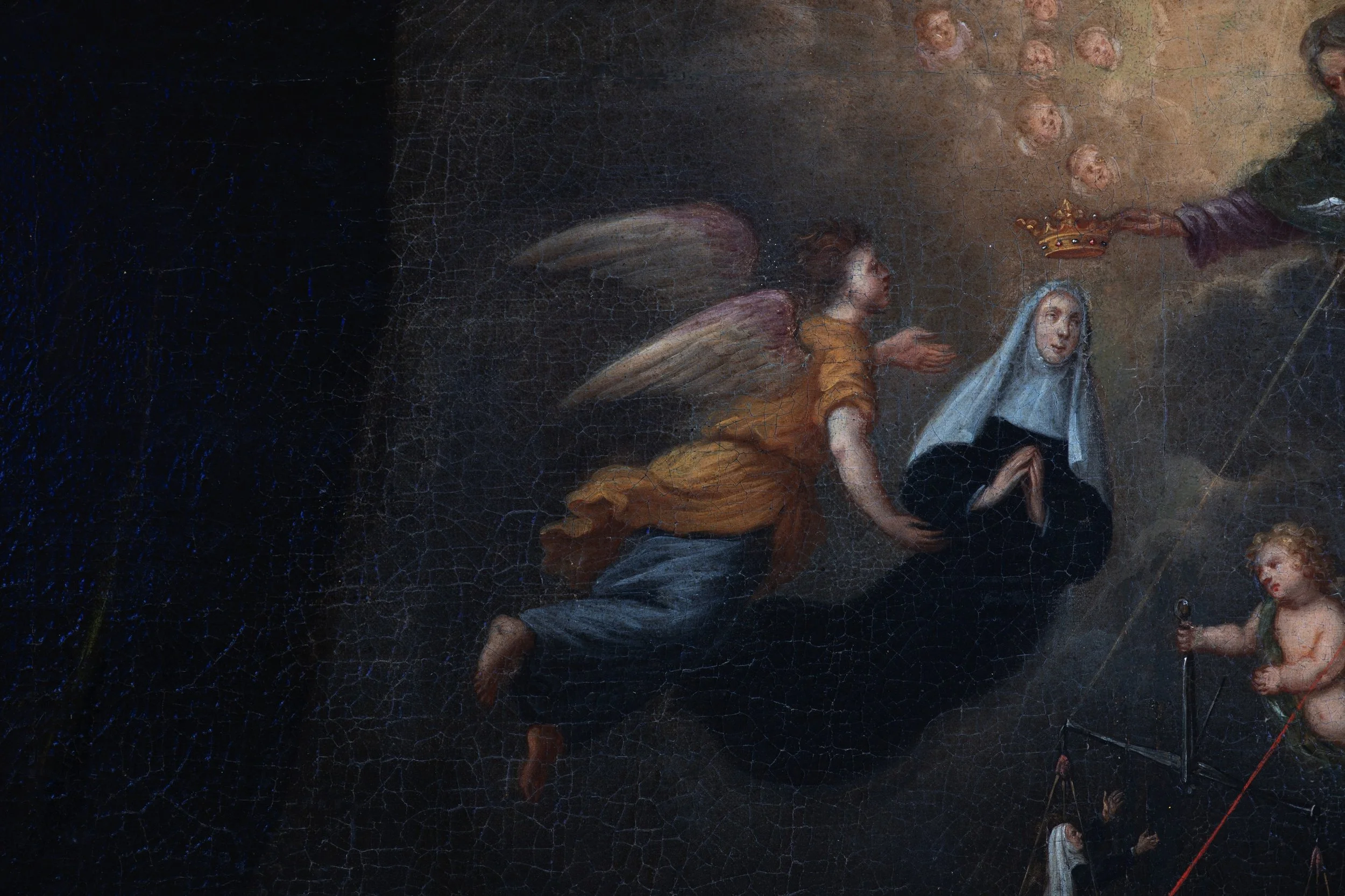 Image 8 of 36
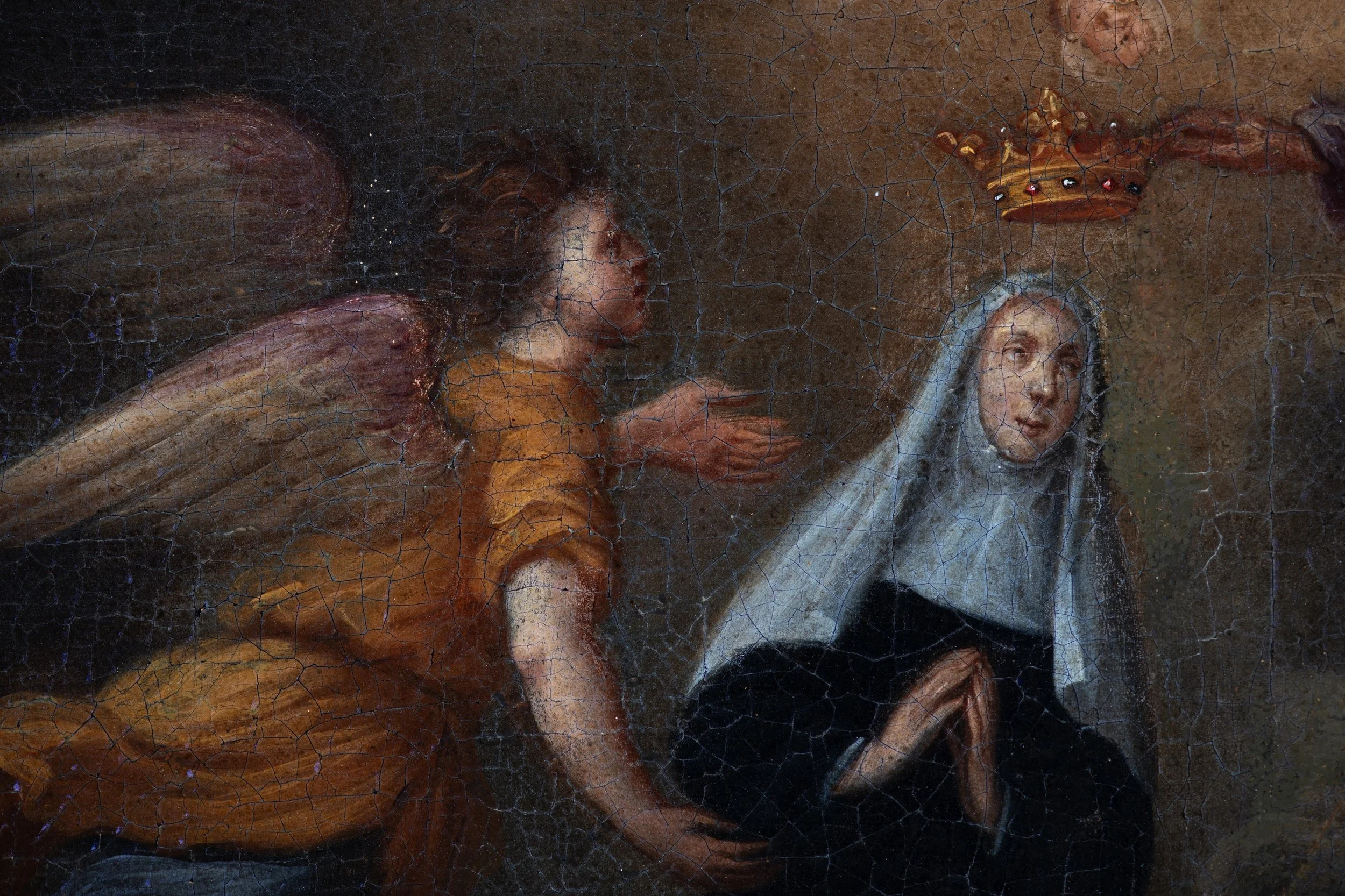 Image 9 of 36
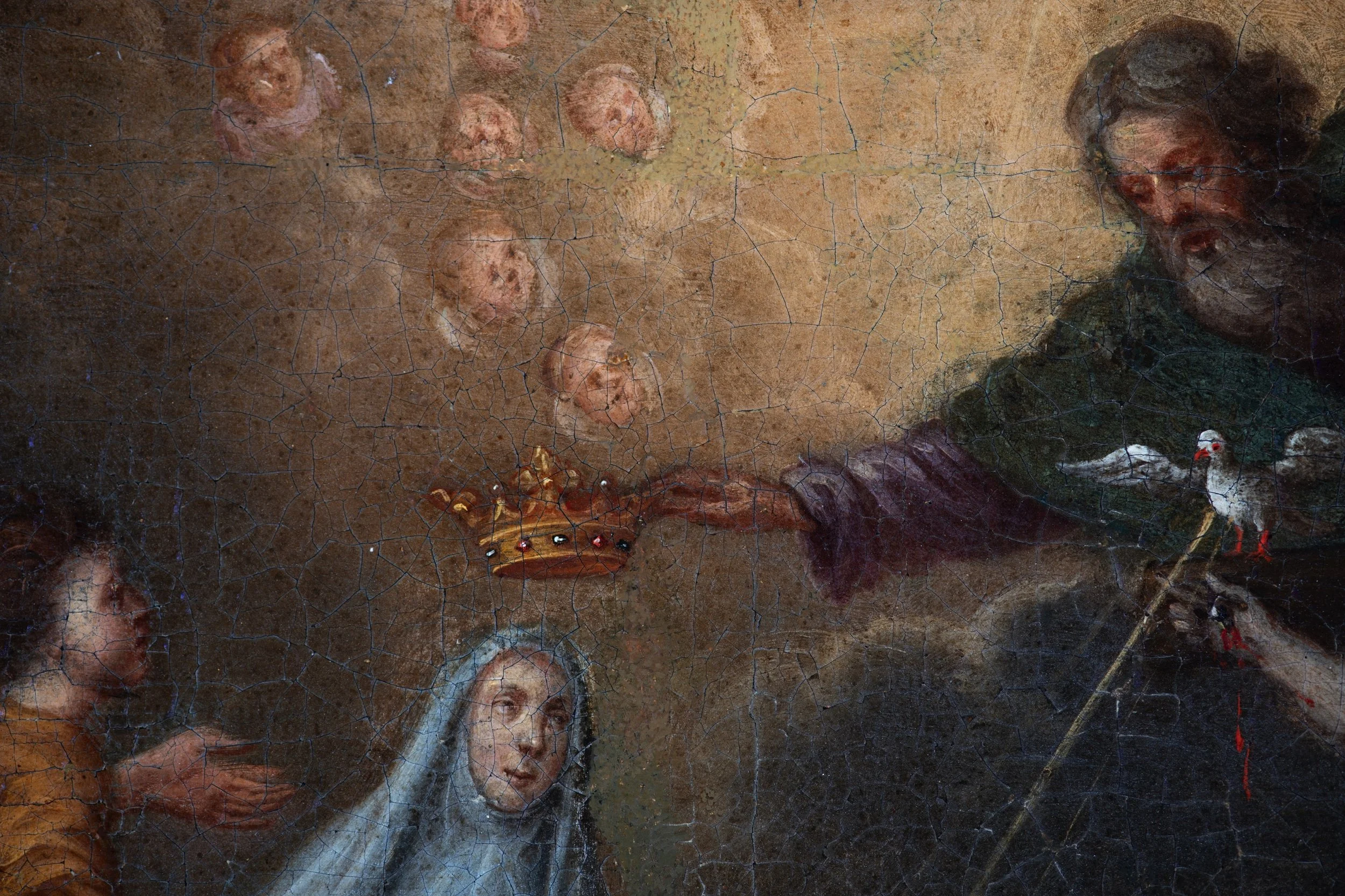 Image 10 of 36
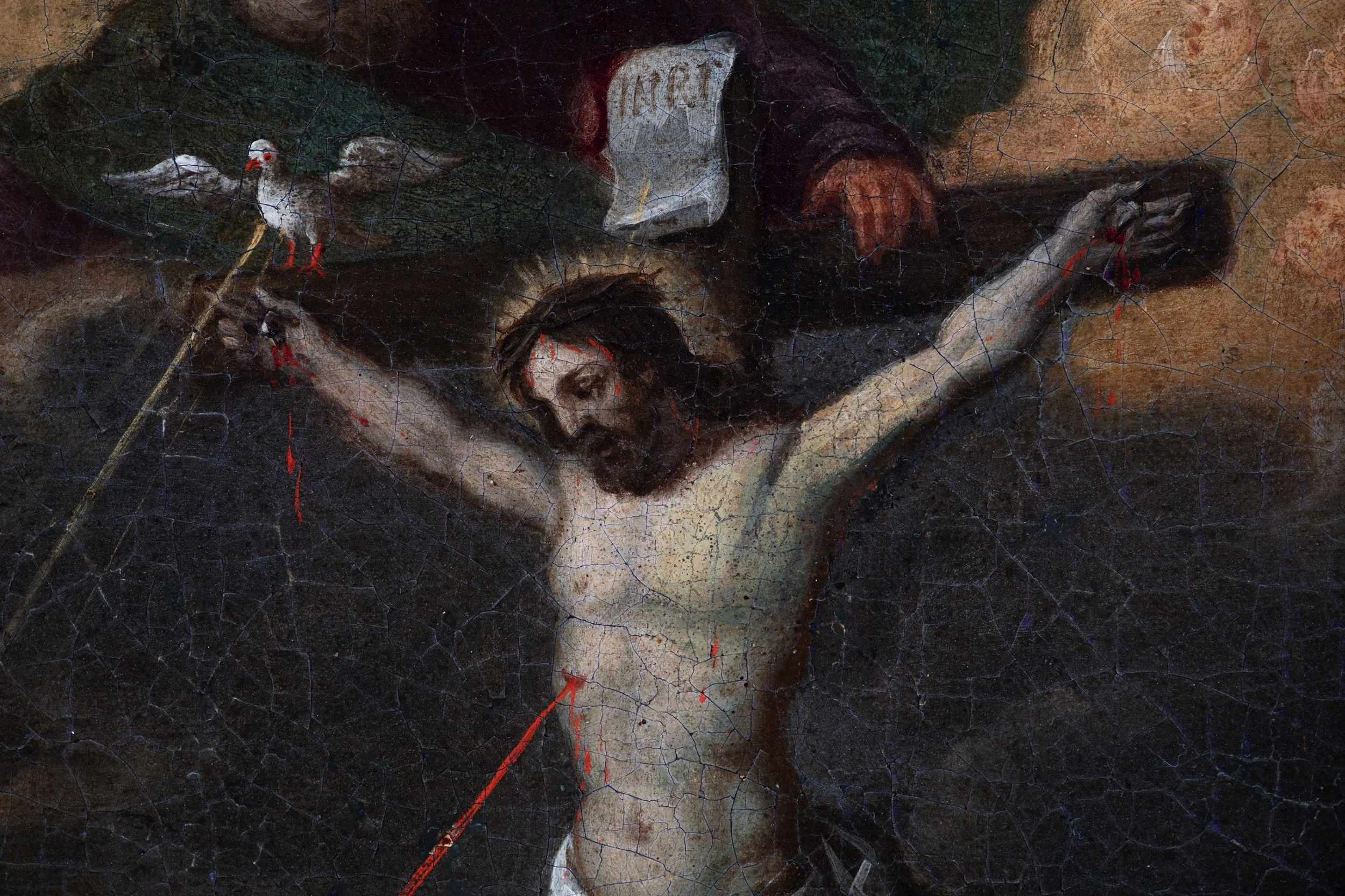 Image 11 of 36
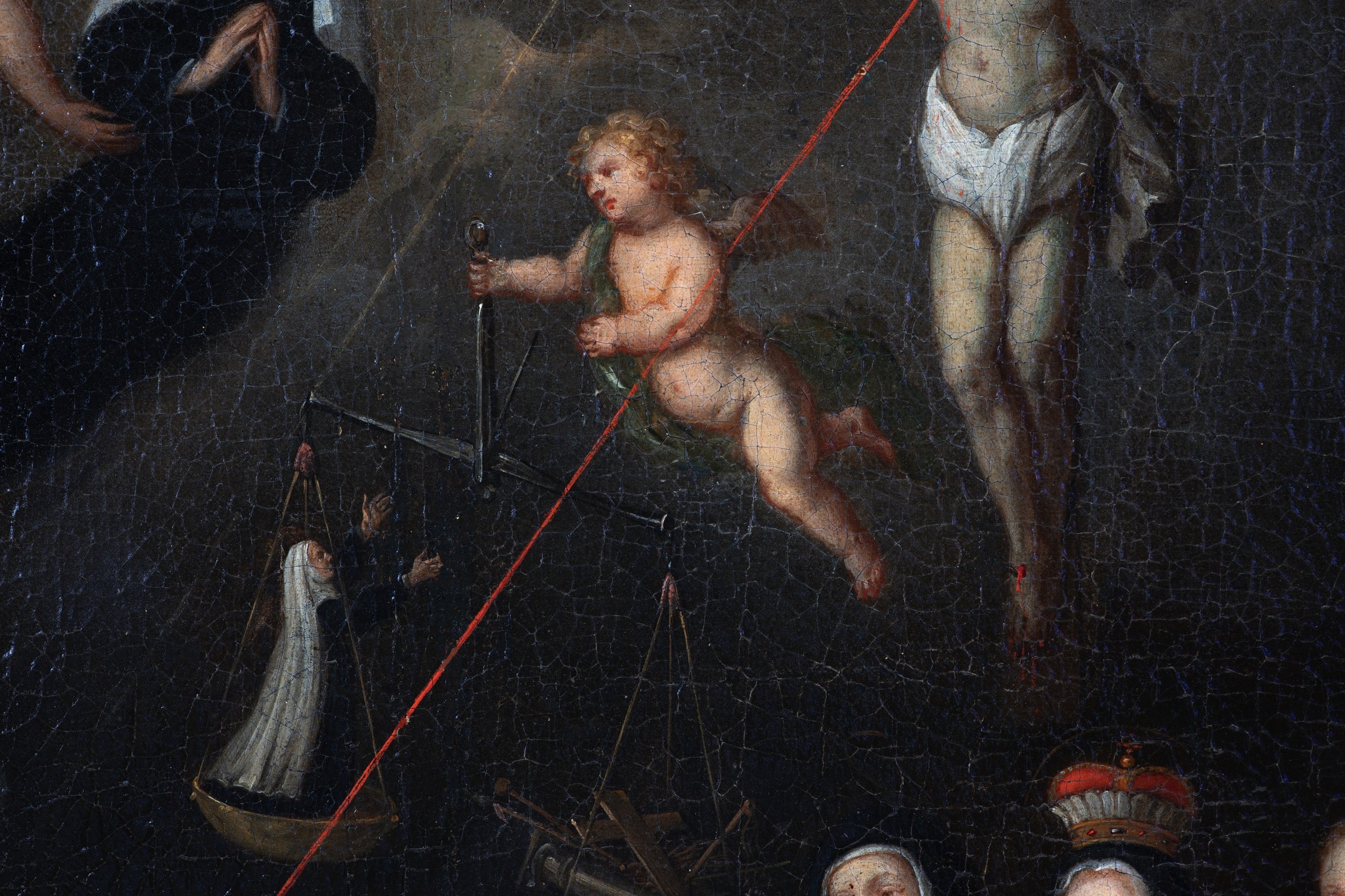 Image 12 of 36
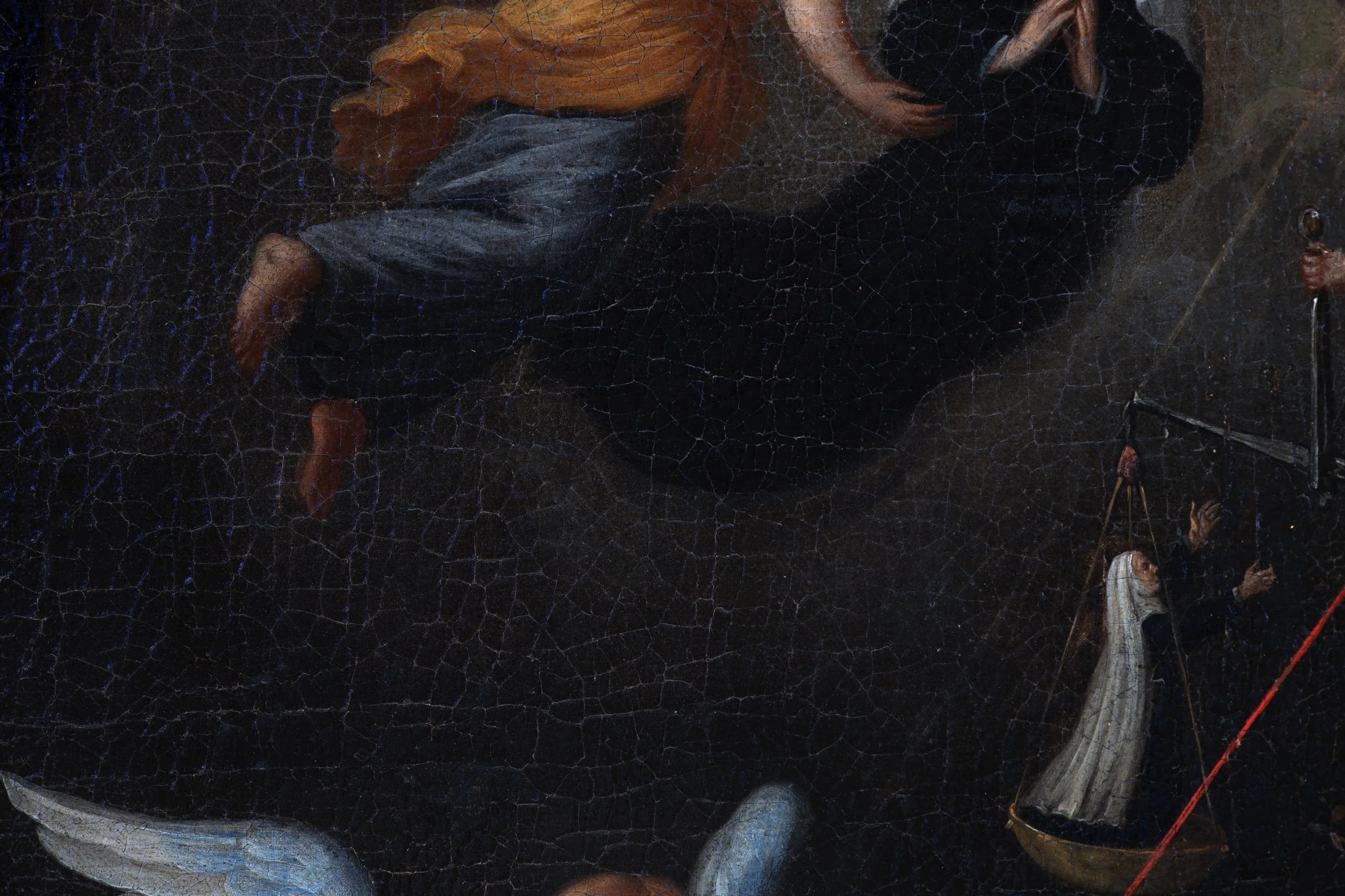 Image 13 of 36
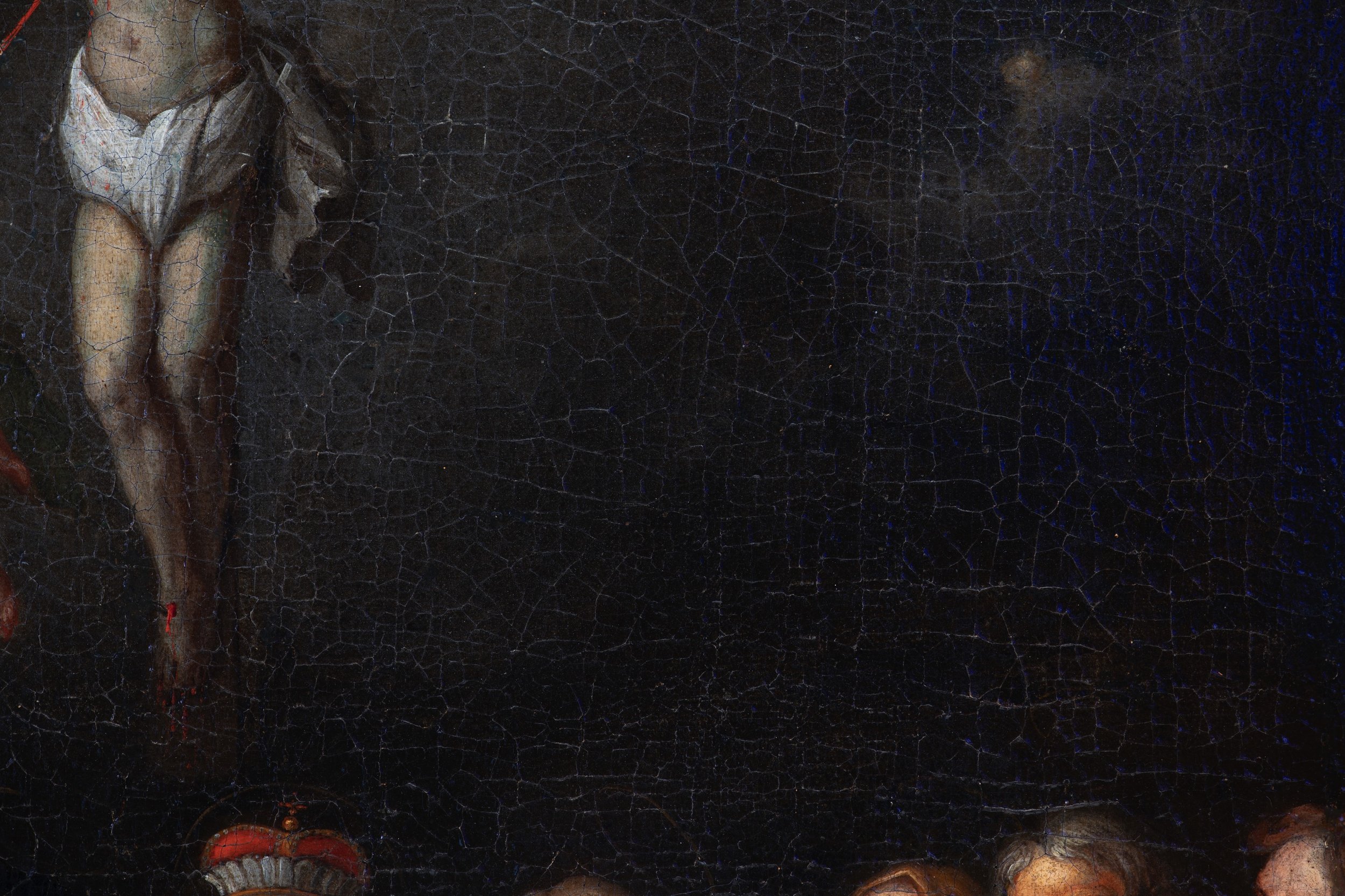 Image 14 of 36
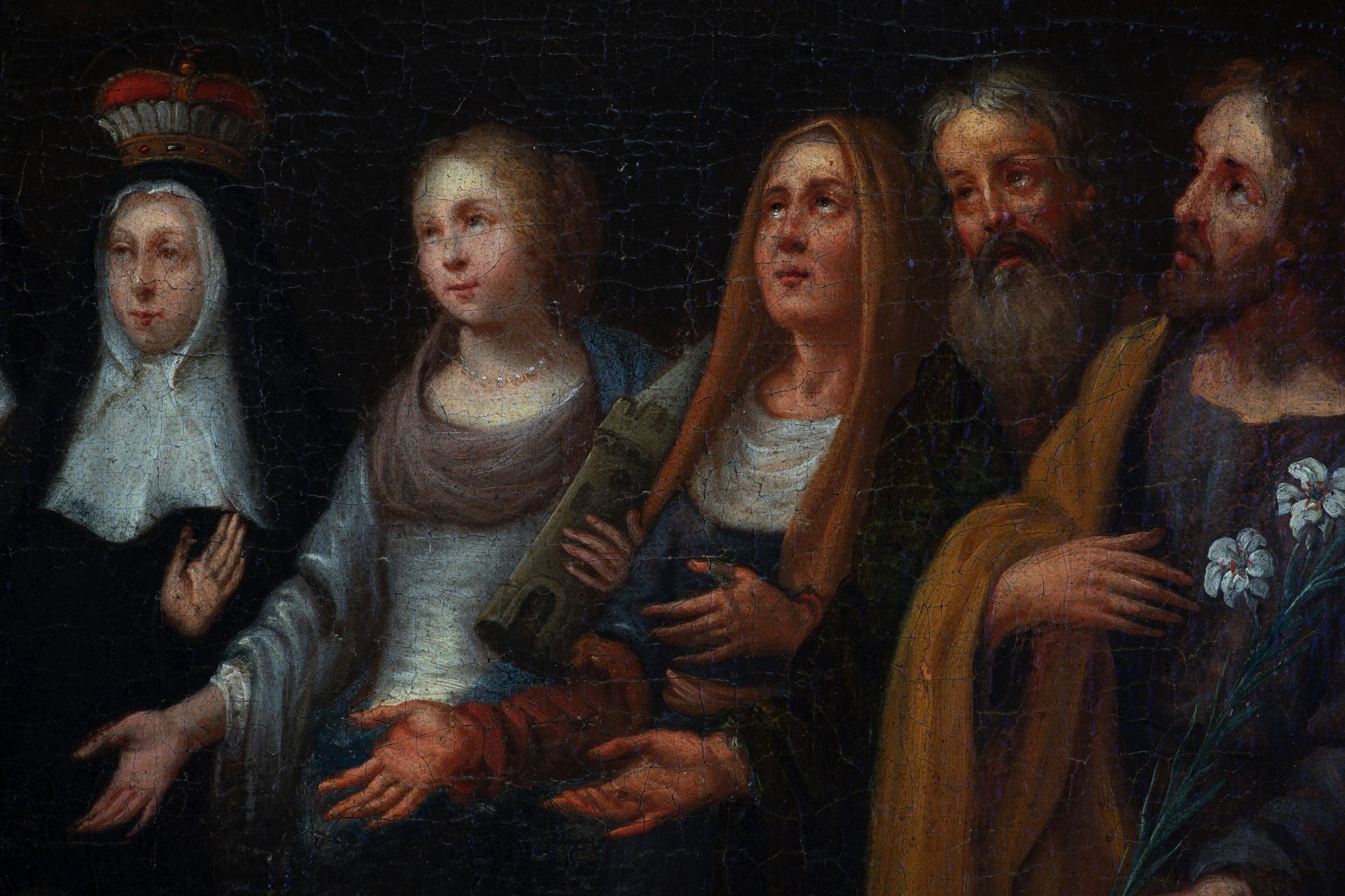 Image 15 of 36
 Image 16 of 36
 Image 17 of 36
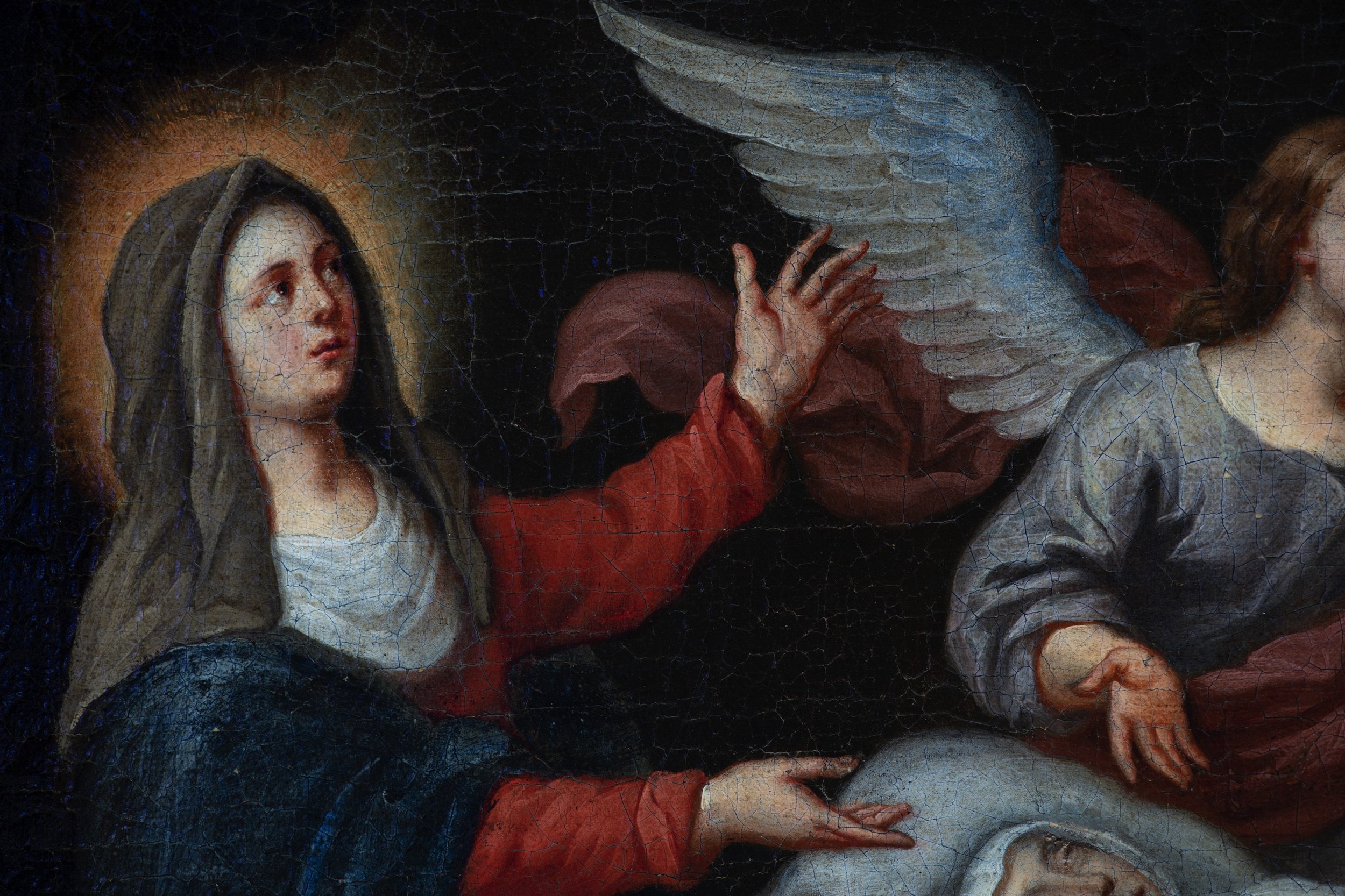 Image 18 of 36
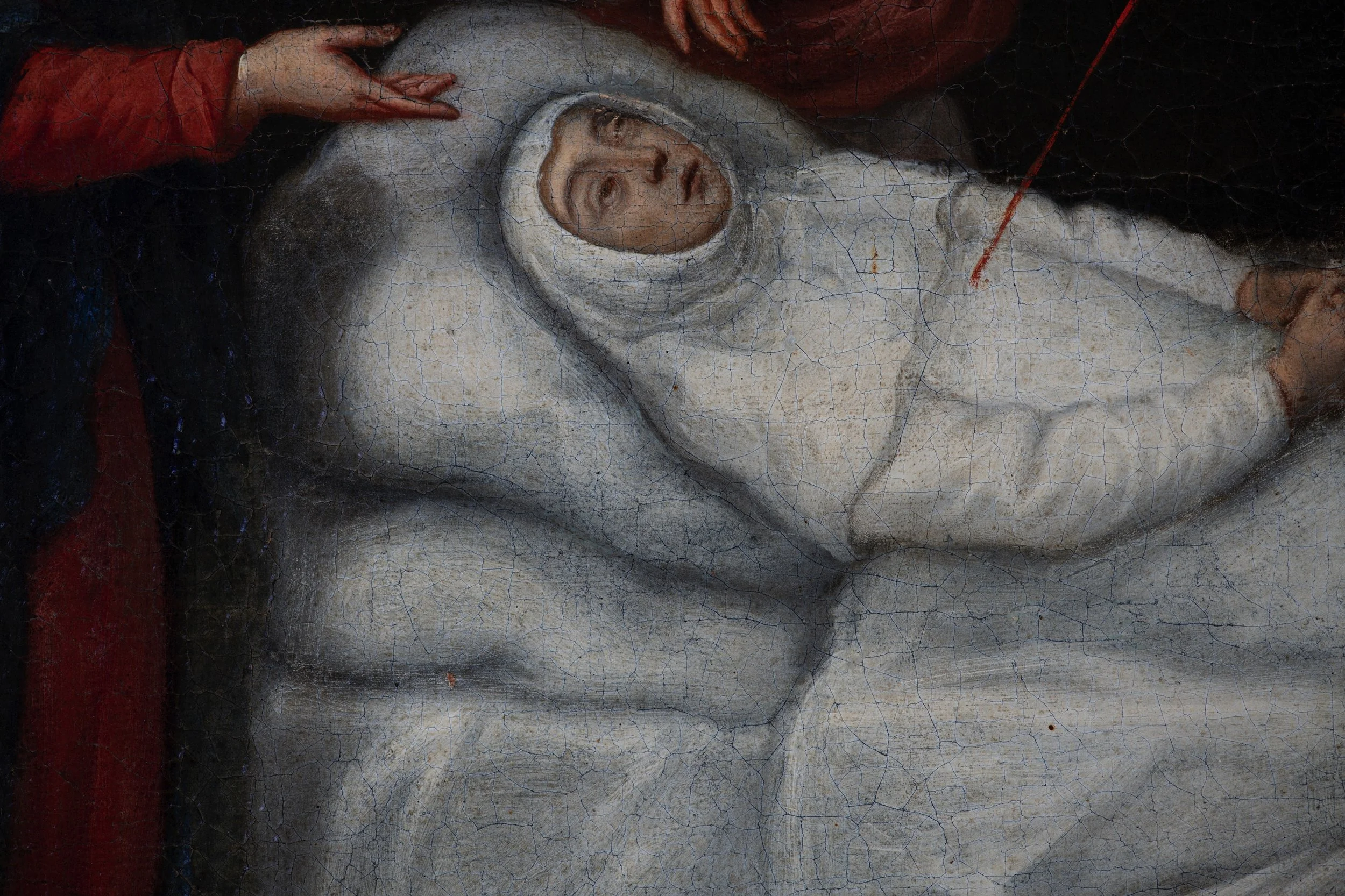 Image 19 of 36
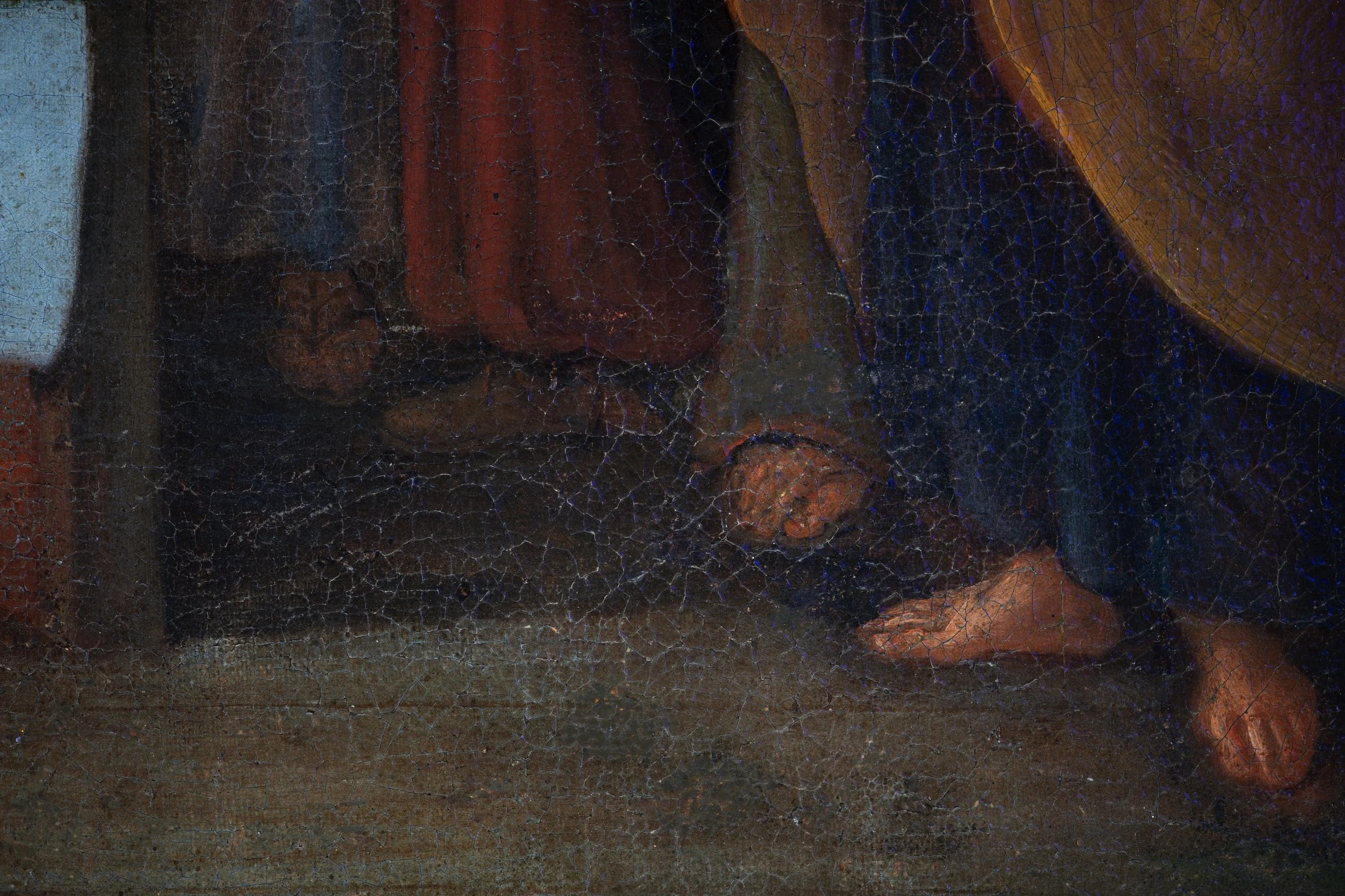 Image 20 of 36
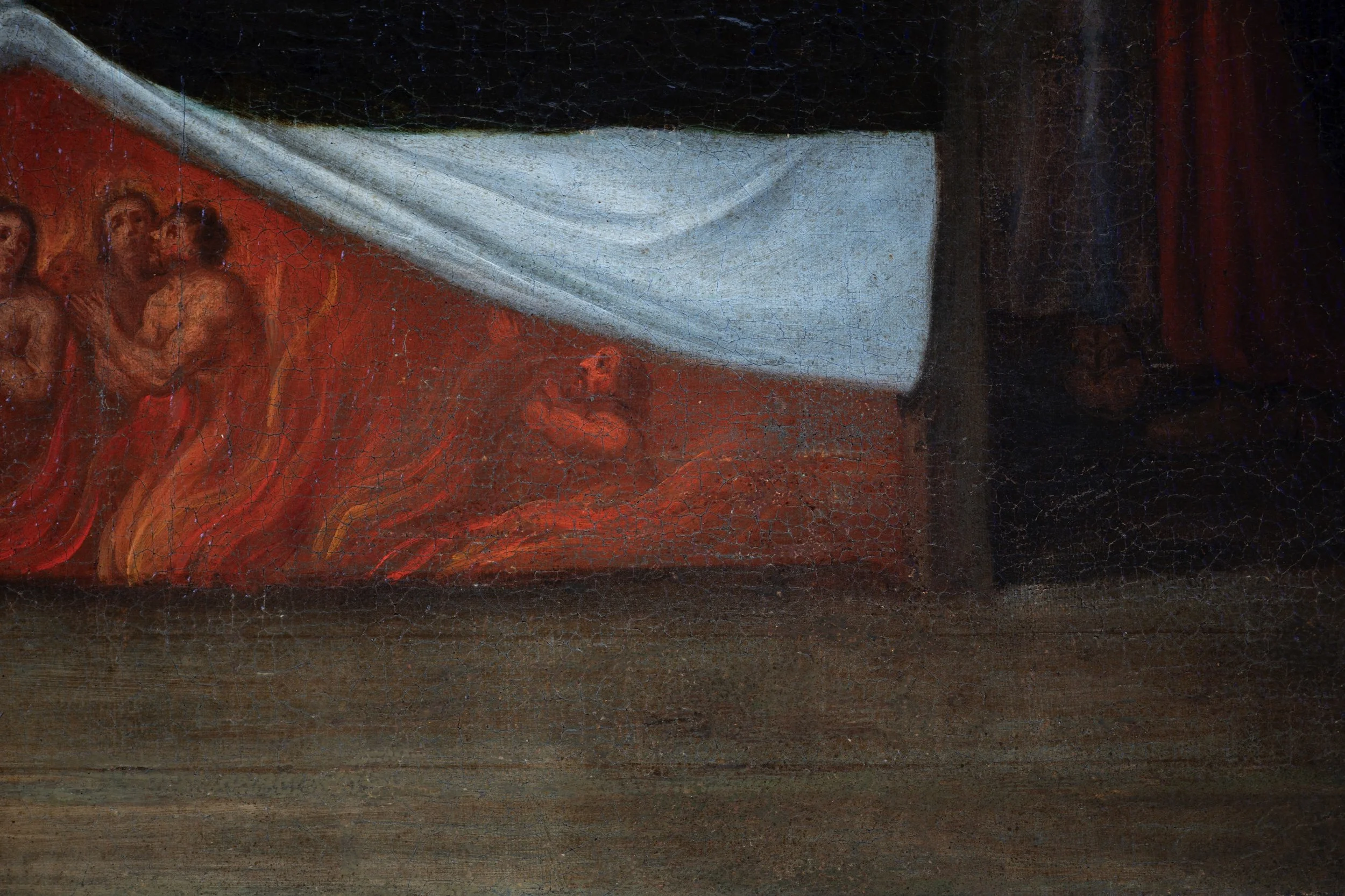 Image 21 of 36
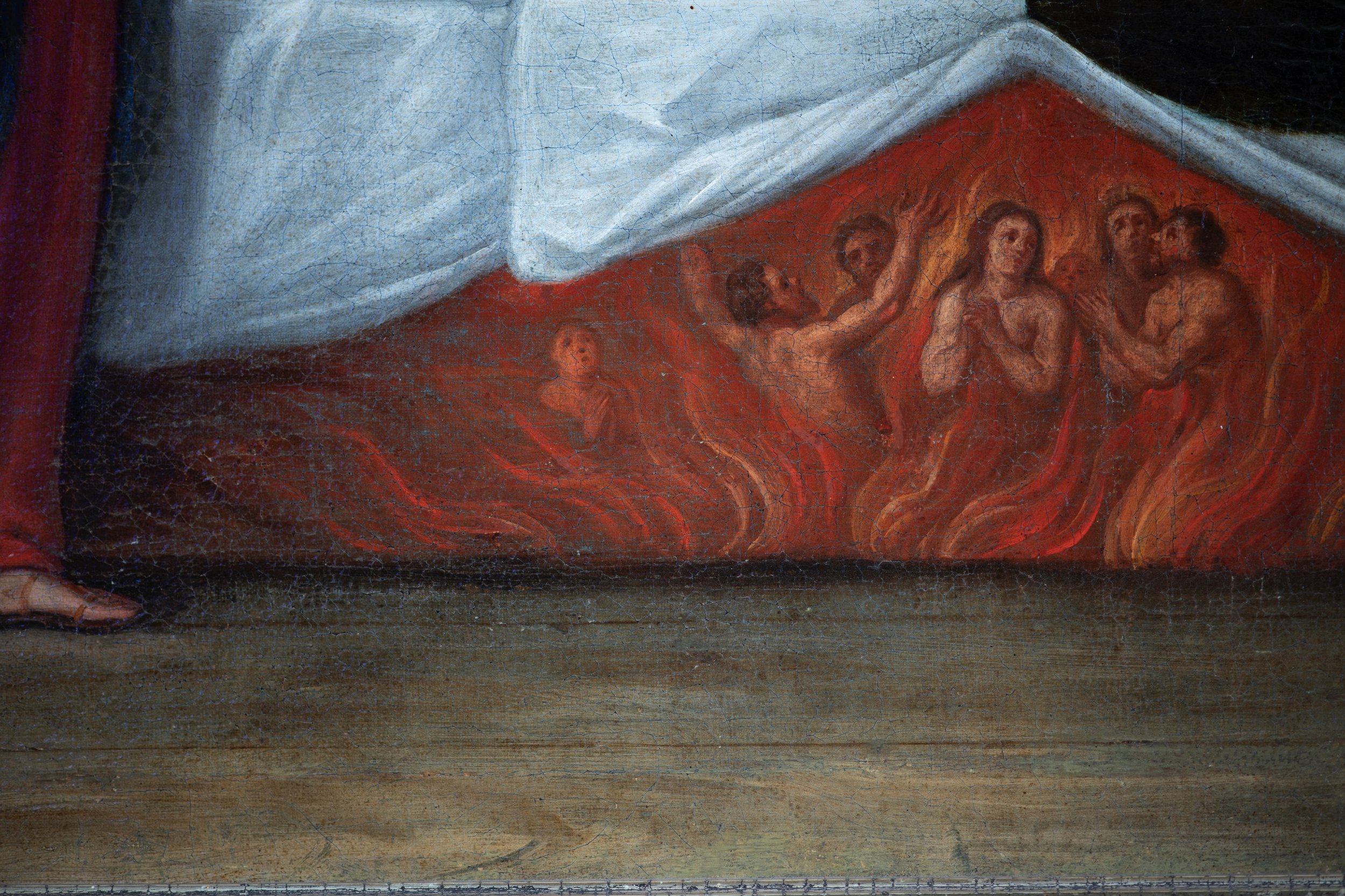 Image 22 of 36
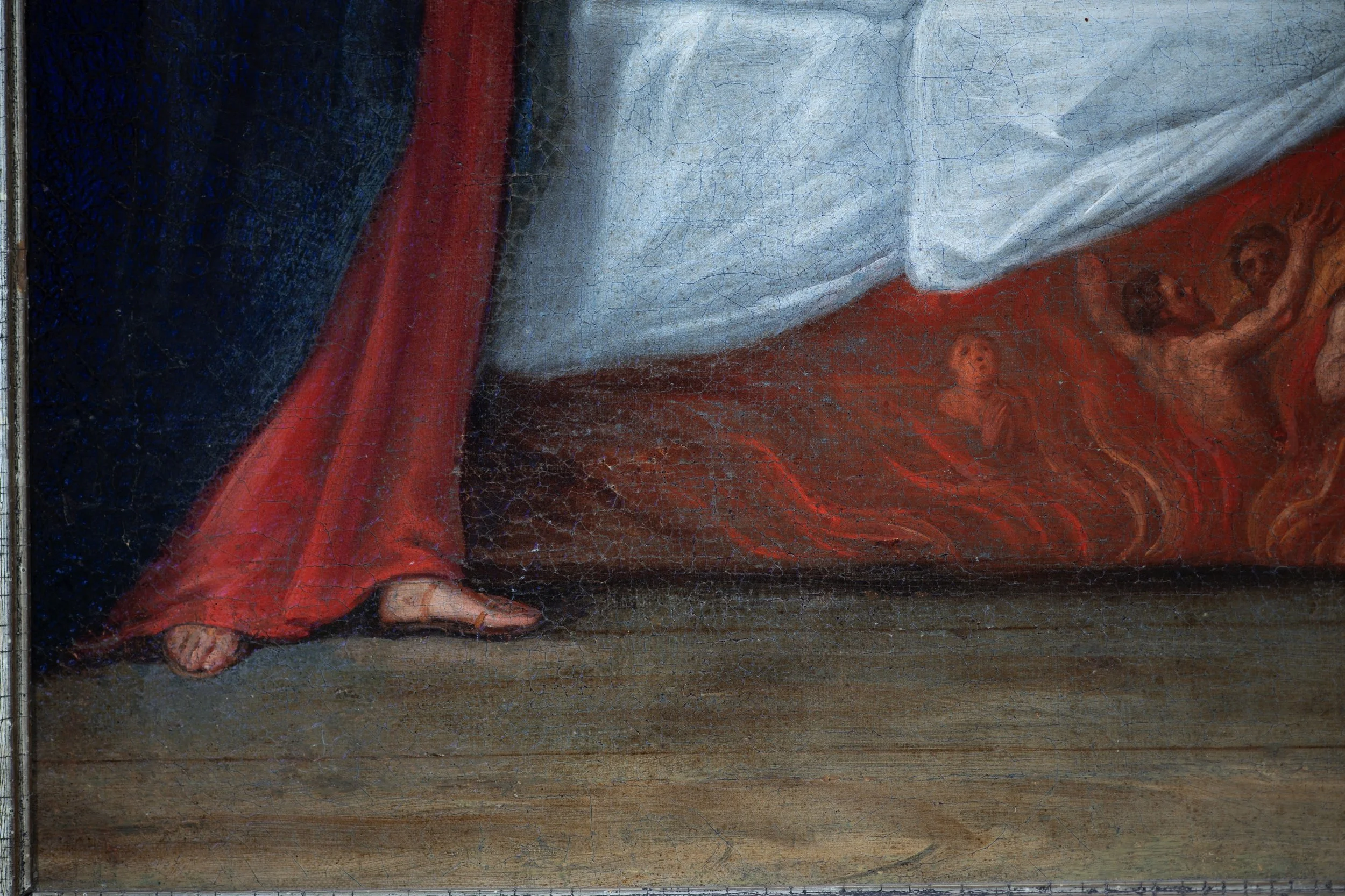 Image 23 of 36
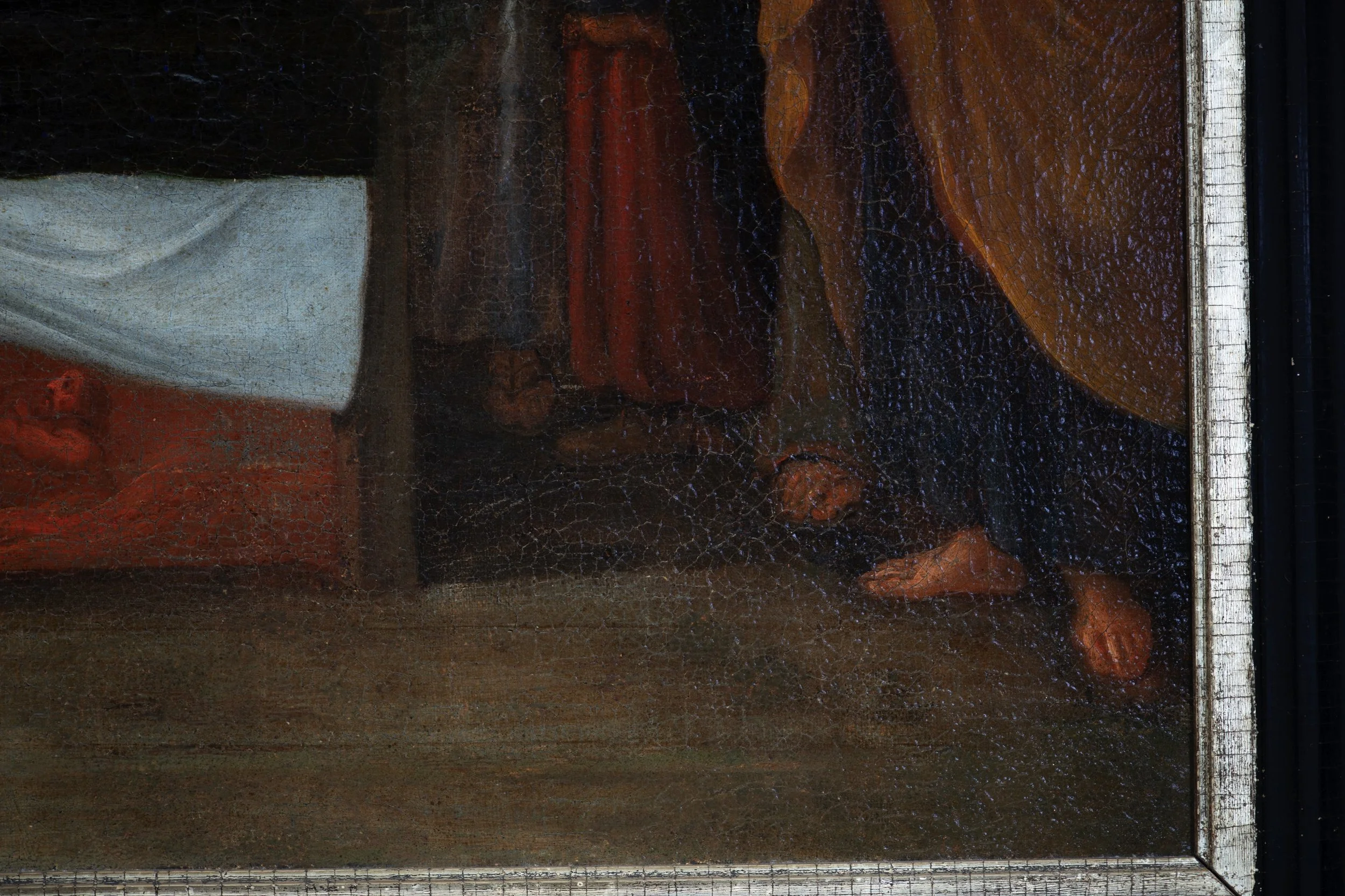 Image 24 of 36
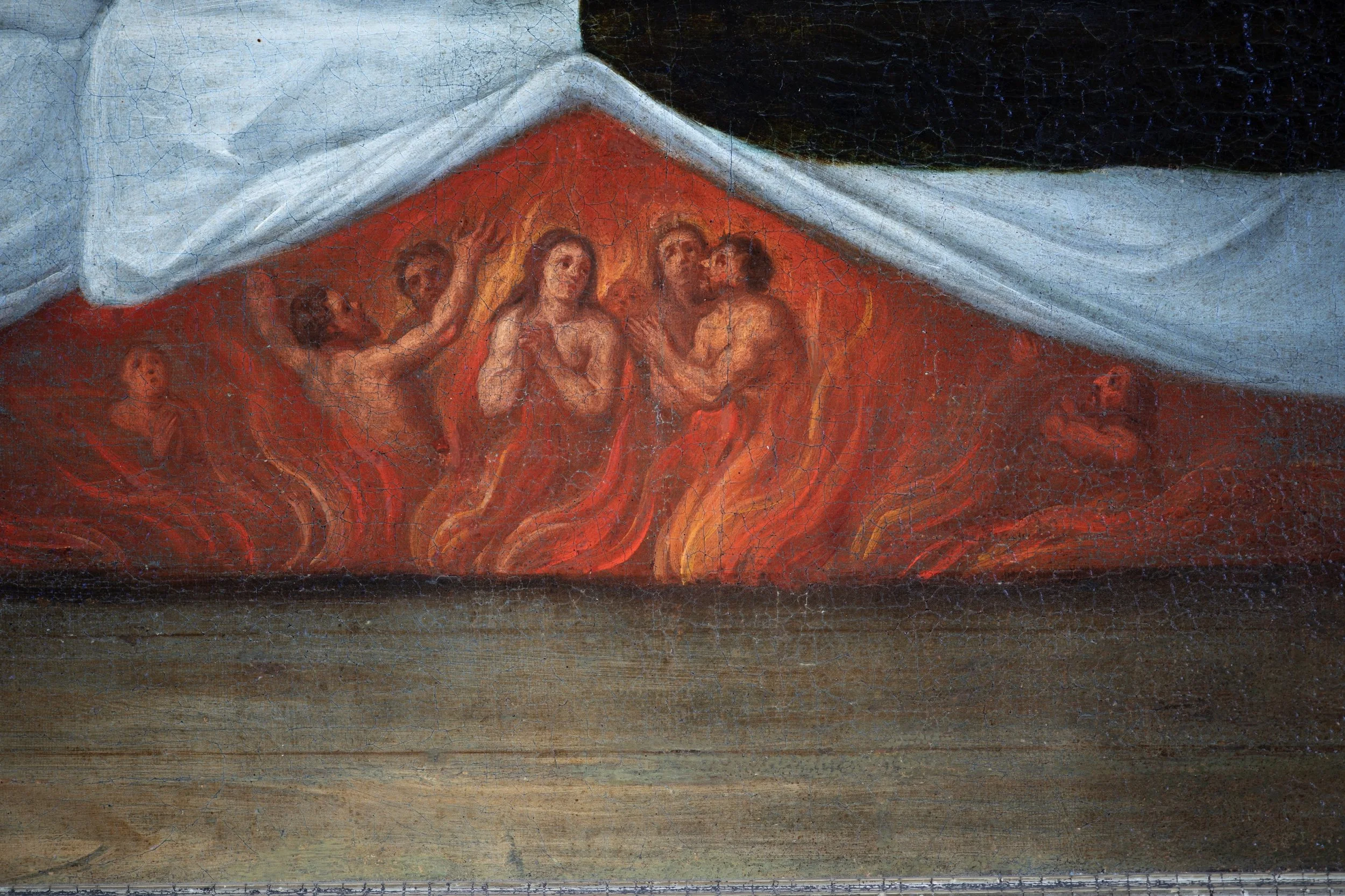 Image 25 of 36
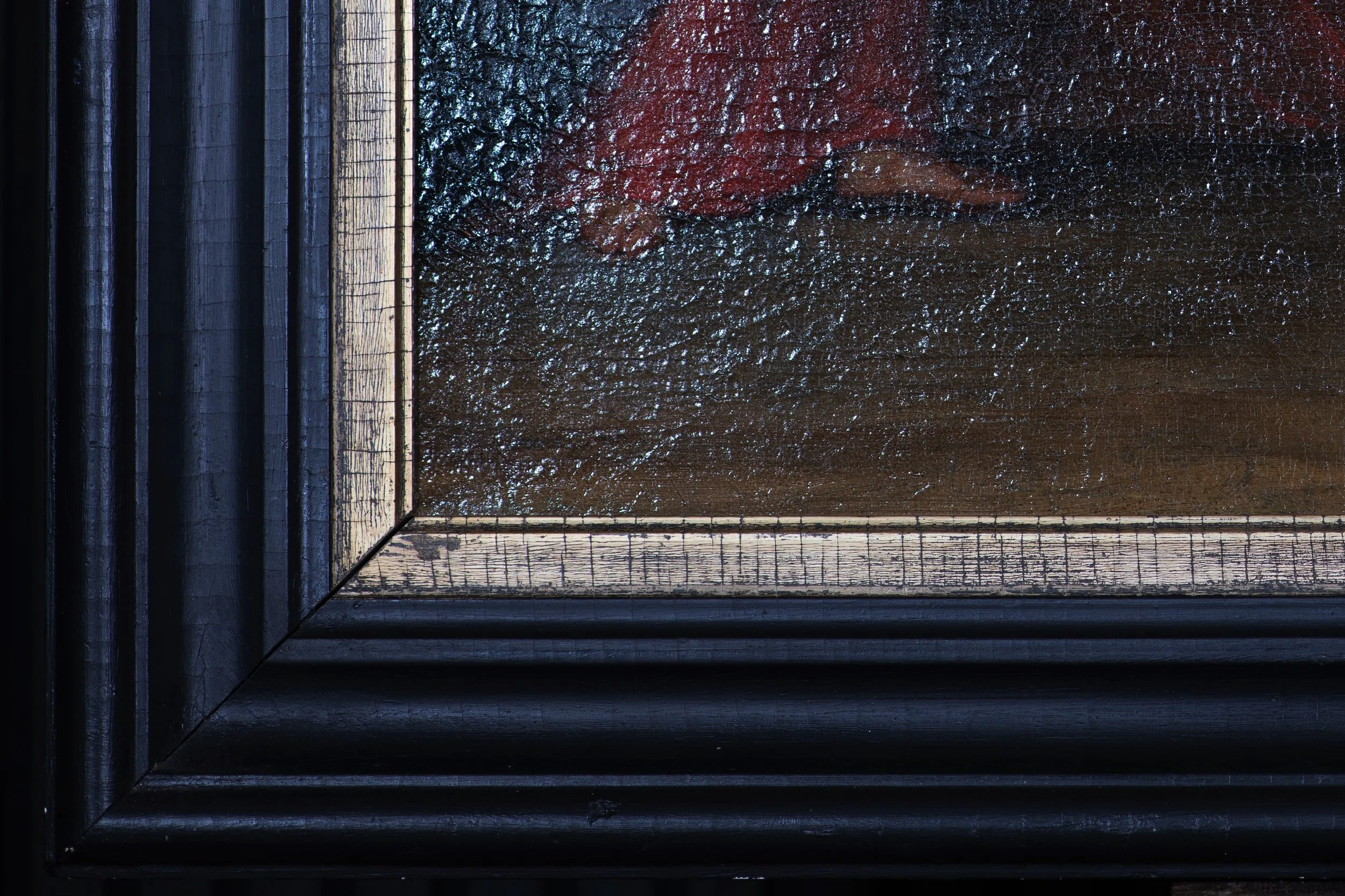 Image 26 of 36
 Image 27 of 36
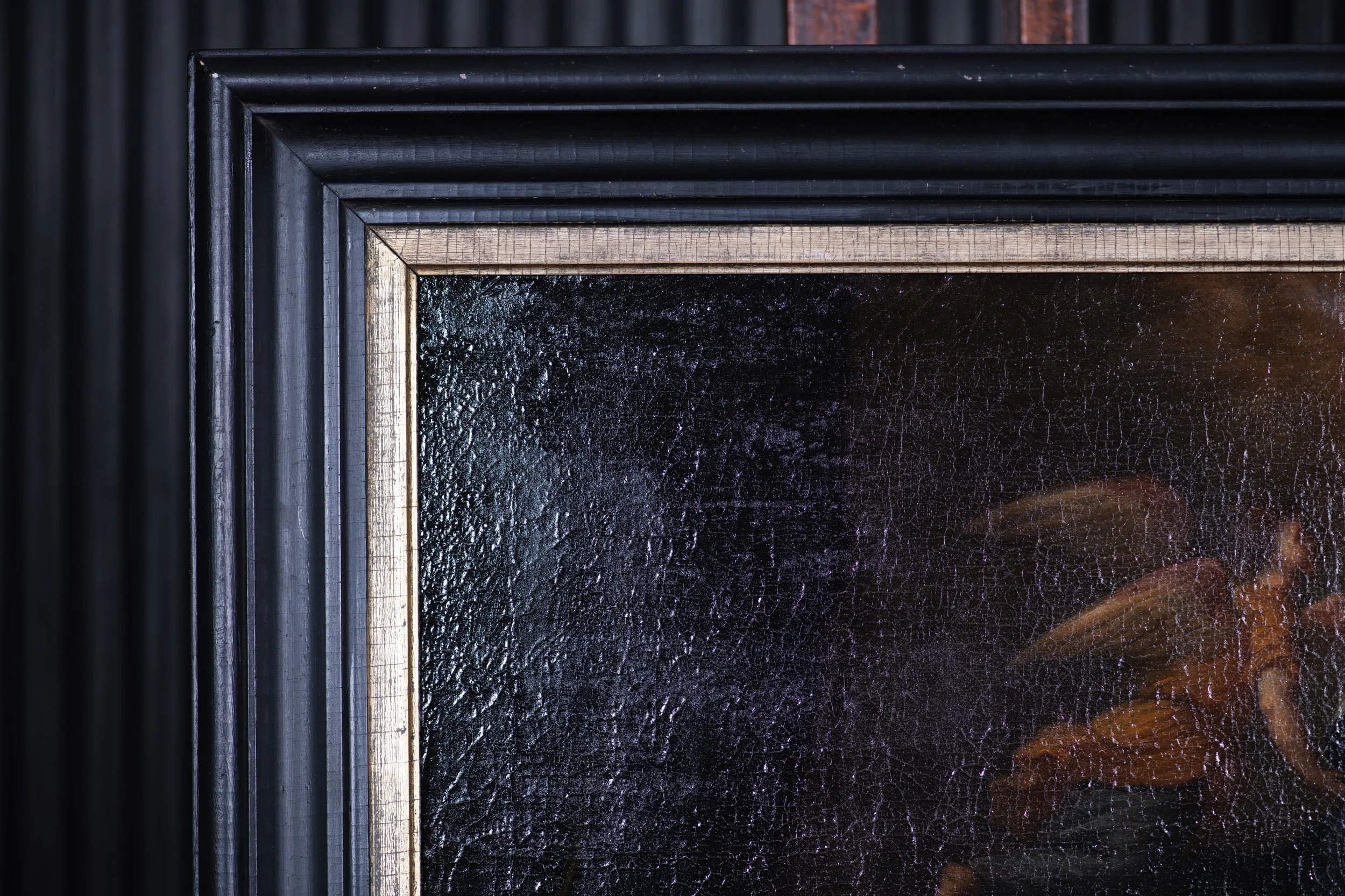 Image 28 of 36
 Image 29 of 36
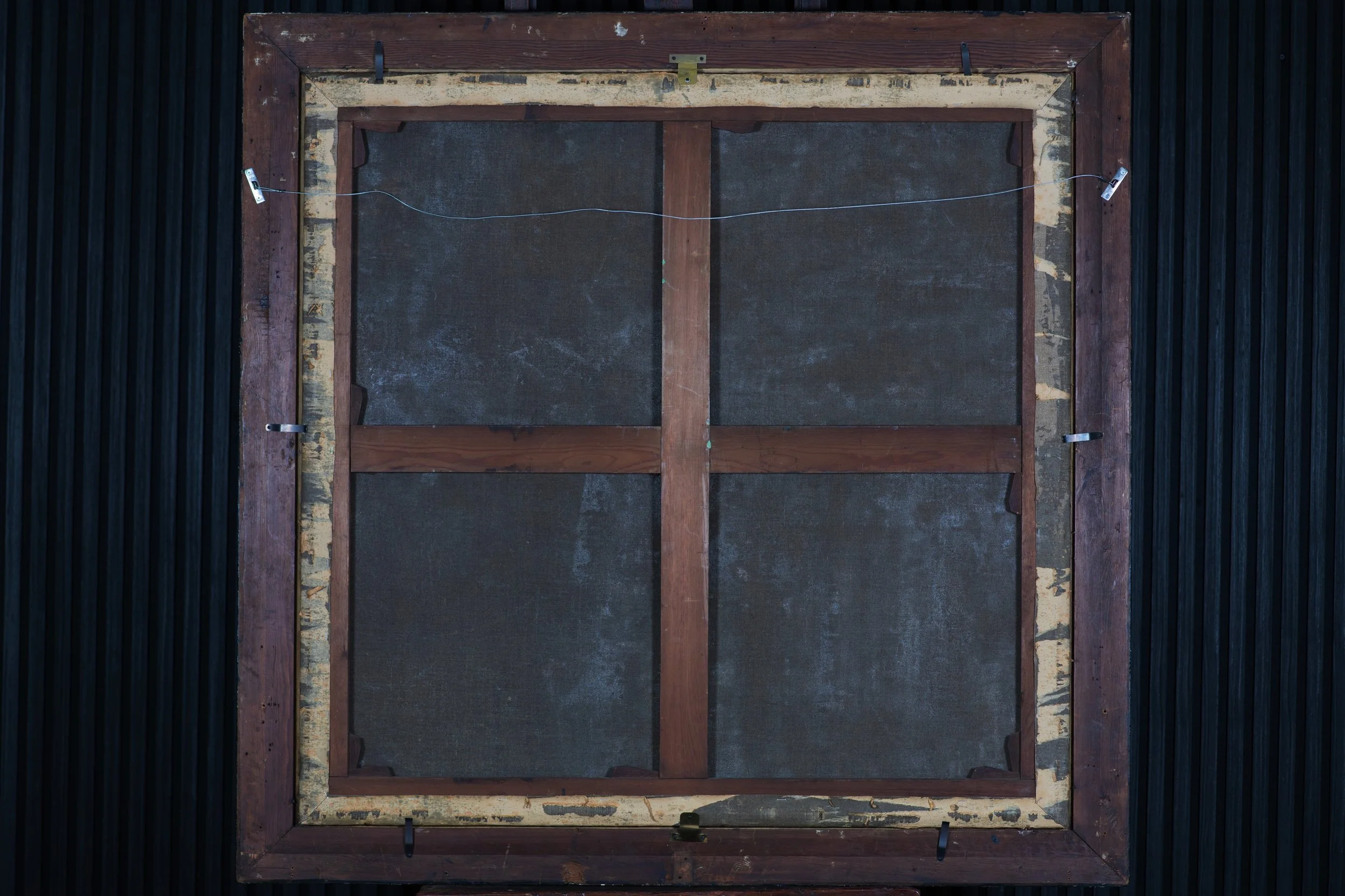 Image 30 of 36
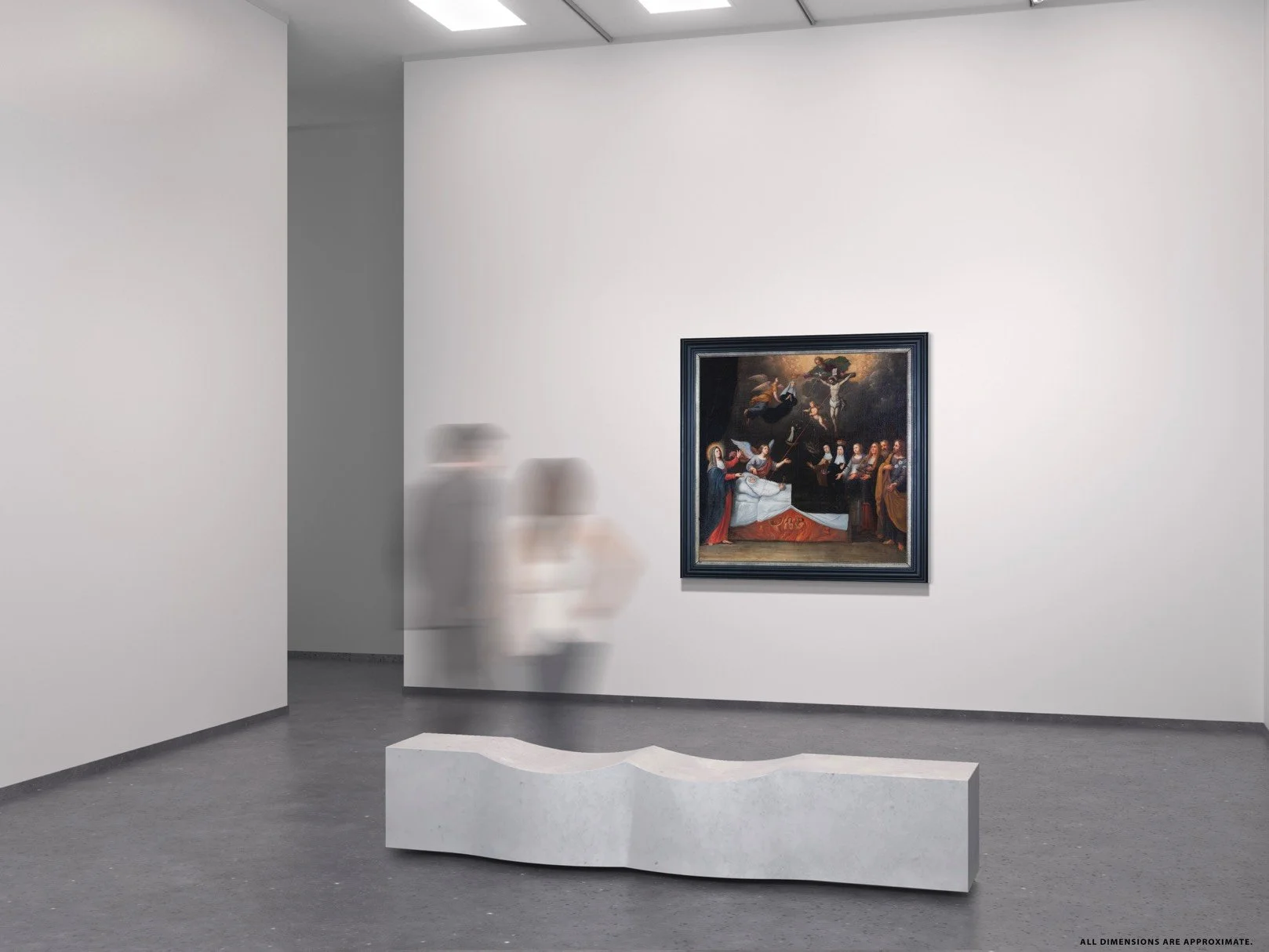 Image 31 of 36
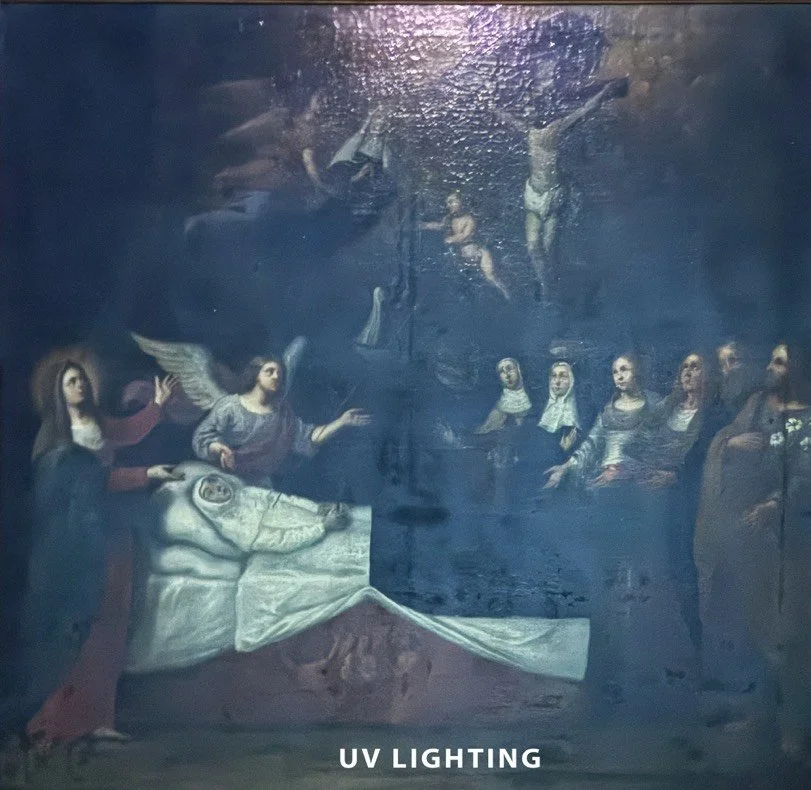 Image 32 of 36
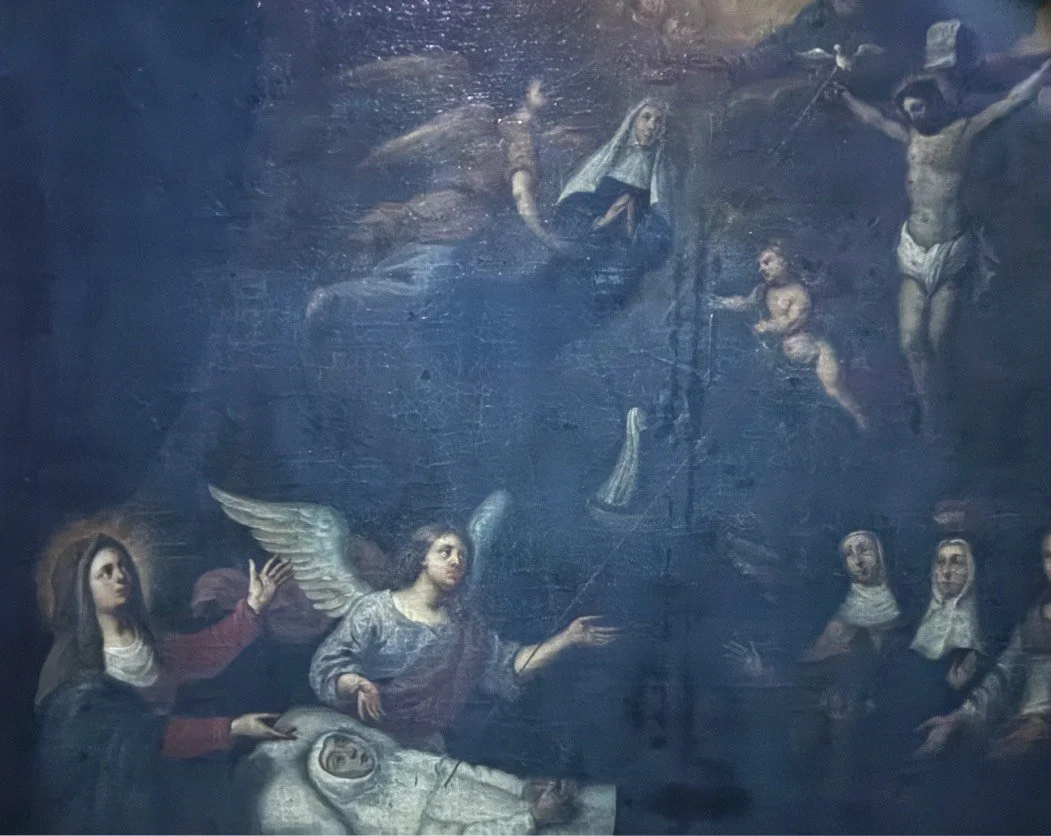 Image 33 of 36
 Image 34 of 36
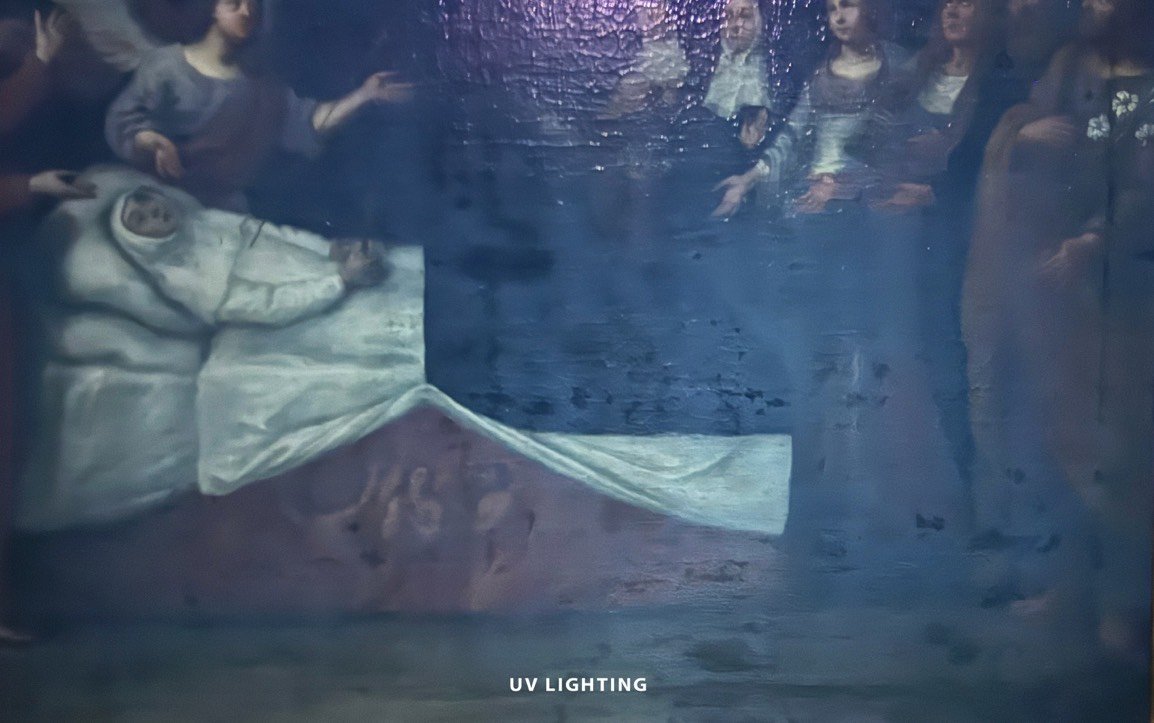 Image 35 of 36