CONTACT US
Leandro Bassano (1557–1622), follower, 17th–18th century
Beggars at the City Gate
Oil on canvas, 90.5 × 73 cm (frame: 108 × 92 cm) – unsigned – Baroque
Lined; darkened colours; light craquelure; some areas thinly painted; recently surface-cleaned and finished with a very thin matte dammar varnish; retouching visible under UV; old collection inventory number on the stretcher; no further documented provenance.
Introduction
The present painting belongs to the long and influential tradition of works created in the orbit of Leandro Bassano, a central figure of the late Renaissance and early Baroque in Venice. The Bassano family gained renown through their innovative approach to genre scenes in which religious, pastoral, and social subjects were interwoven with a distinctly naturalistic visual language. This canvas, executed by a 17th–18th century follower, draws directly on that heritage, focusing on the representation of poverty and human vulnerability at the margins of urban life. Its impressive scale, dramatic handling of light, and densely populated composition make it a vivid and compelling genre scene that places the human condition at its centre.
Description of the Work
The scene unfolds at the edge of a city, identifiable by the eroded whitewashed fortifications and the massive red-brown structure on the left. These architectural remains function both as a physical and symbolic threshold: they demarcate the transition between inside and outside, between safety and exposure, between civic life and social marginality. At the foot of these walls, a large group of beggars, poor families, and destitute figures has gathered.
In the shaded foreground, partially obscured by the mass of the wall, a number of figures sit or lie in exhausted postures. A woman draped with a red cloth rests heavily against another figure, while a cluster of men and women bends over her with gestures suggesting both care and helplessness. The intense contrast between light and shadow emphasizes the fragility of the group and draws attention to their expressions and physical strain. Particularly striking is the mother seated at the right, holding a child—an image of vulnerability yet quiet resilience that anchors the emotional register of the composition.
In the middle ground we find a second group: travellers, accompanied by pack animals, making their way in and out of the city. A kneeling man holds out a bowl—an unmistakable emblem of begging—while another traveller, simply dressed and carrying a staff, appears to move between the two spheres of activity. This interplay between movement and stasis heightens the narrative tension between those who pass through and those who have remained behind at society’s edge.
The background reveals an expansive landscape with distant hills, rendered in cool greys and muted blues. Its openness creates a poignant contrast with the compressed drama of the foreground. The sky, filled with softly turbulent clouds, introduces a sense of unease or atmospheric change—a device frequently employed within the Bassano tradition to deepen emotional tone.
Technique and Palette
Executed in oil on canvas, the work displays the natural signs of age: lining, areas of thin or worn paint, and a network of craquelure. UV examination reveals scattered retouching, mainly in shadowed zones and passages of earlier wear. A thin matte dammar varnish unifies the surface and restores tonal balance.
The palette is characteristic of the Bassano school: rich earth tones dominate the foreground—ochres, siennas, and umbers—while the sky and landscape are built up in cool greys and blue-greens. Modelling is handled with soft transitions, giving the figures a sculptural volume and a subtle sfumato effect that merges forms into their atmospheric surroundings.
Composition and Style
The asymmetrical, layered structure of the composition is closely aligned with the formulas developed in the Bassano workshop. The dense, shadowed mass on the left—comprising the wall and the cluster of beggars—contrasts with the open, luminous space to the right, where movement and perspective unfold. The diagonal axis running from left foreground to right background guides the viewer’s gaze through the successive narrative zones of the image.
In stylistic terms, the painting belongs to Baroque genre painting, where emotional immediacy, dramatic light contrasts, and socially engaged themes play a central role. Rather than idealization, the focus lies on the raw intensity of lived experience—an approach pioneered by the Bassano family and widely adopted by their followers.
The Artist and His Influence
Leandro Bassano, trained in the workshop of his father Jacopo Bassano, emerged as a distinguished painter within the Venetian milieu. He was celebrated for his refined colour harmonies, naturalistic detail, and his ability to merge everyday life with religious and allegorical imagery. His later activity in Venice strengthened his reputation and exposed his workshop to a sophisticated urban clientele.
The Bassano workshop exerted a broad and long-lasting influence: its compositional patterns and themes were reproduced by numerous artists throughout the 17th and 18th centuries. This painting clearly participates in that wider legacy, reflecting the enduring appeal of Bassano’s socially charged subjects.
Art-Historical Context
The theme of beggars at a city gate belongs to the wider European exploration of daily life and social marginality in the 17th century. Comparable artistic sensibilities can be found among contemporaries and stylistic parallels such as Pietro Bellotti, Giuseppe Maria Crespi, and internationally David Teniers the Younger, Jan Victors.
Conclusion
Beggars at the City Gate is an evocative and emotionally charged genre composition that renders the precarious existence of the poor with striking narrative depth. Set against an architectural and landscape backdrop rooted in the Bassano tradition, the painting maintains its expressive power despite evidence of age and earlier restoration. It stands as a representative example of the enduring influence of Leandro Bassano’s themes and visual language, and of the continued reinterpretation of his repertoire by followers well into the 18th century.
CONTACT US
Leandro Bassano (1557–1622), follower, 17th–18th century
Beggars at the City Gate
Oil on canvas, 90.5 × 73 cm (frame: 108 × 92 cm) – unsigned – Baroque
Lined; darkened colours; light craquelure; some areas thinly painted; recently surface-cleaned and finished with a very thin matte dammar varnish; retouching visible under UV; old collection inventory number on the stretcher; no further documented provenance.
Introduction
The present painting belongs to the long and influential tradition of works created in the orbit of Leandro Bassano, a central figure of the late Renaissance and early Baroque in Venice. The Bassano family gained renown through their innovative approach to genre scenes in which religious, pastoral, and social subjects were interwoven with a distinctly naturalistic visual language. This canvas, executed by a 17th–18th century follower, draws directly on that heritage, focusing on the representation of poverty and human vulnerability at the margins of urban life. Its impressive scale, dramatic handling of light, and densely populated composition make it a vivid and compelling genre scene that places the human condition at its centre.
Description of the Work
The scene unfolds at the edge of a city, identifiable by the eroded whitewashed fortifications and the massive red-brown structure on the left. These architectural remains function both as a physical and symbolic threshold: they demarcate the transition between inside and outside, between safety and exposure, between civic life and social marginality. At the foot of these walls, a large group of beggars, poor families, and destitute figures has gathered.
In the shaded foreground, partially obscured by the mass of the wall, a number of figures sit or lie in exhausted postures. A woman draped with a red cloth rests heavily against another figure, while a cluster of men and women bends over her with gestures suggesting both care and helplessness. The intense contrast between light and shadow emphasizes the fragility of the group and draws attention to their expressions and physical strain. Particularly striking is the mother seated at the right, holding a child—an image of vulnerability yet quiet resilience that anchors the emotional register of the composition.
In the middle ground we find a second group: travellers, accompanied by pack animals, making their way in and out of the city. A kneeling man holds out a bowl—an unmistakable emblem of begging—while another traveller, simply dressed and carrying a staff, appears to move between the two spheres of activity. This interplay between movement and stasis heightens the narrative tension between those who pass through and those who have remained behind at society’s edge.
The background reveals an expansive landscape with distant hills, rendered in cool greys and muted blues. Its openness creates a poignant contrast with the compressed drama of the foreground. The sky, filled with softly turbulent clouds, introduces a sense of unease or atmospheric change—a device frequently employed within the Bassano tradition to deepen emotional tone.
Technique and Palette
Executed in oil on canvas, the work displays the natural signs of age: lining, areas of thin or worn paint, and a network of craquelure. UV examination reveals scattered retouching, mainly in shadowed zones and passages of earlier wear. A thin matte dammar varnish unifies the surface and restores tonal balance.
The palette is characteristic of the Bassano school: rich earth tones dominate the foreground—ochres, siennas, and umbers—while the sky and landscape are built up in cool greys and blue-greens. Modelling is handled with soft transitions, giving the figures a sculptural volume and a subtle sfumato effect that merges forms into their atmospheric surroundings.
Composition and Style
The asymmetrical, layered structure of the composition is closely aligned with the formulas developed in the Bassano workshop. The dense, shadowed mass on the left—comprising the wall and the cluster of beggars—contrasts with the open, luminous space to the right, where movement and perspective unfold. The diagonal axis running from left foreground to right background guides the viewer’s gaze through the successive narrative zones of the image.
In stylistic terms, the painting belongs to Baroque genre painting, where emotional immediacy, dramatic light contrasts, and socially engaged themes play a central role. Rather than idealization, the focus lies on the raw intensity of lived experience—an approach pioneered by the Bassano family and widely adopted by their followers.
The Artist and His Influence
Leandro Bassano, trained in the workshop of his father Jacopo Bassano, emerged as a distinguished painter within the Venetian milieu. He was celebrated for his refined colour harmonies, naturalistic detail, and his ability to merge everyday life with religious and allegorical imagery. His later activity in Venice strengthened his reputation and exposed his workshop to a sophisticated urban clientele.
The Bassano workshop exerted a broad and long-lasting influence: its compositional patterns and themes were reproduced by numerous artists throughout the 17th and 18th centuries. This painting clearly participates in that wider legacy, reflecting the enduring appeal of Bassano’s socially charged subjects.
Art-Historical Context
The theme of beggars at a city gate belongs to the wider European exploration of daily life and social marginality in the 17th century. Comparable artistic sensibilities can be found among contemporaries and stylistic parallels such as Pietro Bellotti, Giuseppe Maria Crespi, and internationally David Teniers the Younger, Jan Victors.
Conclusion
Beggars at the City Gate is an evocative and emotionally charged genre composition that renders the precarious existence of the poor with striking narrative depth. Set against an architectural and landscape backdrop rooted in the Bassano tradition, the painting maintains its expressive power despite evidence of age and earlier restoration. It stands as a representative example of the enduring influence of Leandro Bassano’s themes and visual language, and of the continued reinterpretation of his repertoire by followers well into the 18th century.

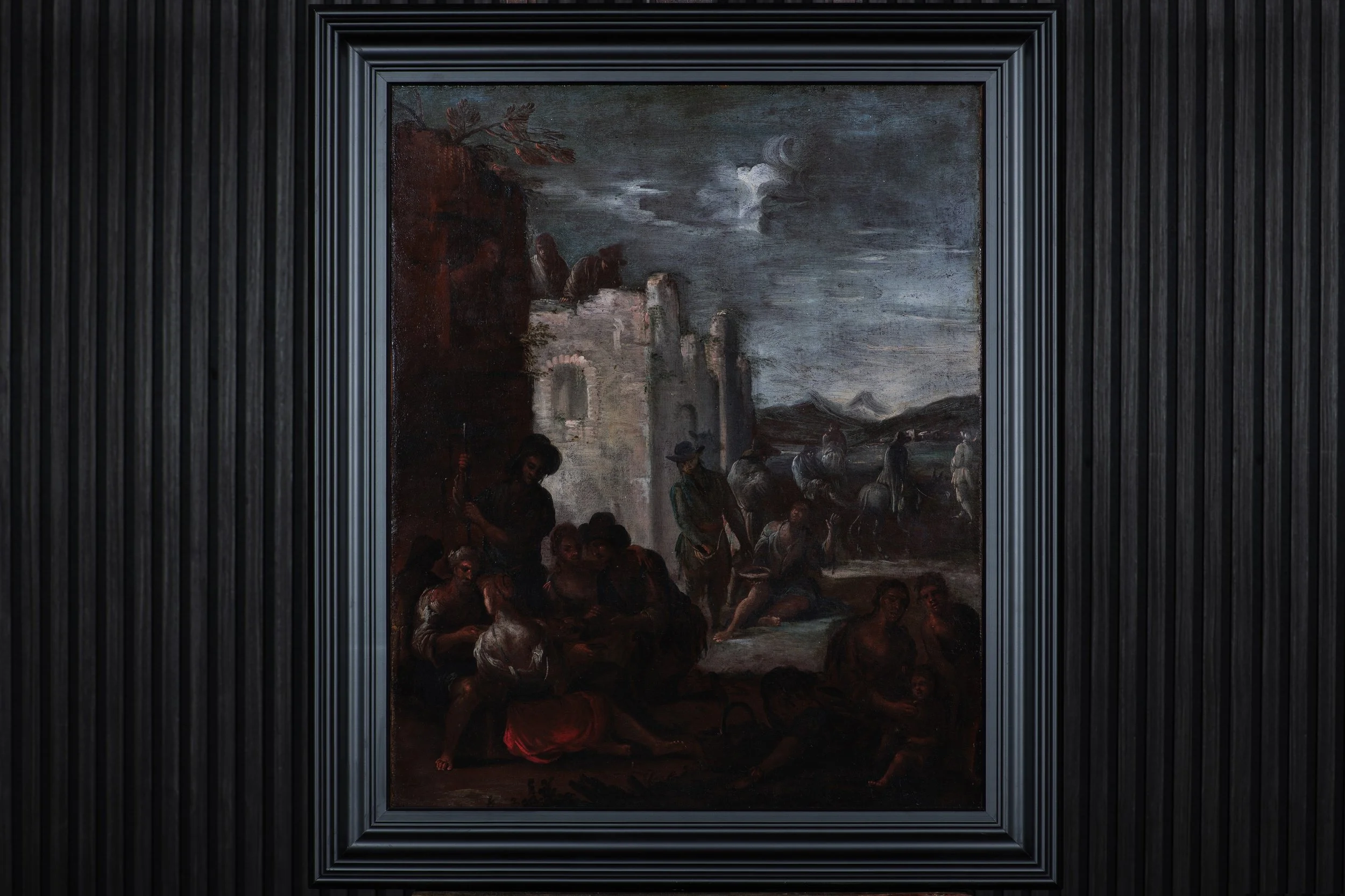 Image 1 of 18
 Image 2 of 18
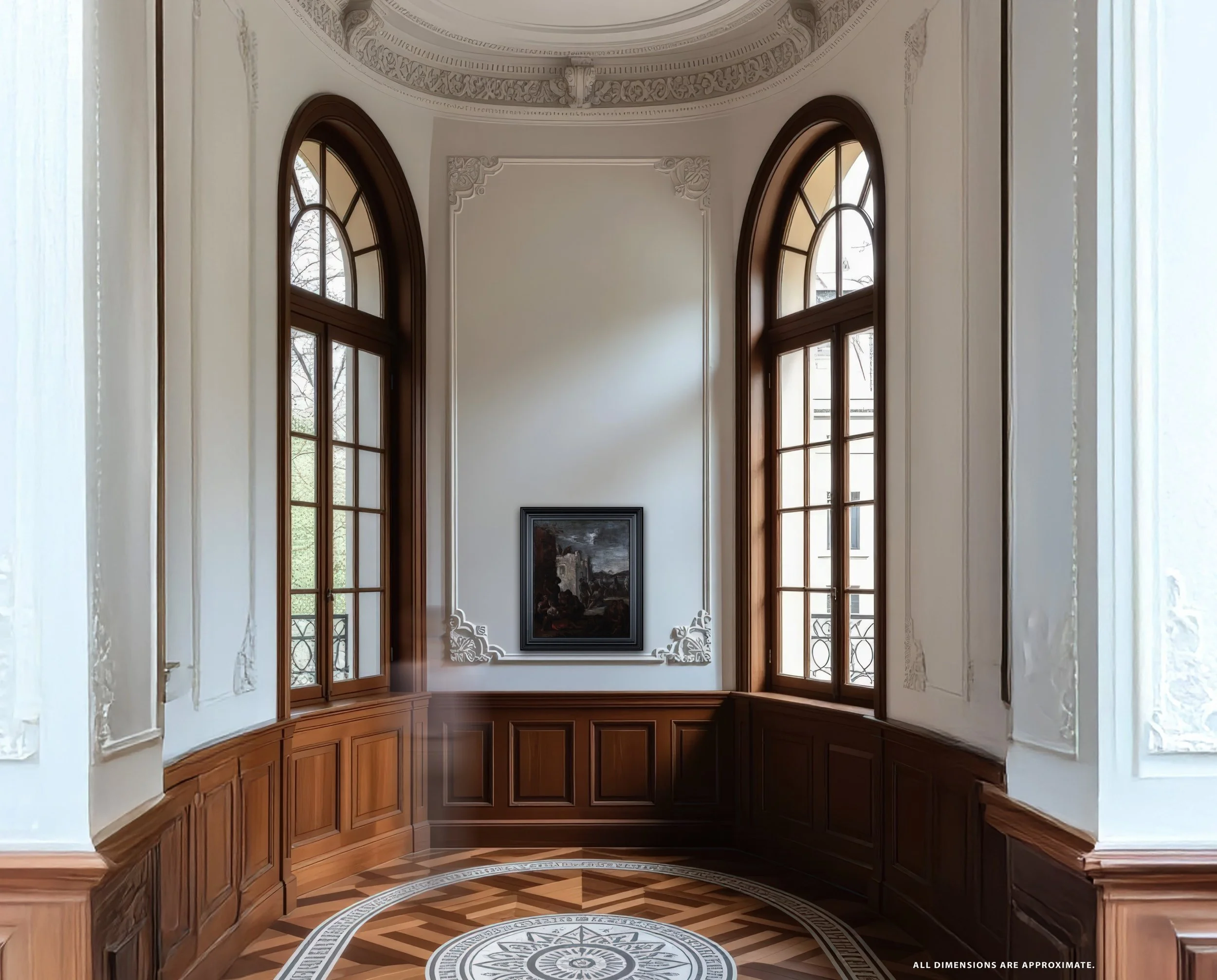 Image 3 of 18
 Image 4 of 18
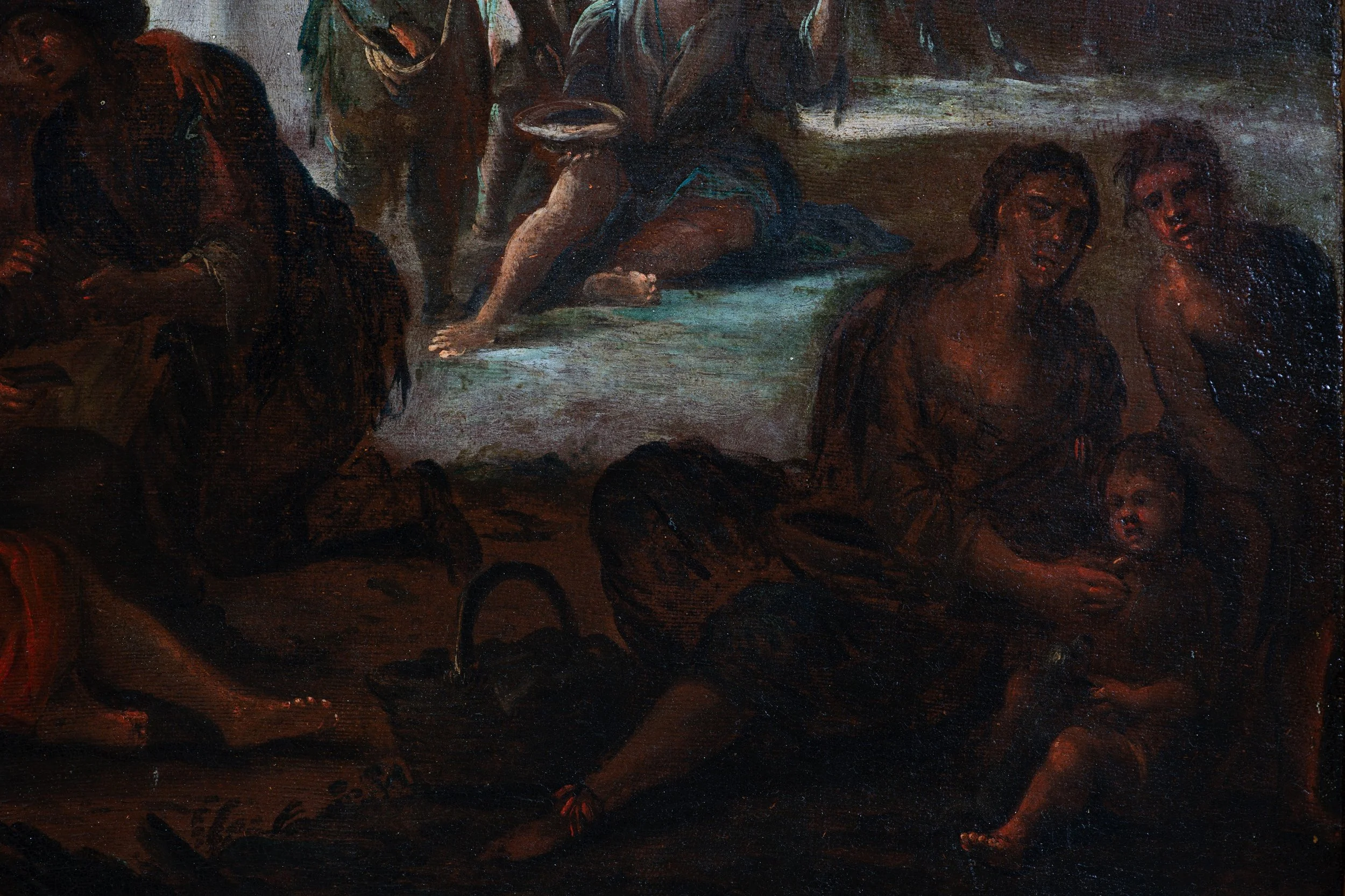 Image 5 of 18
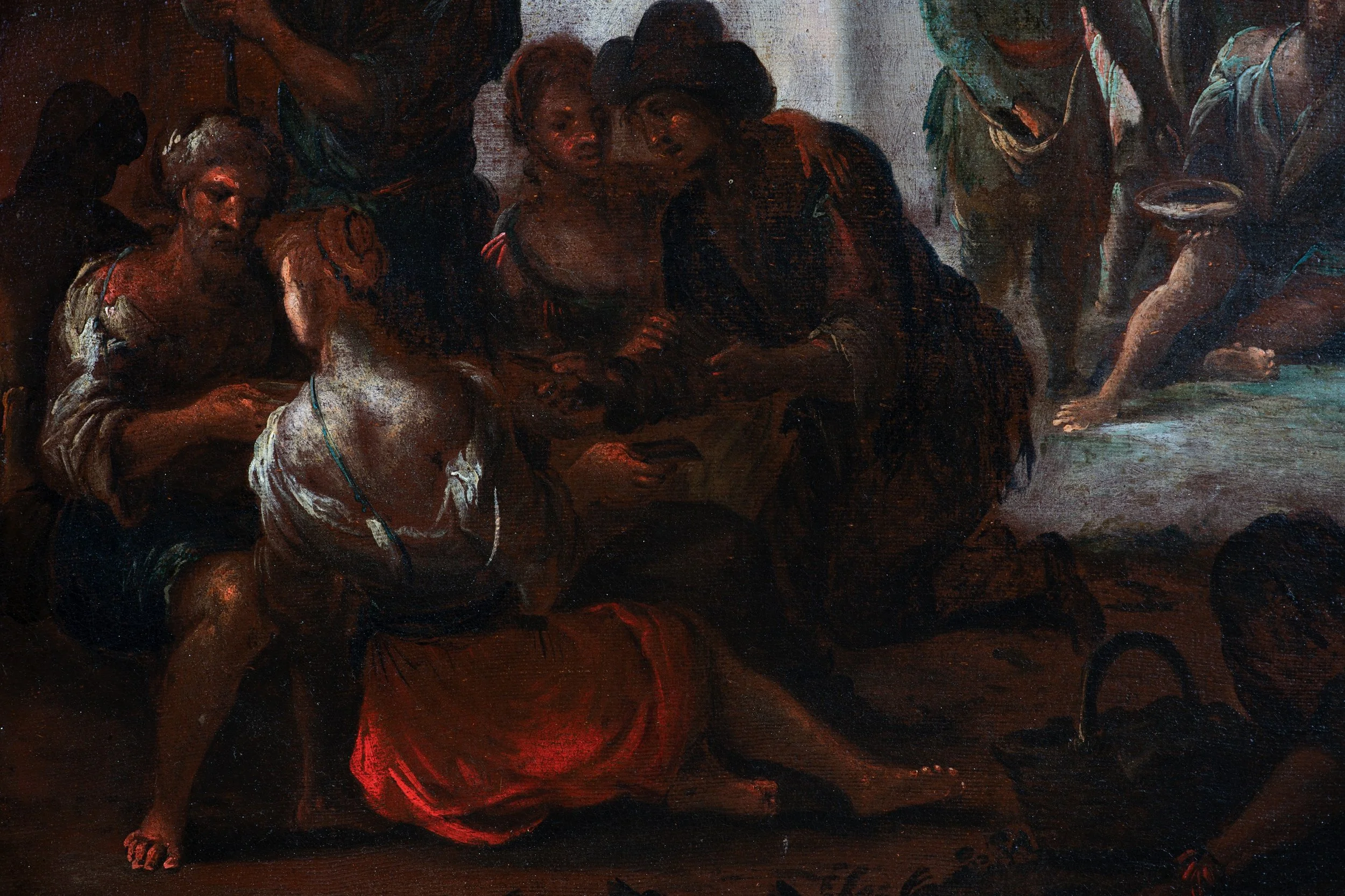 Image 6 of 18
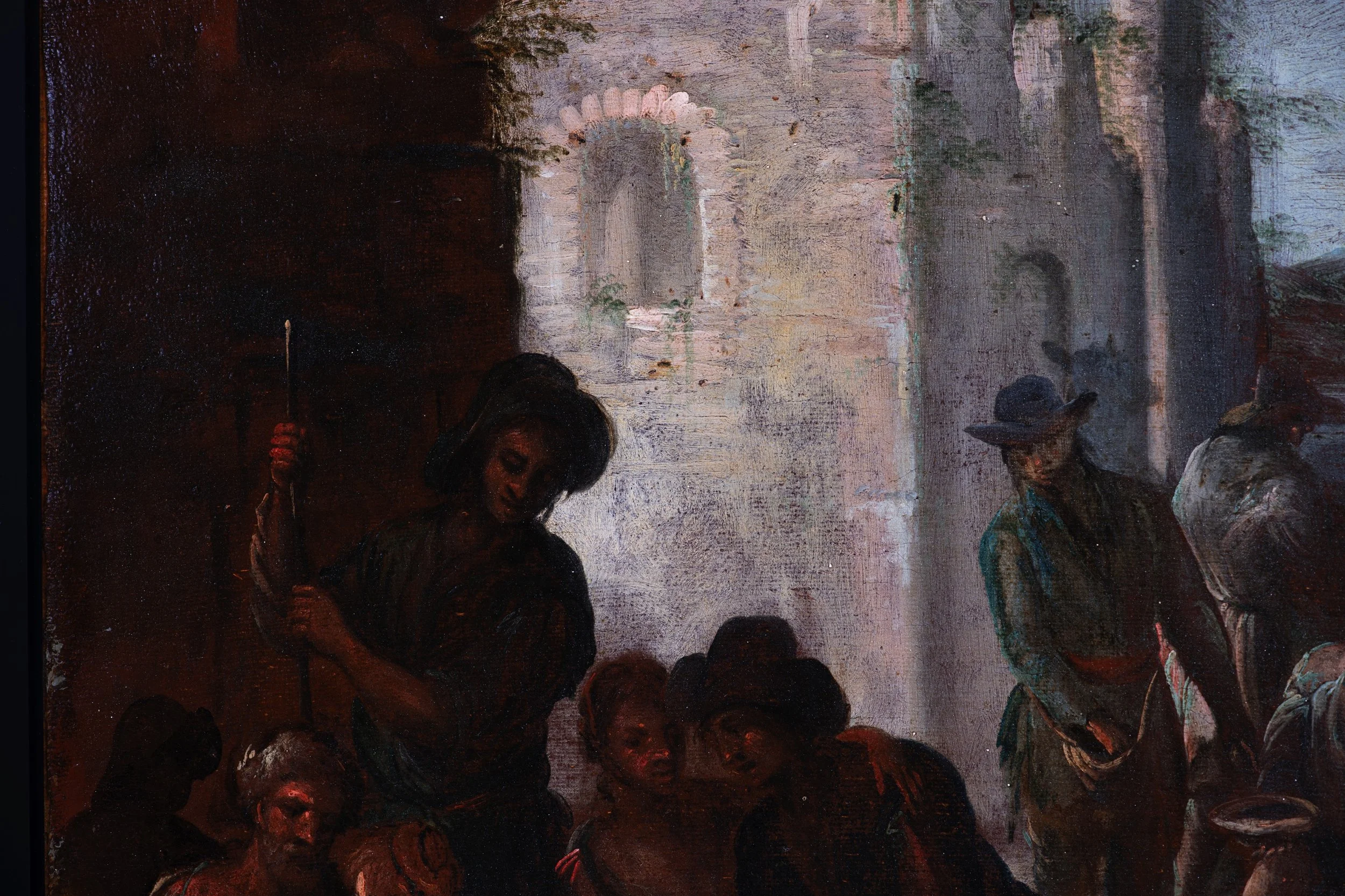 Image 7 of 18
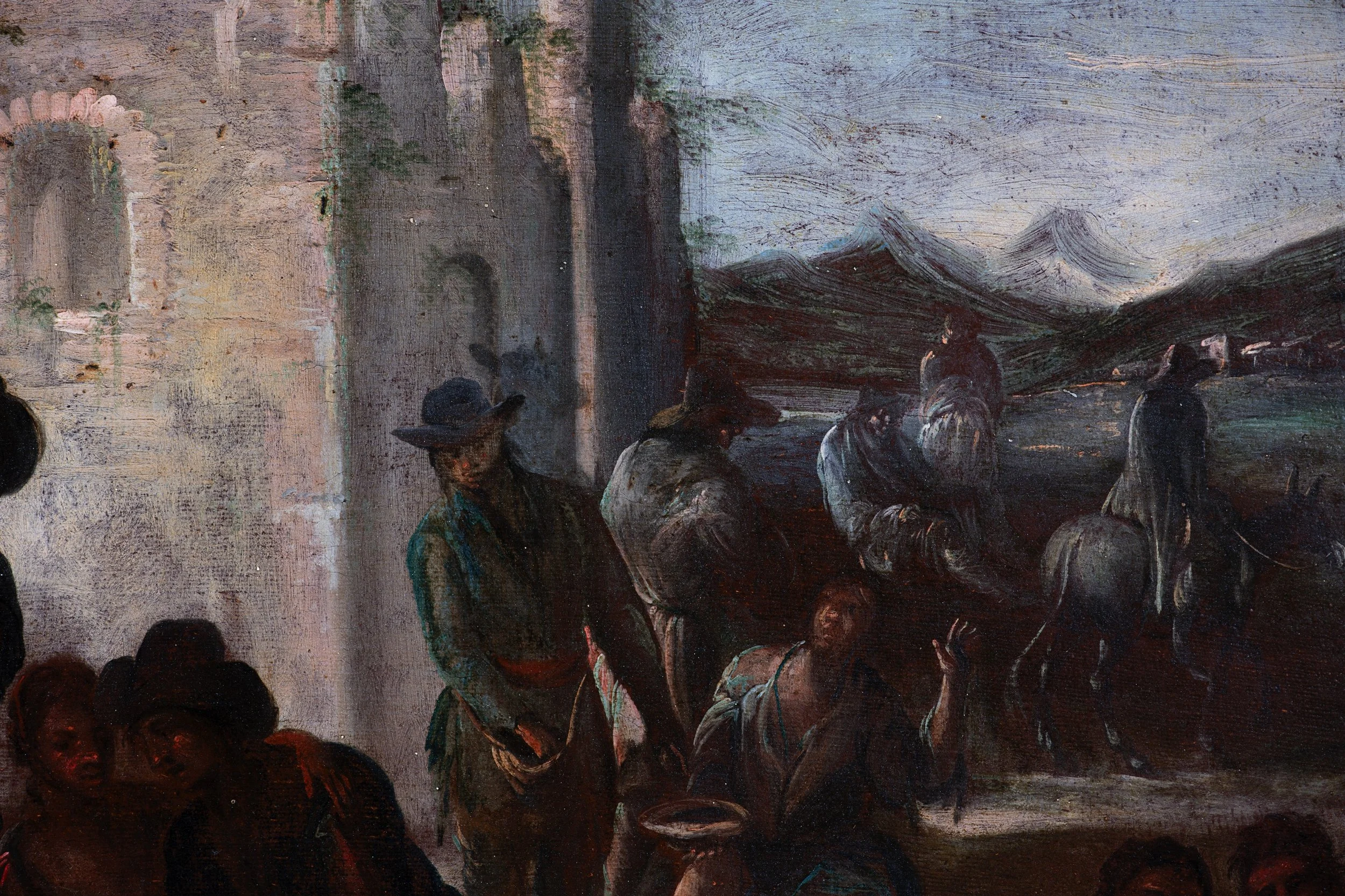 Image 8 of 18
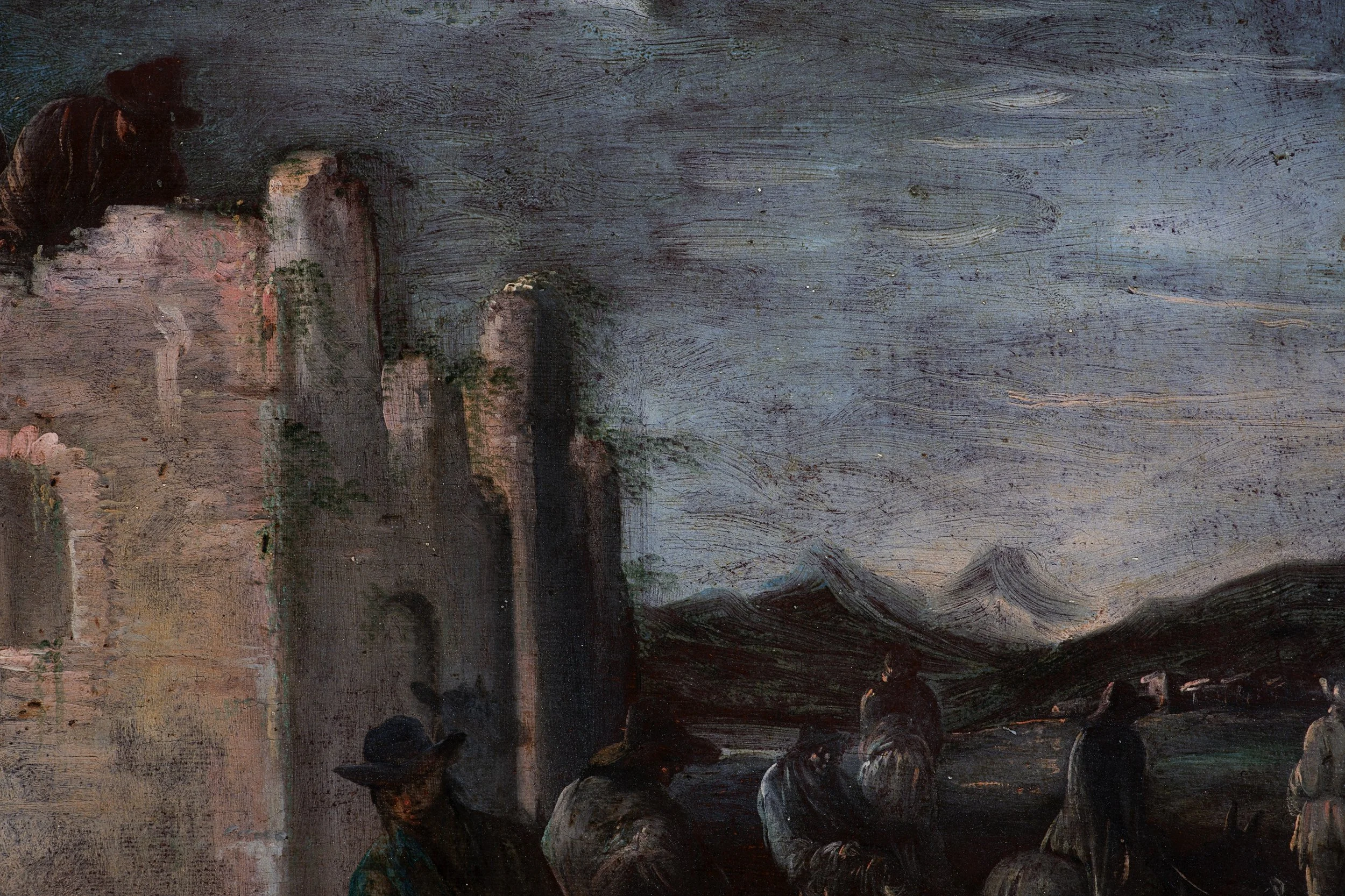 Image 9 of 18
 Image 10 of 18
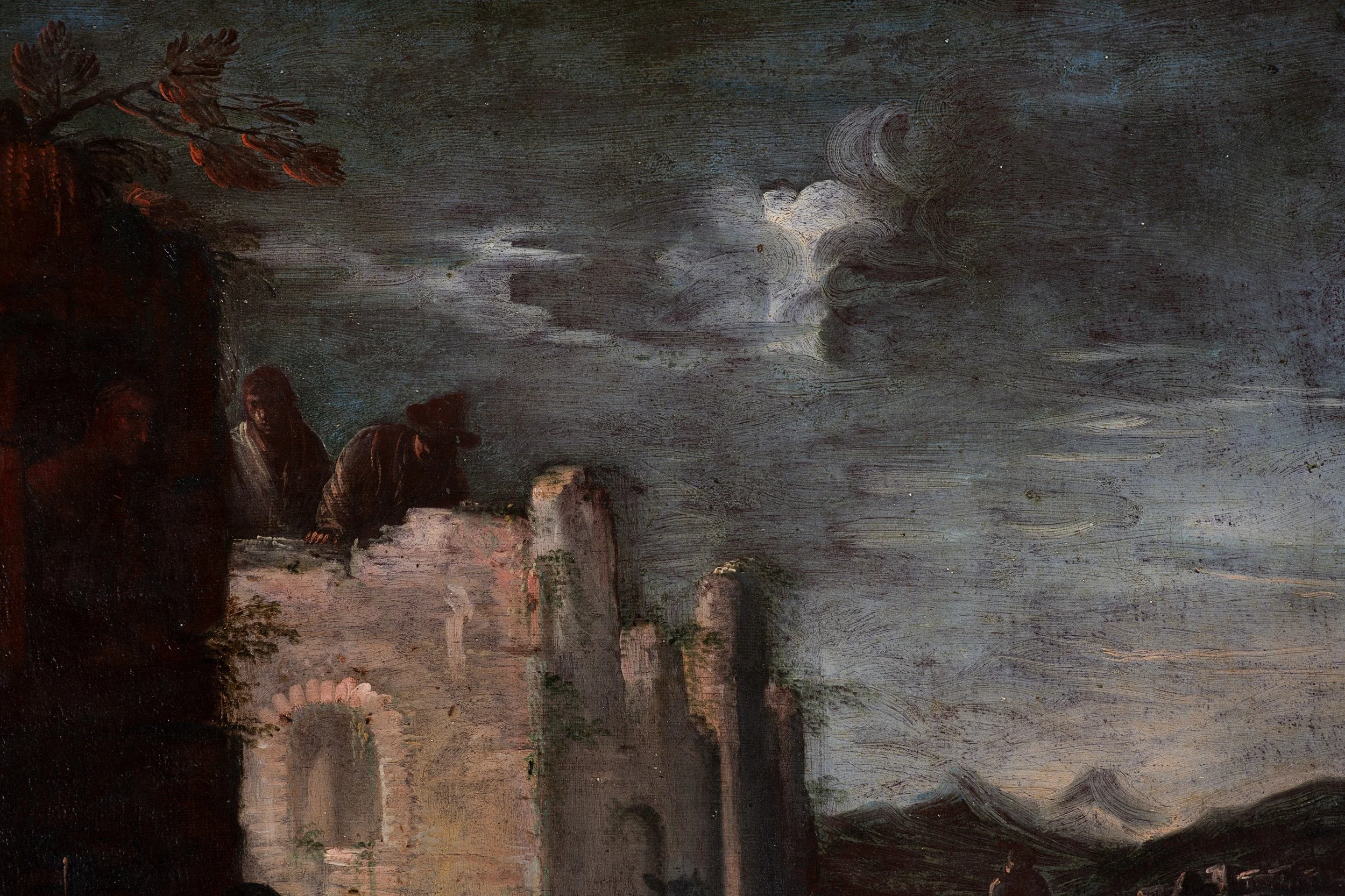 Image 11 of 18
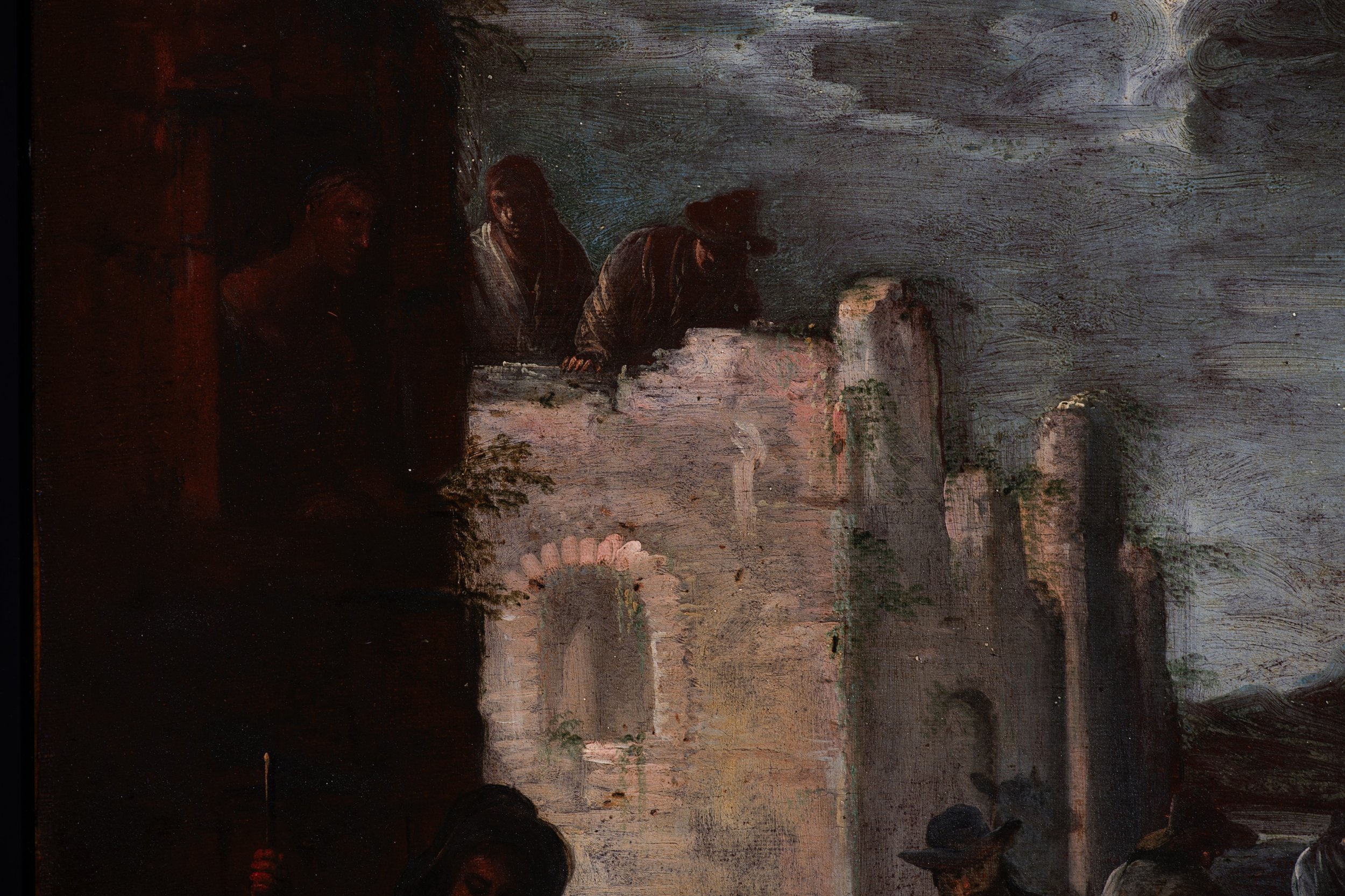 Image 12 of 18
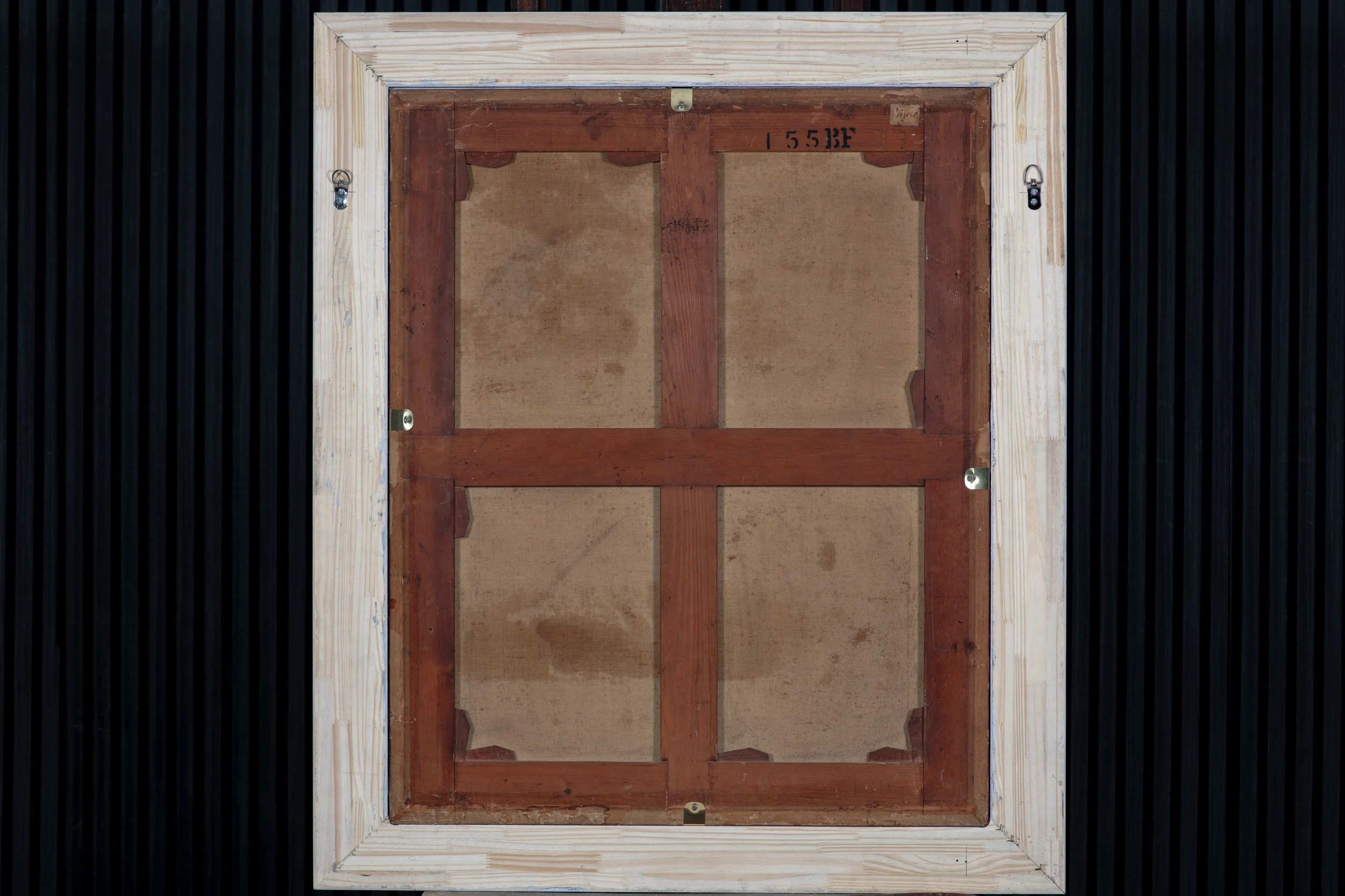 Image 13 of 18
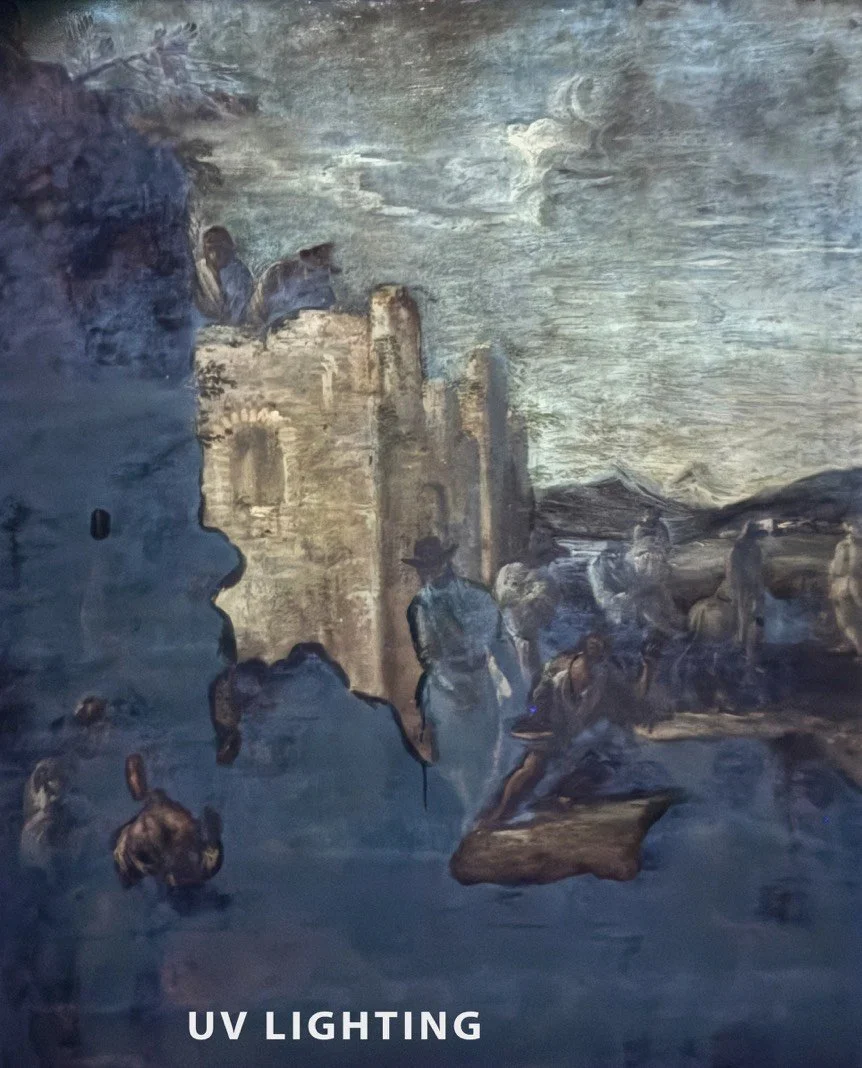 Image 14 of 18
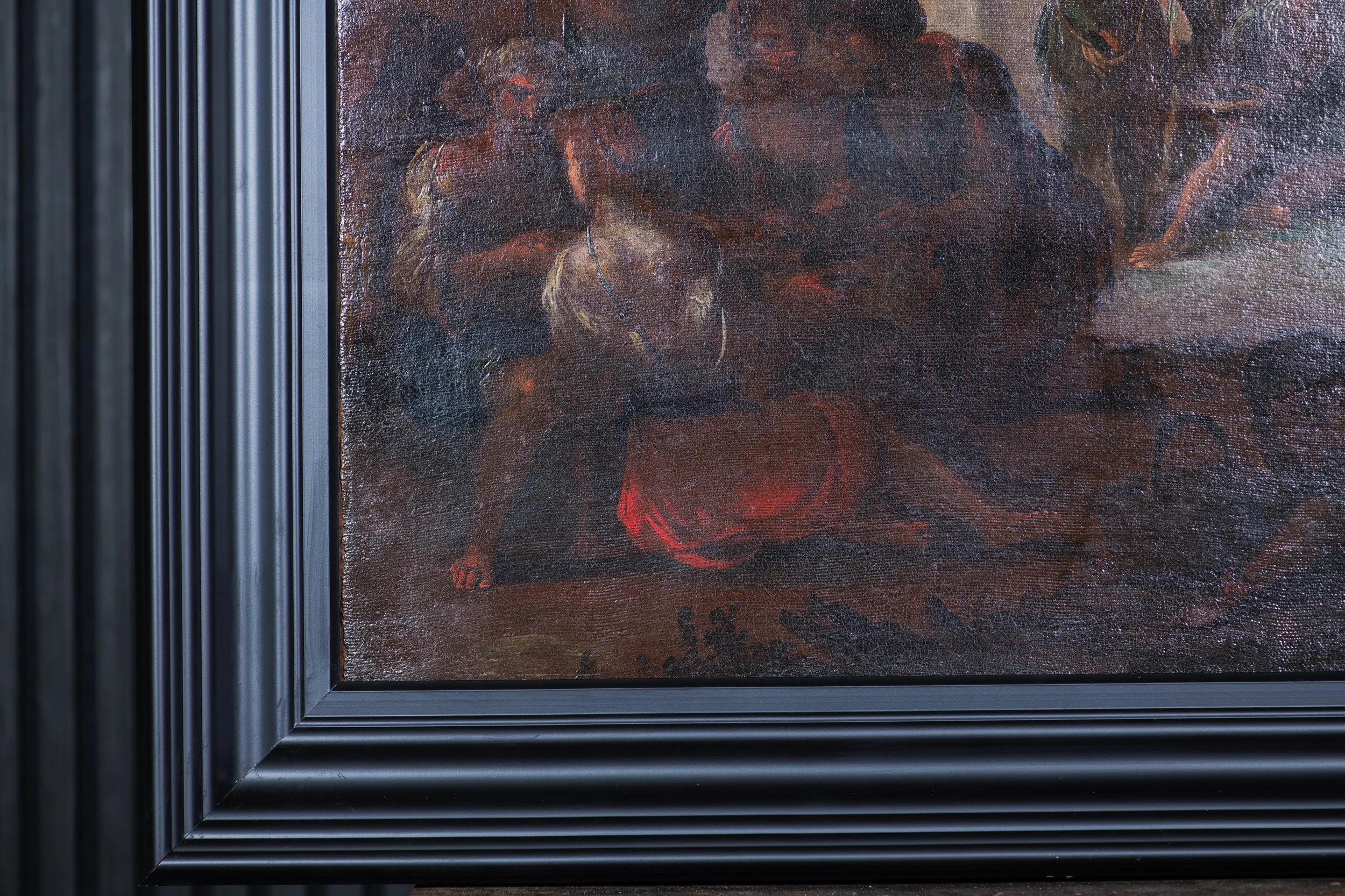 Image 15 of 18
 Image 16 of 18
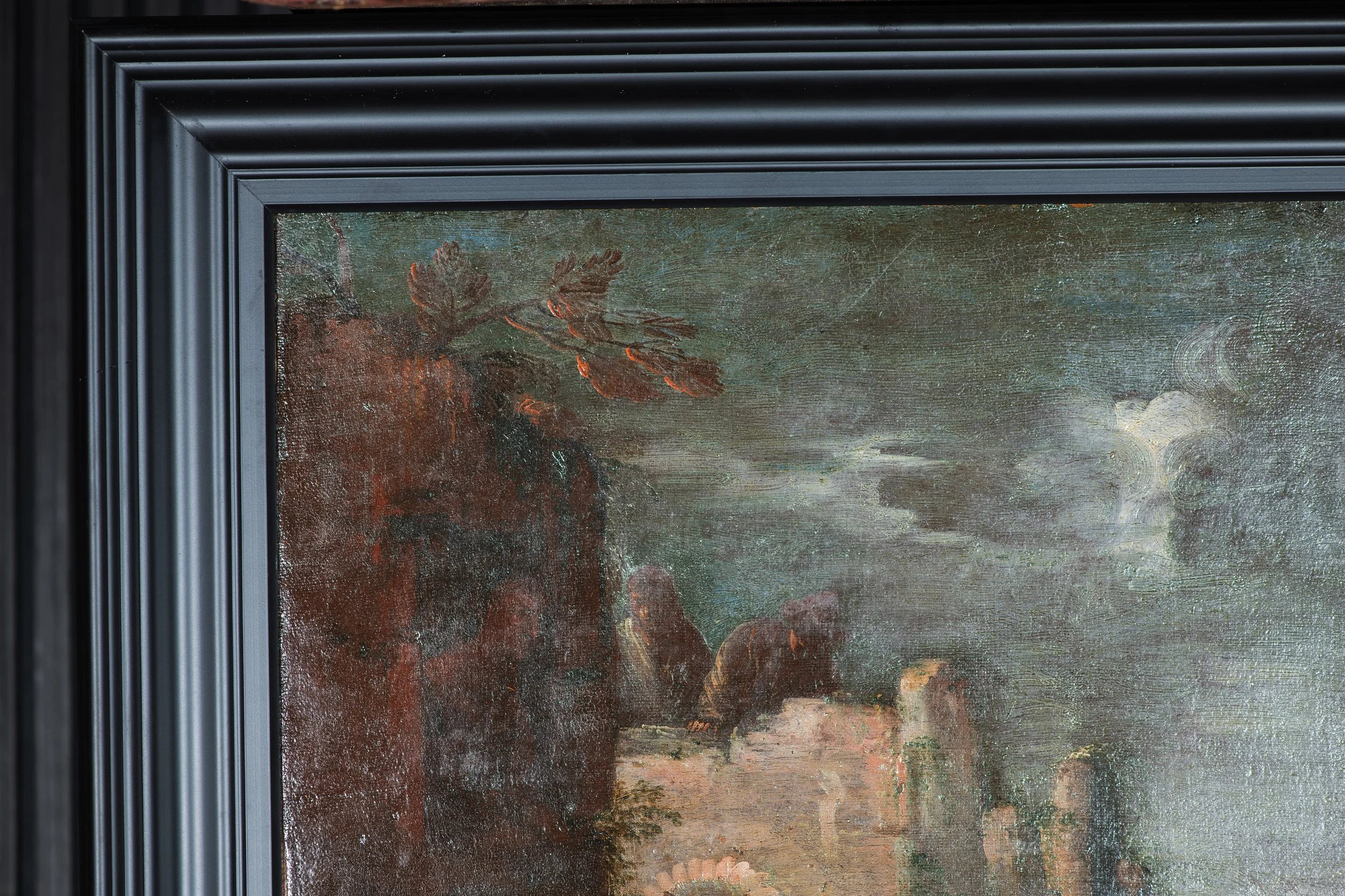 Image 17 of 18
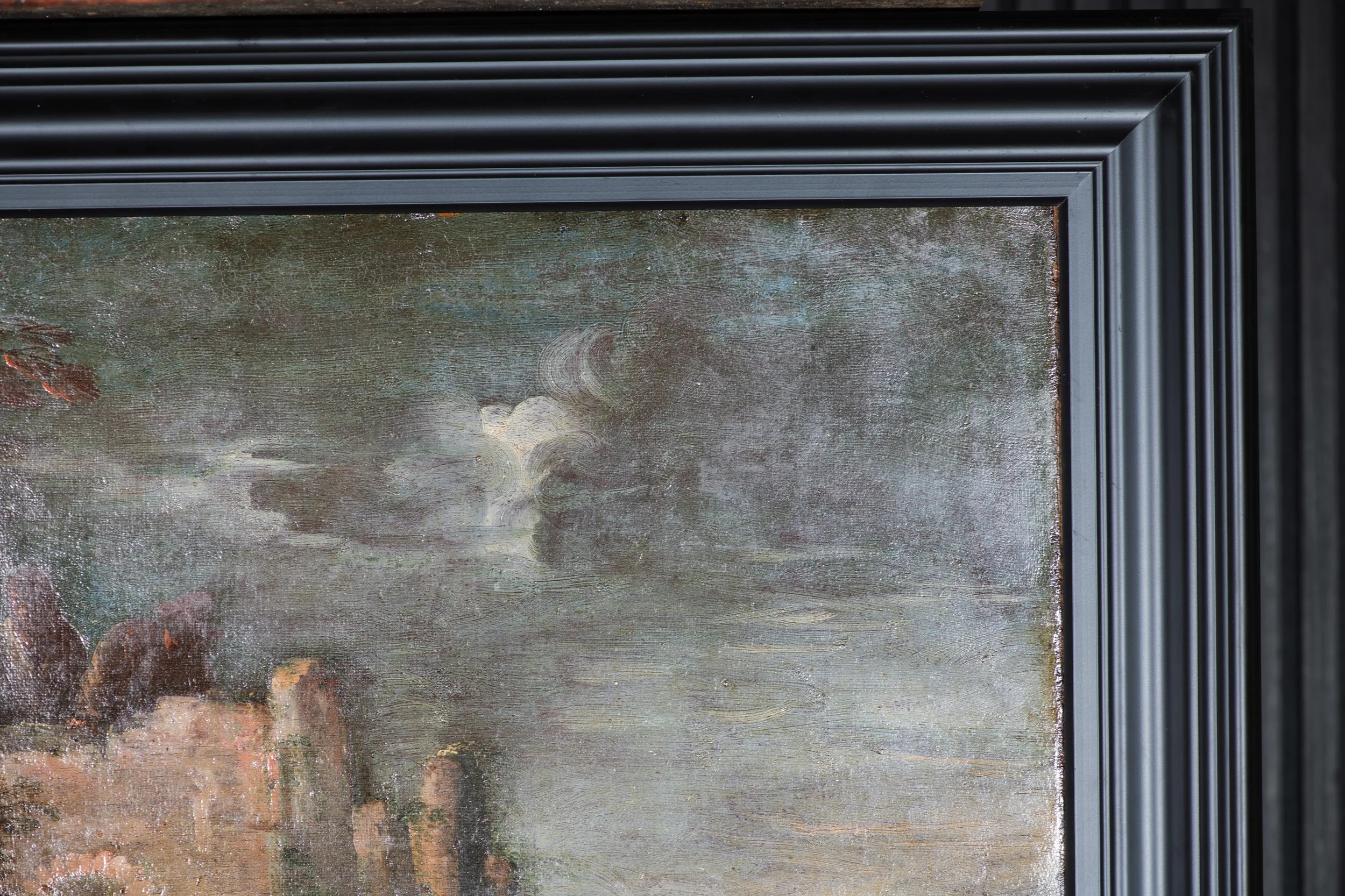 Image 18 of 18