CONTACT US
Oene Romkes de Jongh (1812–1896)
Village Street with Figures and Horse-Drawn Cart
Oil on canvas, 54 × 66.5 cm; framed 69.5 × 82 cm
Signed lower right
Romanticism
Condition: light craquelure; minimal retouching visible under UV light
Introduction
This refined village scene exemplifies the characteristic oeuvre of Oene Romkes de Jongh, a nineteenth-century painter celebrated for his meticulously rendered Dutch street views and intimate depictions of everyday life. The work reflects his pronounced interest in architecture, atmospheric detail and the subtle vitality of rural community life. Within the broader context of Dutch Romanticism, this painting stands as a representative and high-quality example of the genre landscapes that established De Jongh’s solid reputation.
Description of the Work
The composition presents a spacious village street lined with modest brick houses, wooden fences and mature trees that structure the rhythm of the scene. At its centre, a horse-drawn cart moves slowly along the uneven road, surrounded by figures engaged in conversation or going about their daily activities. On the right, a woman leans casually over a doorway, while further in the distance the street narrows towards what appears to be a gate or town building. De Jongh orders these elements with great clarity: a low horizon and deep perspective guide the viewer’s eye naturally into the distance. The fine rendering of windows, roof tiles, fencing and foliage is typical of his work, contributing to the authentic and recognisable character of the scene.
Technique and Colour Palette
Executed with disciplined, precise brushwork, the painting demonstrates De Jongh’s command of a controlled tonal structure and subtle atmospheric graduations. The colour palette is harmonious and warm, with earth tones for the architecture, deep greens for the trees and a luminous, softly modelled sky. The paint surface shows light craquelure consistent with the work’s age; under UV light only minor, carefully applied retouching is visible, pointing to a stable and well-preserved state.
Composition and Art-Historical Context
Within Dutch Romanticism, De Jongh belongs to the group of artists who shaped the nineteenth-century vision of the national landscape and its intimate historical character. His work aligns with the renewed appreciation for distinctly Dutch townscapes and rural views, emphasising tradition, atmosphere and topographical accuracy. The balanced composition, narrative detail and historical sensibility firmly anchor this painting within that tradition. Comparable artists include Cornelis Springer, Adrianus Eversen, Charles Busson, Carl Hasch.
The Artist
Born in Harlingen, Oene Romkes de Jongh developed into a skilled painter of Dutch town and village scenes during a period marked by strong interest in finely detailed, realistic topographical art. His oeuvre is characterised by consistent architectural precision and lively genre elements. The village and street views for which he is best known represent a distinct contribution to nineteenth-century Dutch Romanticism.
Condition
The painting is in good, stable condition. The paint surface displays light, even craquelure appropriate to its age. UV examination reveals a few minor retouchings that are discreet and professionally executed, preserving the integrity of the composition. The canvas remains well tensioned and is presented in an ornate, decorative frame that enhances its period character.
Conclusion
This work stands as an exemplary and appealing testament to Oene Romkes de Jongh’s contribution to Dutch Romanticism. The combination of topographical clarity, narrative liveliness and technical refinement makes it a highly desirable piece within the genre of nineteenth-century village views. Its authentic signature, well-preserved condition and characteristic subject matter imbue it with a distinguished, museum-ready presence suited to a premium auction setting.
CONTACT US
Oene Romkes de Jongh (1812–1896)
Village Street with Figures and Horse-Drawn Cart
Oil on canvas, 54 × 66.5 cm; framed 69.5 × 82 cm
Signed lower right
Romanticism
Condition: light craquelure; minimal retouching visible under UV light
Introduction
This refined village scene exemplifies the characteristic oeuvre of Oene Romkes de Jongh, a nineteenth-century painter celebrated for his meticulously rendered Dutch street views and intimate depictions of everyday life. The work reflects his pronounced interest in architecture, atmospheric detail and the subtle vitality of rural community life. Within the broader context of Dutch Romanticism, this painting stands as a representative and high-quality example of the genre landscapes that established De Jongh’s solid reputation.
Description of the Work
The composition presents a spacious village street lined with modest brick houses, wooden fences and mature trees that structure the rhythm of the scene. At its centre, a horse-drawn cart moves slowly along the uneven road, surrounded by figures engaged in conversation or going about their daily activities. On the right, a woman leans casually over a doorway, while further in the distance the street narrows towards what appears to be a gate or town building. De Jongh orders these elements with great clarity: a low horizon and deep perspective guide the viewer’s eye naturally into the distance. The fine rendering of windows, roof tiles, fencing and foliage is typical of his work, contributing to the authentic and recognisable character of the scene.
Technique and Colour Palette
Executed with disciplined, precise brushwork, the painting demonstrates De Jongh’s command of a controlled tonal structure and subtle atmospheric graduations. The colour palette is harmonious and warm, with earth tones for the architecture, deep greens for the trees and a luminous, softly modelled sky. The paint surface shows light craquelure consistent with the work’s age; under UV light only minor, carefully applied retouching is visible, pointing to a stable and well-preserved state.
Composition and Art-Historical Context
Within Dutch Romanticism, De Jongh belongs to the group of artists who shaped the nineteenth-century vision of the national landscape and its intimate historical character. His work aligns with the renewed appreciation for distinctly Dutch townscapes and rural views, emphasising tradition, atmosphere and topographical accuracy. The balanced composition, narrative detail and historical sensibility firmly anchor this painting within that tradition. Comparable artists include Cornelis Springer, Adrianus Eversen, Charles Busson, Carl Hasch.
The Artist
Born in Harlingen, Oene Romkes de Jongh developed into a skilled painter of Dutch town and village scenes during a period marked by strong interest in finely detailed, realistic topographical art. His oeuvre is characterised by consistent architectural precision and lively genre elements. The village and street views for which he is best known represent a distinct contribution to nineteenth-century Dutch Romanticism.
Condition
The painting is in good, stable condition. The paint surface displays light, even craquelure appropriate to its age. UV examination reveals a few minor retouchings that are discreet and professionally executed, preserving the integrity of the composition. The canvas remains well tensioned and is presented in an ornate, decorative frame that enhances its period character.
Conclusion
This work stands as an exemplary and appealing testament to Oene Romkes de Jongh’s contribution to Dutch Romanticism. The combination of topographical clarity, narrative liveliness and technical refinement makes it a highly desirable piece within the genre of nineteenth-century village views. Its authentic signature, well-preserved condition and characteristic subject matter imbue it with a distinguished, museum-ready presence suited to a premium auction setting.

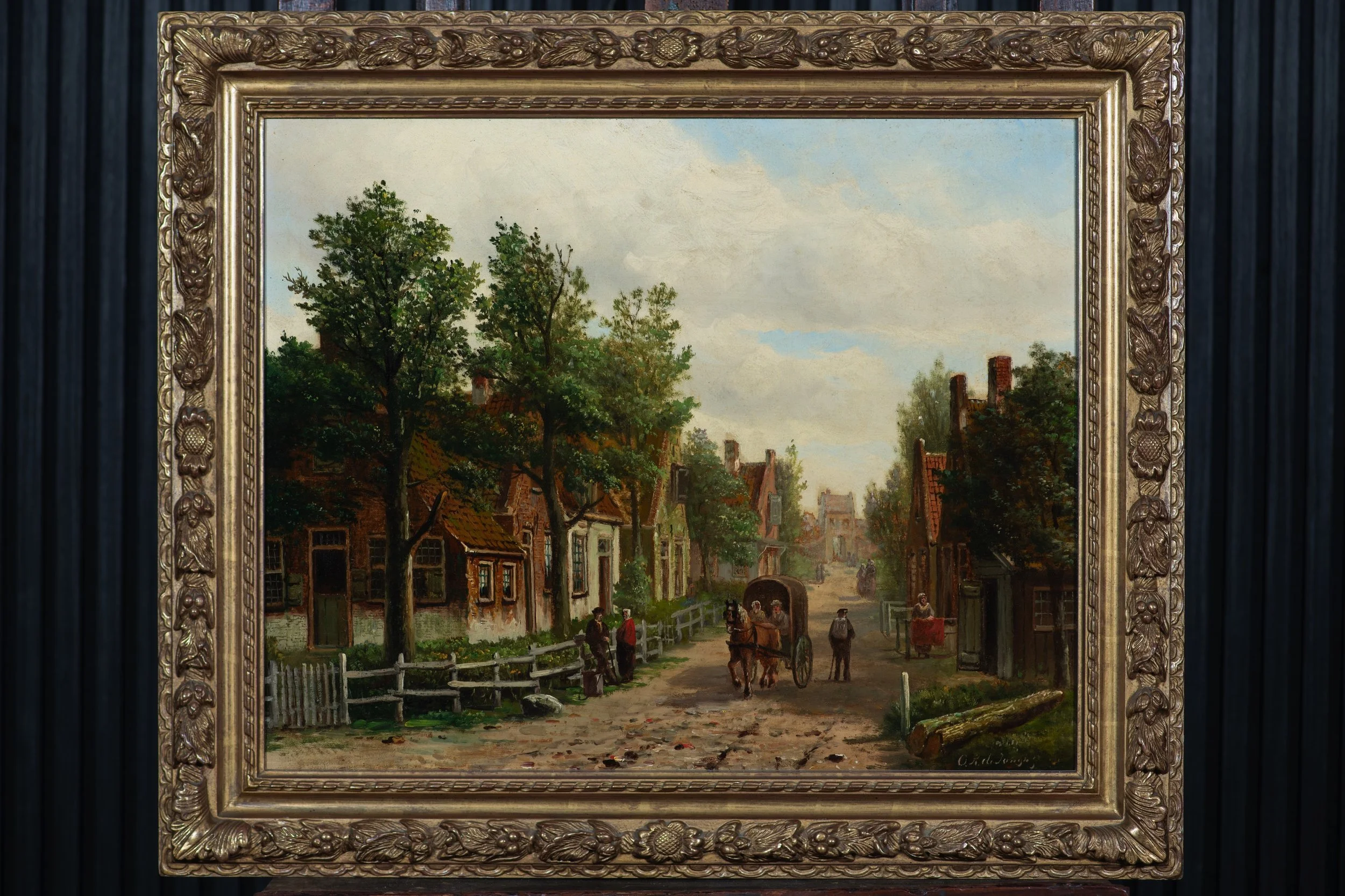 Image 1 of 21
 Image 2 of 21
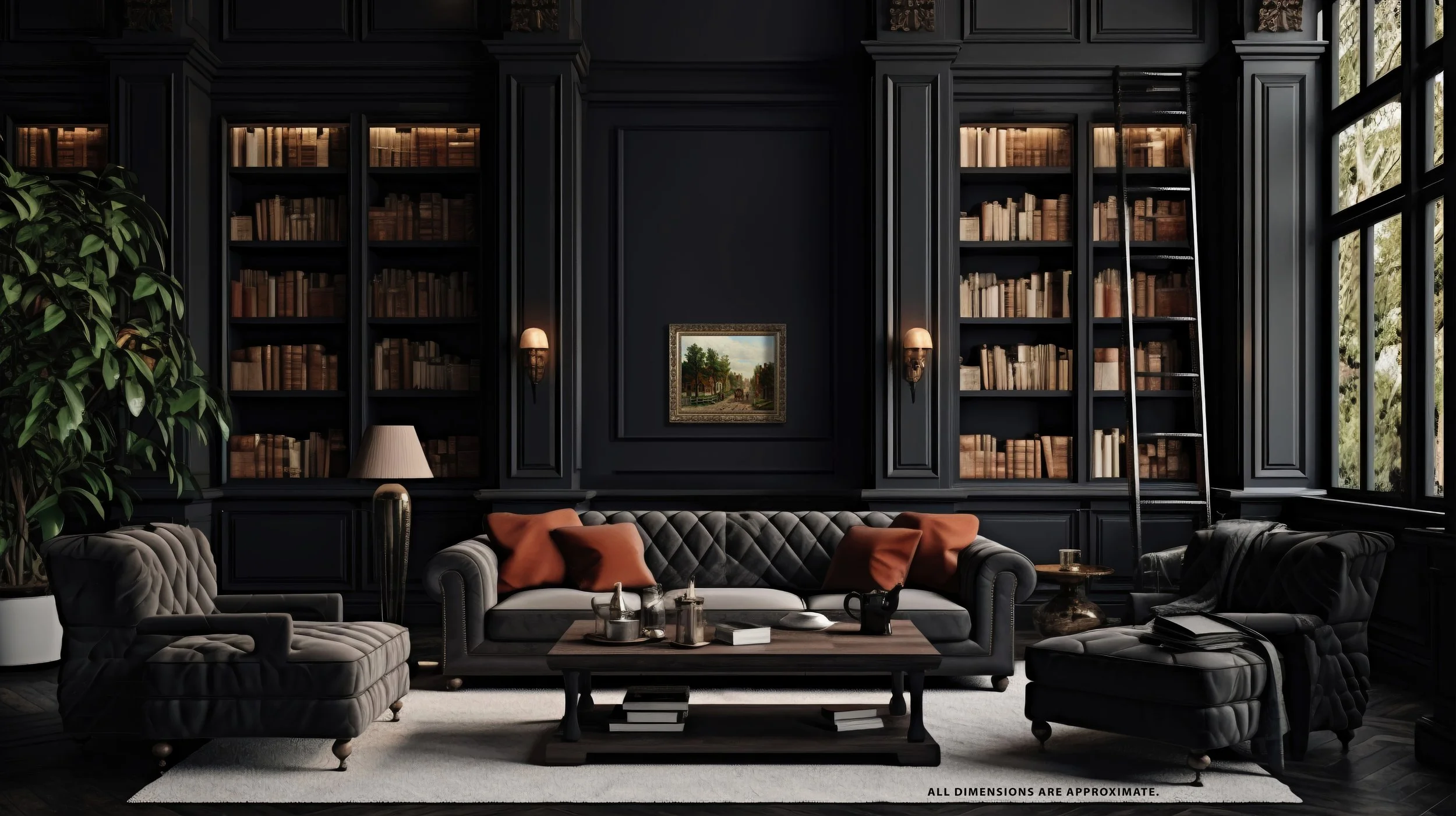 Image 3 of 21
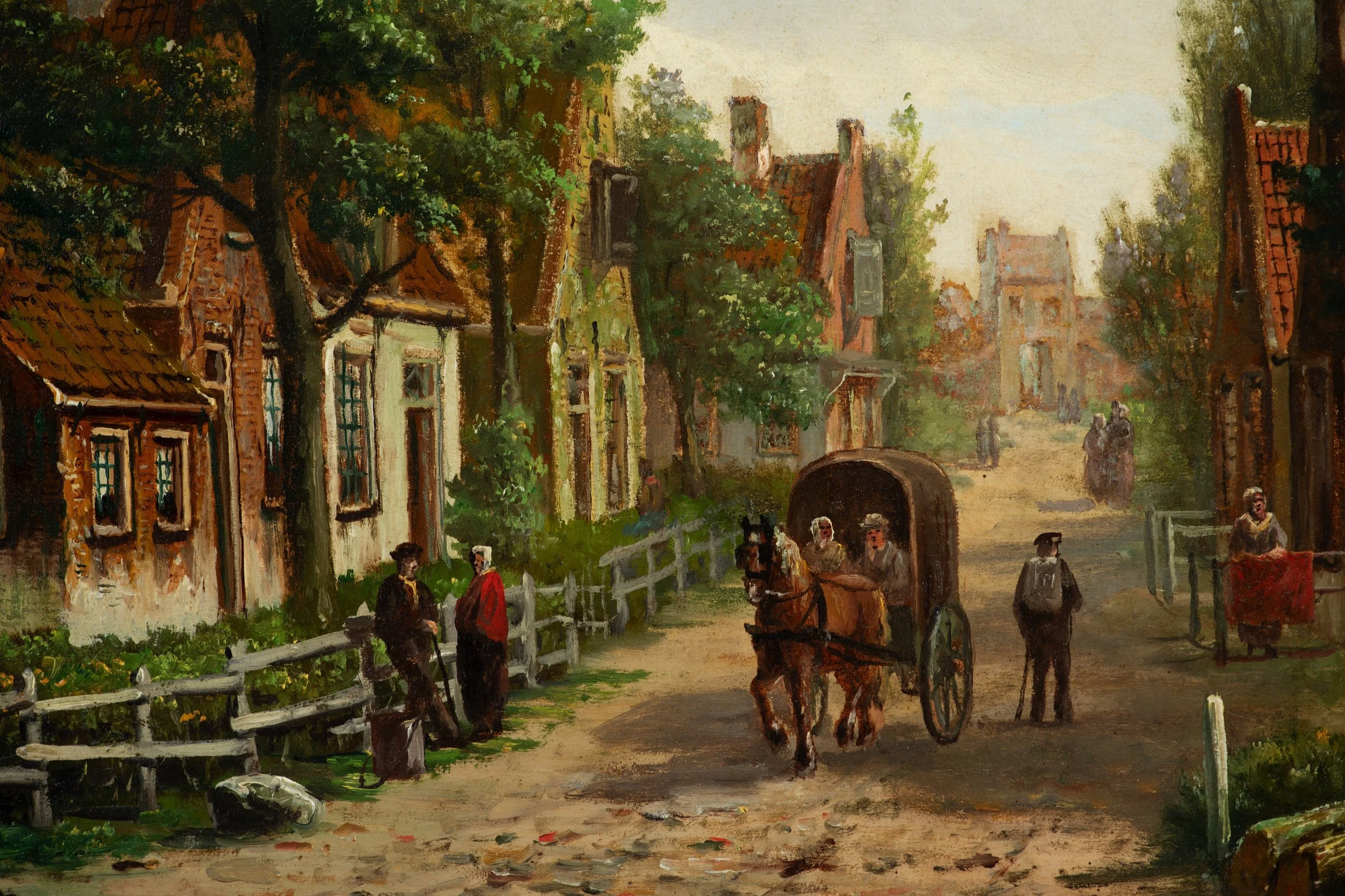 Image 4 of 21
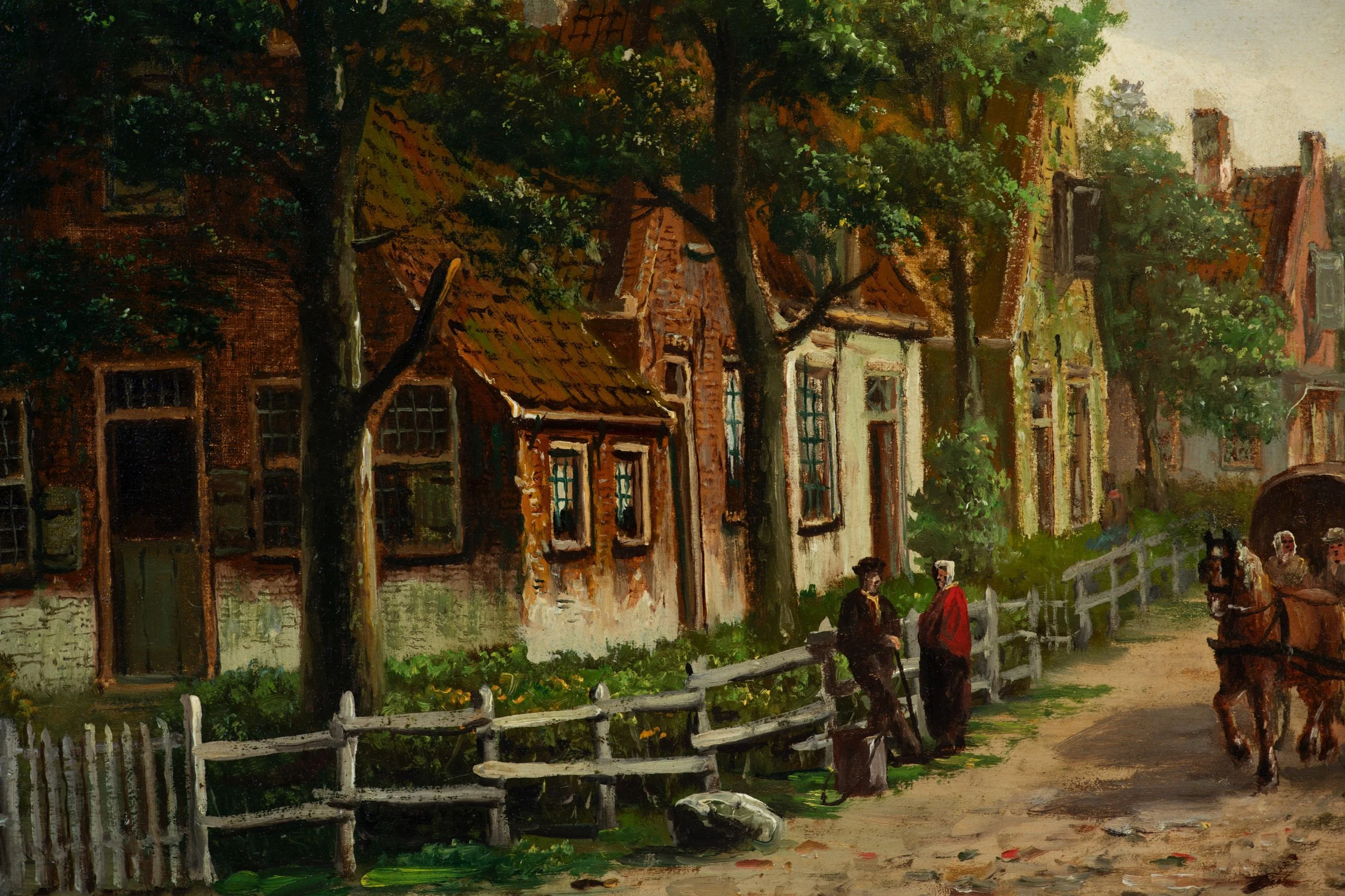 Image 5 of 21
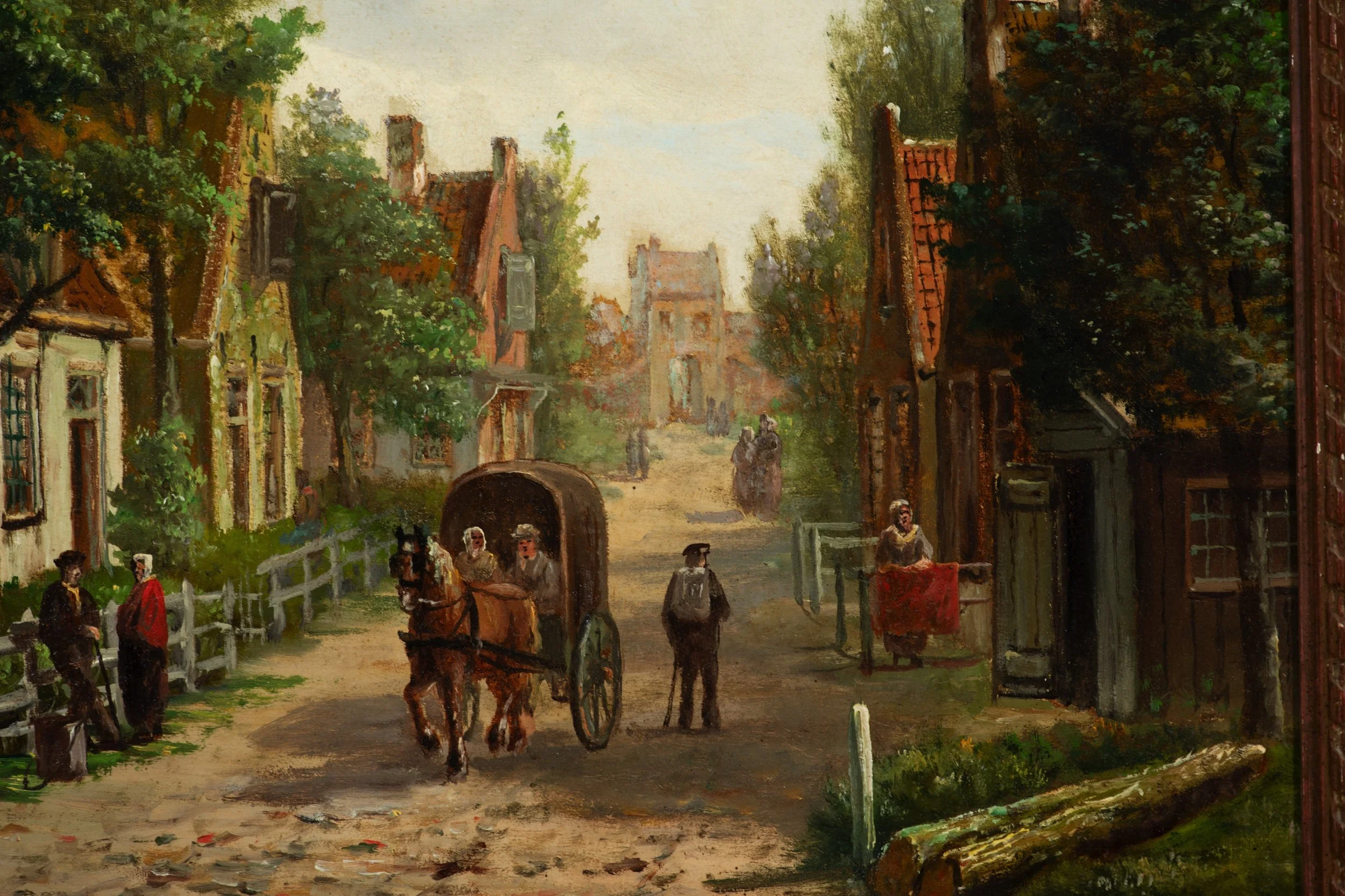 Image 6 of 21
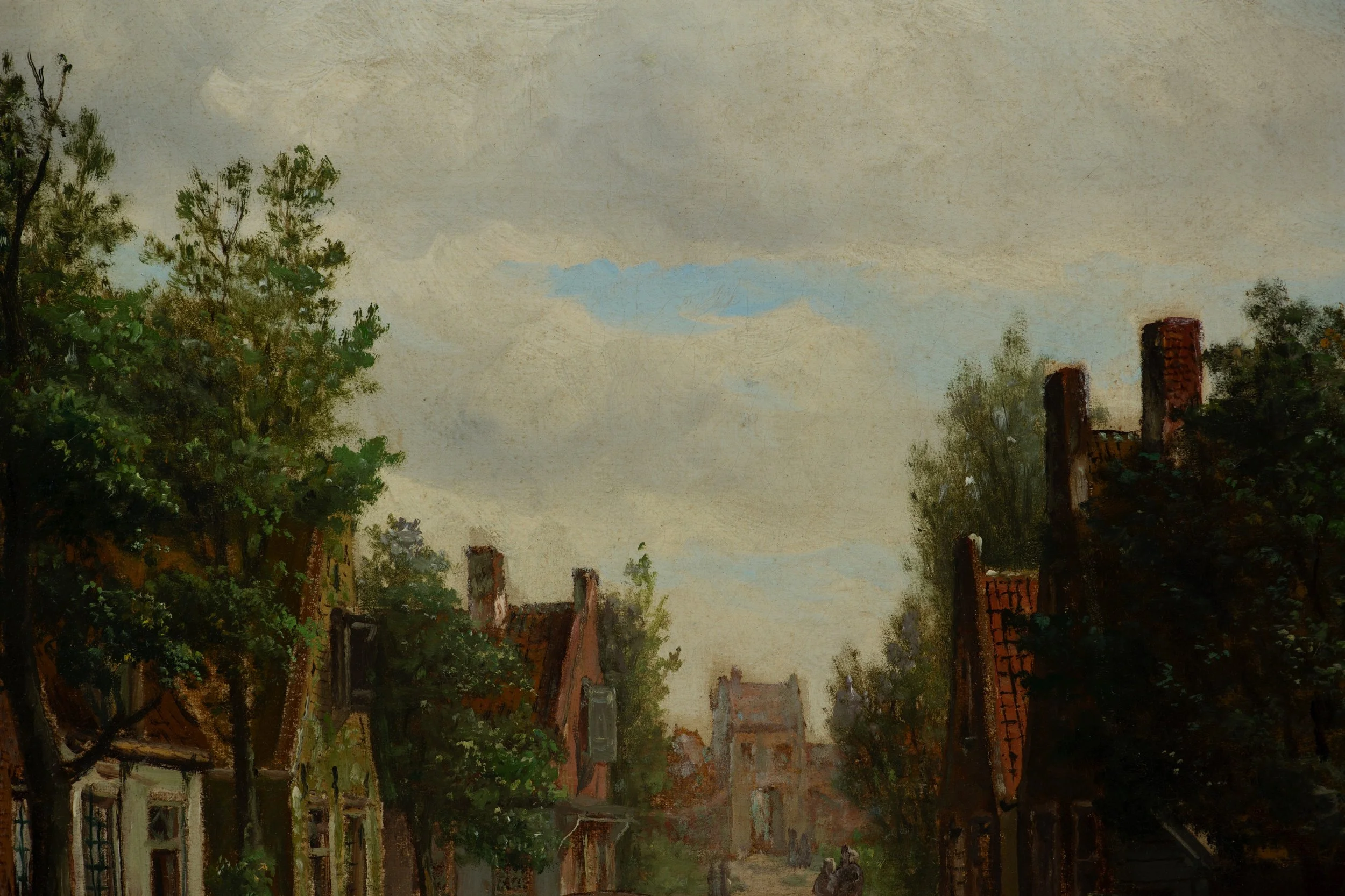 Image 7 of 21
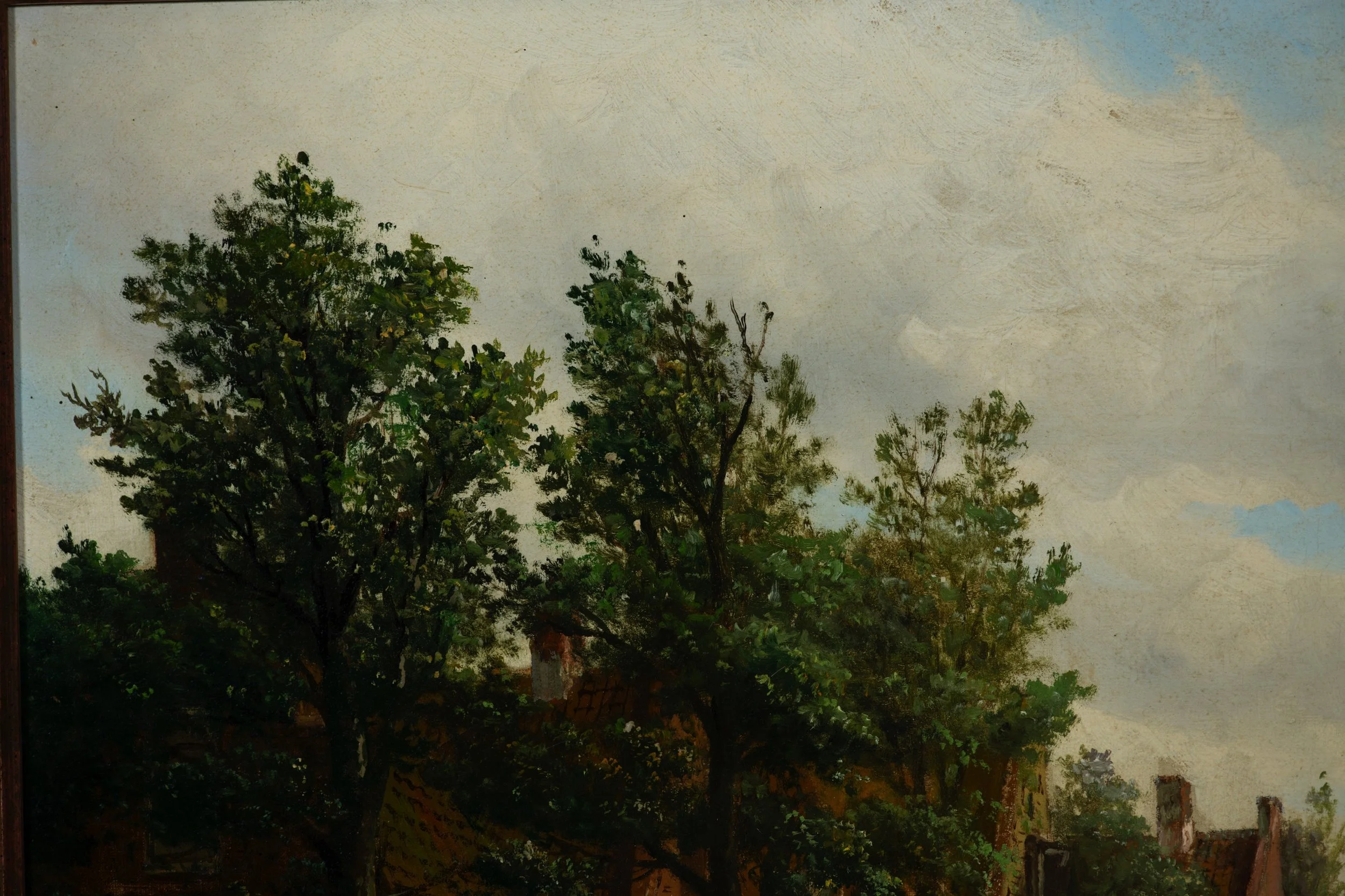 Image 8 of 21
 Image 9 of 21
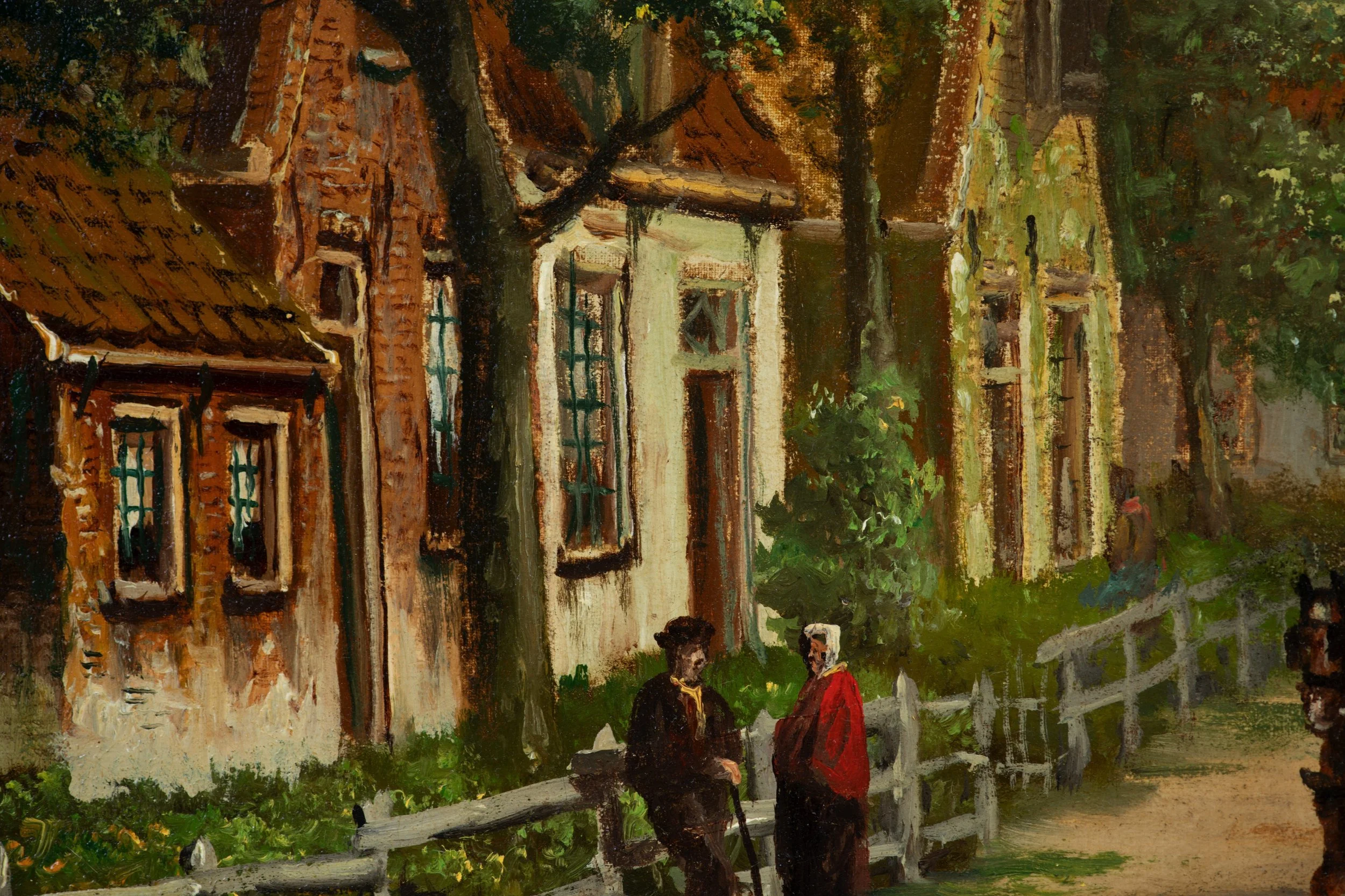 Image 10 of 21
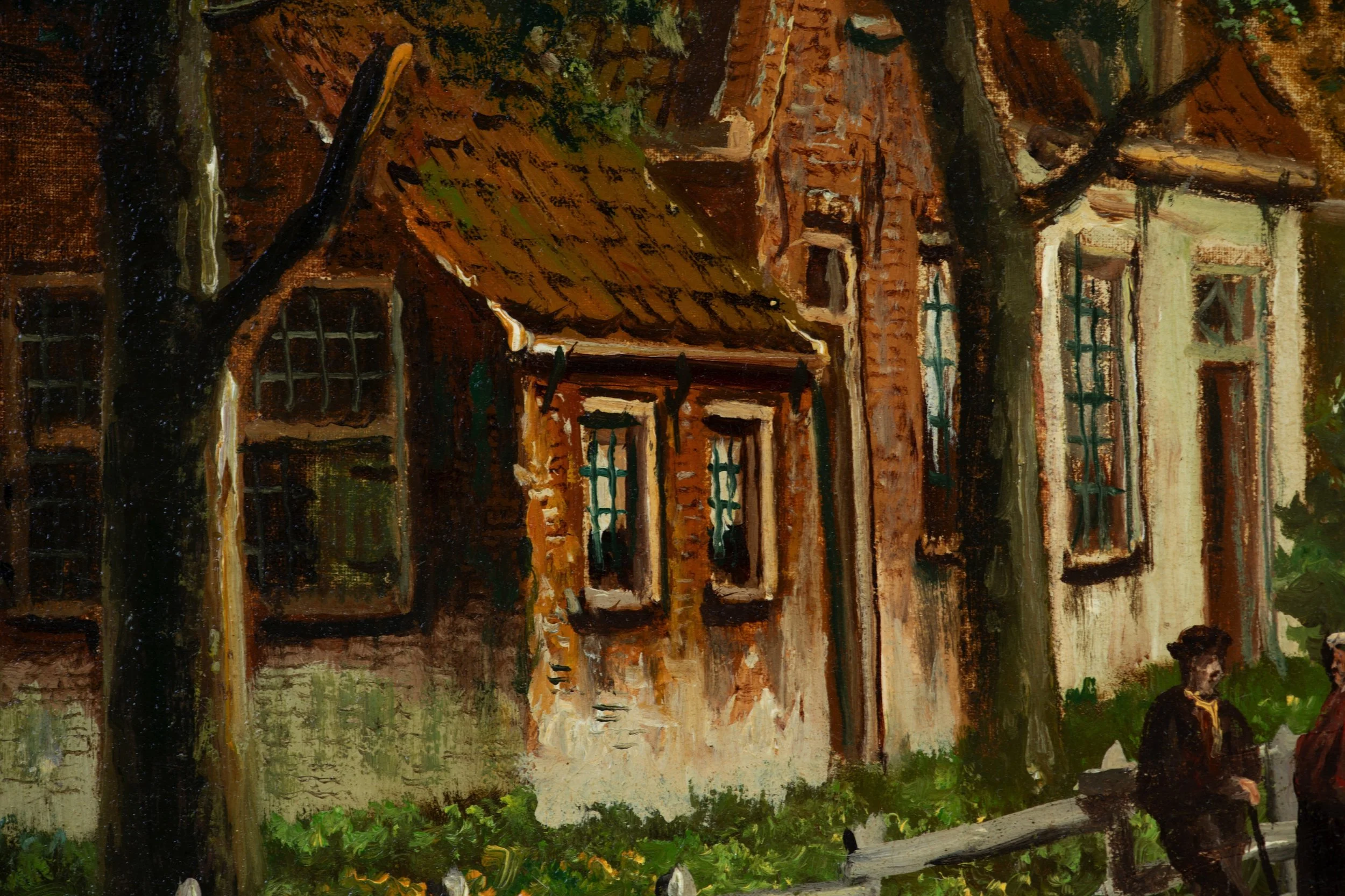 Image 11 of 21
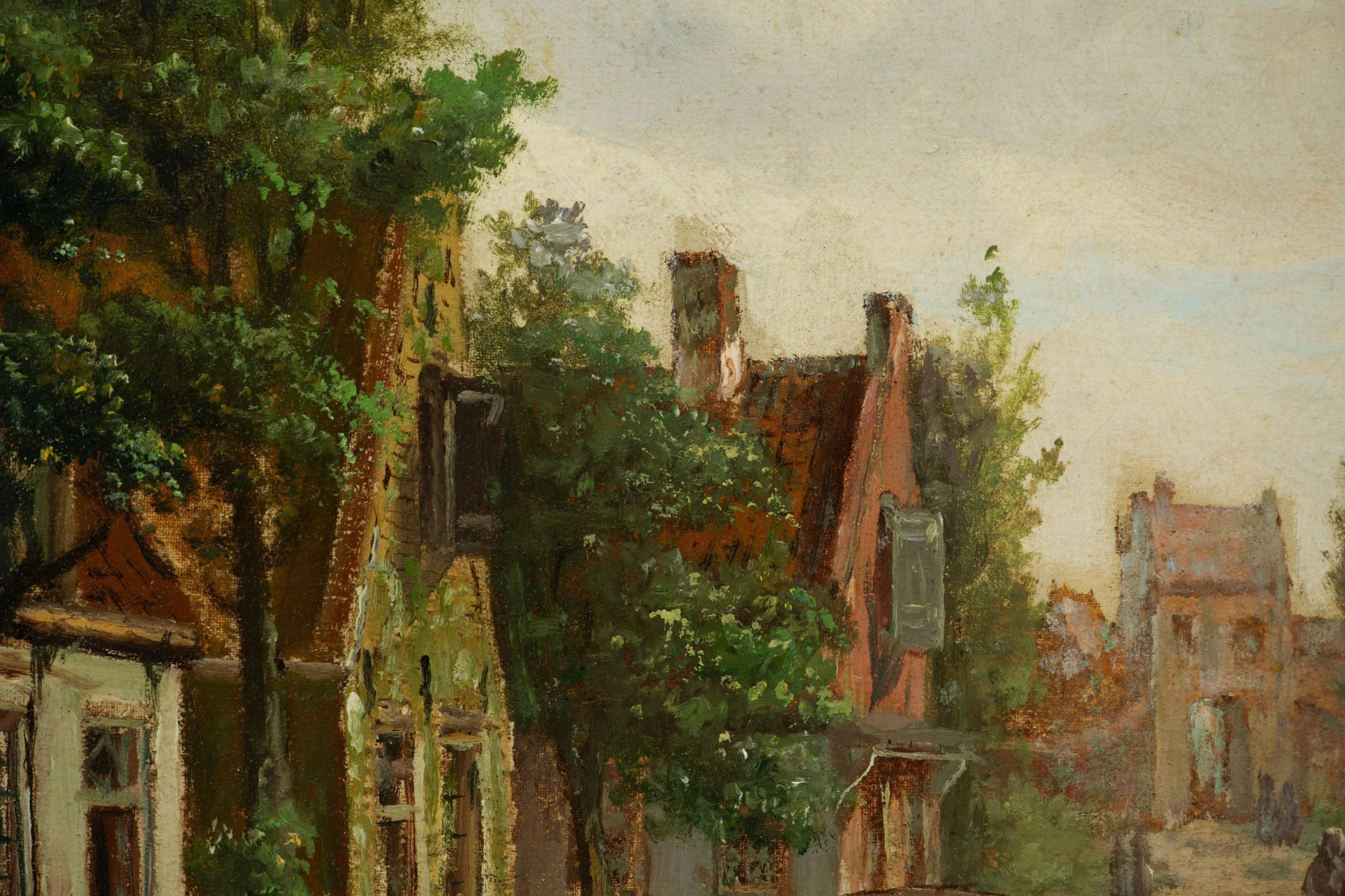 Image 12 of 21
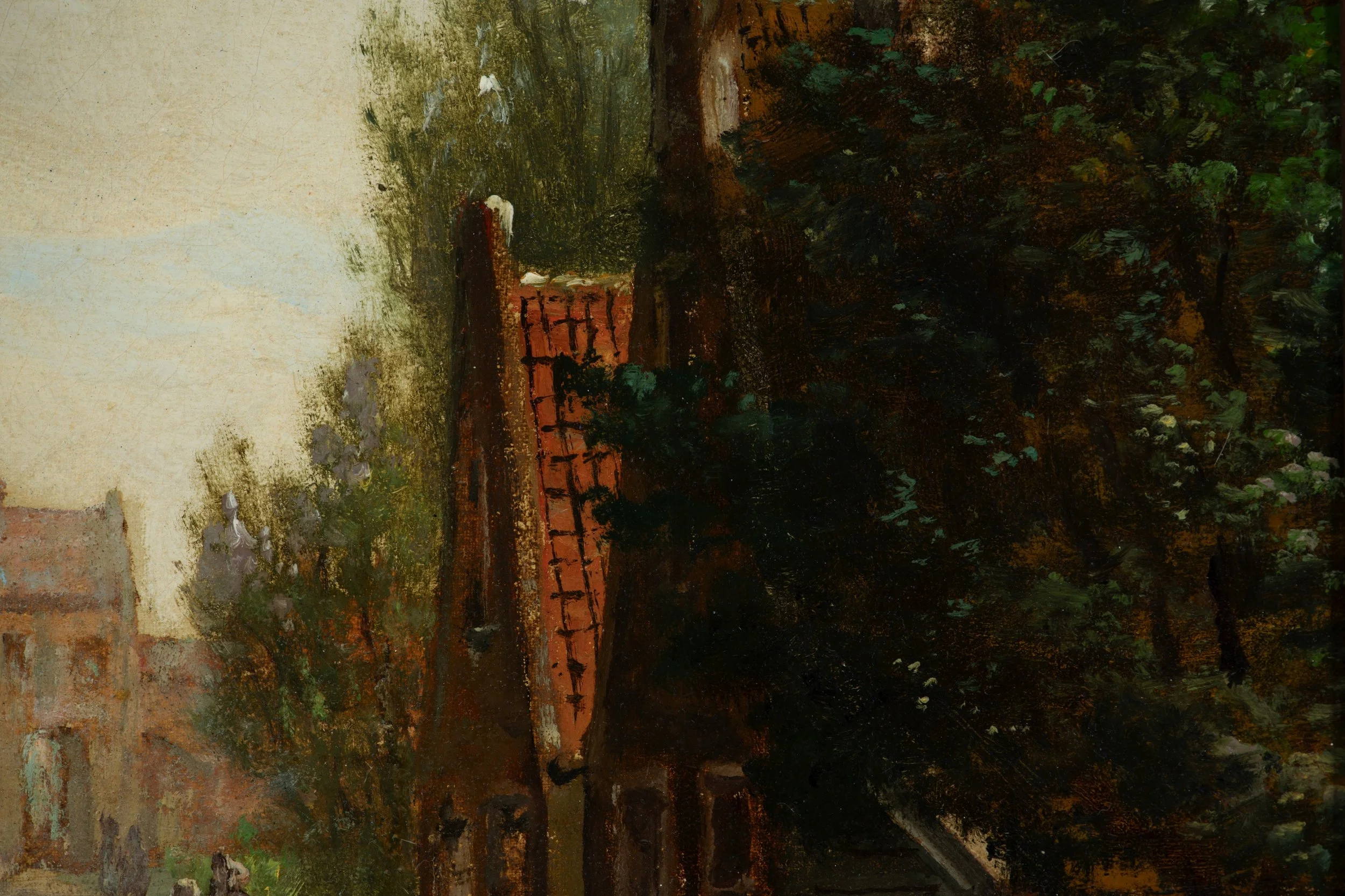 Image 13 of 21
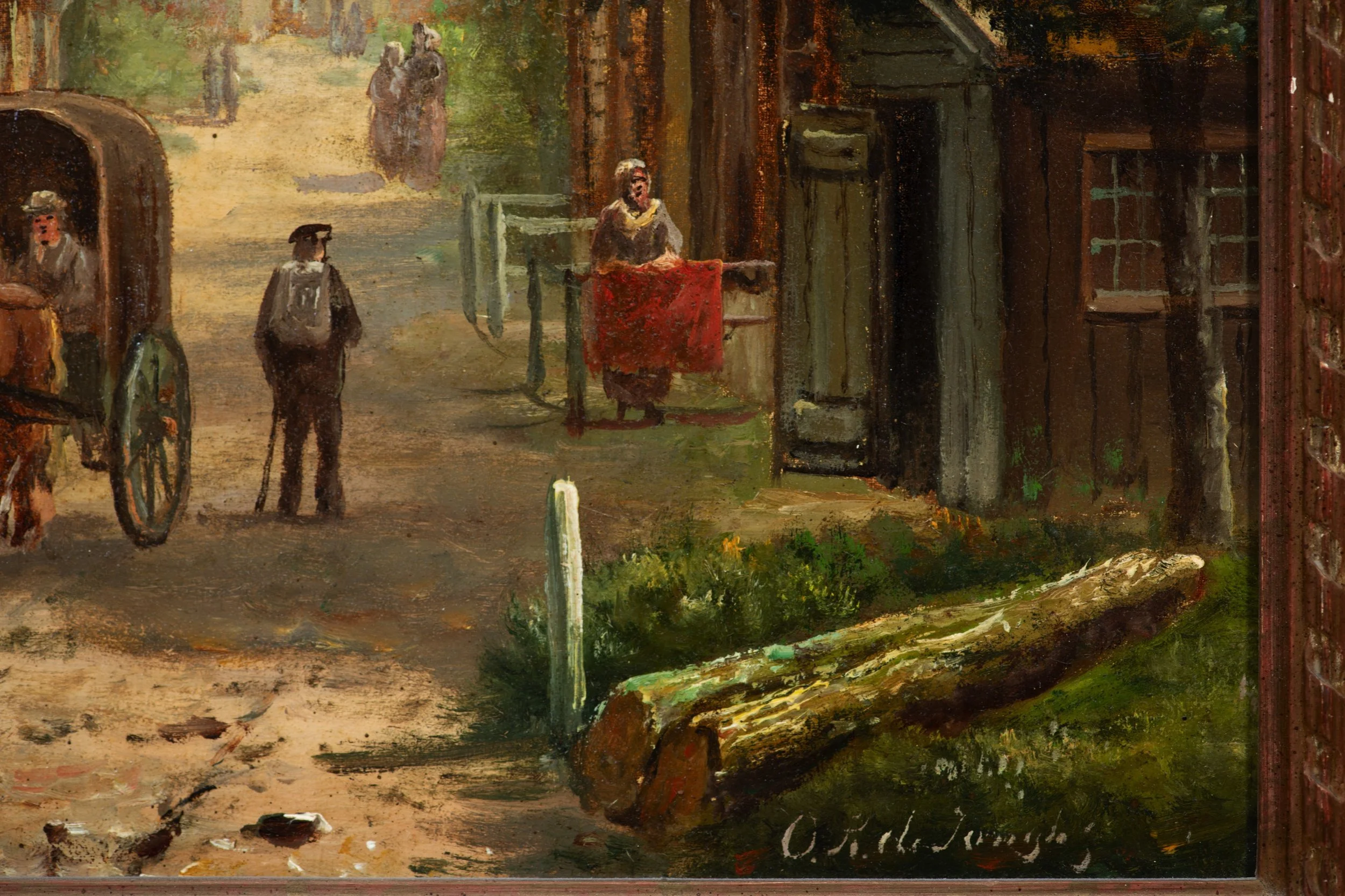 Image 14 of 21
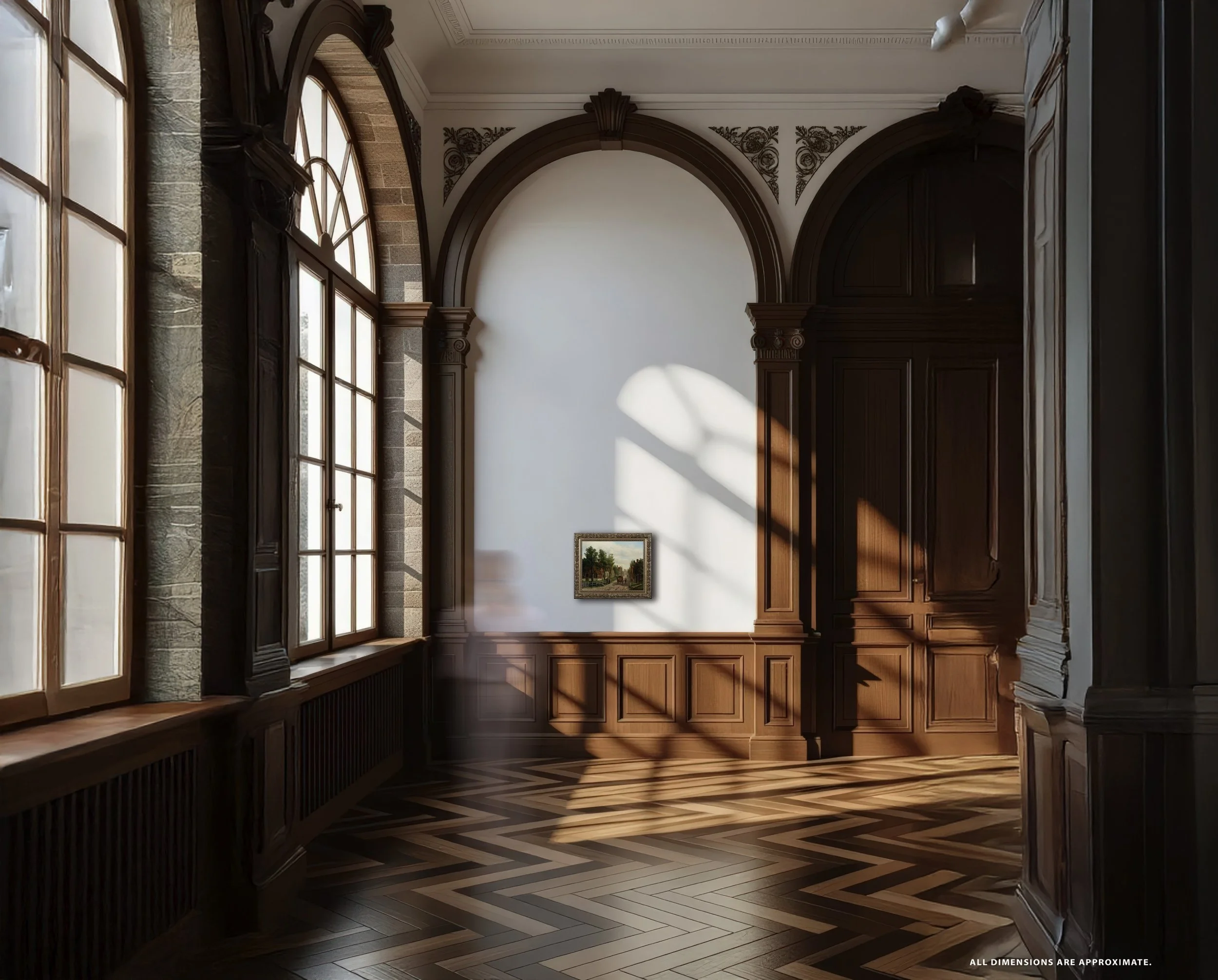 Image 15 of 21
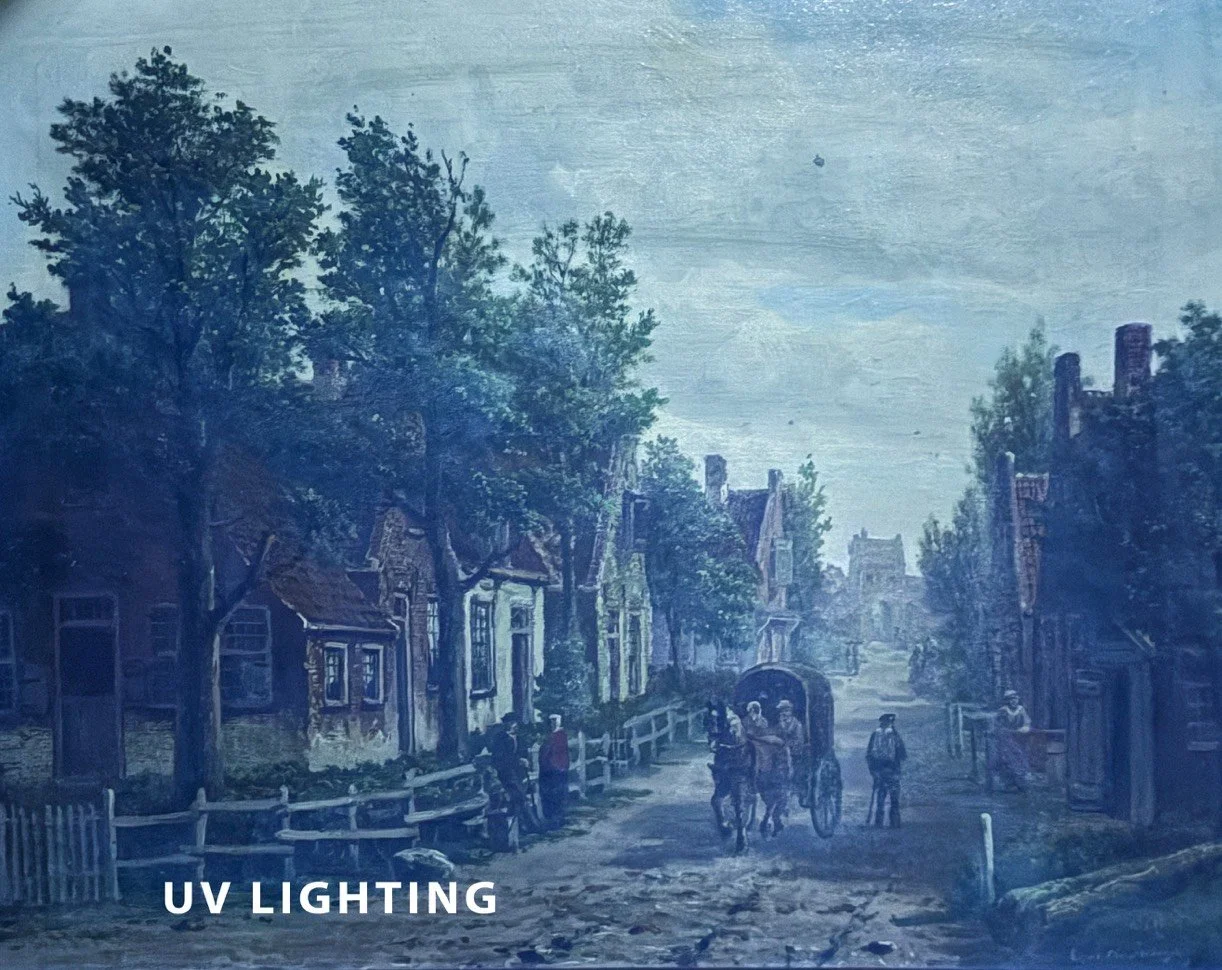 Image 16 of 21
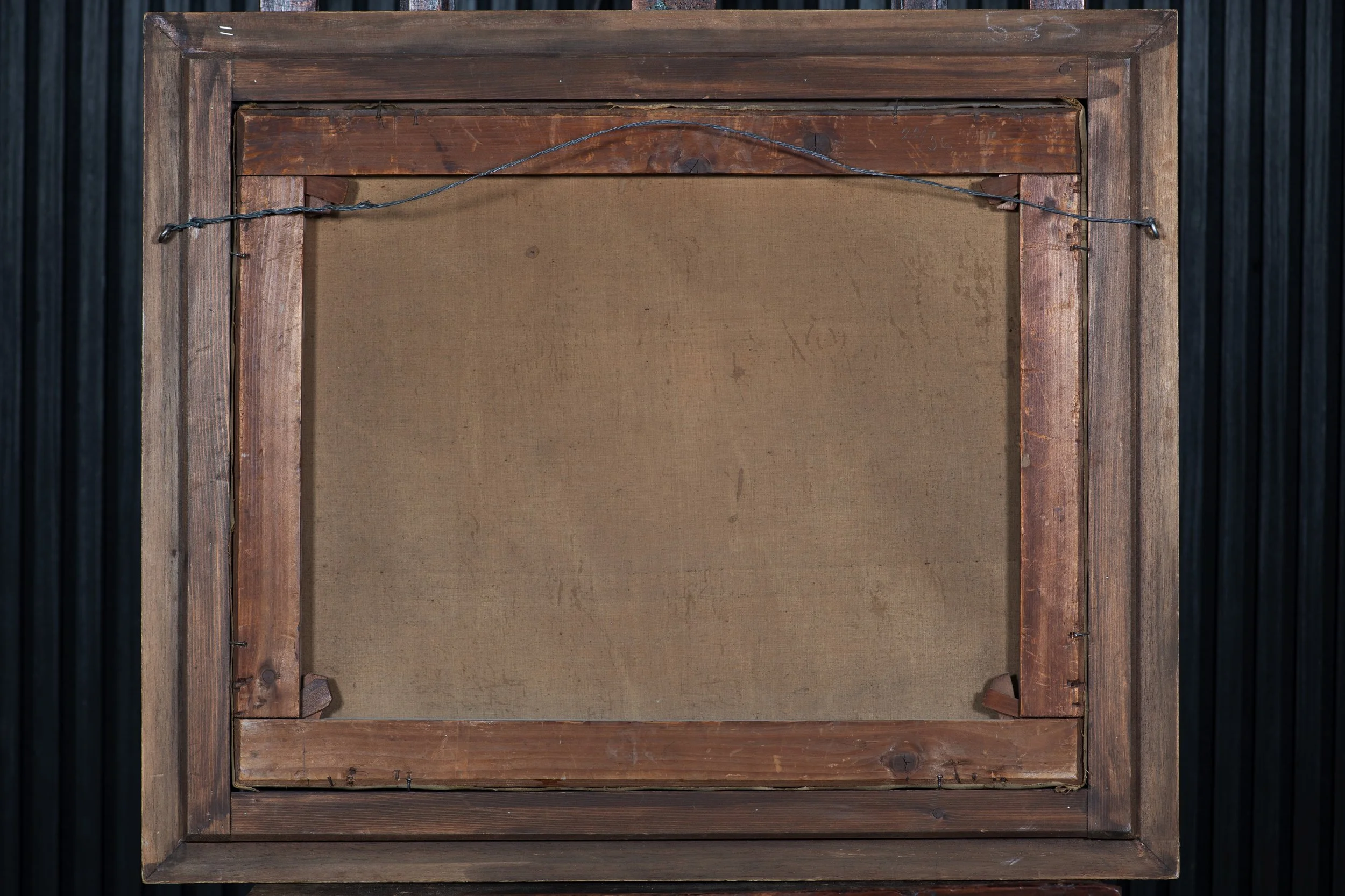 Image 17 of 21
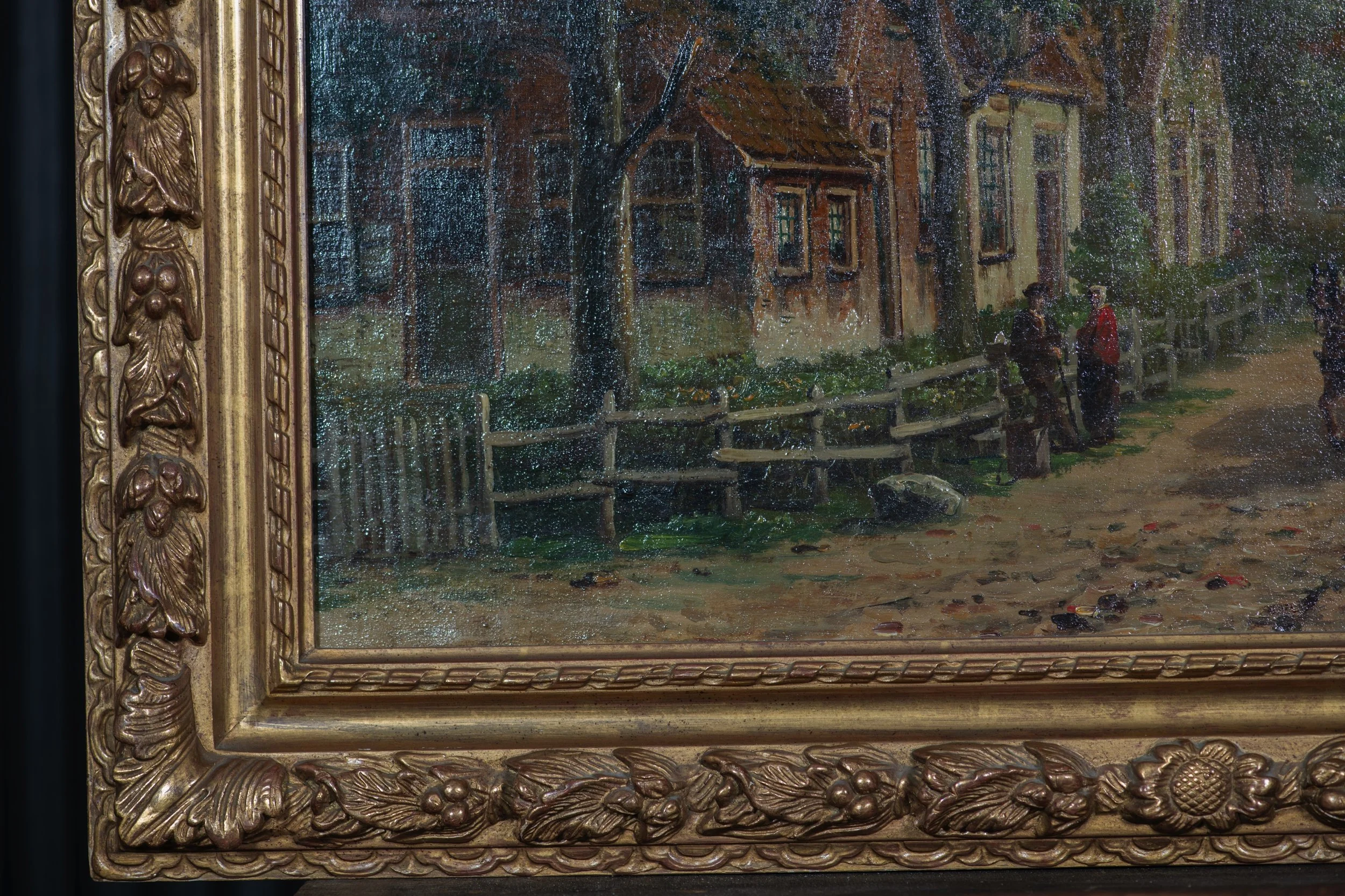 Image 18 of 21
 Image 19 of 21
 Image 20 of 21
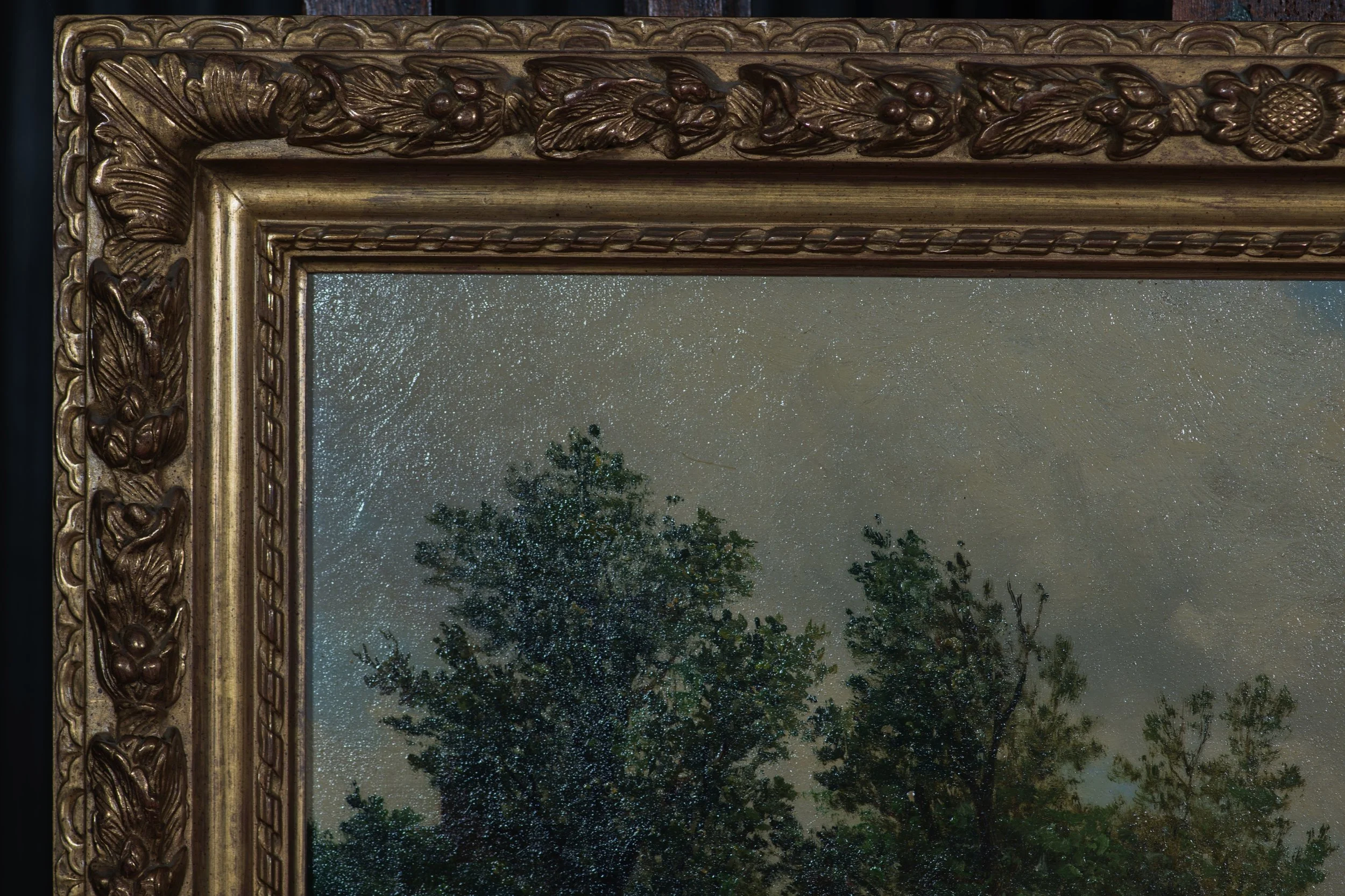 Image 21 of 21