CONTACT US
Follower of Peter Paul Rubens (1577–1640), 18th Century
The Crucifixion of Saint Peter
Oil on canvas, approx. 93 × 68 cm
Framed approx. 111 × 85 cm
Flemish Baroque – unsigned – relined, craquelure and retouching visible under UV
Introduction
This exceptionally powerful depiction of The Crucifixion of Saint Peter belongs to the eighteenth-century tradition of artists working in the wake of Peter Paul Rubens, the central figure of the Flemish Baroque and the foremost exponent of Counter-Reformation visual culture in the Southern Netherlands. The composition follows the visual vocabulary Rubens developed in the early seventeenth century for scenes of martyrdom: energetic diagonals, muscular bodies in maximal torsion, a rhythmic interplay of figures, and a dramatic light structure designed to heighten physical tension and emotional intensity. The work possesses a pronounced monumentality, not only through its dimensions, but especially through the immediacy with which it evokes the crushing physical weight of the moment.
Description of the Work
The scene focuses on the crucial instant in which Saint Peter—crucified head-down according to tradition—is lifted onto the cross by three executioners. The painter organizes the figures along forceful diagonal movement lines, creating a spiralling tension that animates the entire composition. Peter’s body, painted in pale, cool hues, forms a striking contrast with the warm, prominently lit skin tones of the executioners. His face, drawn and contorted yet dignified, is opposed by the sculptural physicality and sharply modelled musculature of the men handling his body, entirely consistent with the Rubensian fascination for expressive anatomy and corporeal dynamism.
The figure at left strains under the full weight of the apostle’s body and leans backwards in a taut arc that amplifies the dramatic charge. To the right, a second executioner lifts Peter’s legs, while a third, positioned above the structure, pulls the rope tight. Their simple work garments and unidealised physiognomies align with Rubens’ realistic approach to labour, suffering, and the physical world as seen in his large religious commissions. The dark ground and earthen mound behind the group isolate the figures and intensify the focus on the unfolding drama.
Technique and Colour Palette
The painting is executed in a vigorous and direct oil technique, with visible brushwork and a modelling strategy that emphasises the musculature and tension within the bodies. The artist employs a warm earth palette, dominated by reds, ochres, and brown tonalities. The cool light falling across Peter’s pale skin is handled with precision and becomes a visual anchor amid the turbulent physicality of the scene. The softly brushed blue of the sky provides a subtle optical counterbalance to the heated tones of the figures. The interplay of light and shadow corresponds closely to the dramatic aesthetic that shaped the Southern Netherlandish Baroque under Rubens’ influence.
Composition, Style, and Art-Historical Context
The overall organisation of the scene follows the Baroque principle of diagonal dynamism, structuring the narrative around a compressed, ascending movement. This approach is characteristic of Counter-Reformation Flemish painting: religious subjects are presented not merely as narrative events, but as emotionally charged, physically immediate spectacles. Rubens’ visual language—energetic, expressive, and rooted in anatomical monumentality—continued to inspire a wide circle of artists throughout the eighteenth century, who studied, replicated, and reinterpreted his altar-piece compositions.
The martyrdom of Saint Peter belongs to the canonical iconographies of Catholic devotion. Within this context, the painting is firmly aligned with the broader Flemish Baroque tradition, in which masters such as Jacob Jordaens, Anthony van Dyck, Theodoor Rombouts, and internationally Gian Lorenzo Bernini, Luca Giordano share a stylistic affinity with Rubens’ dramatic pictorial idiom.
The Artist and the Tradition of Rubensian Afterwork
Peter Paul Rubens stands at the centre of one of the most influential workshops of the seventeenth century. His training under Otto van Veen, his formative years in Italy, and his extensive study of antique sculpture directly shaped his religious compositions. The Antwerp workshop, supported by numerous assistants and copyists, produced an enormous oeuvre of original works, modelli, variants, and reproductions, ensuring wide dissemination of Rubens’ distinctive style across Europe.
This painting is an eighteenth-century example from that broader tradition of post-Rubens production. Although the artist remains anonymous, the work demonstrates a clear command of Rubensian dynamism, anatomical articulation, and dramatic structural tension. The composition is not a direct copy; rather, it interprets and reformulates Rubens’ celebrated models in accordance with the established practice of period followers.
Condition
The canvas has been historically relined, a customary conservation method for older Baroque paintings. A stable, age-consistent craquelure pattern extends across the surface. Under UV light, several areas of retouching become visible, notably in flesh passages, darker zones, and sections of the background. The overall condition is coherent and visually unified, with the historical restorations incorporated into the painting’s present, stable appearance.
Conclusion
This compelling Baroque vision of The Crucifixion of Saint Peter stands as a vivid testament to the enduring impact of Rubens’ religious history paintings within eighteenth-century artistic practice. The energetic composition, monumental anatomy, and dramatic illumination evoke the full expressive force of the Flemish Baroque. The work forms a significant contribution to collections concerned with the development, reception, and continued reinterpretation of Rubens’ visual legacy in European art history.
CONTACT US
Follower of Peter Paul Rubens (1577–1640), 18th Century
The Crucifixion of Saint Peter
Oil on canvas, approx. 93 × 68 cm
Framed approx. 111 × 85 cm
Flemish Baroque – unsigned – relined, craquelure and retouching visible under UV
Introduction
This exceptionally powerful depiction of The Crucifixion of Saint Peter belongs to the eighteenth-century tradition of artists working in the wake of Peter Paul Rubens, the central figure of the Flemish Baroque and the foremost exponent of Counter-Reformation visual culture in the Southern Netherlands. The composition follows the visual vocabulary Rubens developed in the early seventeenth century for scenes of martyrdom: energetic diagonals, muscular bodies in maximal torsion, a rhythmic interplay of figures, and a dramatic light structure designed to heighten physical tension and emotional intensity. The work possesses a pronounced monumentality, not only through its dimensions, but especially through the immediacy with which it evokes the crushing physical weight of the moment.
Description of the Work
The scene focuses on the crucial instant in which Saint Peter—crucified head-down according to tradition—is lifted onto the cross by three executioners. The painter organizes the figures along forceful diagonal movement lines, creating a spiralling tension that animates the entire composition. Peter’s body, painted in pale, cool hues, forms a striking contrast with the warm, prominently lit skin tones of the executioners. His face, drawn and contorted yet dignified, is opposed by the sculptural physicality and sharply modelled musculature of the men handling his body, entirely consistent with the Rubensian fascination for expressive anatomy and corporeal dynamism.
The figure at left strains under the full weight of the apostle’s body and leans backwards in a taut arc that amplifies the dramatic charge. To the right, a second executioner lifts Peter’s legs, while a third, positioned above the structure, pulls the rope tight. Their simple work garments and unidealised physiognomies align with Rubens’ realistic approach to labour, suffering, and the physical world as seen in his large religious commissions. The dark ground and earthen mound behind the group isolate the figures and intensify the focus on the unfolding drama.
Technique and Colour Palette
The painting is executed in a vigorous and direct oil technique, with visible brushwork and a modelling strategy that emphasises the musculature and tension within the bodies. The artist employs a warm earth palette, dominated by reds, ochres, and brown tonalities. The cool light falling across Peter’s pale skin is handled with precision and becomes a visual anchor amid the turbulent physicality of the scene. The softly brushed blue of the sky provides a subtle optical counterbalance to the heated tones of the figures. The interplay of light and shadow corresponds closely to the dramatic aesthetic that shaped the Southern Netherlandish Baroque under Rubens’ influence.
Composition, Style, and Art-Historical Context
The overall organisation of the scene follows the Baroque principle of diagonal dynamism, structuring the narrative around a compressed, ascending movement. This approach is characteristic of Counter-Reformation Flemish painting: religious subjects are presented not merely as narrative events, but as emotionally charged, physically immediate spectacles. Rubens’ visual language—energetic, expressive, and rooted in anatomical monumentality—continued to inspire a wide circle of artists throughout the eighteenth century, who studied, replicated, and reinterpreted his altar-piece compositions.
The martyrdom of Saint Peter belongs to the canonical iconographies of Catholic devotion. Within this context, the painting is firmly aligned with the broader Flemish Baroque tradition, in which masters such as Jacob Jordaens, Anthony van Dyck, Theodoor Rombouts, and internationally Gian Lorenzo Bernini, Luca Giordano share a stylistic affinity with Rubens’ dramatic pictorial idiom.
The Artist and the Tradition of Rubensian Afterwork
Peter Paul Rubens stands at the centre of one of the most influential workshops of the seventeenth century. His training under Otto van Veen, his formative years in Italy, and his extensive study of antique sculpture directly shaped his religious compositions. The Antwerp workshop, supported by numerous assistants and copyists, produced an enormous oeuvre of original works, modelli, variants, and reproductions, ensuring wide dissemination of Rubens’ distinctive style across Europe.
This painting is an eighteenth-century example from that broader tradition of post-Rubens production. Although the artist remains anonymous, the work demonstrates a clear command of Rubensian dynamism, anatomical articulation, and dramatic structural tension. The composition is not a direct copy; rather, it interprets and reformulates Rubens’ celebrated models in accordance with the established practice of period followers.
Condition
The canvas has been historically relined, a customary conservation method for older Baroque paintings. A stable, age-consistent craquelure pattern extends across the surface. Under UV light, several areas of retouching become visible, notably in flesh passages, darker zones, and sections of the background. The overall condition is coherent and visually unified, with the historical restorations incorporated into the painting’s present, stable appearance.
Conclusion
This compelling Baroque vision of The Crucifixion of Saint Peter stands as a vivid testament to the enduring impact of Rubens’ religious history paintings within eighteenth-century artistic practice. The energetic composition, monumental anatomy, and dramatic illumination evoke the full expressive force of the Flemish Baroque. The work forms a significant contribution to collections concerned with the development, reception, and continued reinterpretation of Rubens’ visual legacy in European art history.

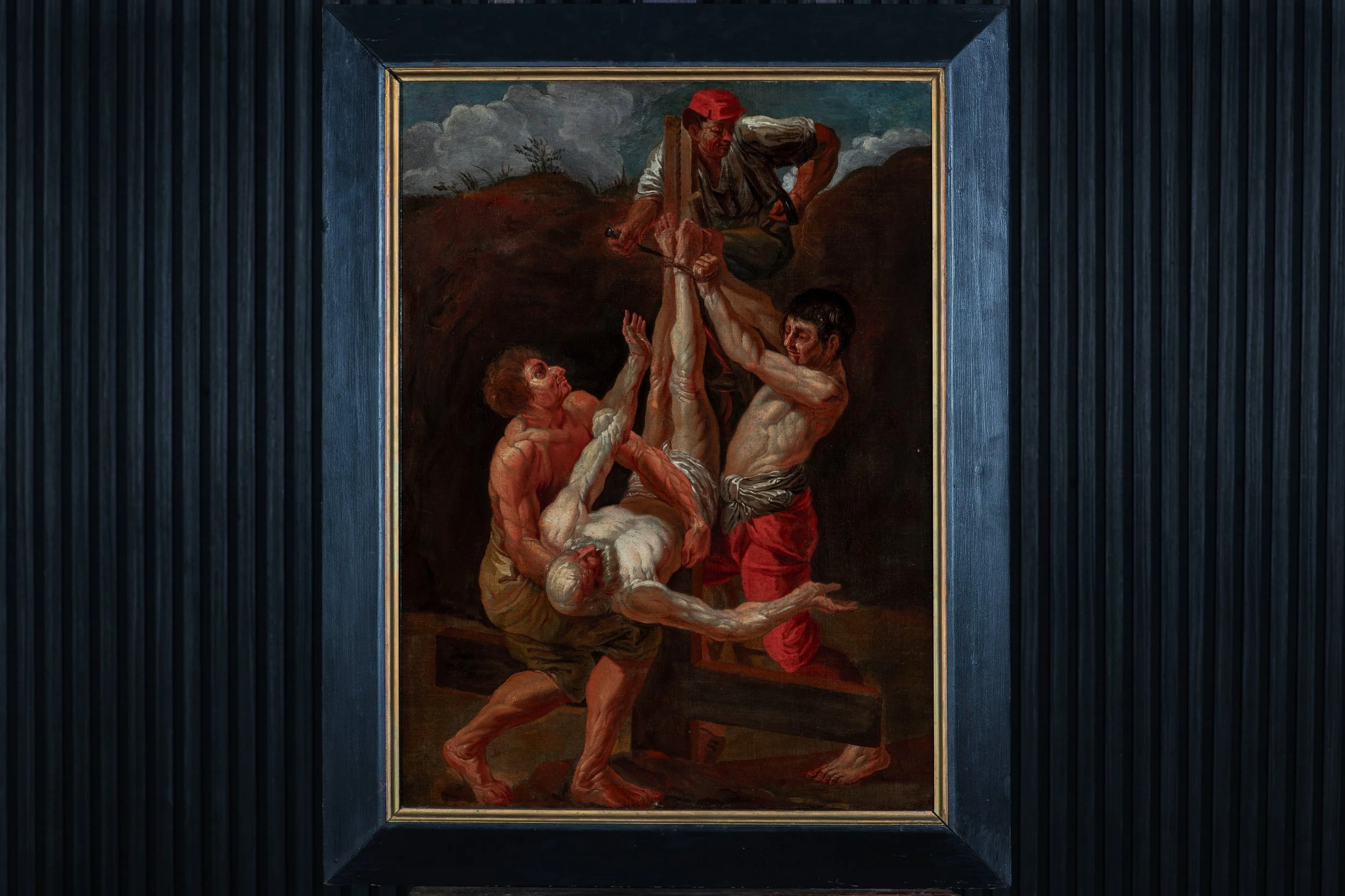 Image 1 of 24
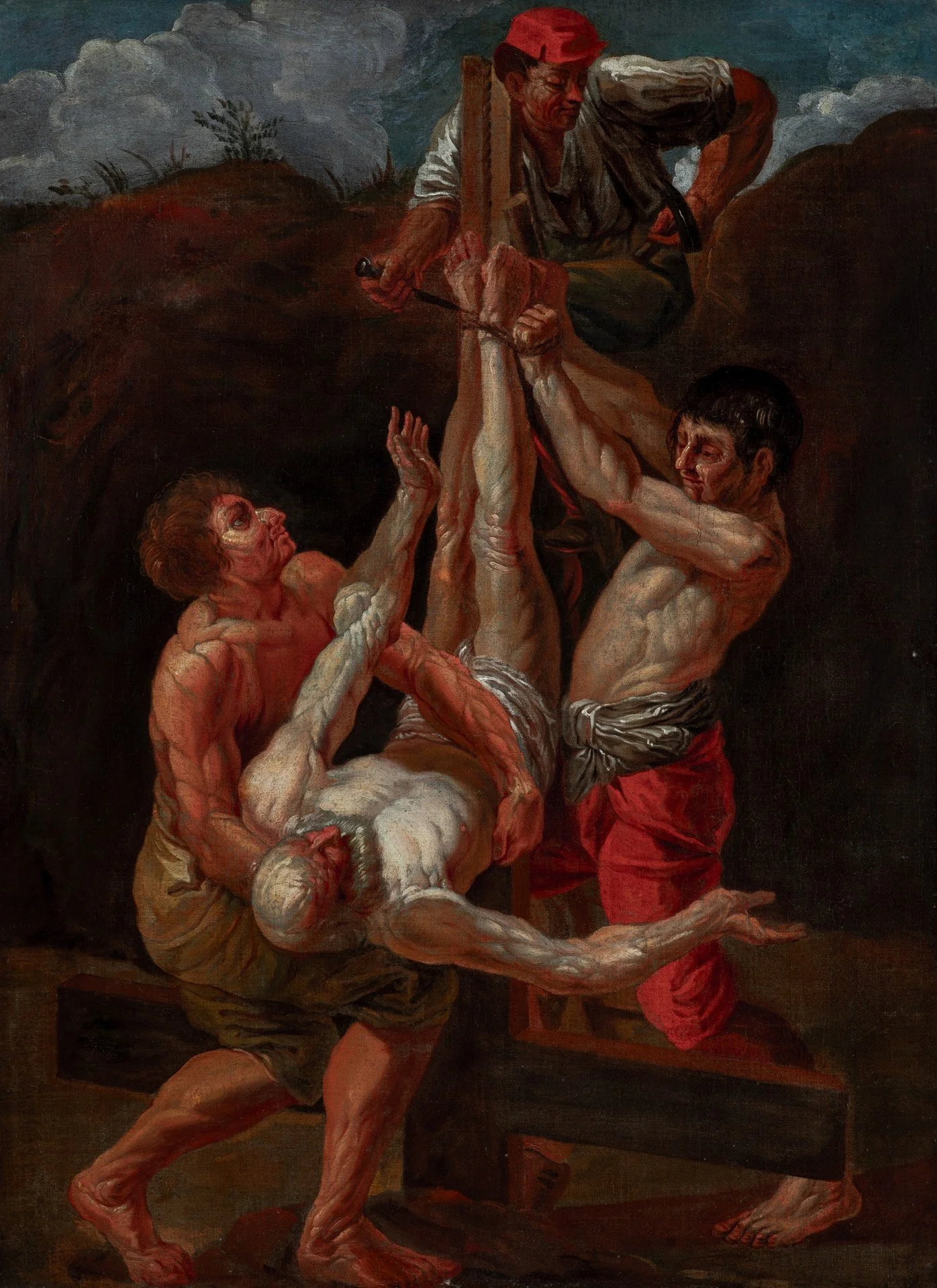 Image 2 of 24
 Image 3 of 24
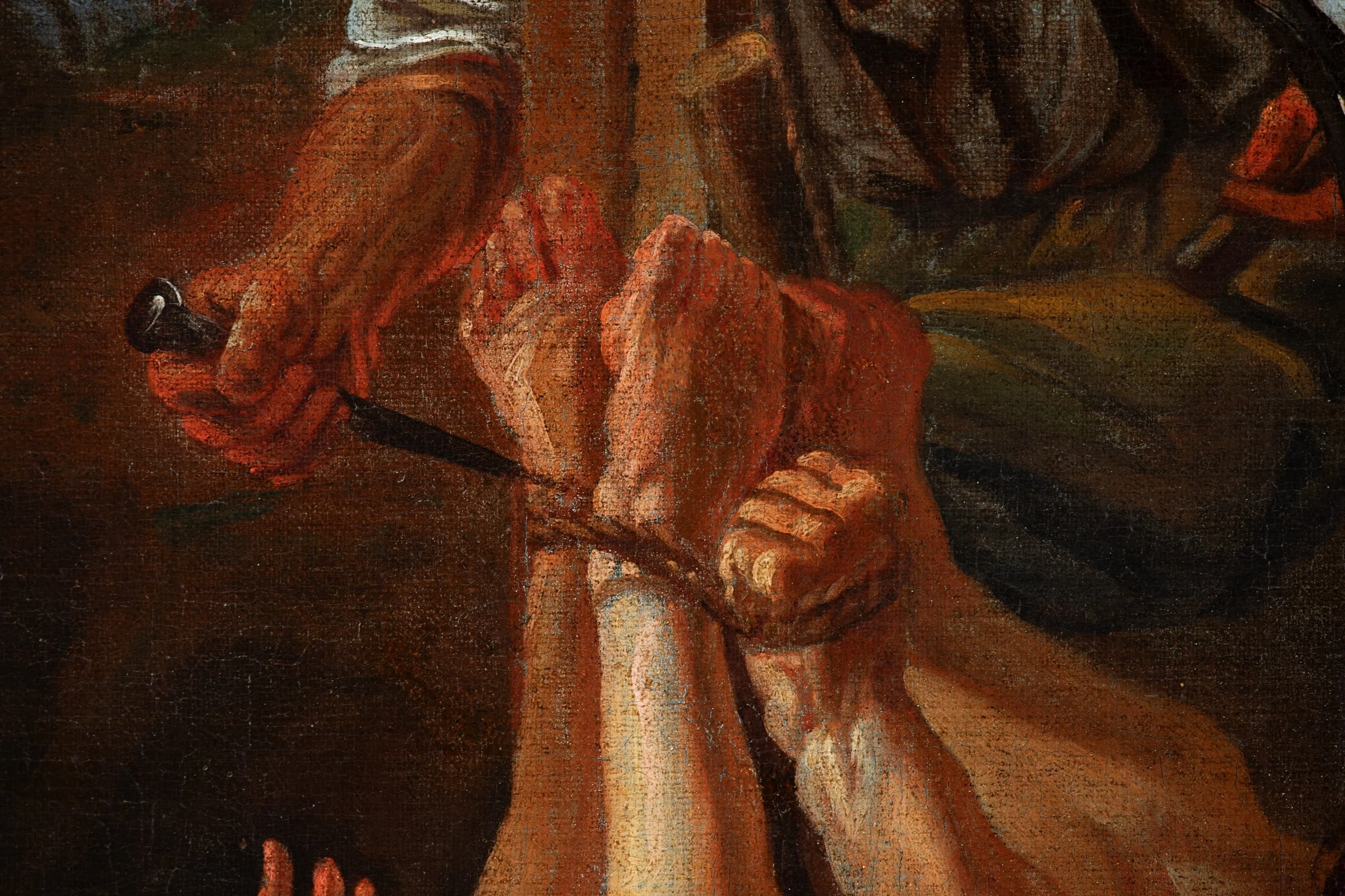 Image 4 of 24
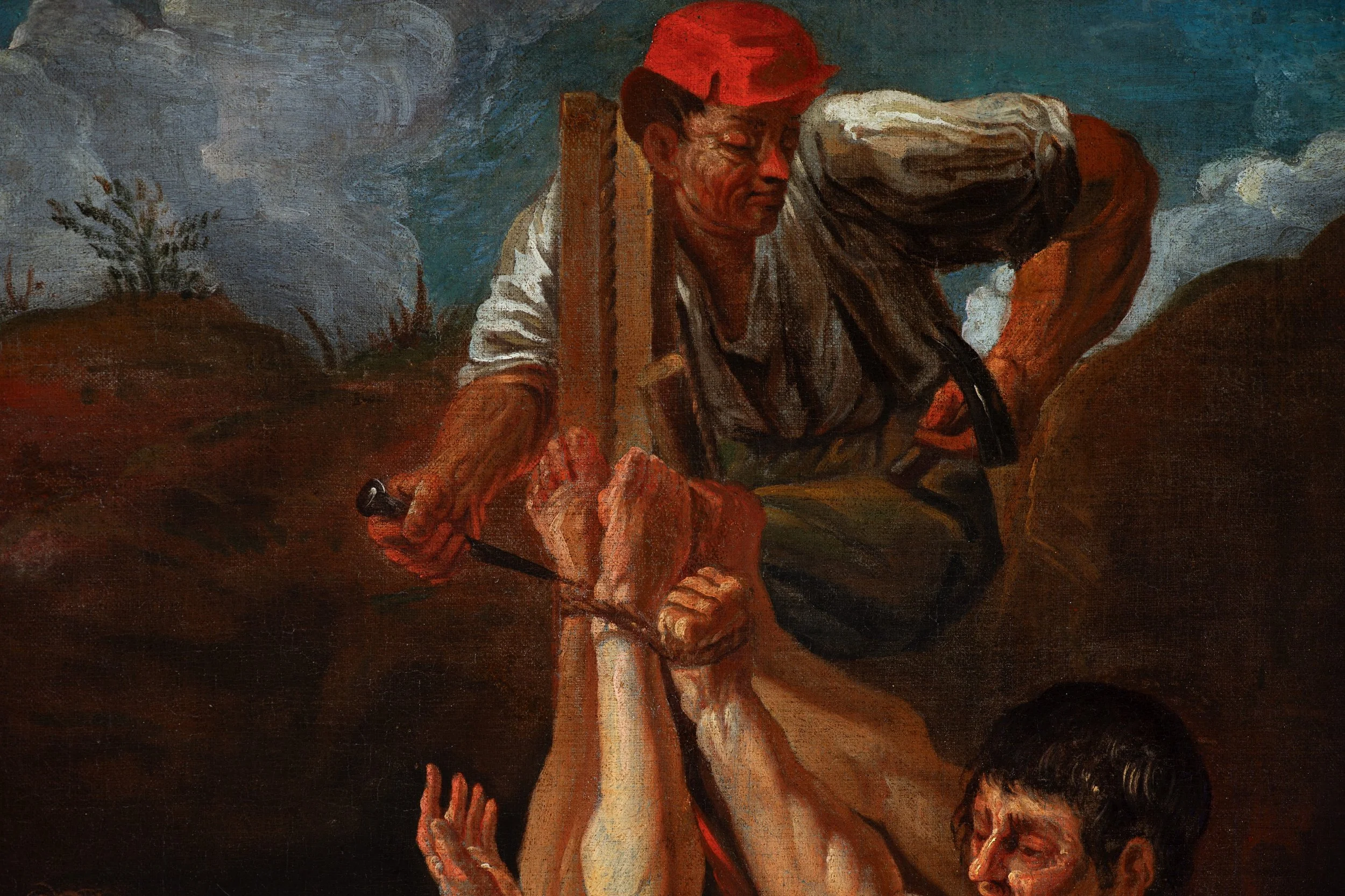 Image 5 of 24
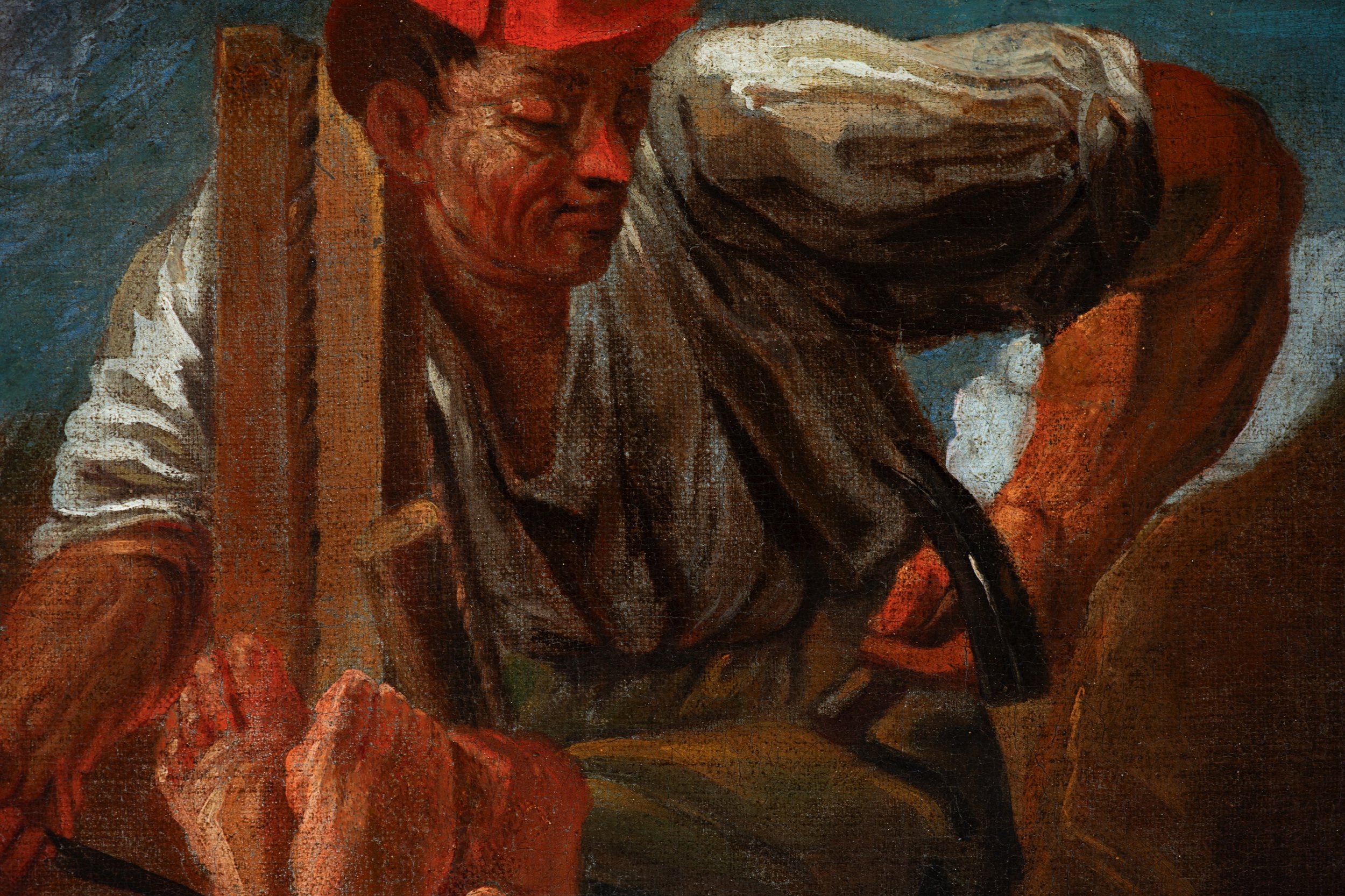 Image 6 of 24
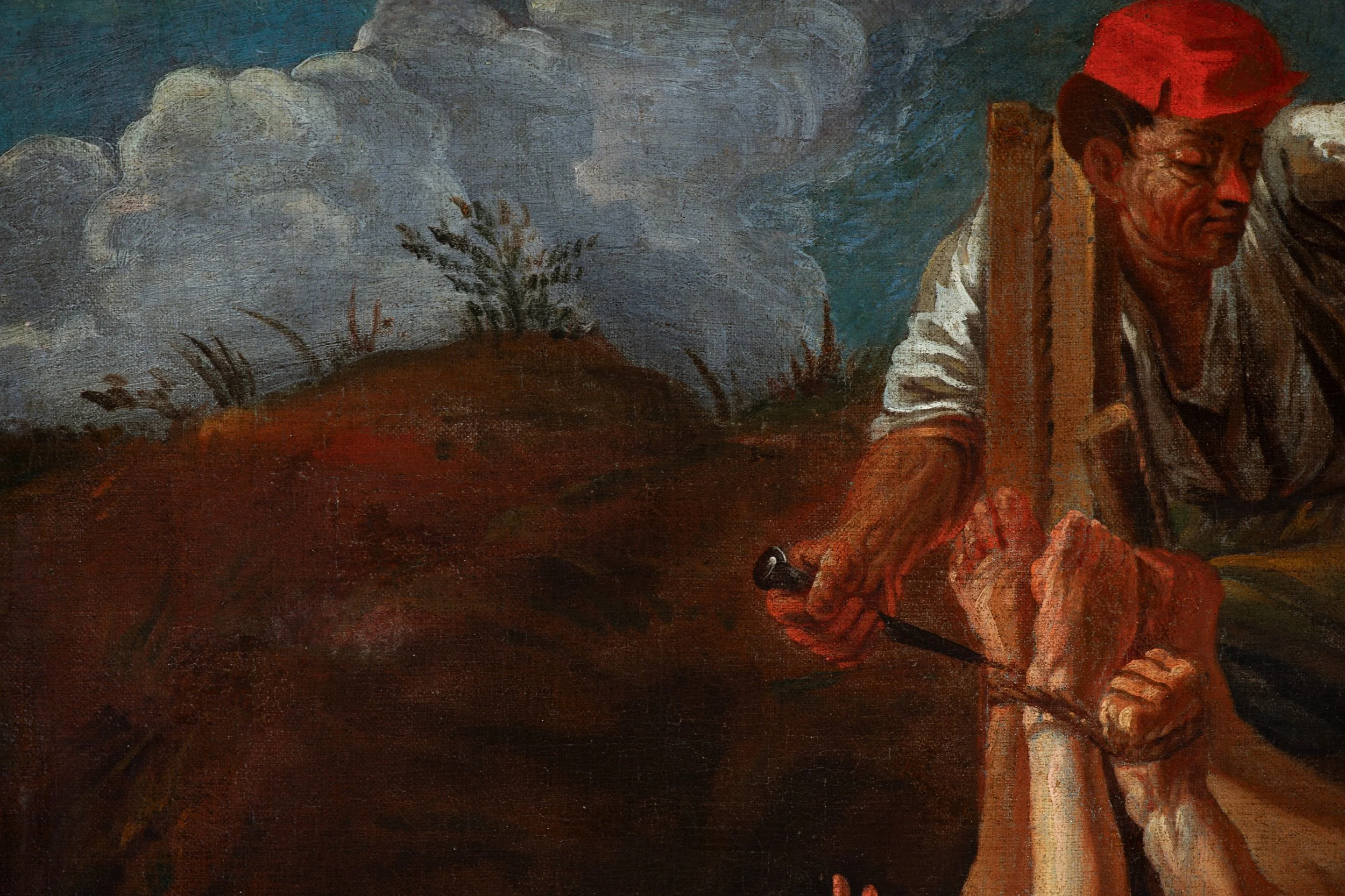 Image 7 of 24
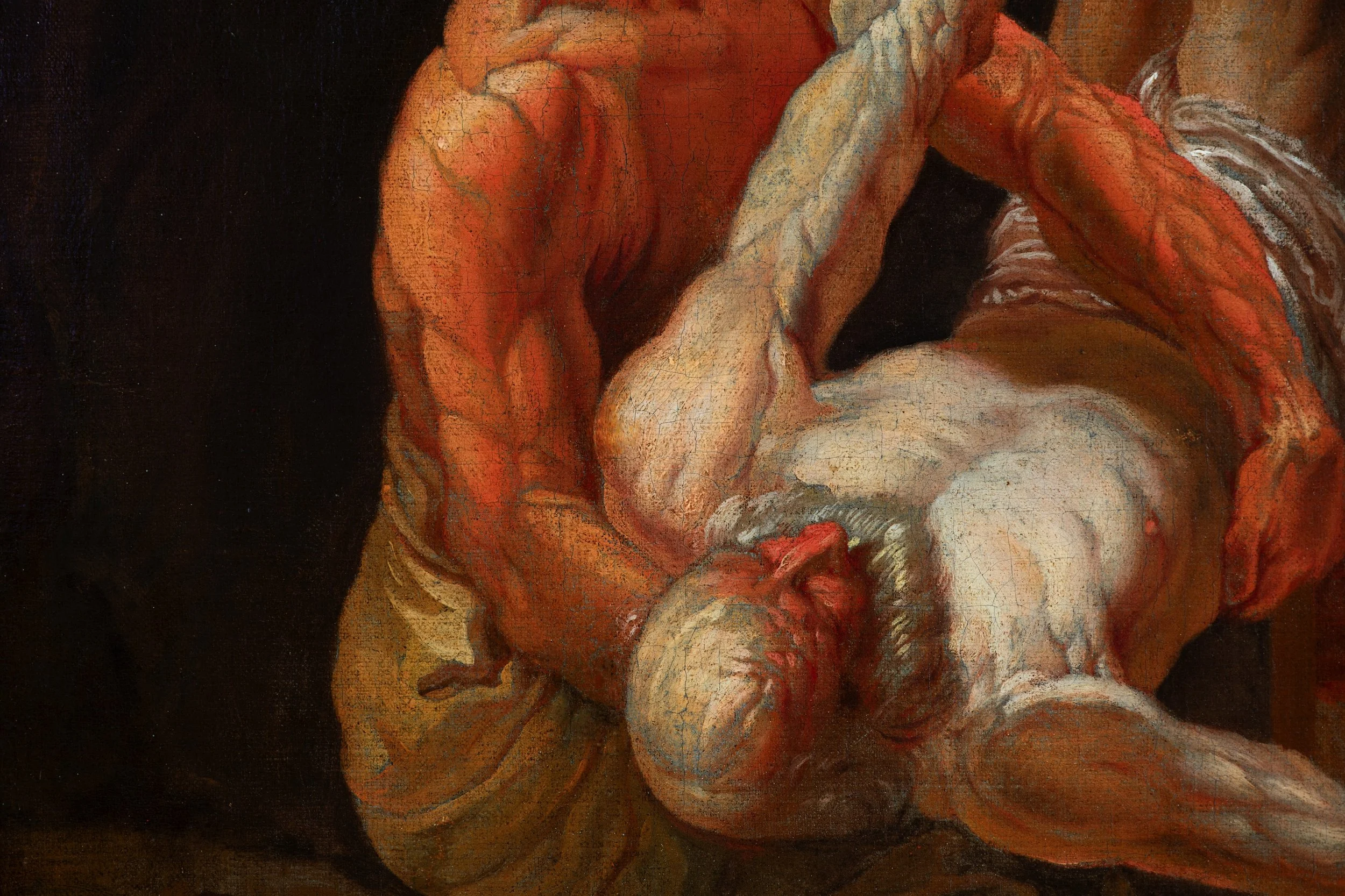 Image 8 of 24
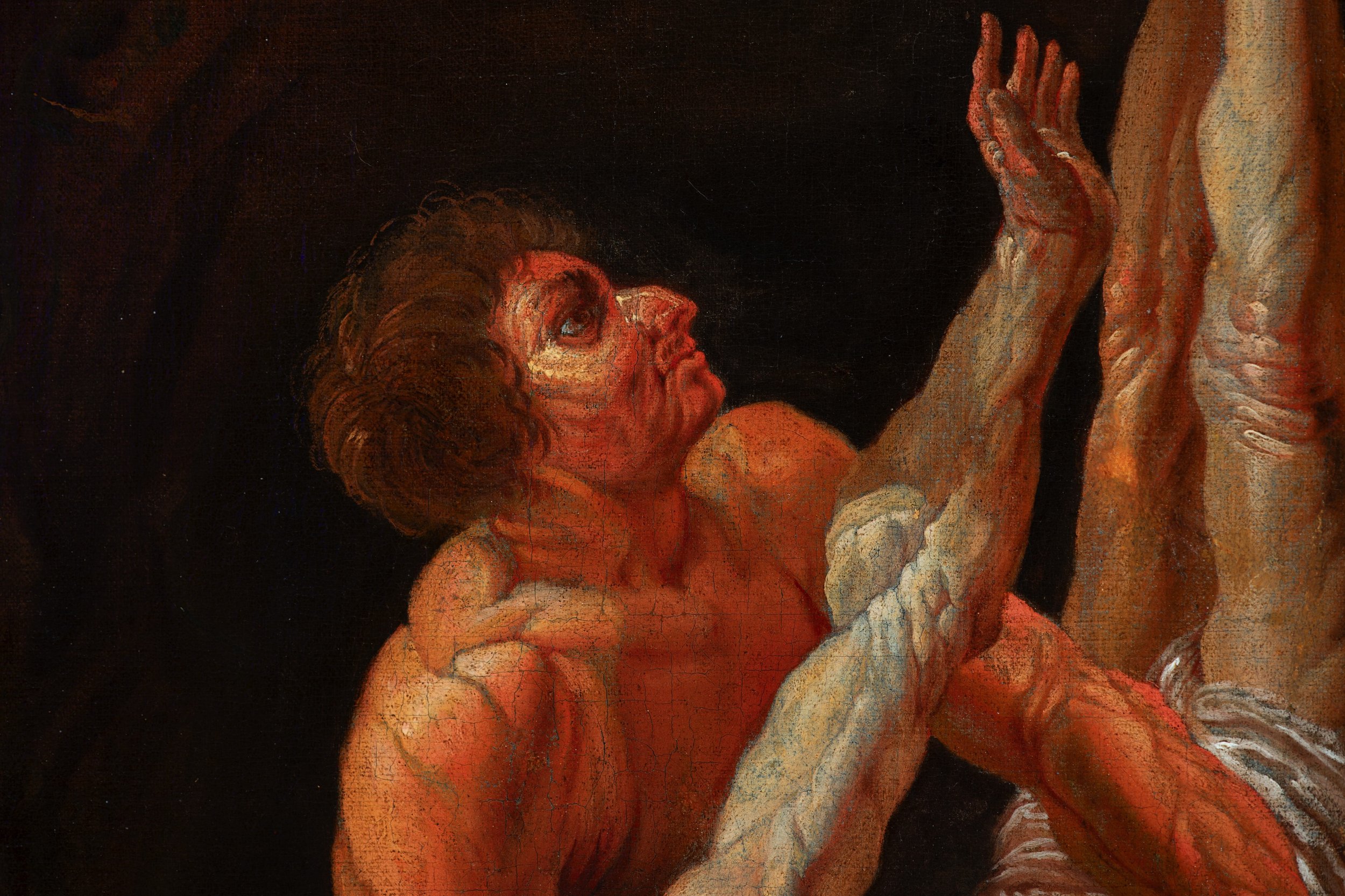 Image 9 of 24
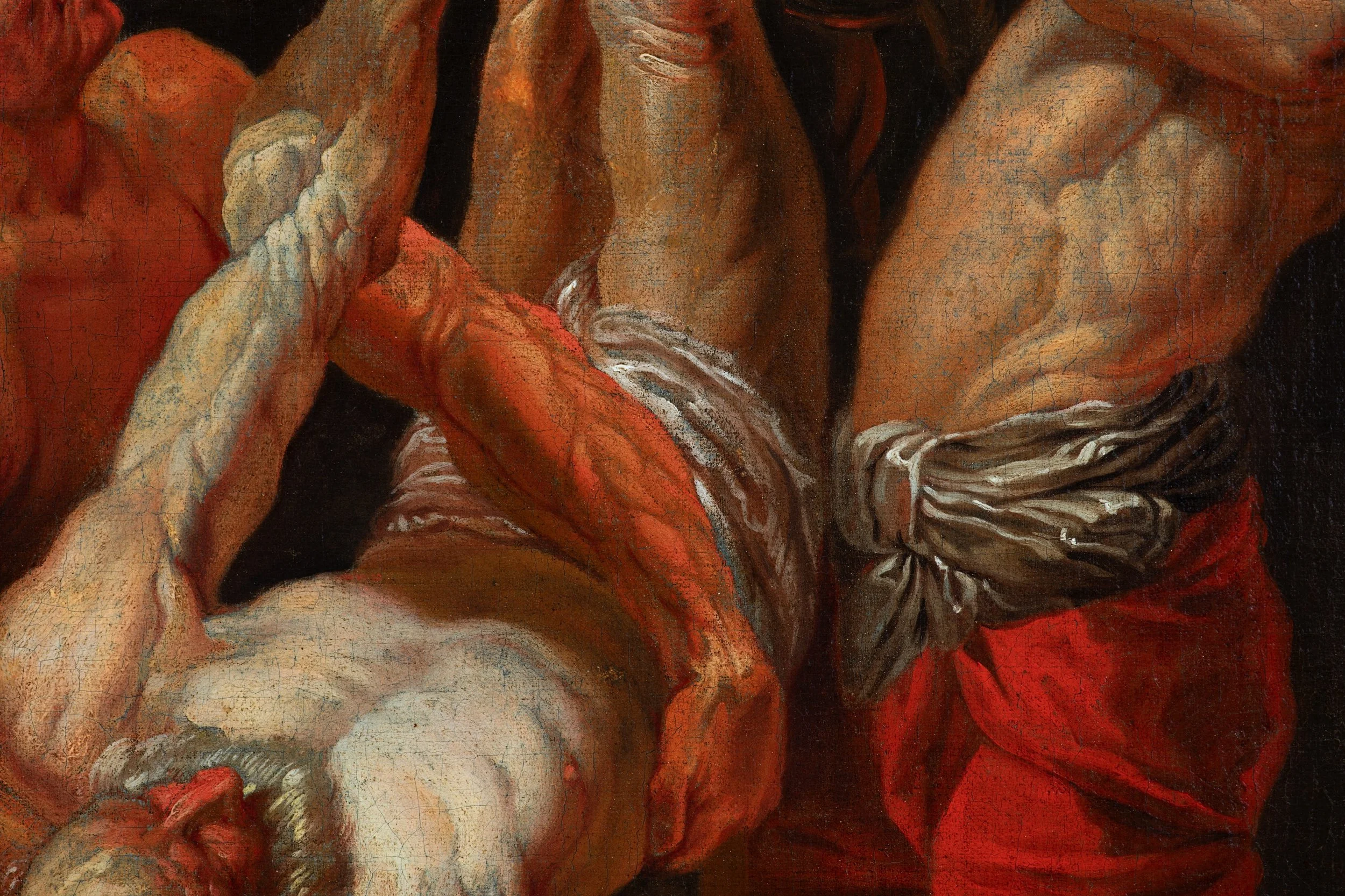 Image 10 of 24
 Image 11 of 24
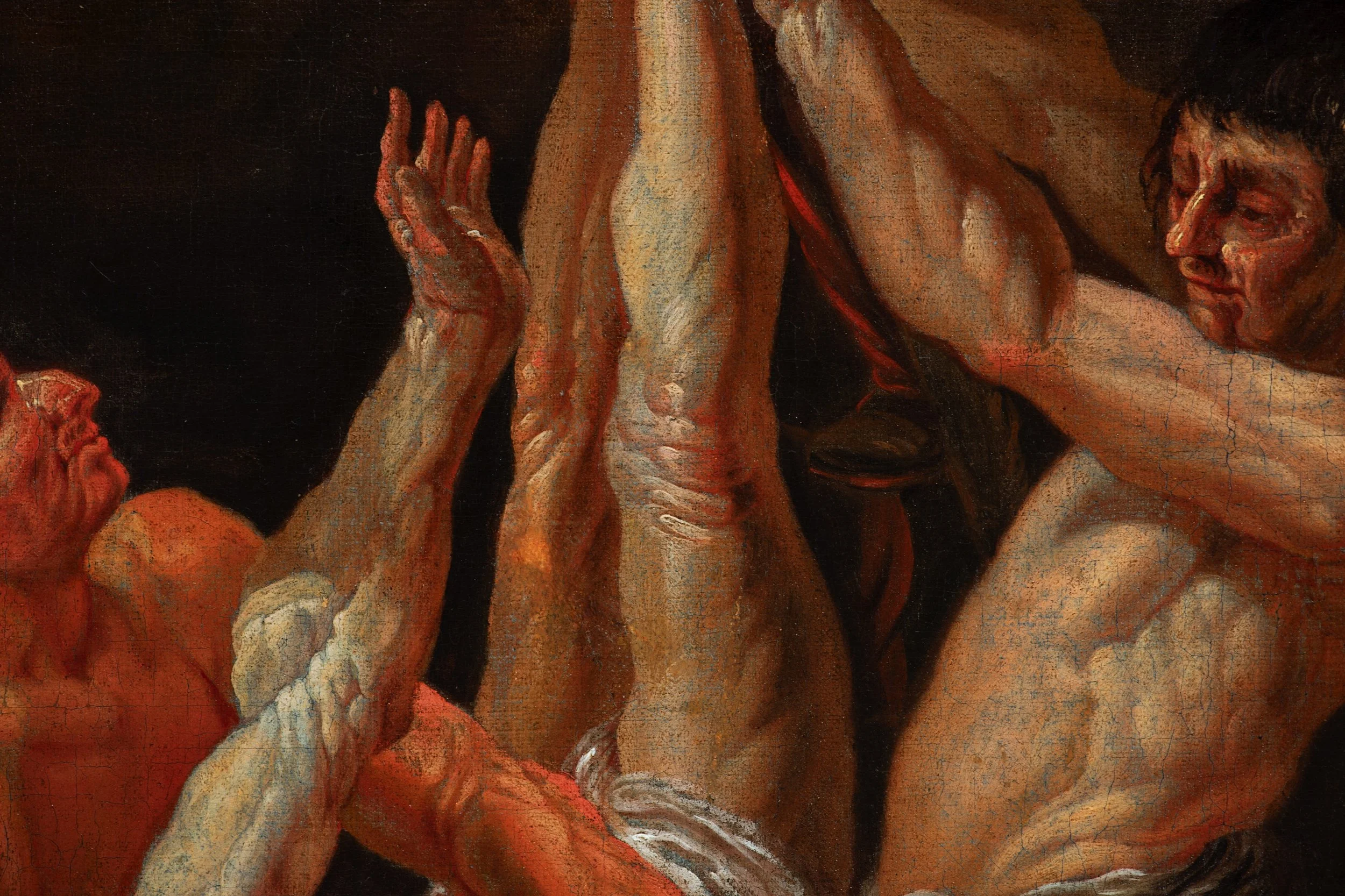 Image 12 of 24
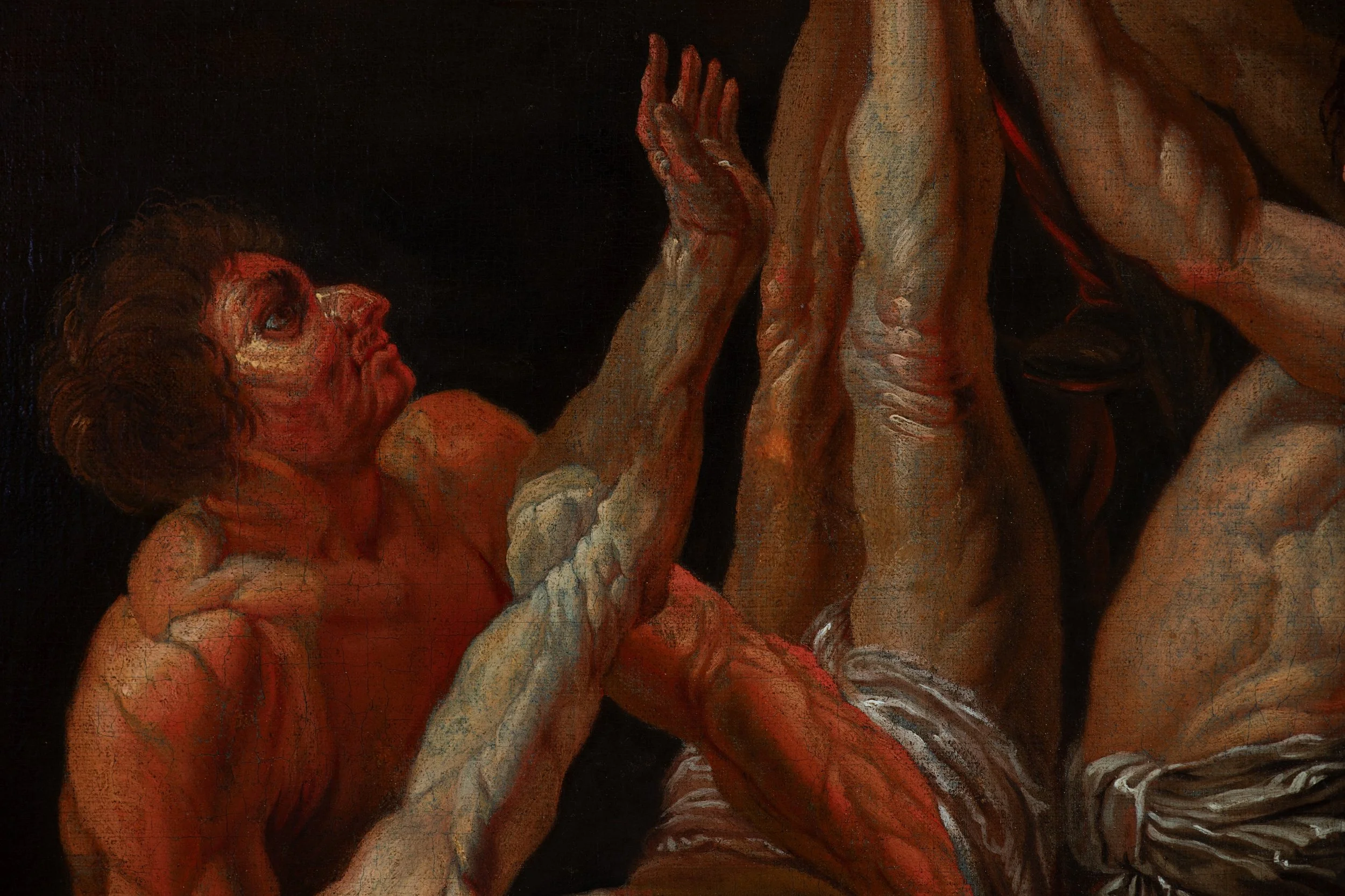 Image 13 of 24
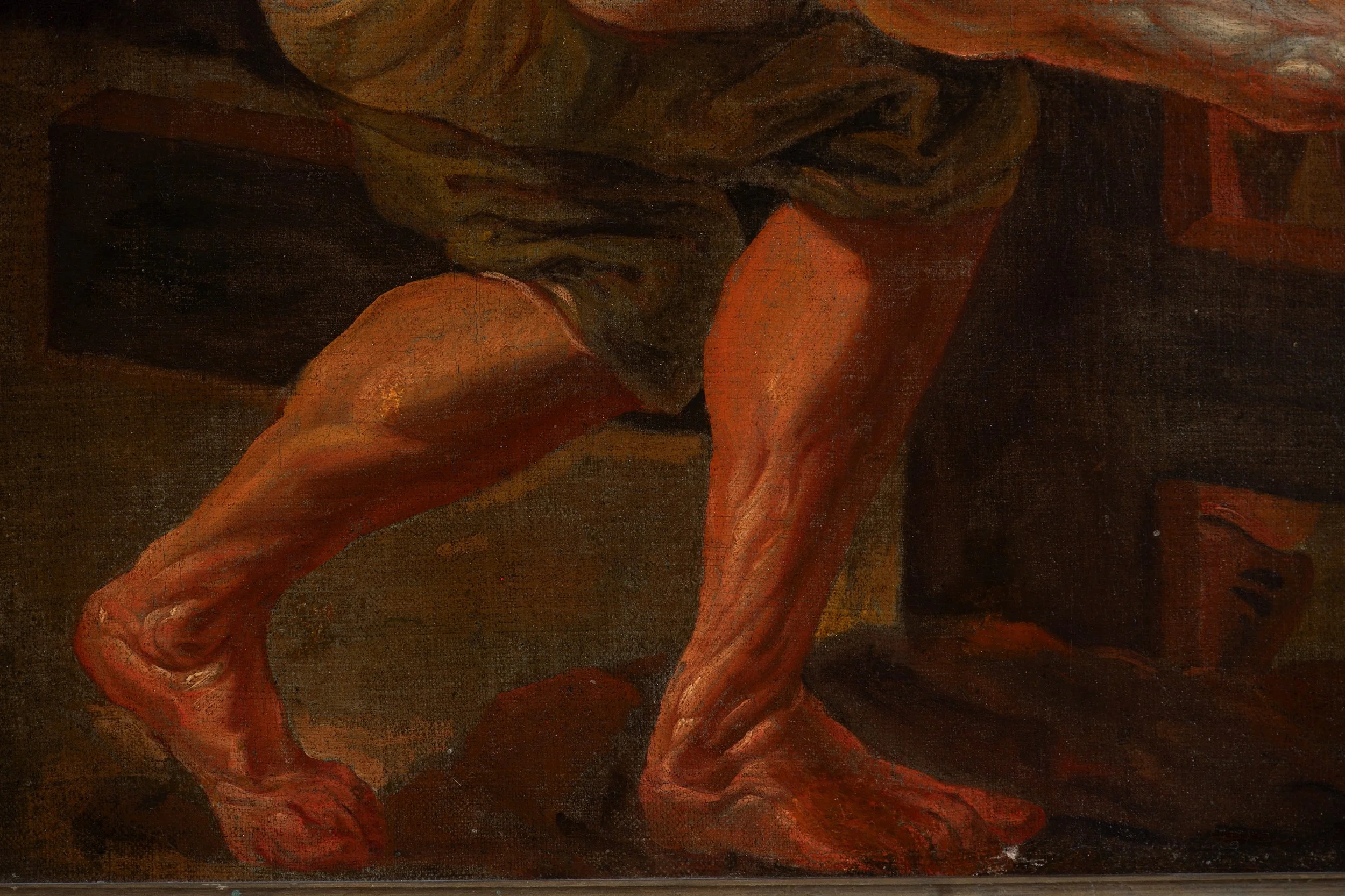 Image 14 of 24
 Image 15 of 24
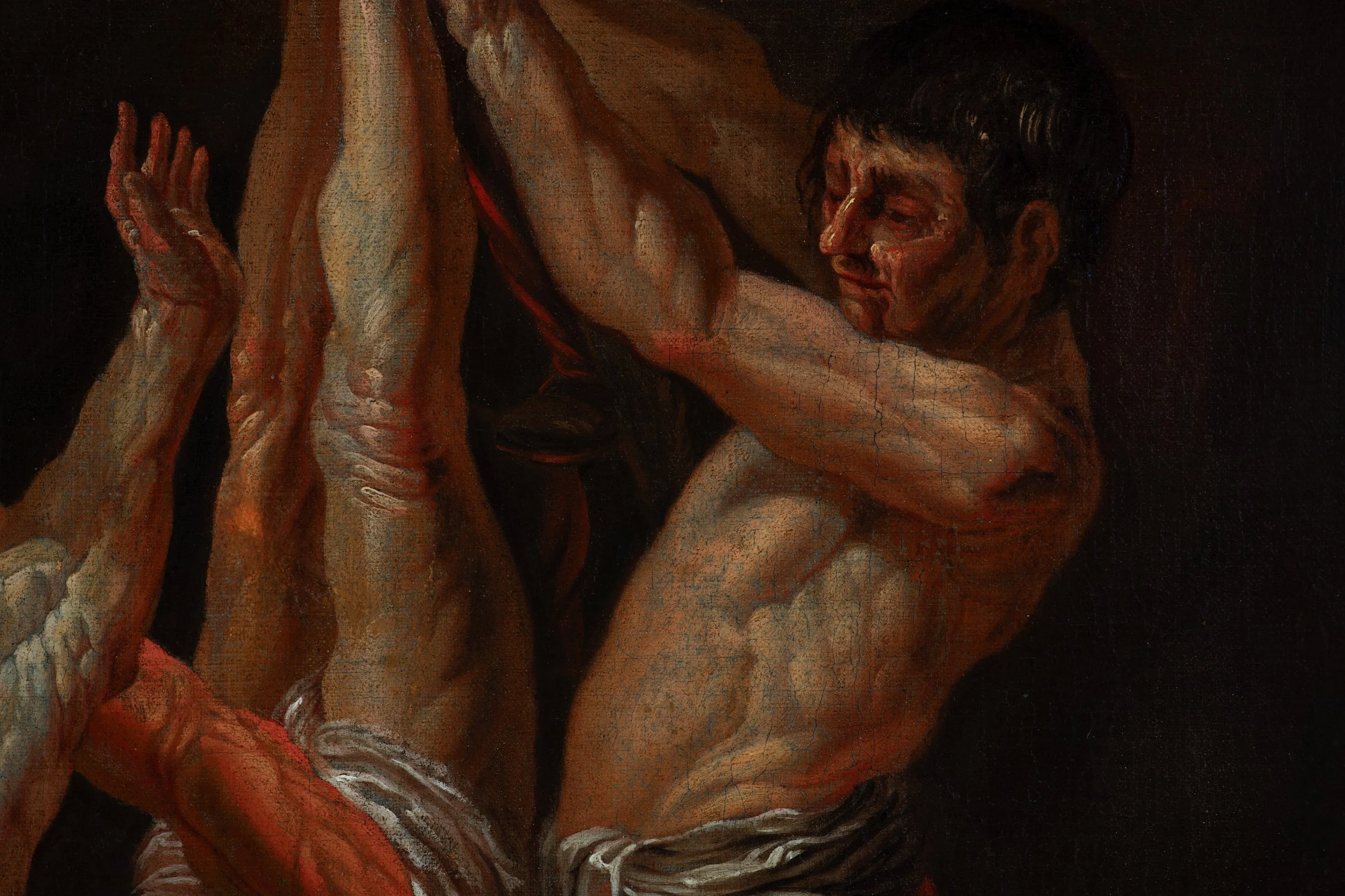 Image 16 of 24
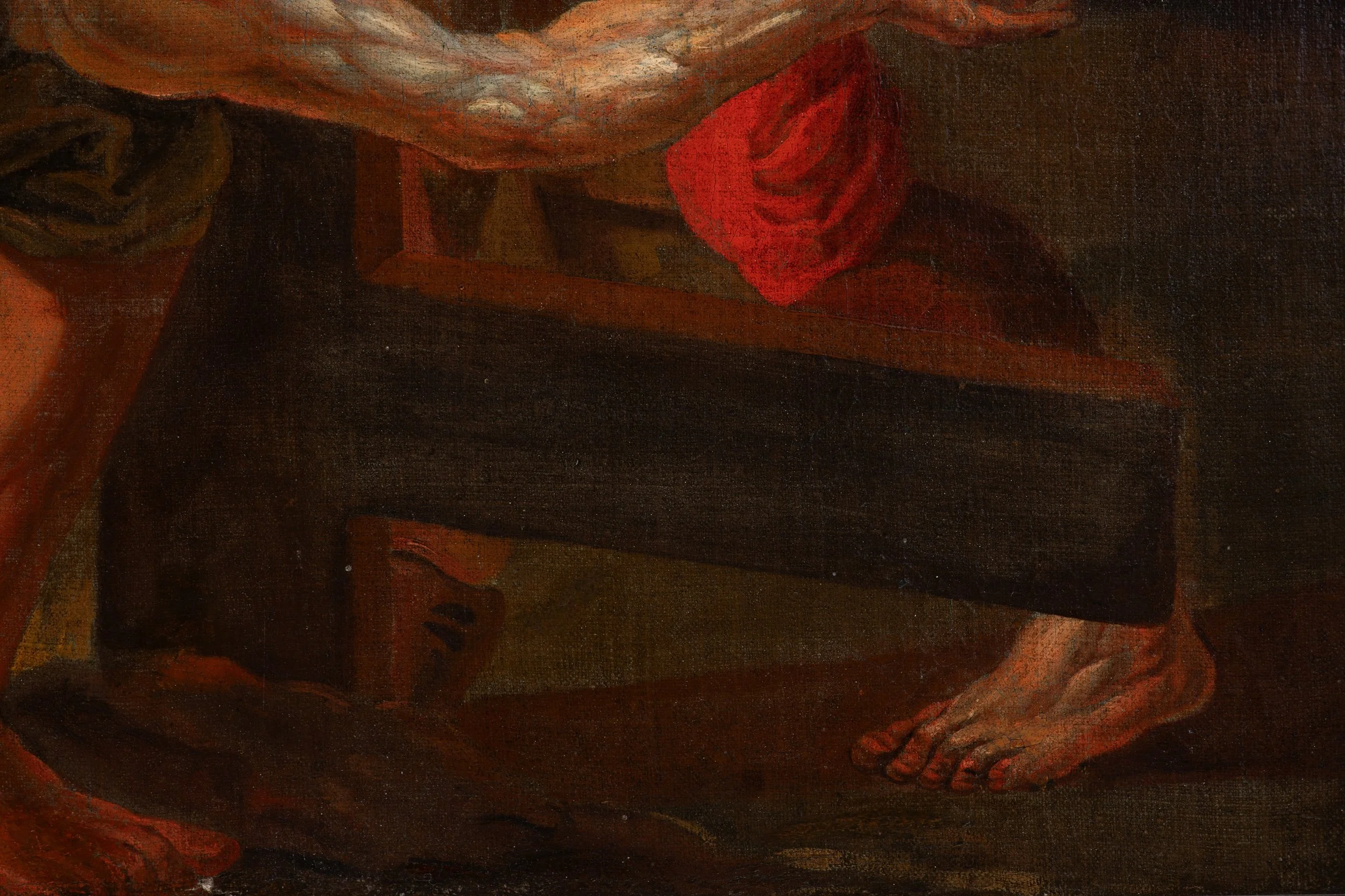 Image 17 of 24
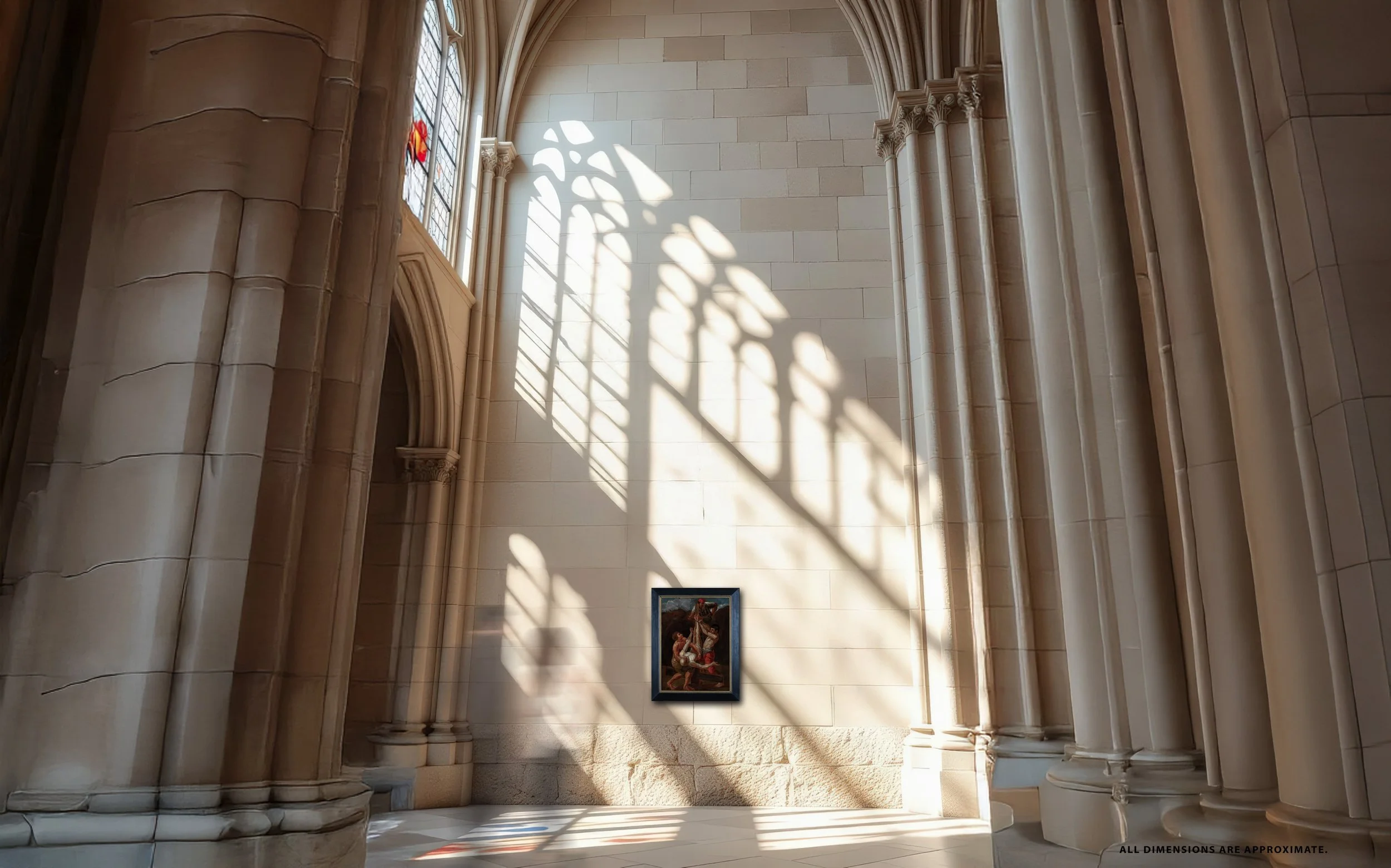 Image 18 of 24
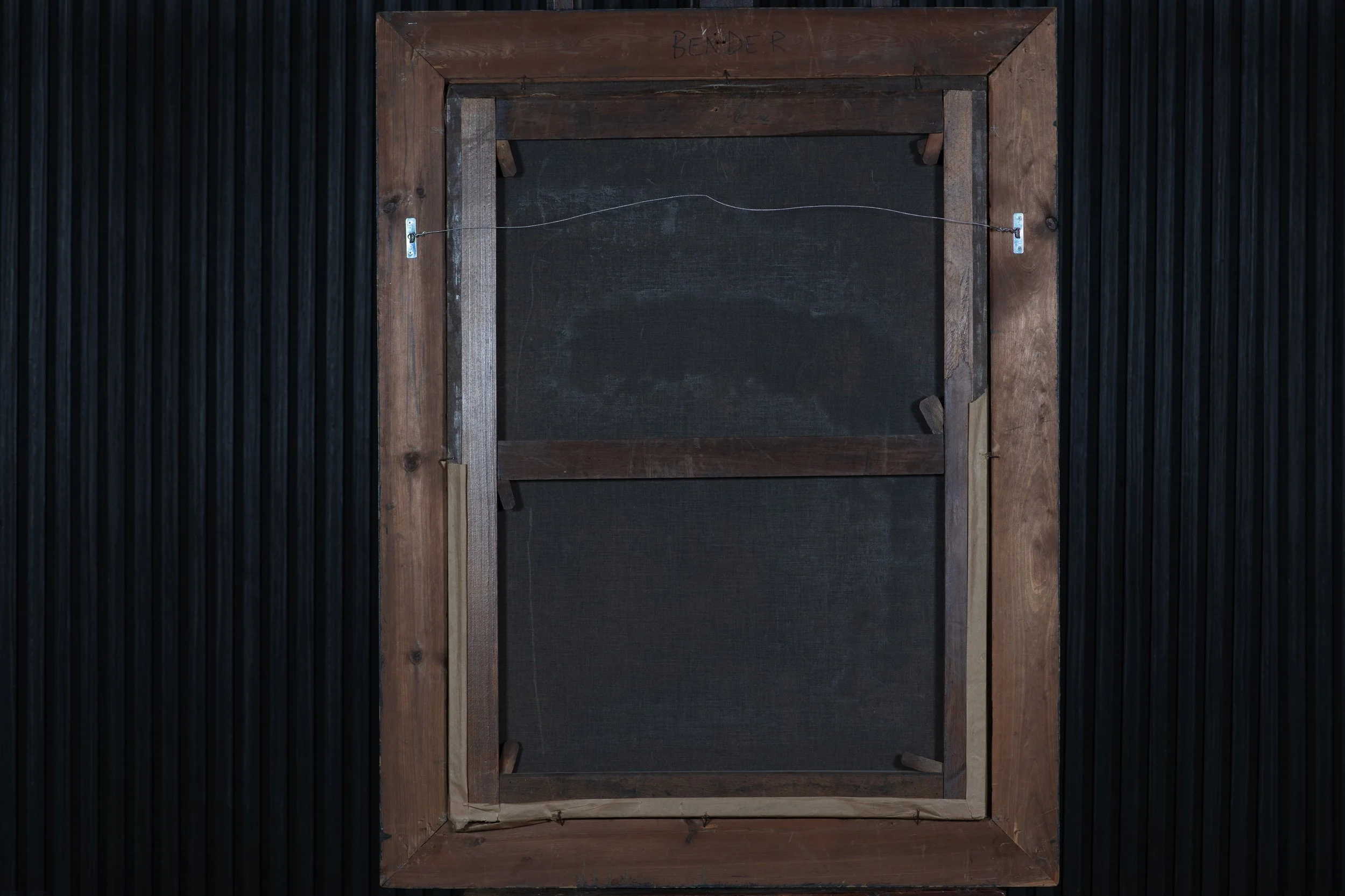 Image 19 of 24
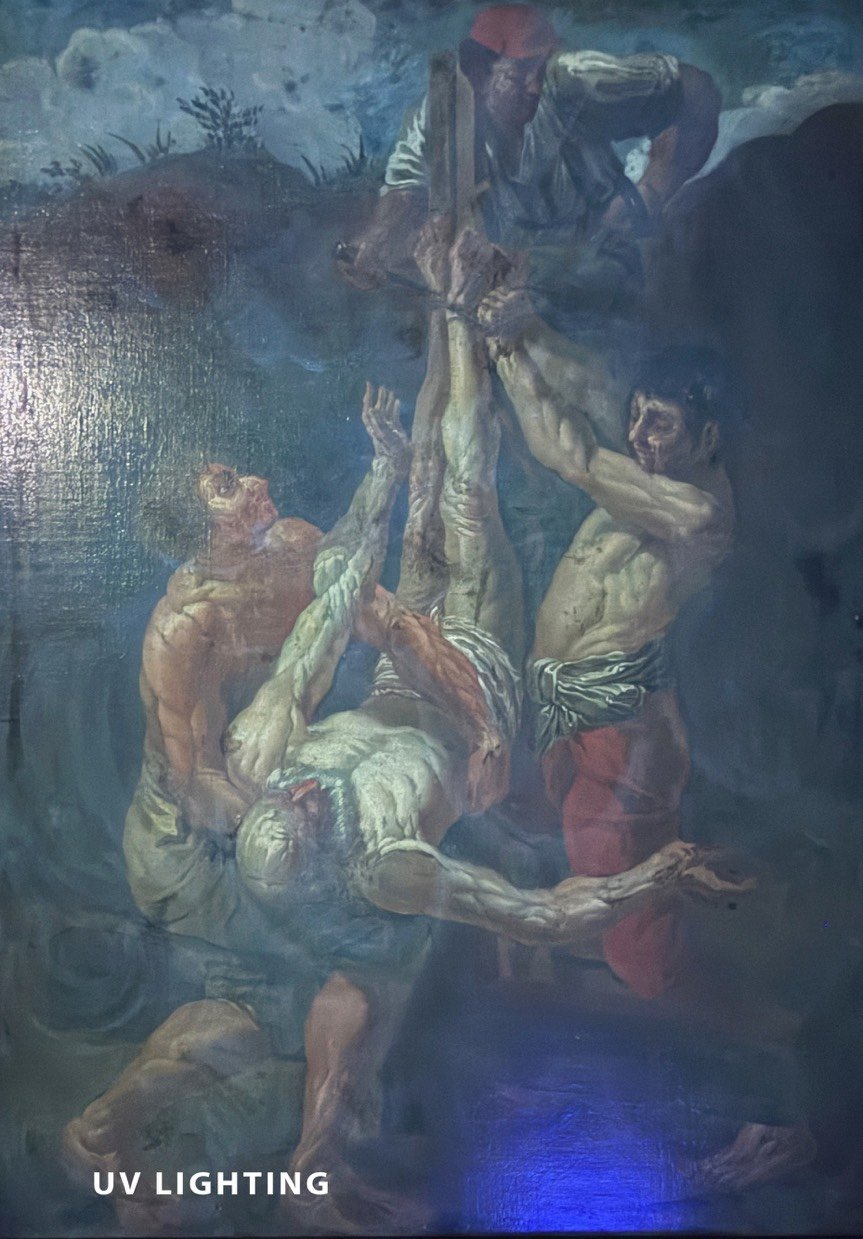 Image 20 of 24
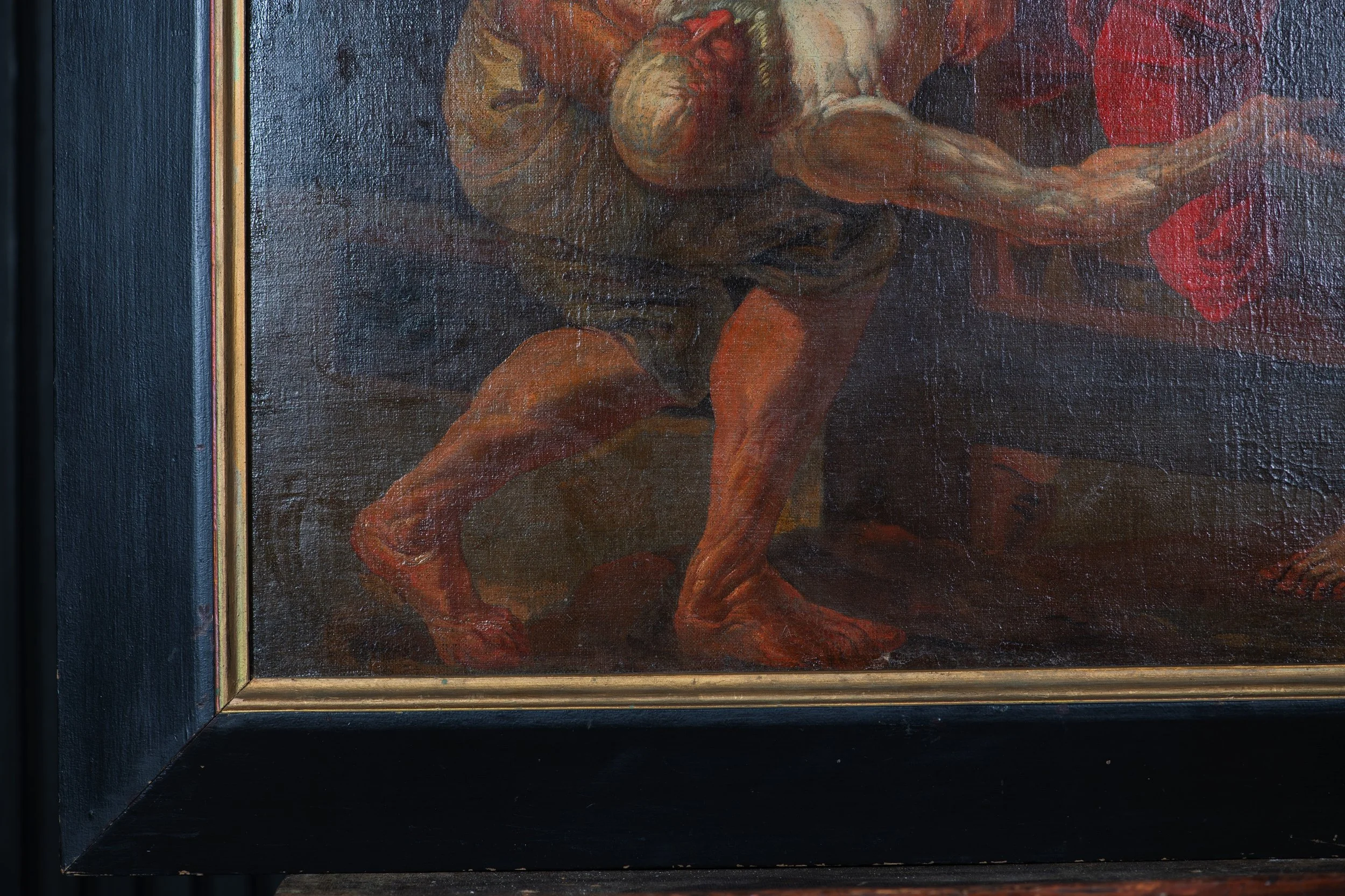 Image 21 of 24
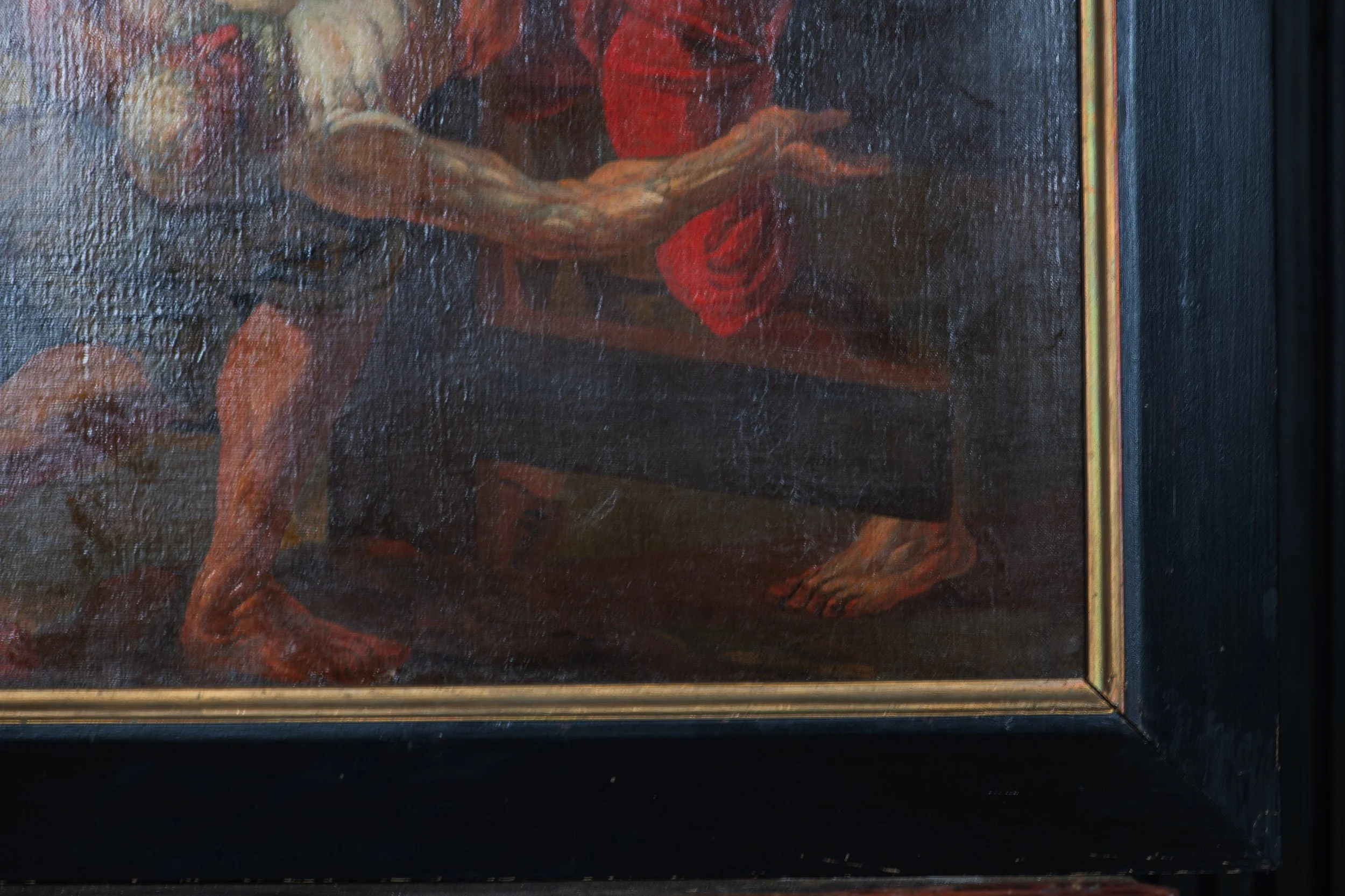 Image 22 of 24
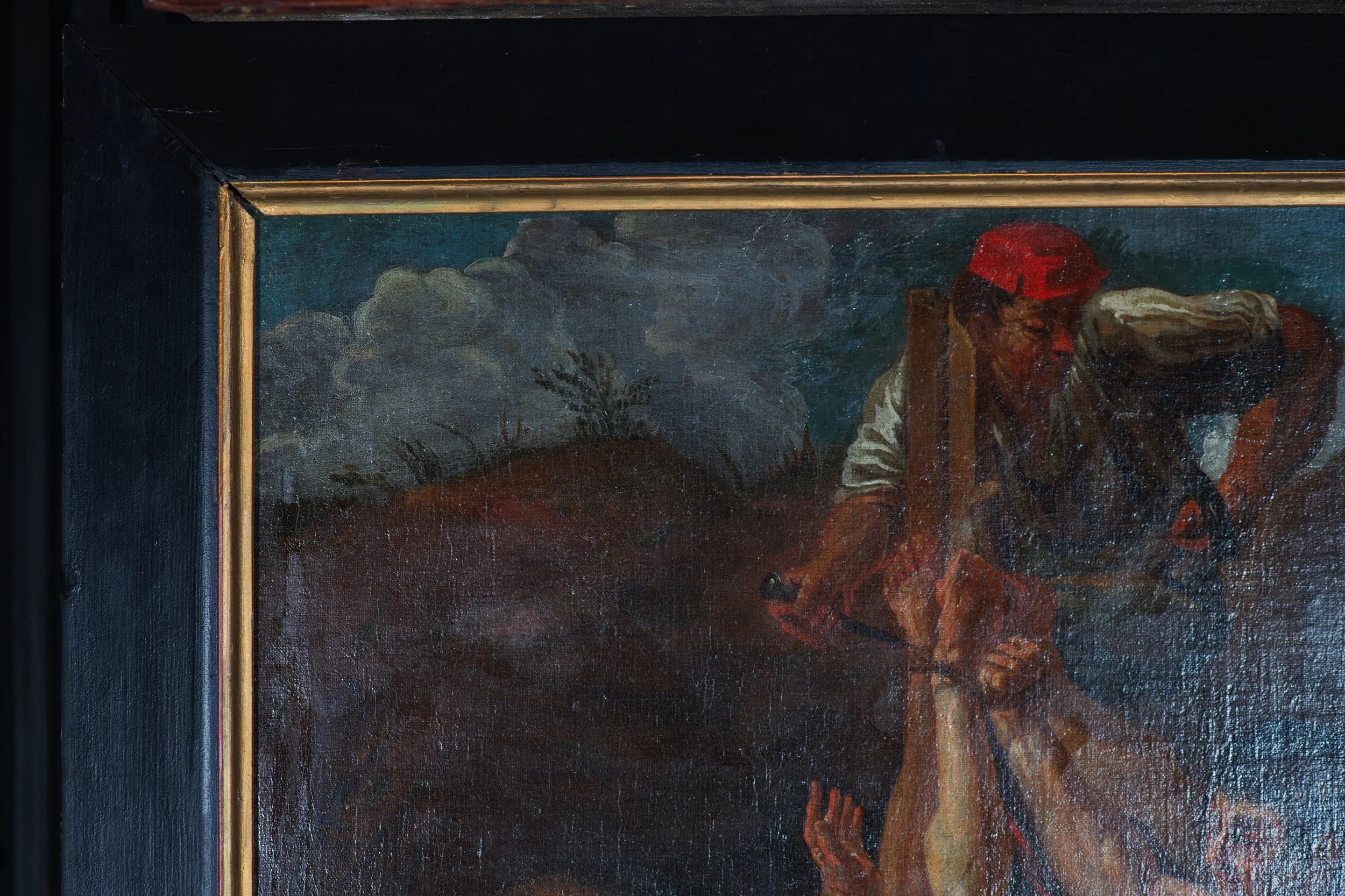 Image 23 of 24
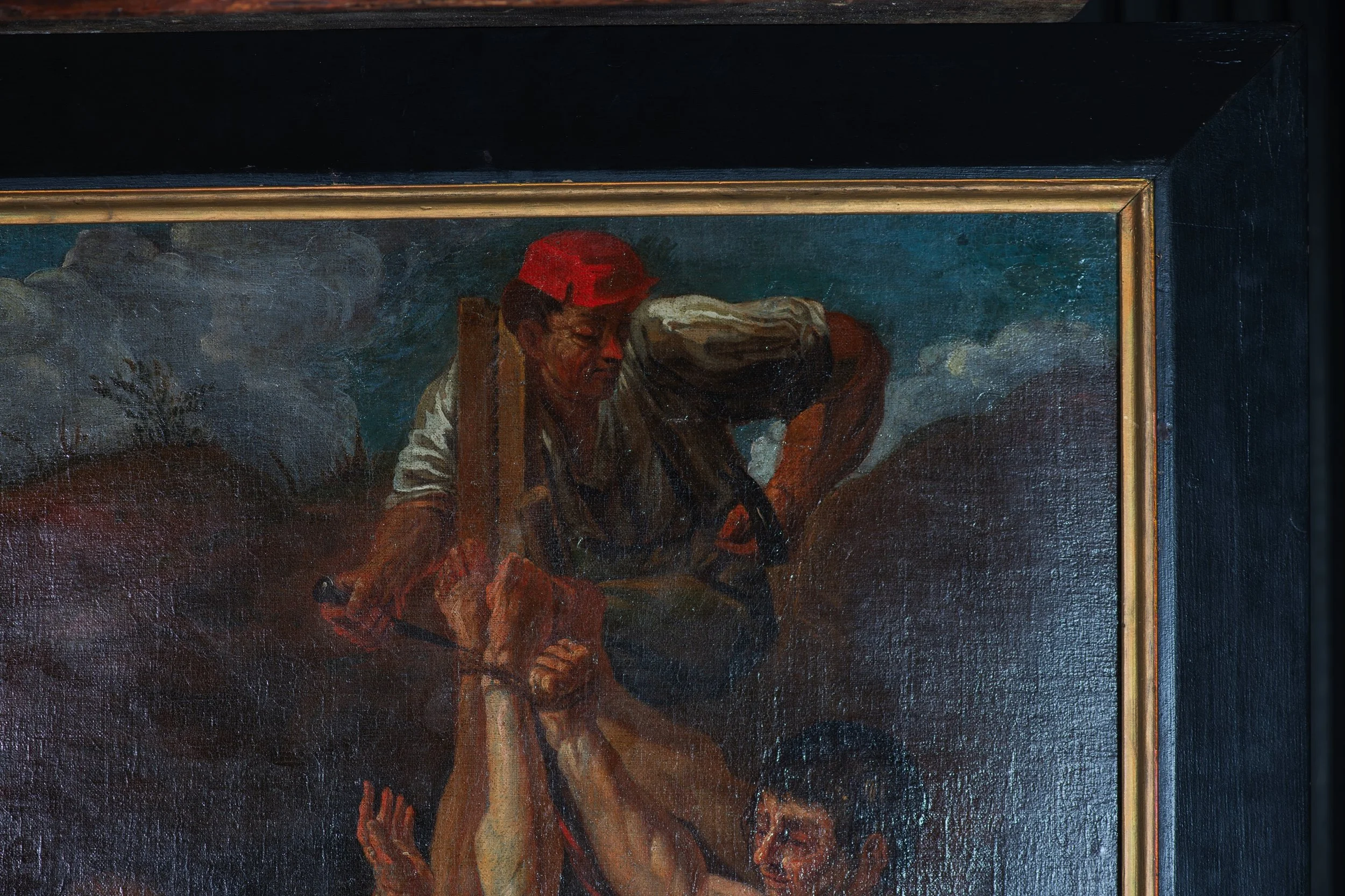 Image 24 of 24