CONTACT US
Follower of Pieter Cornelisz. van Slingelandt (1640–1691), 18th–19th Century
The Lacemaker – Oil on panel (38 × 29.5 cm; framed 48 × 49.5 cm)
Introduction
This refined cabinet painting—measuring 38 × 29.5 cm and presented in a frame of 48 × 49.5 cm—is a later 18th–19th-century work executed in close emulation of Pieter Cornelisz. van Slingelandt, one of the foremost masters of the Leiden fijnschilders tradition during the Dutch Golden Age. Van Slingelandt was renowned for his microscopic precision, immaculate surfaces and exceptionally delicate rendering of textures, qualities that made his paintings highly prized already in his own lifetime. The present work demonstrates the enduring admiration for his aesthetic in later centuries, when artists again studied and revived the technical brilliance of the seventeenth-century Leiden School.
Historically, the painting was recorded in the RKD Netherlands Institute for Art History under Ferdinand de Braekeleer (I), described as an adaptation after a Slingelandt original (RKD database no. 3836711). This documentation situates the work securely within the broader revival of Old Master techniques and affirms its art-historical position as a later homage to Slingelandt’s refined interiors.
Description of the Work
The Lacemaker presents an intimate domestic interior meticulously composed with abundant narrative detail. At the centre sits a young woman absorbed in the delicate craft of lace-making—an activity symbolising household virtue, diligence and refinement in seventeenth-century Dutch culture. She is seated on a carved wooden chair, dressed in a velvet brown bodice and crisp white apron. The subtle fall of her garments and the controlled highlights demonstrate the painter’s firm grasp of texture.
At the left, an older woman leans through an open window holding out a rooster. This lively exchange creates a bridge between interior and exterior and introduces an engaging narrative element. The rooster—with its shimmering plumage in ochres, copper reds and soft whites—offered the artist an ideal opportunity to showcase technical skill through the precise depiction of feathers and light.
A small lapdog at the right enlivens the scene, while the ornate mantelpiece, decorated plates, putto figurine, wall hangings and framed paintings-within-the-painting create depth and evoke the atmosphere of cultivated domesticity associated with seventeenth-century Leiden.
Technique, Brushwork and Colour Palette
Despite being a later work, the painting reflects a thorough understanding of Leiden fijnschilder methods. The surface is smooth and highly finished, built up in thin layers where the brushwork remains nearly invisible—true to the optical precision and refined execution that defined the Leiden School.
The palette harmonises warm earth tones with cooler whites and silvery highlights. The velvety browns of the woman’s dress, the crisp whites of the apron and sleeves, the carefully modulated feathers of the rooster and the muted green-grey background form a coherent and balanced chromatic structure.
Light enters through the left window, illuminating the young woman’s features and moving softly across the room’s objects, generating an atmospheric unity.
The panel was recently surface-cleaned and finished with a new matte dammar varnish. Under UV light, restorations appear mainly in the background and selective shadow zones—normal for a work of this age and consistent with its history of conservation.
Composition and Stylistic Characteristics
The composition reflects the ideals of the Dutch fijnschilders: a controlled domestic setting, a focus on delicate gesture, and a deep engagement with textural accuracy. The diagonal axis from the window to the lacemaker stabilises the composition while guiding the viewer’s gaze naturally toward the central subject.
The fallen slipper, wicker basket, embroidered table covering and other household details enrich the scene with layers of meaning and visual interest. Thematically, the work resonates with seventeenth-century imagery celebrating modesty, industry and domestic virtue.
Comparable artists within this tradition include Gerrit Dou, Frans van Mieris the Elder, Godfried Schalcken, Willem van Mieris, and internationally Samuel van Hoogstraten and Michael Sweerts.
Art-Historical Context and Legacy
Van Slingelandt, active in Leiden and strongly associated with the fijnschilders around Gerrit Dou, earned a reputation for exceptional patience and precision—period sources note that he sometimes devoted months to executing a single ornamental detail. His influence persisted well beyond his lifetime, particularly in the nineteenth century when artists such as Ferdinand de Braekeleer (I) revisited Dutch Golden Age techniques with renewed admiration.
The RKD registration of the present work highlights its place within this lineage. Possible vestiges of a monogram in the lower left, noted in the RKD entry, reflect historical efforts toward attribution, though no conclusive signature is present.
Provenance and Registration
Registered in the RKD under Ferdinand de Braekeleer (I) as a work after Pieter Cornelisz. van Slingelandt (RKD no. 3836711), with mention of possible monogram remains in the lower left on the bellows.
Conclusion
The Lacemaker is a particularly compelling example of the 18th–19th-century revival of the Leiden fijnschilder tradition. Its finely controlled execution, atmospheric intimacy, technical refinement and rich narrative detail combine to evoke convincingly the spirit of Pieter Cornelisz. van Slingelandt.
For collectors of Dutch Golden Age–inspired interiors, the painting—compact yet visually abundant at 38 × 29.5 cm (framed 48 × 49.5 cm)—offers both historical resonance and exceptional decorative quality, making it a distinguished addition to any refined collection.
CONTACT US
Follower of Pieter Cornelisz. van Slingelandt (1640–1691), 18th–19th Century
The Lacemaker – Oil on panel (38 × 29.5 cm; framed 48 × 49.5 cm)
Introduction
This refined cabinet painting—measuring 38 × 29.5 cm and presented in a frame of 48 × 49.5 cm—is a later 18th–19th-century work executed in close emulation of Pieter Cornelisz. van Slingelandt, one of the foremost masters of the Leiden fijnschilders tradition during the Dutch Golden Age. Van Slingelandt was renowned for his microscopic precision, immaculate surfaces and exceptionally delicate rendering of textures, qualities that made his paintings highly prized already in his own lifetime. The present work demonstrates the enduring admiration for his aesthetic in later centuries, when artists again studied and revived the technical brilliance of the seventeenth-century Leiden School.
Historically, the painting was recorded in the RKD Netherlands Institute for Art History under Ferdinand de Braekeleer (I), described as an adaptation after a Slingelandt original (RKD database no. 3836711). This documentation situates the work securely within the broader revival of Old Master techniques and affirms its art-historical position as a later homage to Slingelandt’s refined interiors.
Description of the Work
The Lacemaker presents an intimate domestic interior meticulously composed with abundant narrative detail. At the centre sits a young woman absorbed in the delicate craft of lace-making—an activity symbolising household virtue, diligence and refinement in seventeenth-century Dutch culture. She is seated on a carved wooden chair, dressed in a velvet brown bodice and crisp white apron. The subtle fall of her garments and the controlled highlights demonstrate the painter’s firm grasp of texture.
At the left, an older woman leans through an open window holding out a rooster. This lively exchange creates a bridge between interior and exterior and introduces an engaging narrative element. The rooster—with its shimmering plumage in ochres, copper reds and soft whites—offered the artist an ideal opportunity to showcase technical skill through the precise depiction of feathers and light.
A small lapdog at the right enlivens the scene, while the ornate mantelpiece, decorated plates, putto figurine, wall hangings and framed paintings-within-the-painting create depth and evoke the atmosphere of cultivated domesticity associated with seventeenth-century Leiden.
Technique, Brushwork and Colour Palette
Despite being a later work, the painting reflects a thorough understanding of Leiden fijnschilder methods. The surface is smooth and highly finished, built up in thin layers where the brushwork remains nearly invisible—true to the optical precision and refined execution that defined the Leiden School.
The palette harmonises warm earth tones with cooler whites and silvery highlights. The velvety browns of the woman’s dress, the crisp whites of the apron and sleeves, the carefully modulated feathers of the rooster and the muted green-grey background form a coherent and balanced chromatic structure.
Light enters through the left window, illuminating the young woman’s features and moving softly across the room’s objects, generating an atmospheric unity.
The panel was recently surface-cleaned and finished with a new matte dammar varnish. Under UV light, restorations appear mainly in the background and selective shadow zones—normal for a work of this age and consistent with its history of conservation.
Composition and Stylistic Characteristics
The composition reflects the ideals of the Dutch fijnschilders: a controlled domestic setting, a focus on delicate gesture, and a deep engagement with textural accuracy. The diagonal axis from the window to the lacemaker stabilises the composition while guiding the viewer’s gaze naturally toward the central subject.
The fallen slipper, wicker basket, embroidered table covering and other household details enrich the scene with layers of meaning and visual interest. Thematically, the work resonates with seventeenth-century imagery celebrating modesty, industry and domestic virtue.
Comparable artists within this tradition include Gerrit Dou, Frans van Mieris the Elder, Godfried Schalcken, Willem van Mieris, and internationally Samuel van Hoogstraten and Michael Sweerts.
Art-Historical Context and Legacy
Van Slingelandt, active in Leiden and strongly associated with the fijnschilders around Gerrit Dou, earned a reputation for exceptional patience and precision—period sources note that he sometimes devoted months to executing a single ornamental detail. His influence persisted well beyond his lifetime, particularly in the nineteenth century when artists such as Ferdinand de Braekeleer (I) revisited Dutch Golden Age techniques with renewed admiration.
The RKD registration of the present work highlights its place within this lineage. Possible vestiges of a monogram in the lower left, noted in the RKD entry, reflect historical efforts toward attribution, though no conclusive signature is present.
Provenance and Registration
Registered in the RKD under Ferdinand de Braekeleer (I) as a work after Pieter Cornelisz. van Slingelandt (RKD no. 3836711), with mention of possible monogram remains in the lower left on the bellows.
Conclusion
The Lacemaker is a particularly compelling example of the 18th–19th-century revival of the Leiden fijnschilder tradition. Its finely controlled execution, atmospheric intimacy, technical refinement and rich narrative detail combine to evoke convincingly the spirit of Pieter Cornelisz. van Slingelandt.
For collectors of Dutch Golden Age–inspired interiors, the painting—compact yet visually abundant at 38 × 29.5 cm (framed 48 × 49.5 cm)—offers both historical resonance and exceptional decorative quality, making it a distinguished addition to any refined collection.

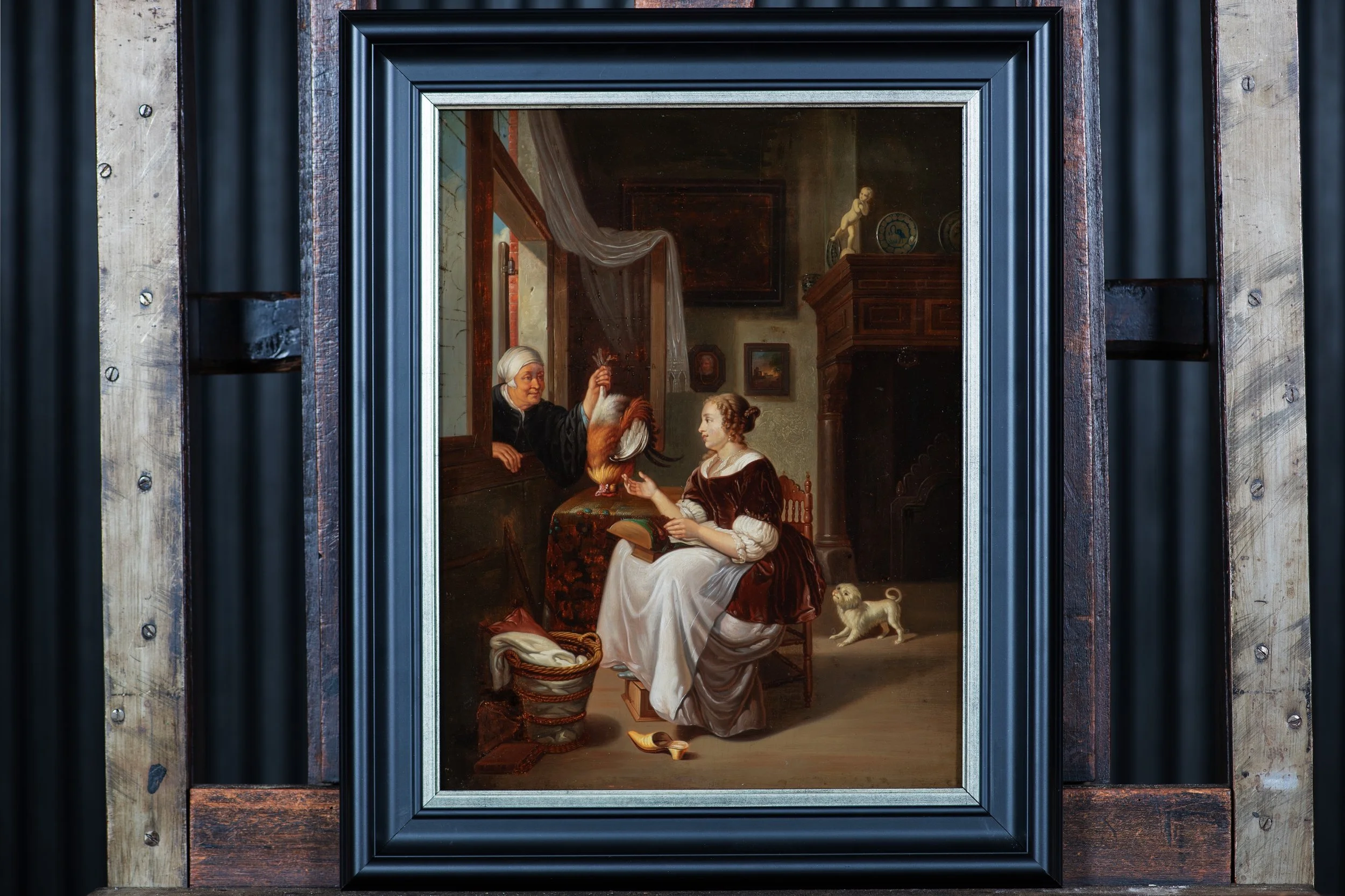 Image 1 of 18
 Image 2 of 18
 Image 3 of 18
 Image 4 of 18
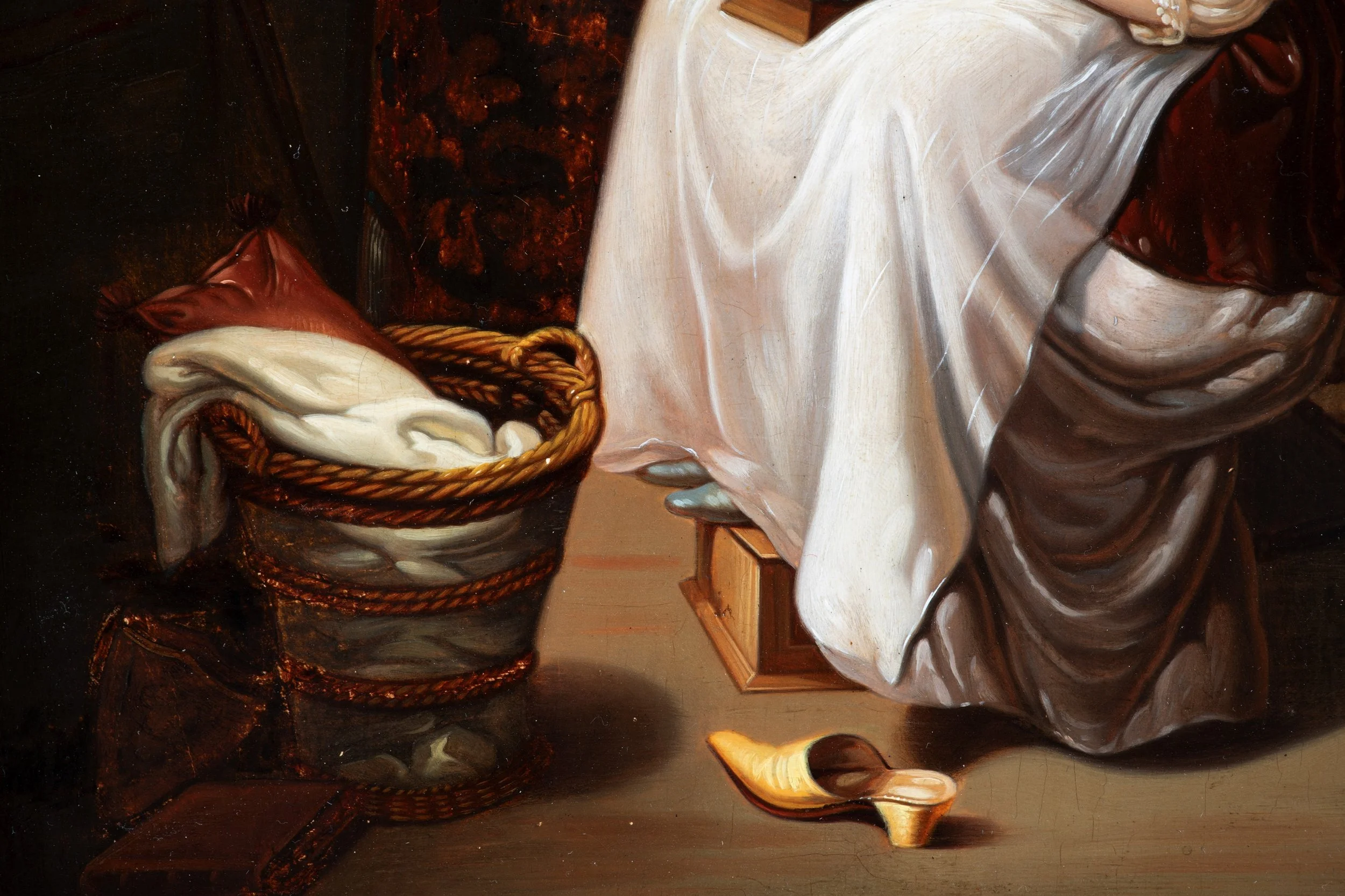 Image 5 of 18
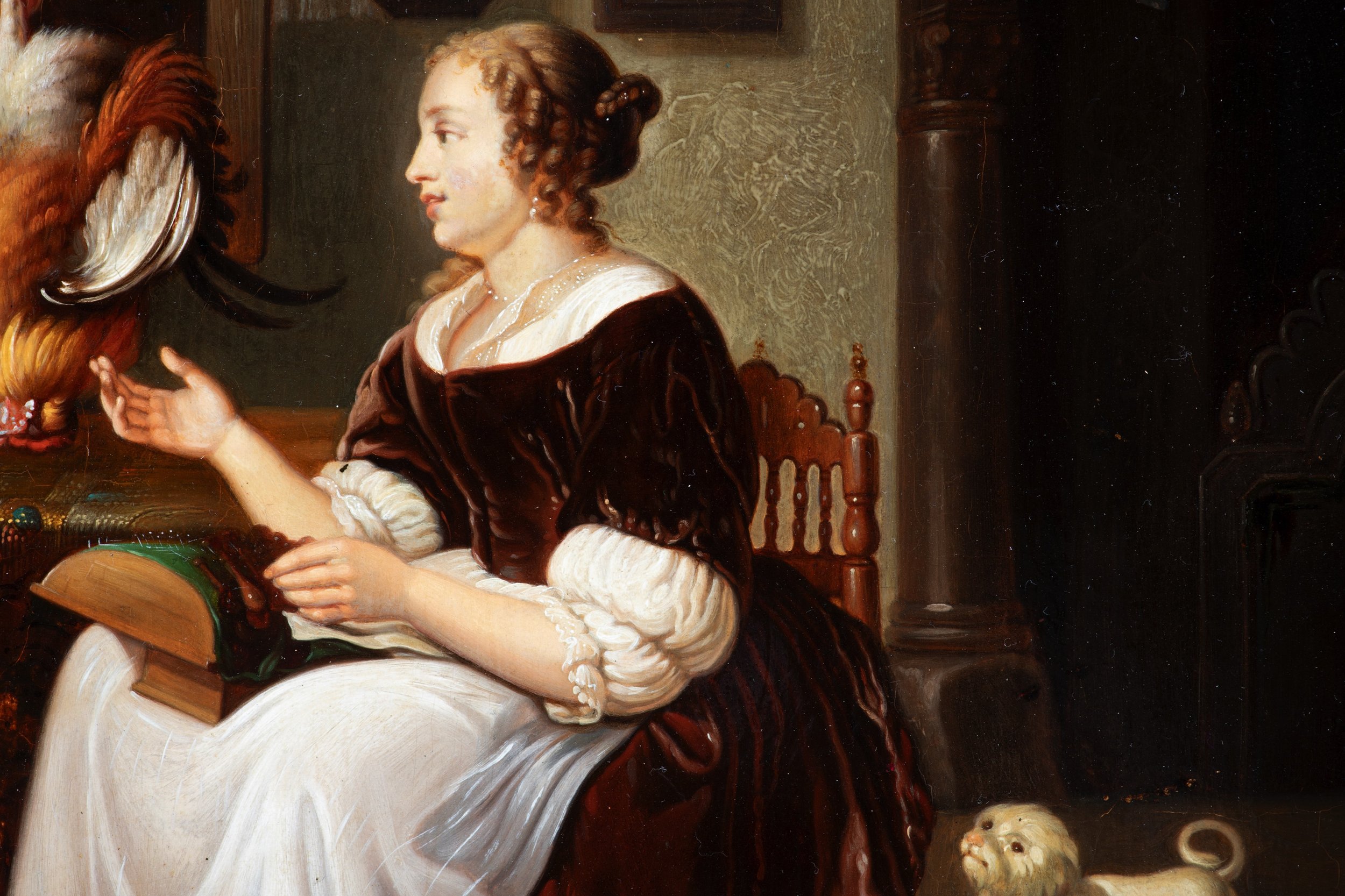 Image 6 of 18
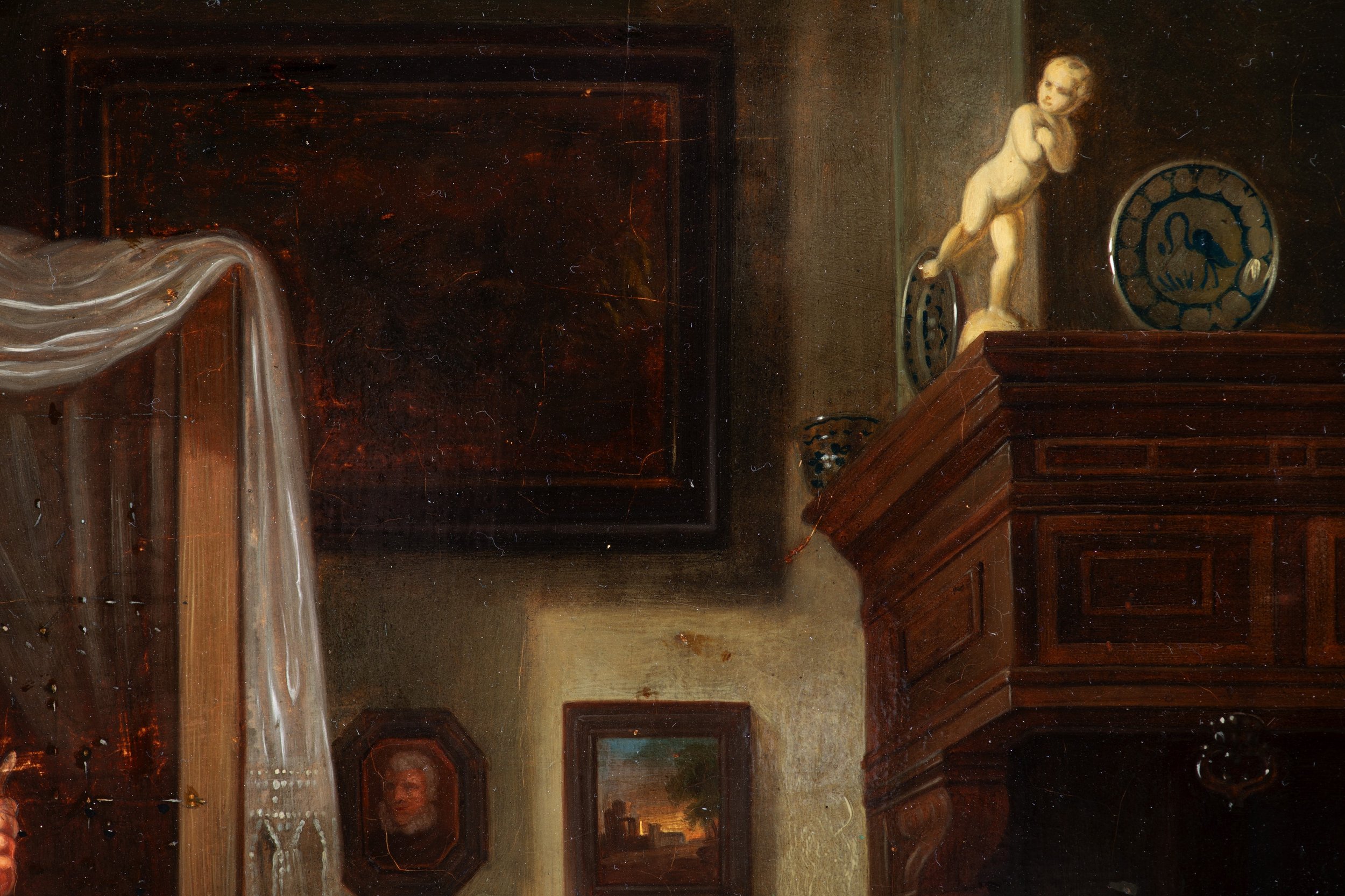 Image 7 of 18
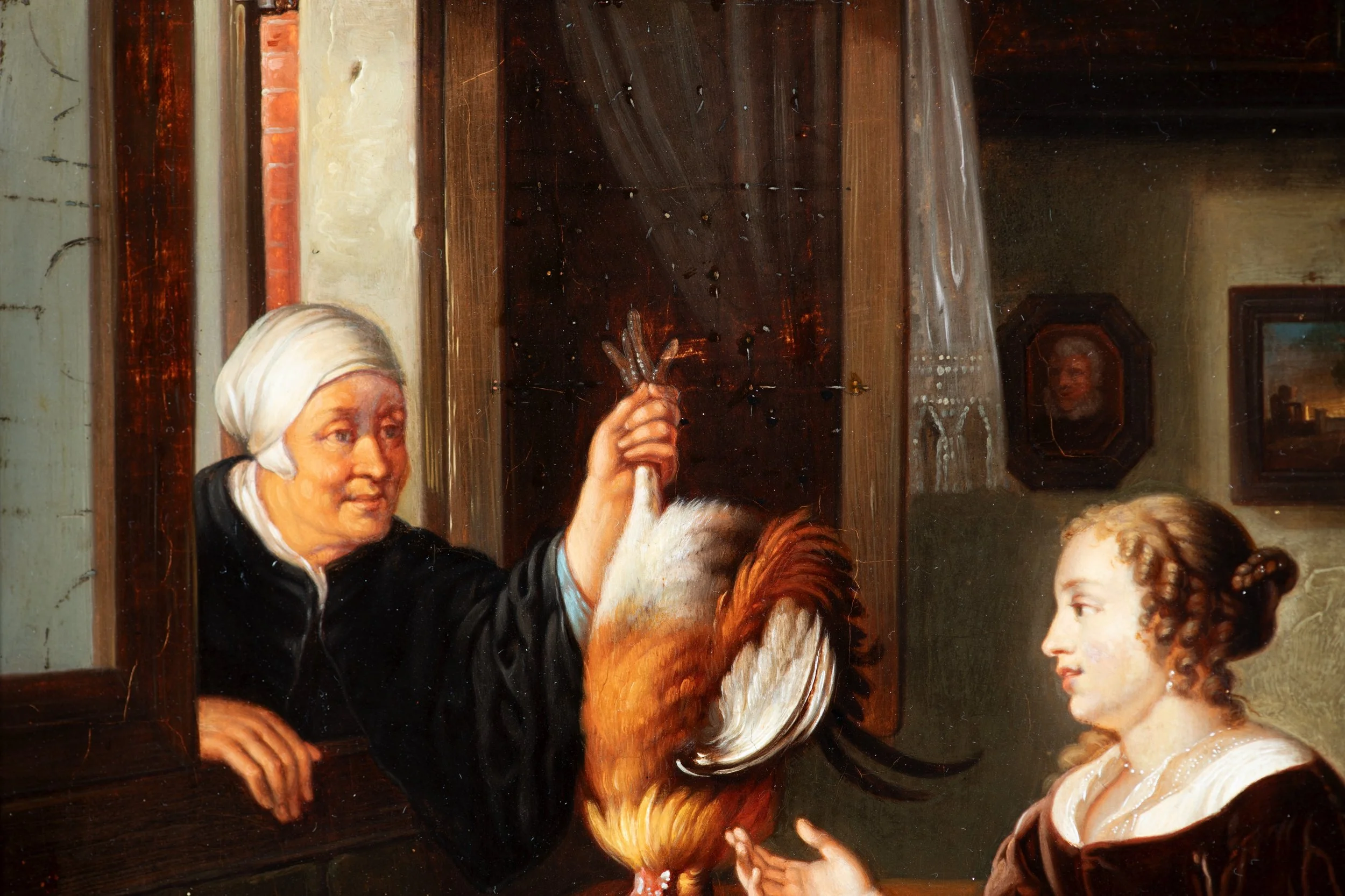 Image 8 of 18
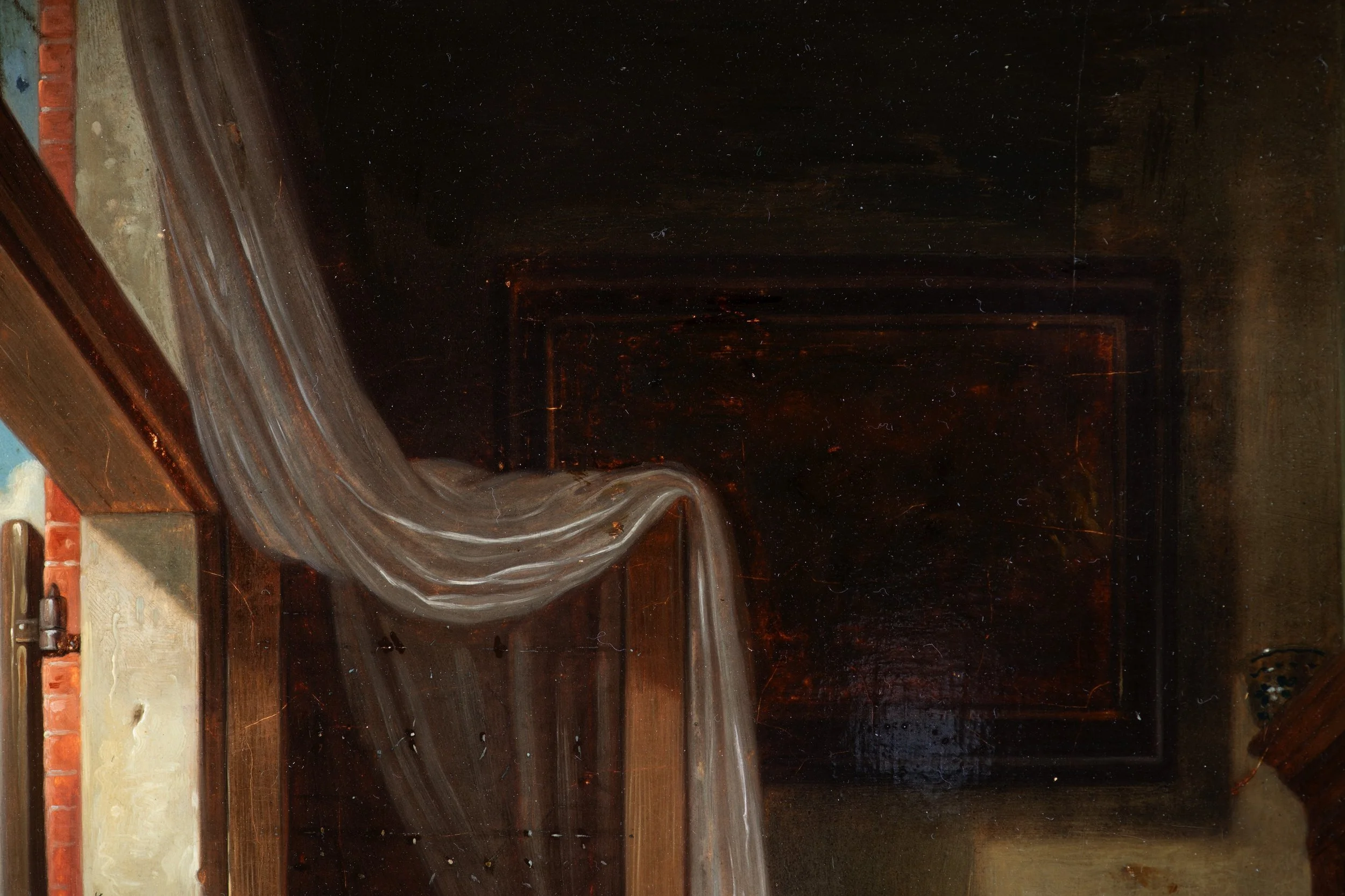 Image 9 of 18
 Image 10 of 18
 Image 11 of 18
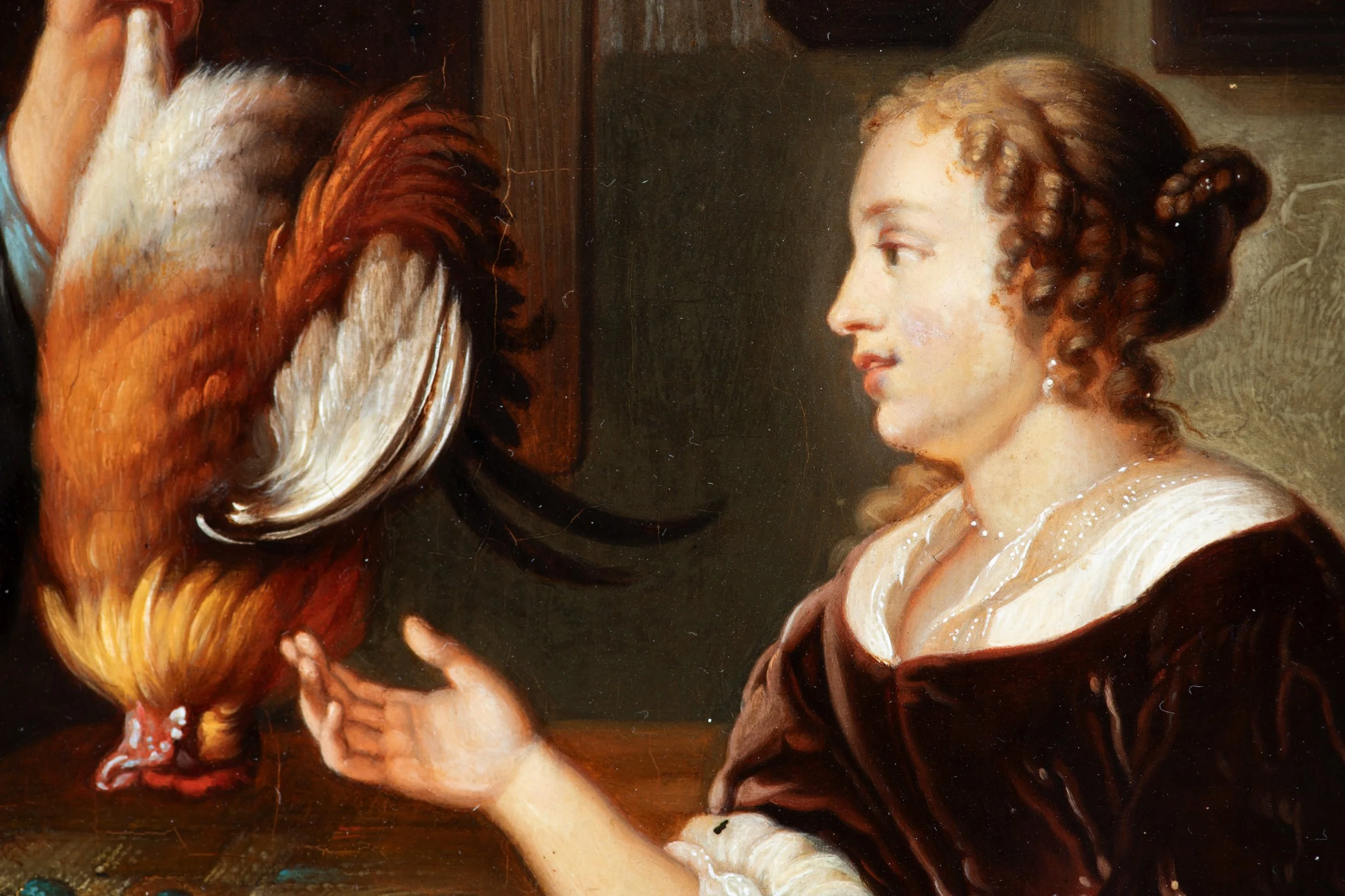 Image 12 of 18
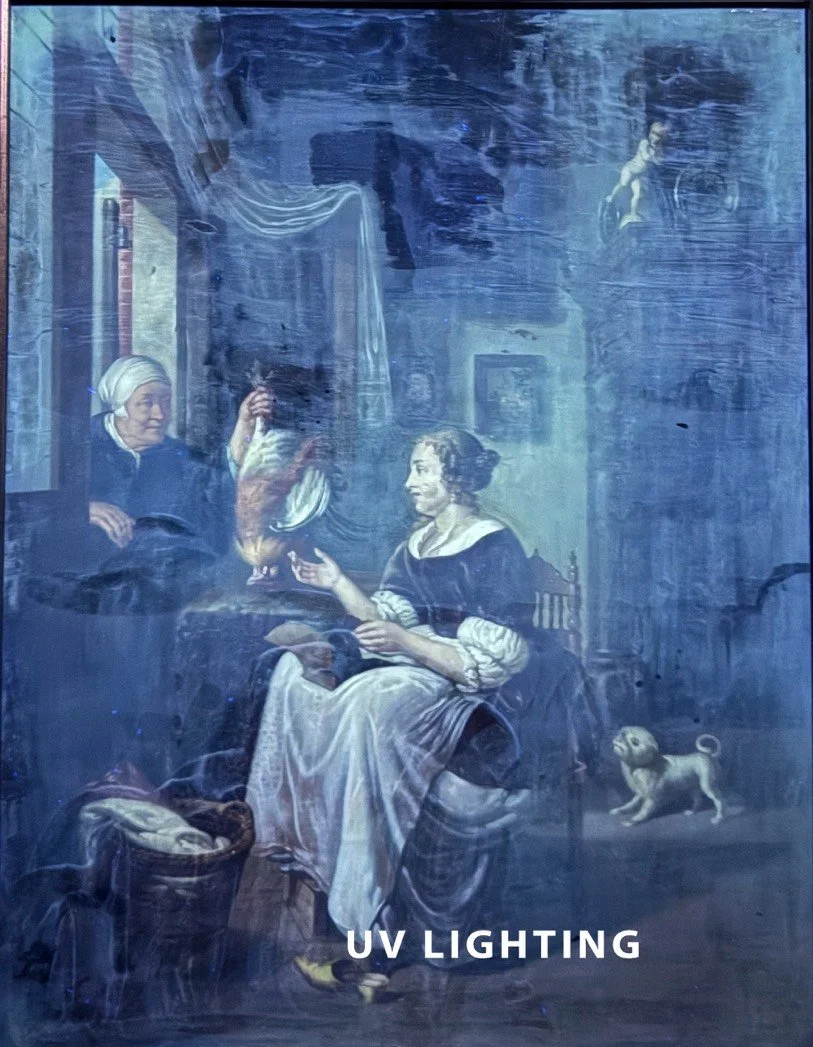 Image 13 of 18
 Image 14 of 18
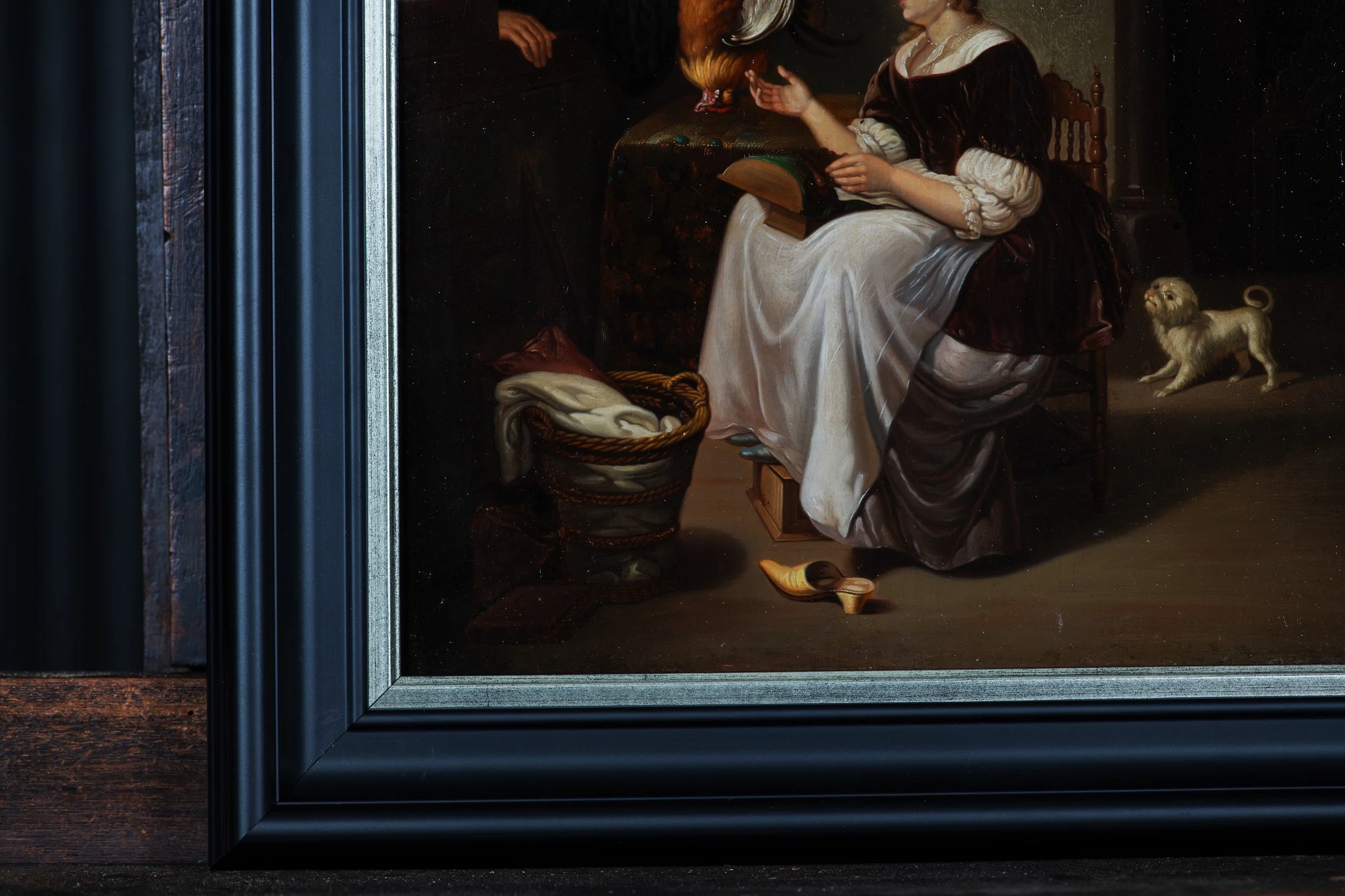 Image 16 of 18
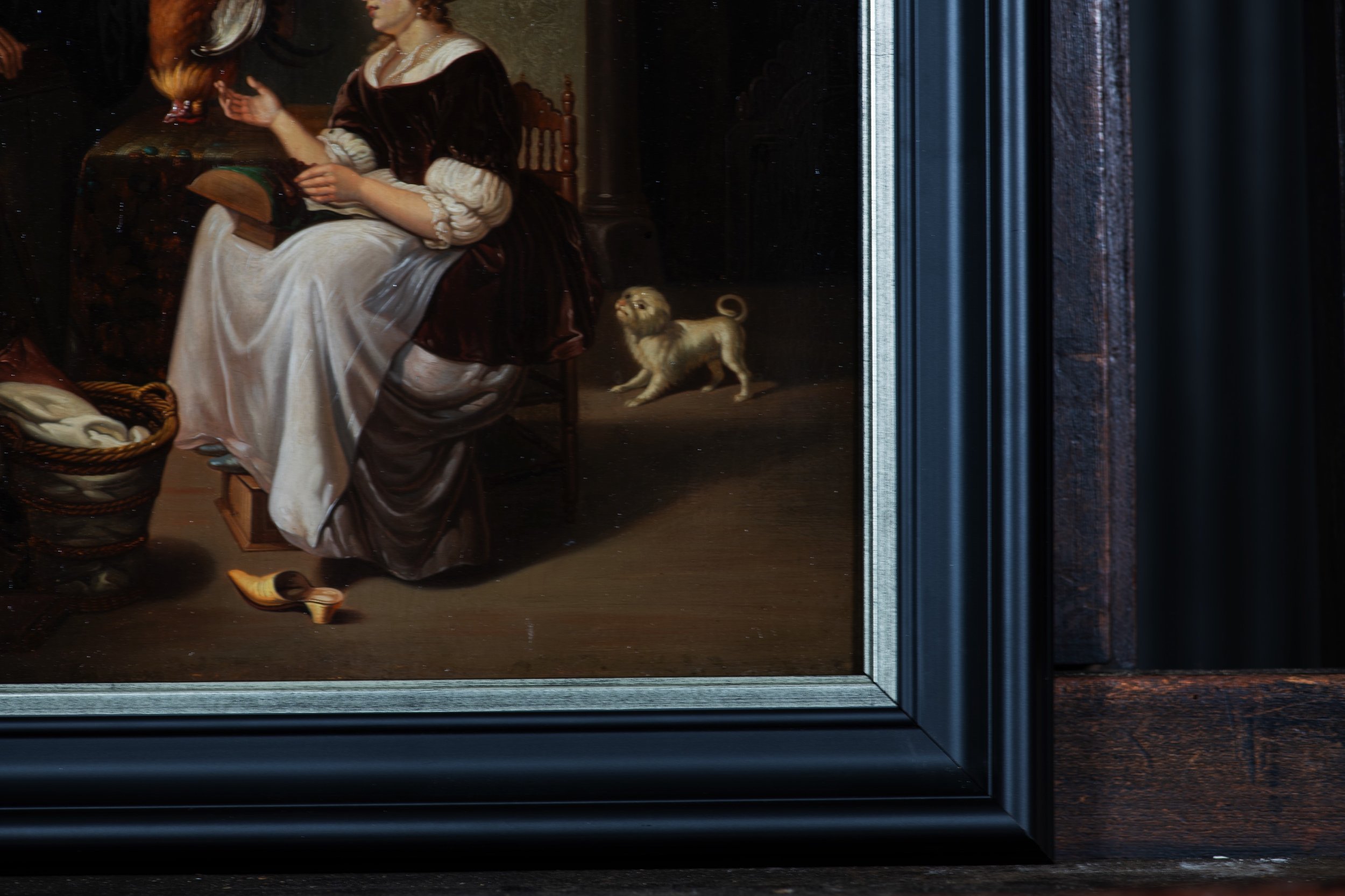 Image 17 of 18
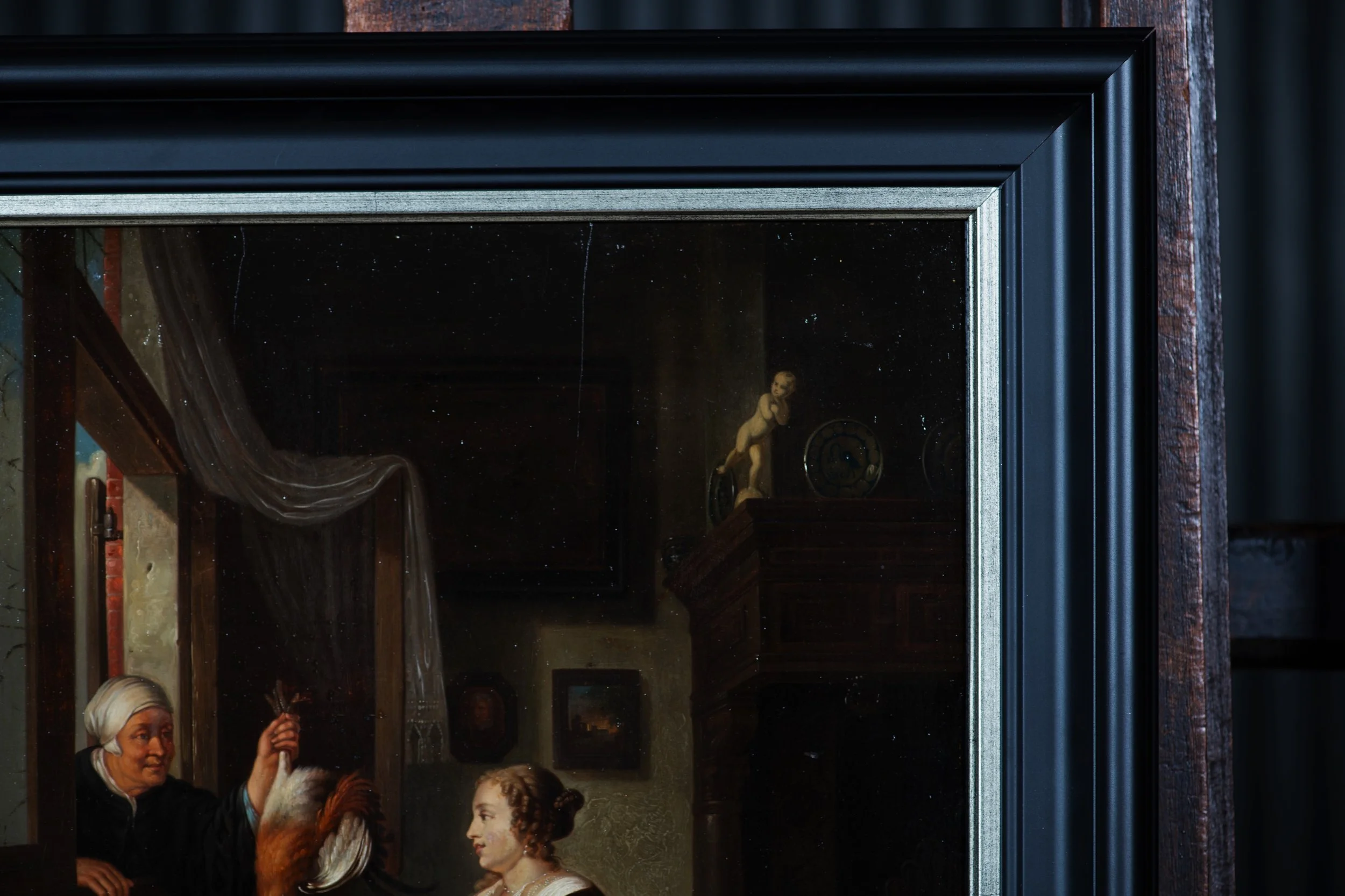 Image 18 of 18