CONTACT US
Willem Willemsz. Thybaut (c. 1526–1599), attributed
after Giulio Clovio (1498–1578)
The Resurrection
Oil on panel, 44 × 48 cm; with frame 59.5 × 63.5 cm
Italian Renaissance – unsigned – losses of colour and retouching (see UV)
Introduction
This exceptionally refined panel belongs to a small but art-historically significant group of Netherlandish works that translate the iconographic and stylistic language of the Italian Renaissance directly into the visual tradition of the Low Countries. The subject — The Resurrection — is one of the most powerful and theologically resonant motifs in Christian art, offering artists of the fifteenth and sixteenth centuries the opportunity to unite divine radiance, dramatic movement, and elaborately orchestrated figural groupings.
The attribution to Willem Willemsz. Thybaut, an active Haarlem master of the later sixteenth century, is supported by the stylistic character of the panel: the elegant, slightly elongated figures, the clear compositional order, and the evident engagement with Italian models. The overall conception follows the influential visual language of Giulio Clovio, the most celebrated miniaturist of the Renaissance, whose designs circulated widely through drawings and court manuscripts and profoundly shaped artistic production across Europe. As such, this painting represents a rare witness to the artistic exchange between Clovio’s Italian High Renaissance idiom and the northern pictorial tradition.
Description of the Work
At the centre of the composition Christ rises from the open tomb, floating above the rocky ground in a radiant mandorla of red-gold light. His figure is idealised according to Renaissance principles: slender proportions, carefully modelled anatomy, and a sculptural, elevated pose combining divine authority with graceful movement. The vivid red of his fluttering mantle introduces a striking chromatic accent with both symbolic meaning (the blood of Christ, victory over death) and compositional impact.
The soldiers in the foreground react with gestures of astonishment and fear. Their armour — polished, with crisply defined decorative edges — demonstrates Thybaut’s familiarity with international military iconography known from both Italian and German printmaking. Their dynamic, interlocking diagonals give the scene heightened emotional and narrative tension. The landscape behind them, with rocky formations and a distant cityscape, acts as a stage-like backdrop that reinforces the painting’s devotional tone.
Technique and Use of Materials
Executed in oil on a sturdy wooden panel, the painting reveals a high degree of precision and control. The paint is applied thinly but with great care: the faces, armour, drapery folds and cloud contours are rendered with a meticulousness that recalls the artist’s familiarity with miniaturist practice. This affinity to Clovio’s manuscript tradition is especially visible in the sharply defined contours and the clean transitions of colour.
The palette is unmistakably Renaissance in character: warm reds and golden hues in the celestial radiance, cool silver-greys and blues in the smoke formations, and earthy umbers and ochres in the foreground. The crisp modelling of the figures and the transparent light effects around Christ reveal a sophisticated command of glazing techniques.
Composition and Style
The composition is structured according to a clearly defined hierarchy: Christ forms the vertical and theological centre, while the soldiers in the foreground create horizontal and diagonal rhythms. This balance between symmetry and dynamism reflects the Renaissance quest for harmonious pictorial architecture. At the same time, the soldiers’ animated gestures and elongated poses relate closely to the early Northern Mannerist idiom that flourished in Haarlem.
The swirling cloud formations — rendered as voluminous, ring-like masses — echo Clovio’s distinct manner of depicting heavenly phenomena in his miniatures. The painting thus stands at an intersection of Italian Renaissance classicism and Northern Mannerist expression.
Art-Historical Context
Thybaut worked in Haarlem, one of the most innovative artistic centres of sixteenth-century Europe. Although historical sources primarily identify him as a painter and glass-painter, the high level of refinement in this panel demonstrates his deep knowledge of international print culture and manuscript illumination.
Giulio Clovio — celebrated by contemporaries as the “Michelangelo of manuscript illumination” — was active in Rome and at major European courts. His designs, known for their precision and intense chromatic brilliance, spread widely and influenced painters throughout the continent. This Resurrection panel is a characteristic example of the northern reception of Clovio’s art, not as a literal copy, but as an adaptation of his visual language into a larger devotional format.
Comparable artists within this stylistic milieu include Maerten de Vos, Frans Floris, Federico Zuccari, Giorgio Vasari.
Condition
The panel shows age-consistent losses of colour and several areas of retouching visible under UV, concentrated in the darker passages and cloud formations. The paint surface is stable, and the panel itself shows the structural characteristics expected of early modern wooden supports. Its current deep-profiled, dark wooden frame enhances the devotional intensity and gives the work a dignified, museum-level presentation.
Conclusion
This rare and highly refined panel embodies the artistic interplay between the Italian Renaissance and the Northern pictorial tradition. The synthesis of Clovio’s miniaturist brilliance with Thybaut’s Netherlandish sensibility results in a work that is both spiritually compelling and technically distinguished. Its precision, iconographic clarity, and international stylistic connections make The Resurrection a work of exceptional merit — a distinguished and museum-worthy piece within any collection of Renaissance and Mannerist art.
CONTACT US
Willem Willemsz. Thybaut (c. 1526–1599), attributed
after Giulio Clovio (1498–1578)
The Resurrection
Oil on panel, 44 × 48 cm; with frame 59.5 × 63.5 cm
Italian Renaissance – unsigned – losses of colour and retouching (see UV)
Introduction
This exceptionally refined panel belongs to a small but art-historically significant group of Netherlandish works that translate the iconographic and stylistic language of the Italian Renaissance directly into the visual tradition of the Low Countries. The subject — The Resurrection — is one of the most powerful and theologically resonant motifs in Christian art, offering artists of the fifteenth and sixteenth centuries the opportunity to unite divine radiance, dramatic movement, and elaborately orchestrated figural groupings.
The attribution to Willem Willemsz. Thybaut, an active Haarlem master of the later sixteenth century, is supported by the stylistic character of the panel: the elegant, slightly elongated figures, the clear compositional order, and the evident engagement with Italian models. The overall conception follows the influential visual language of Giulio Clovio, the most celebrated miniaturist of the Renaissance, whose designs circulated widely through drawings and court manuscripts and profoundly shaped artistic production across Europe. As such, this painting represents a rare witness to the artistic exchange between Clovio’s Italian High Renaissance idiom and the northern pictorial tradition.
Description of the Work
At the centre of the composition Christ rises from the open tomb, floating above the rocky ground in a radiant mandorla of red-gold light. His figure is idealised according to Renaissance principles: slender proportions, carefully modelled anatomy, and a sculptural, elevated pose combining divine authority with graceful movement. The vivid red of his fluttering mantle introduces a striking chromatic accent with both symbolic meaning (the blood of Christ, victory over death) and compositional impact.
The soldiers in the foreground react with gestures of astonishment and fear. Their armour — polished, with crisply defined decorative edges — demonstrates Thybaut’s familiarity with international military iconography known from both Italian and German printmaking. Their dynamic, interlocking diagonals give the scene heightened emotional and narrative tension. The landscape behind them, with rocky formations and a distant cityscape, acts as a stage-like backdrop that reinforces the painting’s devotional tone.
Technique and Use of Materials
Executed in oil on a sturdy wooden panel, the painting reveals a high degree of precision and control. The paint is applied thinly but with great care: the faces, armour, drapery folds and cloud contours are rendered with a meticulousness that recalls the artist’s familiarity with miniaturist practice. This affinity to Clovio’s manuscript tradition is especially visible in the sharply defined contours and the clean transitions of colour.
The palette is unmistakably Renaissance in character: warm reds and golden hues in the celestial radiance, cool silver-greys and blues in the smoke formations, and earthy umbers and ochres in the foreground. The crisp modelling of the figures and the transparent light effects around Christ reveal a sophisticated command of glazing techniques.
Composition and Style
The composition is structured according to a clearly defined hierarchy: Christ forms the vertical and theological centre, while the soldiers in the foreground create horizontal and diagonal rhythms. This balance between symmetry and dynamism reflects the Renaissance quest for harmonious pictorial architecture. At the same time, the soldiers’ animated gestures and elongated poses relate closely to the early Northern Mannerist idiom that flourished in Haarlem.
The swirling cloud formations — rendered as voluminous, ring-like masses — echo Clovio’s distinct manner of depicting heavenly phenomena in his miniatures. The painting thus stands at an intersection of Italian Renaissance classicism and Northern Mannerist expression.
Art-Historical Context
Thybaut worked in Haarlem, one of the most innovative artistic centres of sixteenth-century Europe. Although historical sources primarily identify him as a painter and glass-painter, the high level of refinement in this panel demonstrates his deep knowledge of international print culture and manuscript illumination.
Giulio Clovio — celebrated by contemporaries as the “Michelangelo of manuscript illumination” — was active in Rome and at major European courts. His designs, known for their precision and intense chromatic brilliance, spread widely and influenced painters throughout the continent. This Resurrection panel is a characteristic example of the northern reception of Clovio’s art, not as a literal copy, but as an adaptation of his visual language into a larger devotional format.
Comparable artists within this stylistic milieu include Maerten de Vos, Frans Floris, Federico Zuccari, Giorgio Vasari.
Condition
The panel shows age-consistent losses of colour and several areas of retouching visible under UV, concentrated in the darker passages and cloud formations. The paint surface is stable, and the panel itself shows the structural characteristics expected of early modern wooden supports. Its current deep-profiled, dark wooden frame enhances the devotional intensity and gives the work a dignified, museum-level presentation.
Conclusion
This rare and highly refined panel embodies the artistic interplay between the Italian Renaissance and the Northern pictorial tradition. The synthesis of Clovio’s miniaturist brilliance with Thybaut’s Netherlandish sensibility results in a work that is both spiritually compelling and technically distinguished. Its precision, iconographic clarity, and international stylistic connections make The Resurrection a work of exceptional merit — a distinguished and museum-worthy piece within any collection of Renaissance and Mannerist art.

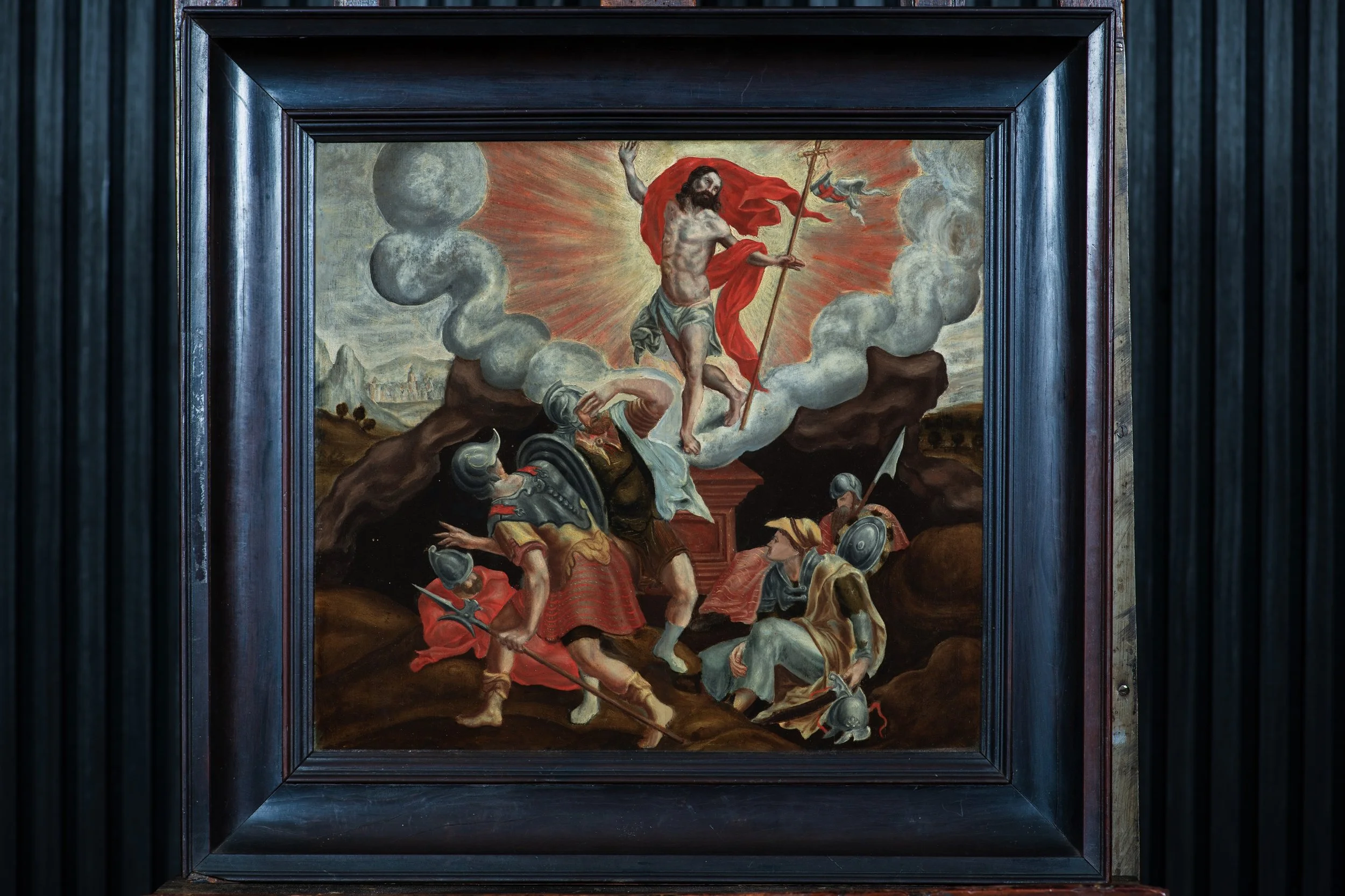 Image 1 of 17
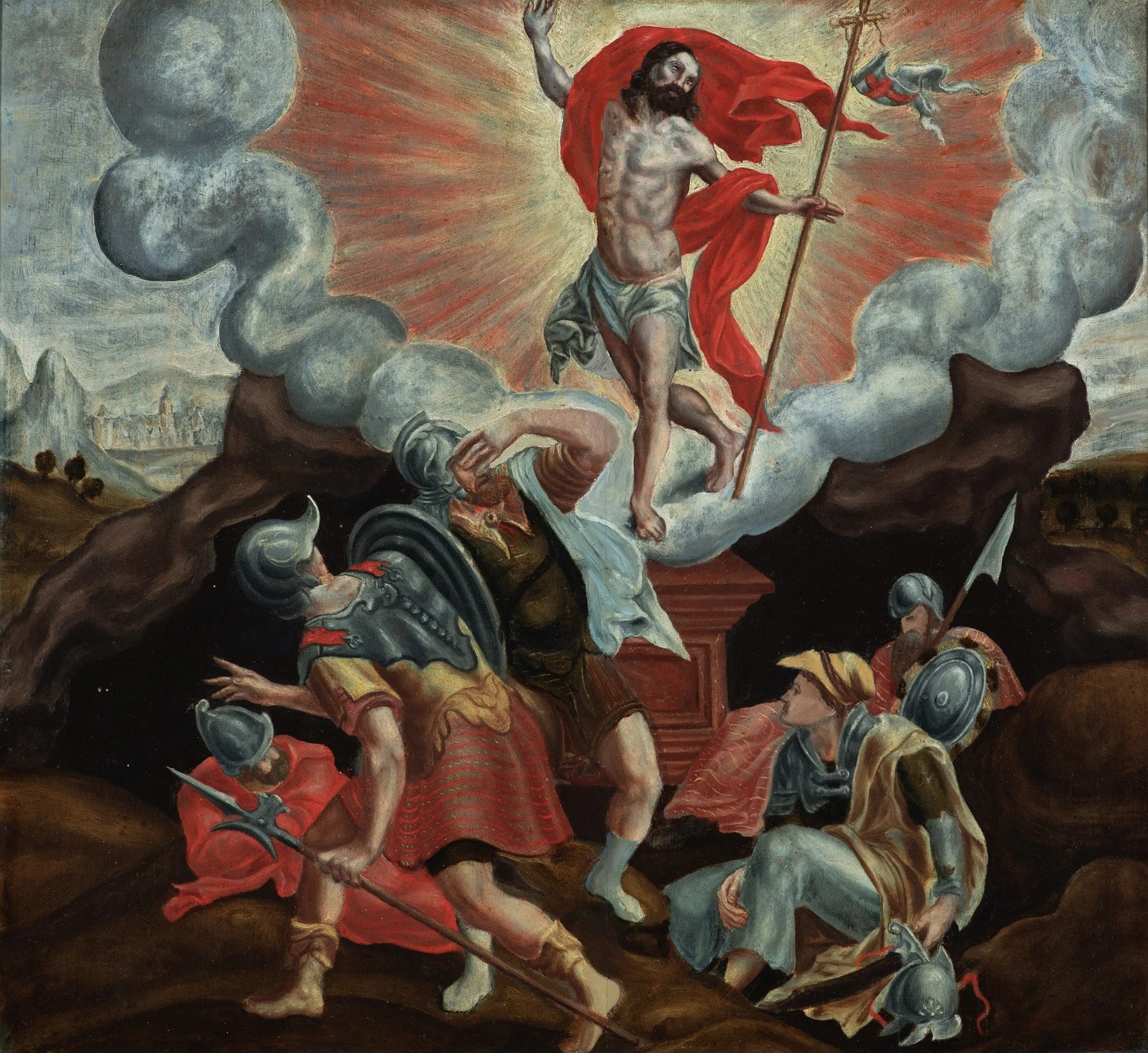 Image 2 of 17
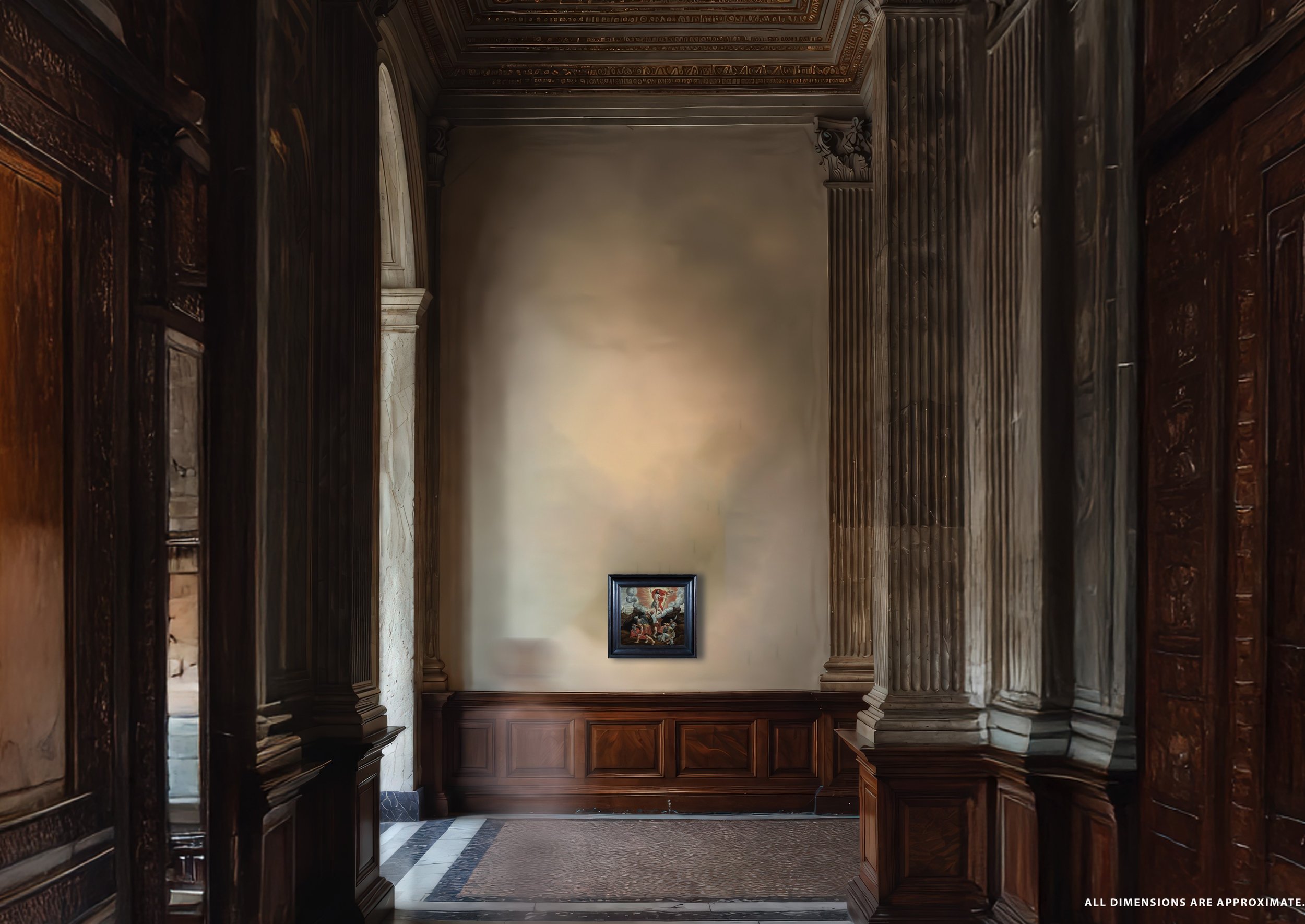 Image 3 of 17
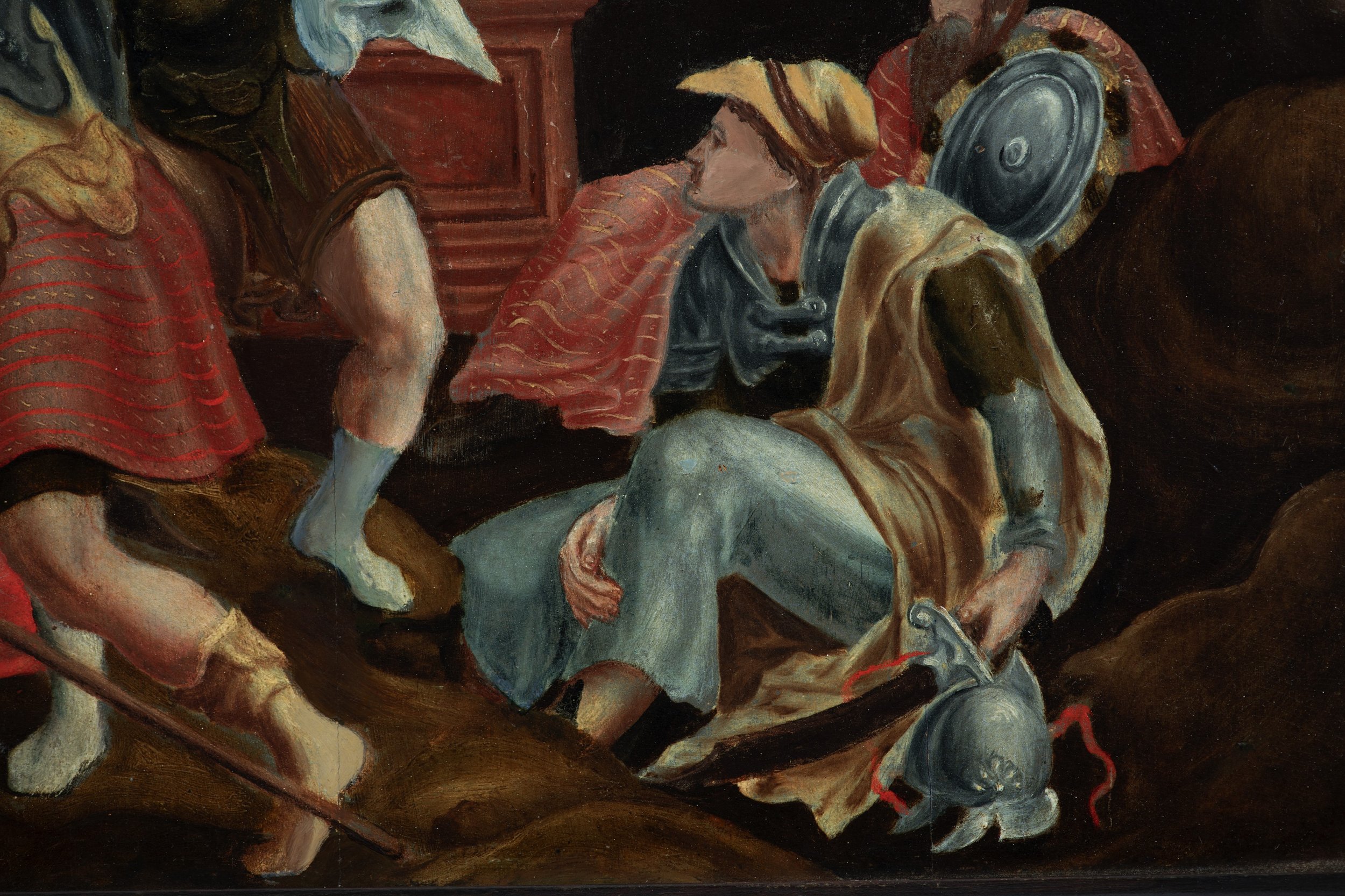 Image 4 of 17
 Image 5 of 17
 Image 6 of 17
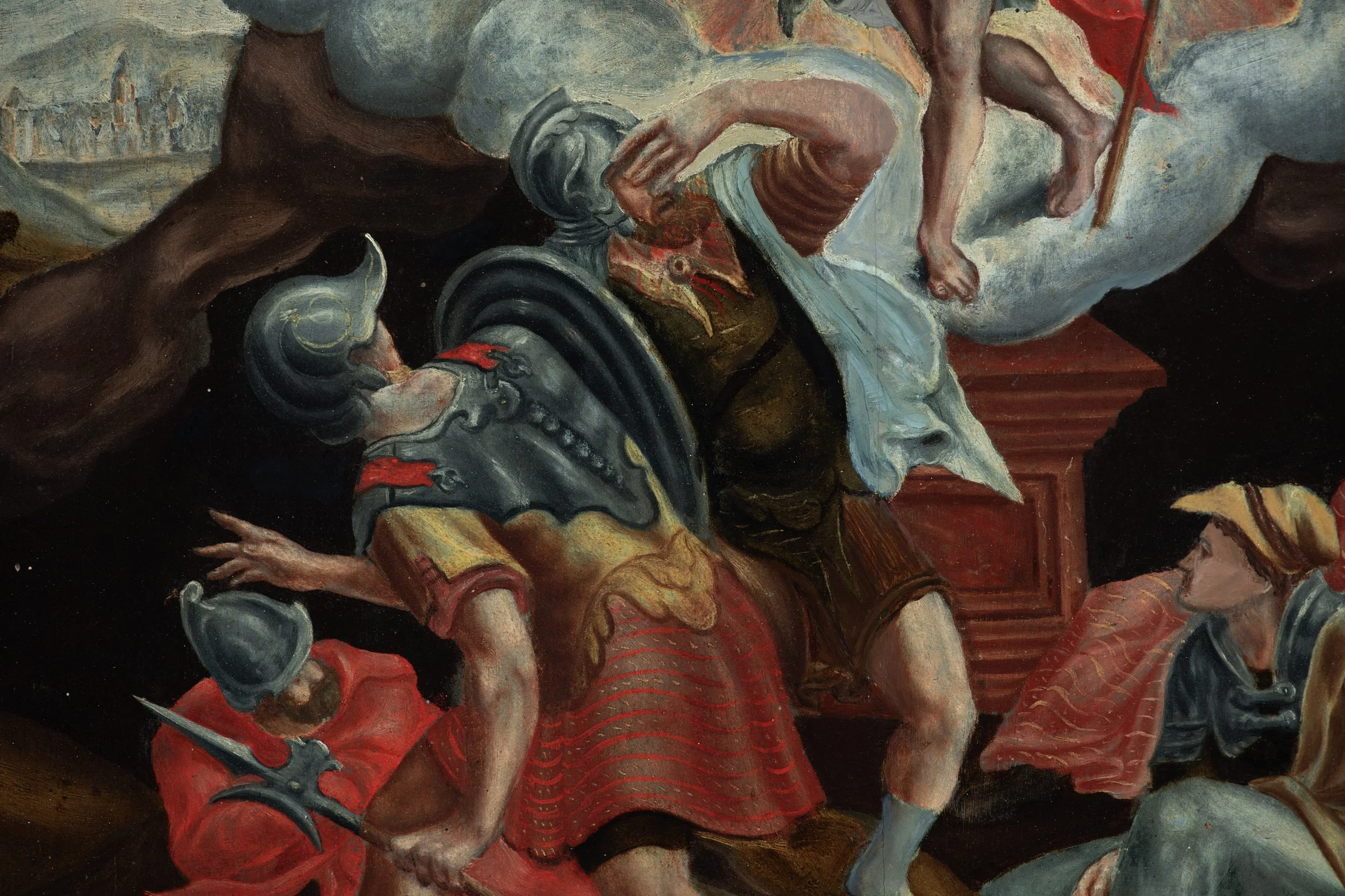 Image 7 of 17
 Image 8 of 17
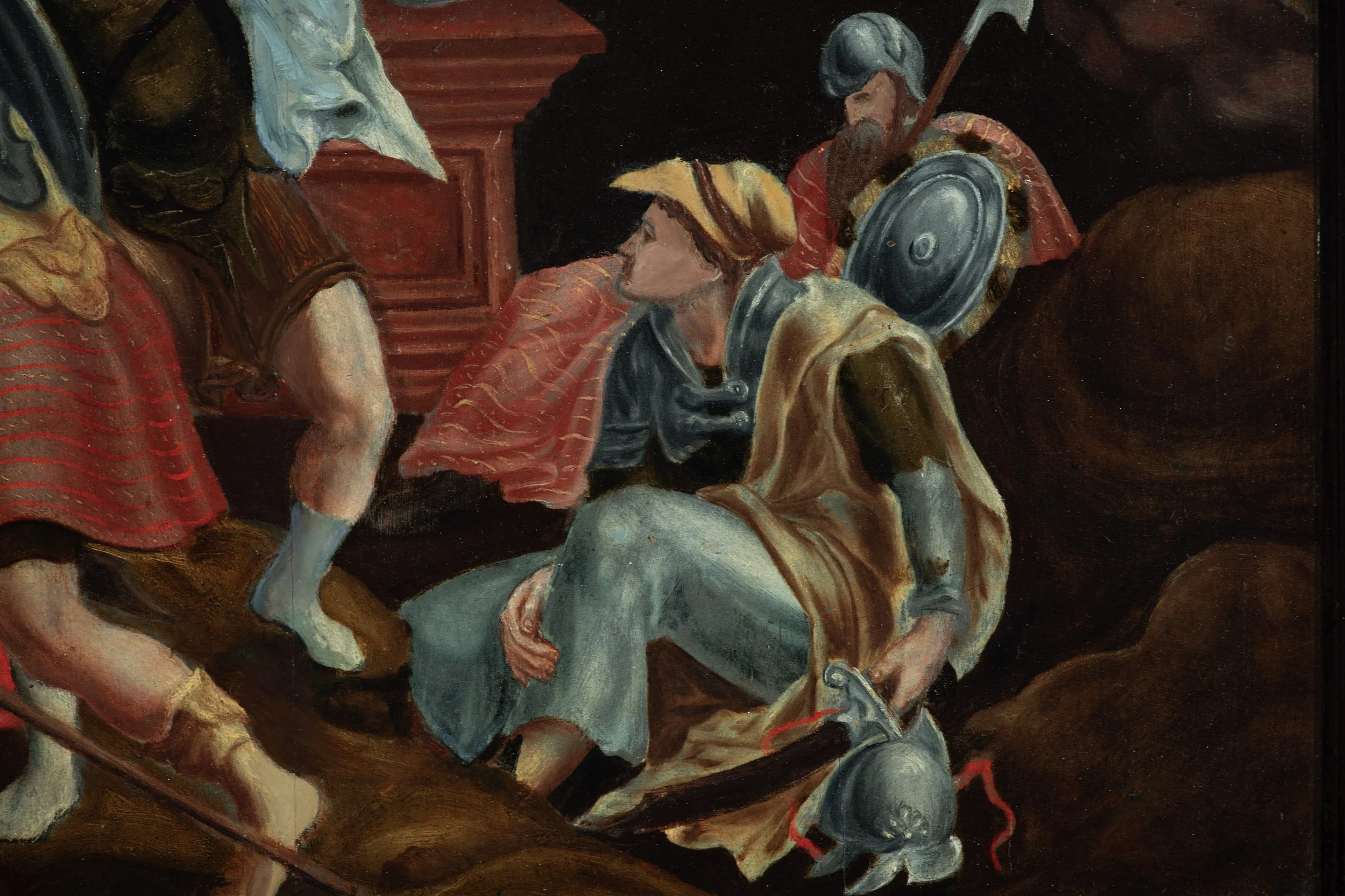 Image 9 of 17
 Image 10 of 17
 Image 11 of 17
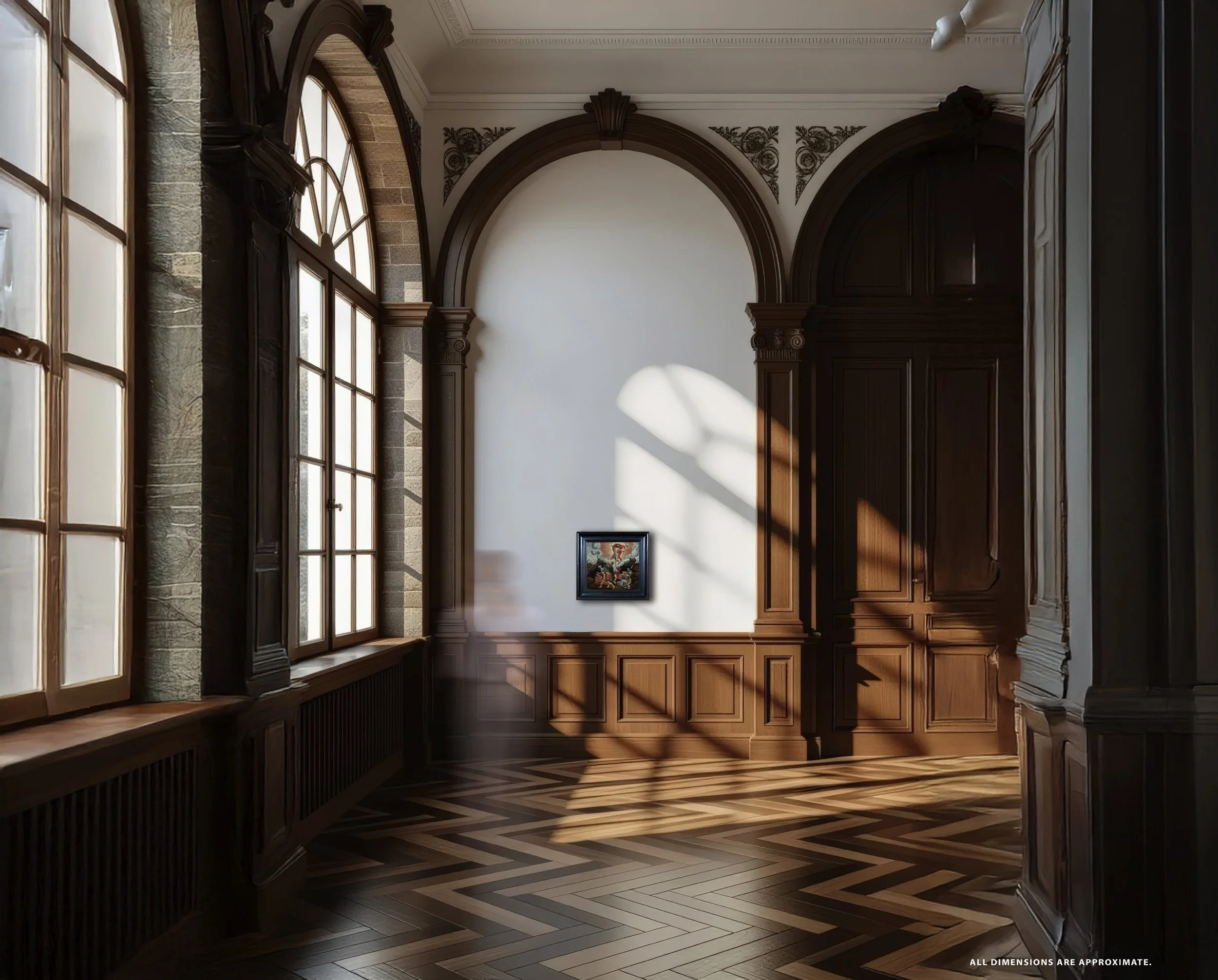 Image 12 of 17
 Image 13 of 17
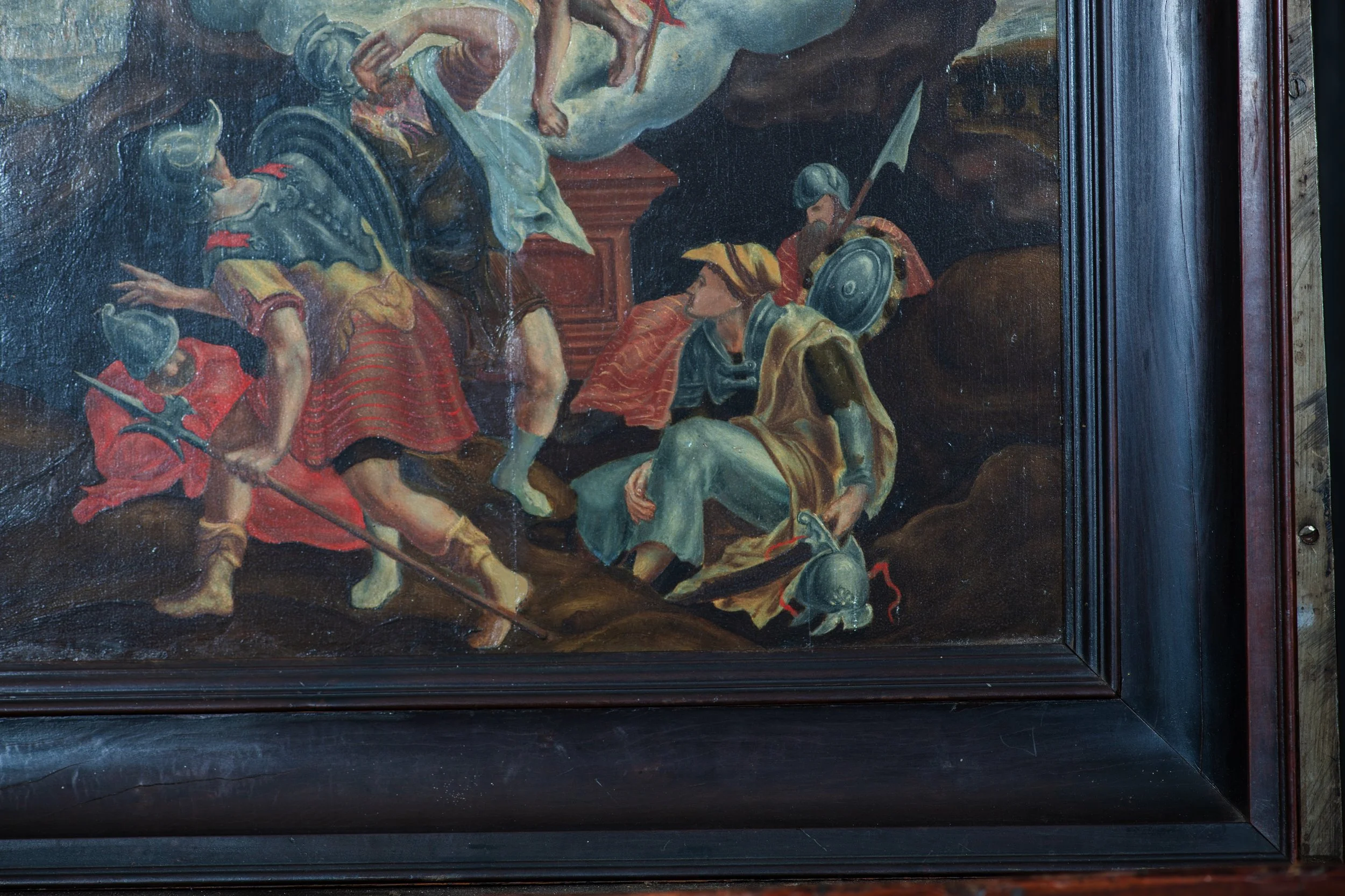 Image 14 of 17
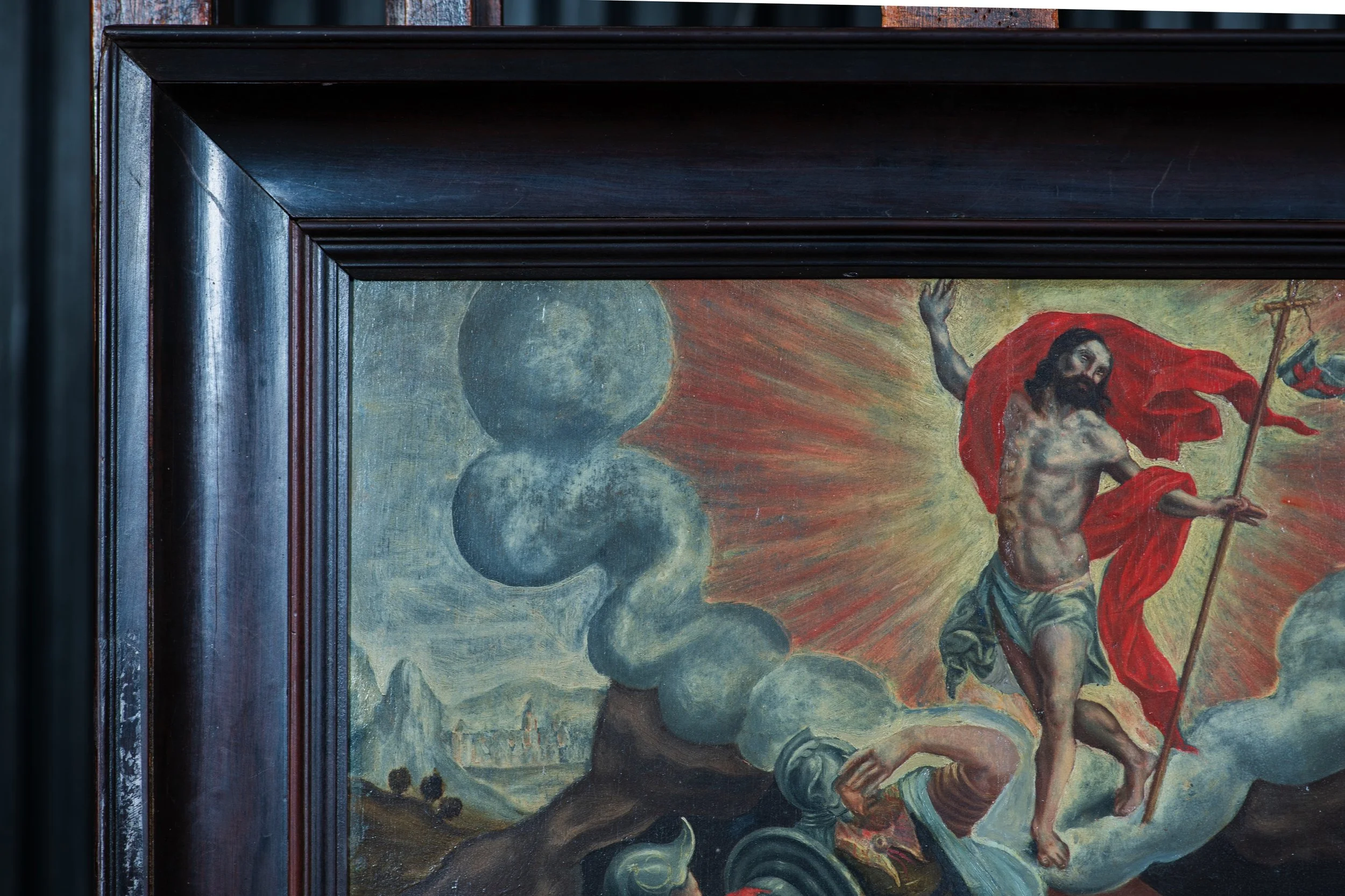 Image 15 of 17
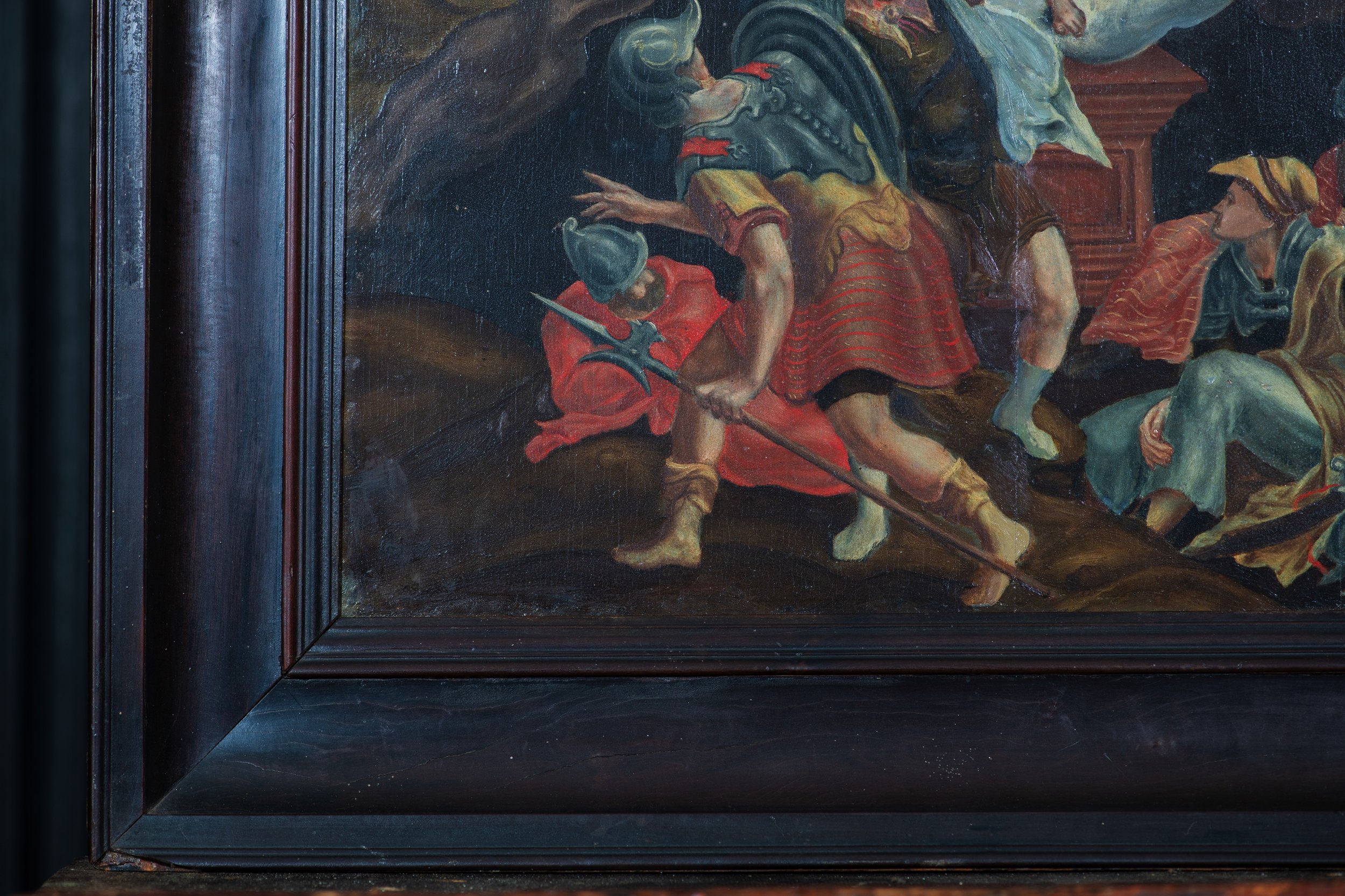 Image 16 of 17
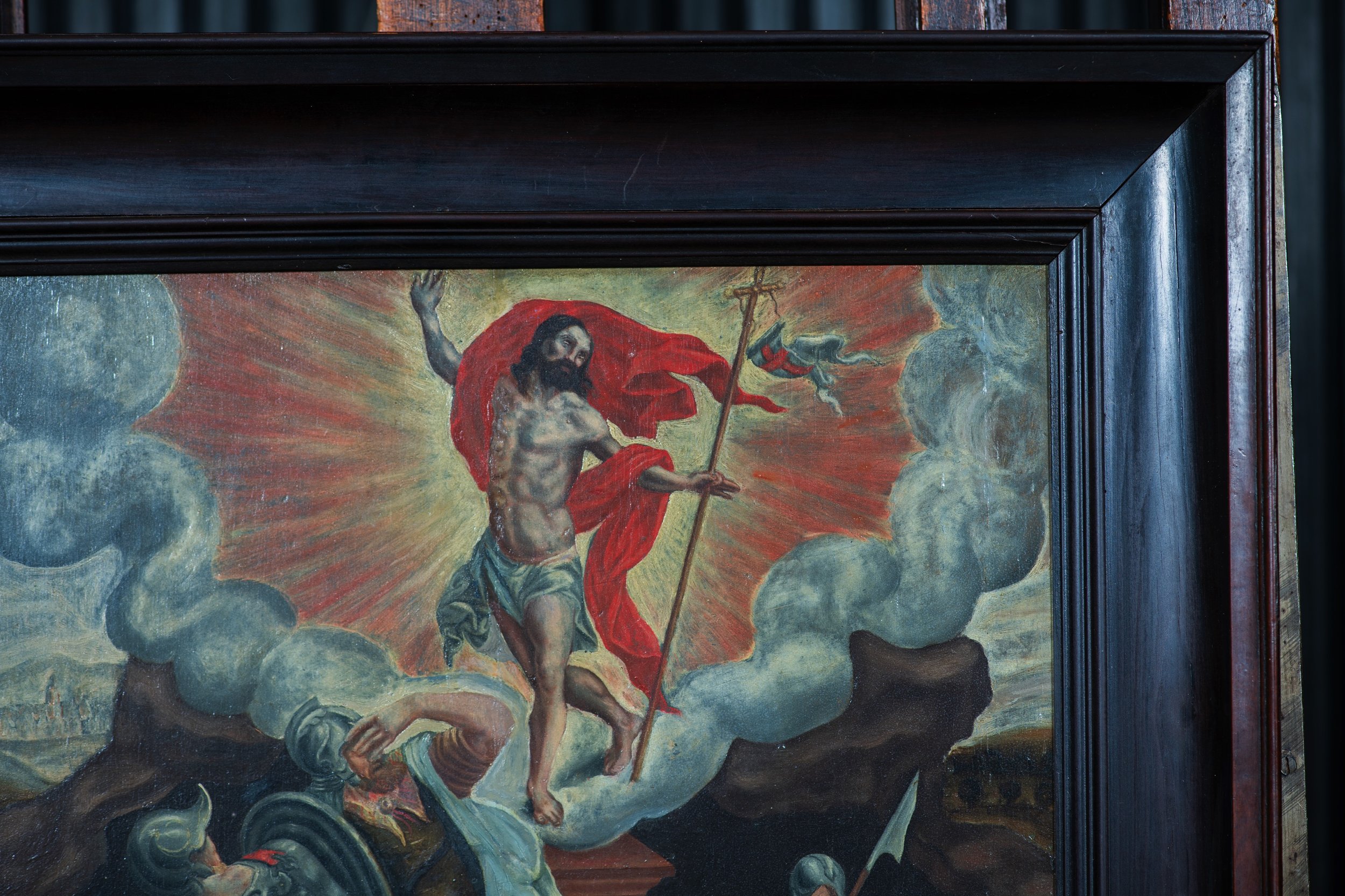 Image 17 of 17